


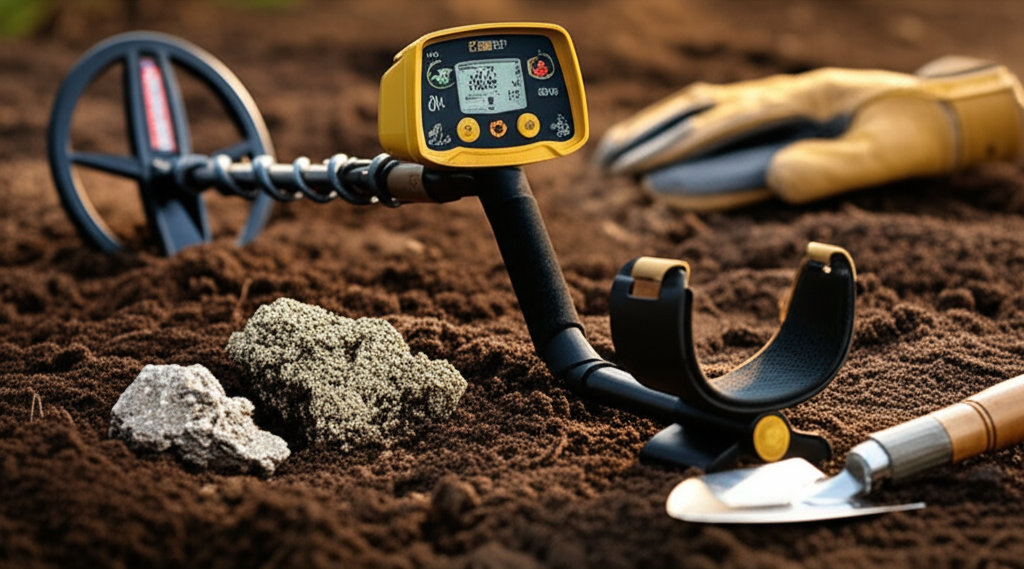
Published on: September 24, 2025 | Updated on: September 24, 2025
Yes, metal detectors can pick up pyrite, but it’s not always straightforward. Understanding how pyrite affects your detector is key to avoiding confusion and maximizing your finds. This guide breaks down the science and practical tips to help you distinguish pyrite from genuine targets.
As a detectorist with years of experience under my belt, I’ve learned that the ground is full of surprises. One of the most common and frustrating surprises is digging up rocks that fool your metal detector. Among these, pyrite, often called “fool’s gold,” is a frequent culprit. Many of us have been there, excited by a strong signal, only to find a chunk of shiny rock. This guide will help you understand why this happens and how to tell the difference. We’ll cover everything from the electrical properties of pyrite to the settings on your detector.
What is Pyrite and Why Does It Fool Metal Detectors?
Pyrite, a mineral composed of iron and sulfur (FeS₂), is commonly found in various geological settings, including sedimentary, metamorphic, and igneous rocks. Its metallic luster and brass-yellow color often lead to its mistaken identity as gold, hence its nickname “fool’s gold.” The reason pyrite can trigger a metal detector lies in its electrical conductivity. While not as conductive as precious metals like gold or silver, pyrite does possess a degree of electrical conductivity. This conductivity allows it to interact with the electromagnetic field generated by a metal detector, creating a signal.
The Science Behind Pyrite’s Signal
Metal detectors work by generating an electromagnetic field. When this field encounters a conductive object in the ground, it induces eddy currents within that object. These eddy currents, in turn, generate their own magnetic field, which is then detected by the metal detector’s receiver coil. Pyrite, with its crystalline structure and metallic inclusions, exhibits enough electrical conductivity to create these eddy currents, albeit often weaker ones than those produced by pure metals. The strength and characteristics of the signal depend on the size, shape, orientation, and specific mineral composition of the pyrite.
Can All Metal Detectors Pick Up Pyrite?
The ability of a metal detector to pick up pyrite varies significantly depending on the detector’s technology, frequency, and discrimination settings. More sensitive detectors, especially those operating at higher frequencies, are more likely to register a signal from pyrite. Conversely, detectors with advanced ground balancing capabilities and sophisticated discrimination algorithms are better equipped to differentiate between pyrite and valuable targets. Understanding your specific detector’s capabilities is crucial for interpreting signals accurately.
Factors Influencing Pyrite Detection
Several factors influence whether your metal detector will pick up pyrite. The size and density of the pyrite nodule play a significant role; larger, more solid pieces will produce a stronger signal. The depth at which the pyrite is buried also affects signal strength, with shallower pieces being easier to detect. Furthermore, the surrounding soil conditions, such as mineralization, can either mask or amplify the pyrite’s signal, making interpretation more challenging.
Identifying Pyrite Signals: What to Listen For
Distinguishing a pyrite signal from a genuine target often comes down to subtle nuances in the audio and visual feedback from your detector. Pyrite signals can sometimes be “chattery,” inconsistent, or have a different tone than typical coin or relic signals. Many modern detectors provide a numerical Target ID. Pyrite often registers in a range that can overlap with some desirable targets, making visual cues important. Learning to recognize these patterns through practice is invaluable.
Ground Balancing and Its Role in Pyrite Rejection
Ground balancing is a critical feature in many metal detectors that helps to cancel out the signals from mineralized ground. Highly mineralized soil can mimic the signals of metal, leading to false positives. Proper ground balancing tunes the detector to ignore these ground signals, allowing it to focus on actual metallic targets. While effective against ground mineralization, it doesn’t always eliminate pyrite signals, as pyrite itself can be a concentrated mineral source.
Discrimination Settings: Your First Line of Defense
Discrimination is the feature that allows you to set your metal detector to ignore certain types of metallic trash, like iron nails or foil. While this is useful for filtering out common junk, it’s a double-edged sword when it comes to pyrite. Some discrimination settings might inadvertently filter out certain types of pyrite signals, but others could cause you to miss valuable targets that produce similar signals. It’s a delicate balance, and understanding how discrimination works on your specific detector is key.
Advanced Techniques for Dealing with Pyrite
When dealing with areas known for pyrite, advanced techniques can significantly improve your success rate. One common method is to lower your sensitivity setting slightly. This can help reduce the detector’s response to weaker, more ambiguous signals like those from small pyrite pieces. Another technique is to use different search coils; some coils are better at separating targets or handling mineralized ground. Experimenting with your detector’s various modes and settings, and carefully observing the audio and visual cues for each target, is essential.
Real-World Detectorist Strategies for Pyrite Avoidance
In the field, I’ve developed a few strategies that help me avoid digging unnecessary holes for pyrite. Firstly, I pay close attention to the “feel” of a target. A solid, consistent signal is usually good, while a “chattery” or inconsistent signal often means trouble. Secondly, I always use my pinpointer to confirm the target’s location and shape before digging. If the pinpointer indicates a large, irregular object rather than a small, distinct item, I’m more cautious. Finally, if I’m in an area with known pyrite, I might adjust my search pattern or focus on signals that have a very clear and distinct audio tone.
Pyrite vs. Gold: A Detectorist’s Comparison
The primary concern for many detectorists is mistaking pyrite for gold. Gold, especially in its natural nugget or placer form, is highly conductive and produces a strong, consistent signal. Pyrite, while conductive, often produces a signal that is less stable and may have a different tonal quality. Furthermore, gold nuggets tend to have a smoother, more rounded appearance, whereas pyrite often forms in crystalline structures. However, there are exceptions, and advanced detectors with good target separation are your best bet for differentiating them accurately.
Choosing the Right Detector for Pyrite-Prone Areas
If you frequently detect in areas known for pyrite, selecting the right metal detector is paramount. Look for detectors with advanced ground balancing capabilities, multi-frequency technology, and sophisticated target ID systems. Detectors like the Minelab Equinox series or the Garrett AT Max are known for their performance in challenging ground conditions. These machines offer the flexibility to fine-tune settings and reject unwanted signals more effectively, helping you focus on genuine finds.
Essential Tools to Complement Your Detector
Beyond the detector itself, a few essential tools can make a significant difference when dealing with pyrite and other confusing targets. A high-quality pinpointer is non-negotiable. It helps you pinpoint the exact location of a target in the soil plug, allowing you to assess its size and shape before excessive digging. A good digging tool, like a sturdy trowel or a specialized digging stick, also helps you excavate cleanly and efficiently.
When to Dig and When to Leave It Be
Deciding whether to dig a target signal is an art form honed by experience. If you’re getting a strong, consistent, and clear signal from your detector, especially in a range where coins or relics are likely to register, it’s generally worth investigating. However, if the signal is weak, chattery, inconsistent, or registers in a typical “junk” range that your detector flags with low confidence, it might be best to pass, especially if you’re in a known pyrite area. Always trust your instincts and the accumulated knowledge from your detector’s feedback.
Frequently Asked Questions
Will my beginner metal detector pick up pyrite?

Beginner metal detectors can indeed pick up pyrite, especially if it’s a larger piece or in areas with high mineralization. These detectors might have simpler discrimination settings, which can sometimes lead to more false signals from rocks like pyrite. Learning your detector’s specific responses to different targets is key.
How can I tell if a signal is pyrite or a coin?
The audio tone and target ID number can offer clues. Coins usually produce a clear, stable tone and a consistent target ID. Pyrite signals might be more erratic, “chattery,” or have a less distinct tone. Visual inspection of the target before full recovery is also important; coins are typically round and flat.
Can ground balancing eliminate pyrite signals?
Ground balancing helps cancel out mineralized soil, which can reduce some false signals. However, pyrite itself is a mineral and can sometimes produce its own signal that ground balancing may not fully eliminate, especially if it’s a concentrated deposit.
Is all pyrite conductive?
Most forms of pyrite exhibit some degree of electrical conductivity due to their metallic nature and crystalline structure. However, the level of conductivity can vary, affecting how strongly it registers on a metal detector.
Should I turn off discrimination when I suspect pyrite?
It depends on your detector and the type of pyrite. Sometimes, turning discrimination off can reveal targets you might otherwise miss. However, it can also lead to many more unwanted signals. It’s often better to experiment with lower discrimination levels or specific settings designed for mineralized ground.
What is the best metal detector for areas with a lot of pyrite?
Detectors with advanced features like multi-frequency operation, excellent ground balancing, and nuanced target ID systems are best. Models from brands like Minelab, Garrett, and Nokta Makro are often recommended for their performance in challenging environments.
Conclusion
Navigating the world of metal detecting involves learning to interpret a wide range of signals, and understanding how pyrite affects your detector is a crucial part of that journey. While metal detectors can and often do pick up pyrite, it’s not an insurmountable challenge. By understanding the science behind pyrite’s conductivity, learning to recognize its distinct signal characteristics, and utilizing your detector’s features like ground balancing and discrimination wisely, you can significantly reduce confusion. Always remember to trust your detector’s feedback, use your pinpointer effectively, and gain experience in the field. With the right knowledge and tools, you’ll be better equipped to distinguish those frustrating “fool’s gold” signals from the genuine treasures waiting to be unearthed.
