Close Menu
Tool Guider – Trending Tools
  • Home
  • Tools Blogs Trending Now
  • Editors choice
  • Reviews
  • Jump to
    • Outdoor
    • Power Energy
    • Tools & Devices
      • Tools Tips
      • Home Tools
      • Kitchen Tools
      • Garden Tools
      • Power tools
      • Precious Metals
      • Baby tools
      • Construction & Power Tools
    • Home decor
      • Home office decor
      • Small Home Office Ideas
      • Modern Home Office Ideas
      • Desk Setup Inspiration
      • Home Office Furniture
      • Minimalist Office Decor
      • Under $100 Home Office Setup
    • Office Accessories & Decor
      • Chairs
      • Desk
      • Work-from-Home Tools
    • Productivity & Organization
      • Shopping
      • Shipping & Logistics
      • Storage & Shelving
      • Packaging
    • Autos & Vehicles
      • Car maintenance
      • Vehicle Codes & Driving Laws
      • Vehicle Parts & Services
      • Vehicle Parts & Accessories
    • Business & Industrial
      • Industrial And Scientific
      • Industrial Materials & Equipment
      • Construction
      • Hospitality Industry
      • Food Service
      • Dust Collection
      • Metals & Mining
    • Consumer Electronics
      • Air Conditioners
      • Air Filters & Purifiers
    • Kitchen & Dining
      • Kitchen
      • Cooking & Recipes
      • Cuisines
      • Food & Drink
      • Cookware & Diningware
    • Baby
    • Health & Fitness
      • Health And Household
    • Hobbies & Leisure
      • Hunting & Shooting
        • Hunting
      • Camping
      • Metal detecting
        • Metal Detector
      • Antiques & Collectibles
    • Home & Garden
      • Cleaning Tips & Hacks
        • Metal Cleaning
      • Household Supplies
      • Kitchen & Dining
        • Cookware & Diningware
      • Gardening
      • Pest Control
    • Home improvement
      • House Painting & Finishing
      • Household Supplies
        • Laundry
      • HVAC & Climate Control
      • Cabinetry
    • Other
      • Resources
    • Science
      • Biological Sciences
      • Genetics
  • Write for us
What's Hot

Academy Metal Detectors: Prices, Reviews & Best Picks

How Deep Can a Metal Detector Detect? Realistic Depth Guide

uPVC Windows and Doors: Homeowner’s Buying Guide

Facebook X (Twitter) Instagram
Tool Guider – Trending ToolsTool Guider – Trending Tools
  • Home
  • Tools Blogs Trending Now

    Academy Metal Detectors: Prices, Reviews & Best Picks

    How Deep Can a Metal Detector Detect? Realistic Depth Guide

    uPVC Windows and Doors: Homeowner’s Buying Guide

    How to Install Tilt and Turn PVC Windows: A Practical Step‑by‑Step Guide

    Are Old Glass Bottles Worth Anything? How to Identify Valuable Bottles

  • Editors choice

    10 Best Cast Iron Teapot Review with Buying Guide

    Top 10 Best Piping Bags Review and Comparison with Buying Tips

    10 Best Kitchen Drawer Organizer Review with Buying Guide

    Best Bamboo Cutting Boards Review & Buying Guide

    Top 10 Best Wood Salad Bowls Review With Buyer’s Guide

  • Reviews

    Teknetics Omega 8500 Metal Detector Review & Guide

    Best Metal Detector for Kids: Fun, Educational & Safe for Treasure Hunts

    Waterproof Metal Detector: Unearth More!

    10 Best Baby Walker for Carpet in 2026 – Safe & Comfortable Picks

    Discover 5 Best Baby Cradle Swings for Gentle Motion & Endless Joy

  • Jump to
    • Outdoor
    • Power Energy
    • Tools & Devices
      • Tools Tips
      • Home Tools
      • Kitchen Tools
      • Garden Tools
      • Power tools
      • Precious Metals
      • Baby tools
      • Construction & Power Tools
    • Home decor
      • Home office decor
      • Small Home Office Ideas
      • Modern Home Office Ideas
      • Desk Setup Inspiration
      • Home Office Furniture
      • Minimalist Office Decor
      • Under $100 Home Office Setup
    • Office Accessories & Decor
      • Chairs
      • Desk
      • Work-from-Home Tools
    • Productivity & Organization
      • Shopping
      • Shipping & Logistics
      • Storage & Shelving
      • Packaging
    • Autos & Vehicles
      • Car maintenance
      • Vehicle Codes & Driving Laws
      • Vehicle Parts & Services
      • Vehicle Parts & Accessories
    • Business & Industrial
      • Industrial And Scientific
      • Industrial Materials & Equipment
      • Construction
      • Hospitality Industry
      • Food Service
      • Dust Collection
      • Metals & Mining
    • Consumer Electronics
      • Air Conditioners
      • Air Filters & Purifiers
    • Kitchen & Dining
      • Kitchen
      • Cooking & Recipes
      • Cuisines
      • Food & Drink
      • Cookware & Diningware
    • Baby
    • Health & Fitness
      • Health And Household
    • Hobbies & Leisure
      • Hunting & Shooting
        • Hunting
      • Camping
      • Metal detecting
        • Metal Detector
      • Antiques & Collectibles
    • Home & Garden
      • Cleaning Tips & Hacks
        • Metal Cleaning
      • Household Supplies
      • Kitchen & Dining
        • Cookware & Diningware
      • Gardening
      • Pest Control
    • Home improvement
      • House Painting & Finishing
      • Household Supplies
        • Laundry
      • HVAC & Climate Control
      • Cabinetry
    • Other
      • Resources
    • Science
      • Biological Sciences
      • Genetics
  • Write for us
Tool Guider – Trending Tools
Home » Can Metal Detector See Through Metal? Essential Breakthrough!

Can Metal Detector See Through Metal? Essential Breakthrough!

Belayet HossainBy Belayet Hossain Metal detecting 10 Mins Read
Share
Facebook Twitter LinkedIn Pinterest WhatsApp Email

Published on: September 24, 2025 | Updated on: September 24, 2025

No, a standard metal detector cannot “see through” metal in the way you might imagine. Instead, it detects the electromagnetic field disturbances caused by metal objects. The key is understanding how this field interaction works and its limitations, especially when dealing with buried metal.

Can Metal Detectors See Through Metal? The Essential Breakthrough Explained!

It’s a question that pops up often among detectorists, both seasoned and new: “Can a metal detector see through metal?” This isn’t about X-ray vision, but rather how our trusty devices interact with the very thing we’re trying to find. Understanding this is crucial, especially when you encounter situations where you suspect there’s more metal underground than you can initially pinpoint. Let’s clear up this common confusion and explore the fascinating science behind how metal detectors work, and what their limitations truly are when faced with metallic clutter.

Contents

  • 1. The Core Principle: Electromagnetic Fields, Not X-Rays
  • 2. How Metal Detectors “See” Metal: Induction and Eddy Currents
  • 3. The Myth of Seeing “Through” Metal
  • 4. Factors Affecting Detection Depth and Clarity
  • 5. Dealing with Metallic Clutter: The Detectorist’s Challenge
  • 6. How Discrimination Works (and Its Limits)
  • 7. Advanced Techniques for Navigating Clutter
  • 8. The Role of Pinpointers: Essential for Every Detectorist
  • 9. What About Ground Mineralization?
  • 10. Essential Gear Beyond the Detector
  • 11. Can Metal Detectors See Through Metal? The Final Verdict
  • 12. Frequently Asked Questions (FAQ)
  • 13. Conclusion
  • 14. Author

The Core Principle: Electromagnetic Fields, Not X-Rays

Metal detectors don’t possess magical X-ray vision; they operate on a fundamental principle of electromagnetism. A typical detector has a coil that transmits an electromagnetic field into the ground. When this field encounters a metal object, it induces eddy currents within that metal. These eddy currents then generate their own magnetic field, which is detected by the metal detector’s receiver coil.

This interaction is what signals the presence of metal. The strength and characteristics of the returned signal provide clues about the object’s size, depth, and composition. It’s a sophisticated dance of magnetic fields, not a literal ability to peer through solid objects.

How Metal Detectors “See” Metal: Induction and Eddy Currents

The “seeing” part of a metal detector’s function relies heavily on electromagnetic induction. The search coil on your detector acts as both a transmitter and a receiver. When current flows through the transmitter coil, it generates a magnetic field that extends into the ground.

If this field encounters a conductive material like metal, it induces small electrical currents, known as eddy currents, within the metal object. These eddy currents, in turn, create their own magnetic field that opposes the original field. Your metal detector’s receiver coil picks up this secondary magnetic field, and the electronics translate it into an audible or visual signal.

The Myth of Seeing “Through” Metal

The confusion often arises because a metal detector can detect metal objects that are buried beneath other materials, such as soil, sand, or even wood. However, it cannot detect metal that is already blocking the signal from reaching another metal object. For example, if you have a large iron fence post in the ground, a metal detector might struggle to detect a coin buried directly behind it.

The detector’s signal is essentially diffused and distorted by the first piece of metal it encounters. It’s like trying to shout a message through a thick wall; the first obstruction significantly hinders the message’s clarity and reach to anything beyond it. This is a critical distinction to grasp for effective metal detecting.

Factors Affecting Detection Depth and Clarity

Several factors influence how well a metal detector can “see” a target and how deep it can detect it. The size and type of the metal object are paramount; larger and more conductive targets are generally easier to detect at greater depths. The detector’s operating frequency also plays a role, with lower frequencies typically penetrating deeper for larger targets, while higher frequencies are better for smaller, less conductive items like gold nuggets.

The coil size and type are also significant. Larger coils generally offer greater depth penetration, but they can also be less sensitive to small targets and more susceptible to ground mineralization. Conversely, smaller coils offer better pinpointing and sensitivity to small targets but have less depth.

Dealing with Metallic Clutter: The Detectorist’s Challenge

One of the most significant challenges in metal detecting, especially in areas with a history of human activity, is dealing with metallic clutter. This refers to numerous small, often undesirable metal targets like pull tabs, bottle caps, and small iron fragments. When you’re trying to find a specific target, like an old coin, in a field littered with this junk, it can be frustrating.

A detector will signal on all these targets. The trick is to learn to distinguish between them based on the audio tones and visual display (if your detector has one). This is where understanding your detector’s discrimination settings and developing your ear comes into play.

How Discrimination Works (and Its Limits)

Discrimination is a feature on most modern metal detectors that allows you to ignore certain types of metal, typically iron and foil, while still responding to more desirable targets like coins and jewelry. It works by analyzing the electrical conductivity of the target. Iron, for example, is highly conductive and has a different signal characteristic than a silver coin.

However, discrimination isn’t perfect. Highly mineralized ground can sometimes mimic the signals of certain targets, leading to false positives or missed finds. Furthermore, some valuable targets can have signal characteristics similar to junk targets, meaning you might accidentally discriminate them out. It’s a balancing act, and often, experienced detectorists choose to use minimal discrimination to avoid missing good finds.

Advanced Techniques for Navigating Clutter

When faced with heavily cluttered sites, experienced detectorists employ several advanced techniques. One common strategy is to use a smaller coil, which offers better separation between targets. This allows you to pinpoint individual targets within a cluster of metal. Another technique involves using different detector settings or even different detectors altogether.

For instance, a detector with excellent iron separation might be used for initial sweeps, followed by a more sensitive, all-metal mode detector for the final search. Slowing down your sweep speed is also crucial. This gives the detector more time to process the signals from each target, improving your ability to distinguish between them.

The Role of Pinpointers: Essential for Every Detectorist

While the main search coil helps you locate areas of interest, a pinpointer is an indispensable tool for pinpointing the exact location of a target within the removed plug of soil. Once you’ve dug your plug, a pinpointer can be waved over it, and it will beep faster and louder as it gets closer to the target. This dramatically reduces the time and effort spent sifting through dirt by hand.

Even with the most advanced metal detectors, the signal from a small coin can be broad, and the target could be anywhere within a few inches of your initial dig spot. A good pinpointer, like the Garrett Pro-Pointer AT, can save you immense frustration and prevent you from accidentally damaging delicate relics.

What About Ground Mineralization?

Ground mineralization is another factor that can affect how a metal detector performs. Many soils contain natural minerals that can also conduct electricity to some extent. This can create a background signal that the detector interprets as metal, leading to false signals or masking real targets.

Most detectors have a feature called “ground balancing” which helps to cancel out these ground signals. Manual ground balancing involves adjusting a control until the detector stops chattering or giving false signals from the ground itself. Automatic ground balancing does this for you. Understanding and properly setting your ground balance is crucial for optimal performance, especially in challenging soil conditions.

Essential Gear Beyond the Detector

To truly maximize your success and navigate the complexities of metal detecting, having the right supporting gear is just as important as the detector itself. A sturdy digging tool, such as a trowel or a specialized digging stick, is essential for cleanly extracting targets. A find pouch or bag is necessary to store your discoveries and any trash you dig up (always pack it out!).

Gloves can protect your hands, and a good pair of headphones will help you hear faint signals that you might otherwise miss, especially in noisy environments. For those venturing into more challenging terrains, a reliable backpack to carry your gear and water is a must.

Can Metal Detectors See Through Metal? The Final Verdict

So, can a metal detector see through metal? The answer is a nuanced no. A metal detector works by detecting the electromagnetic field disruptions caused by metal objects. It cannot “see through” existing metal to find another object behind it in the way an X-ray can. However, it can detect metal objects buried beneath non-metallic substances like soil, sand, and water.

The key is understanding the physics involved, learning to interpret the signals your detector provides, and employing techniques and tools to overcome challenges like metallic clutter and ground mineralization. With practice and the right knowledge, you can significantly improve your chances of making amazing finds.

Frequently Asked Questions (FAQ)

What is the most important setting on a metal detector?

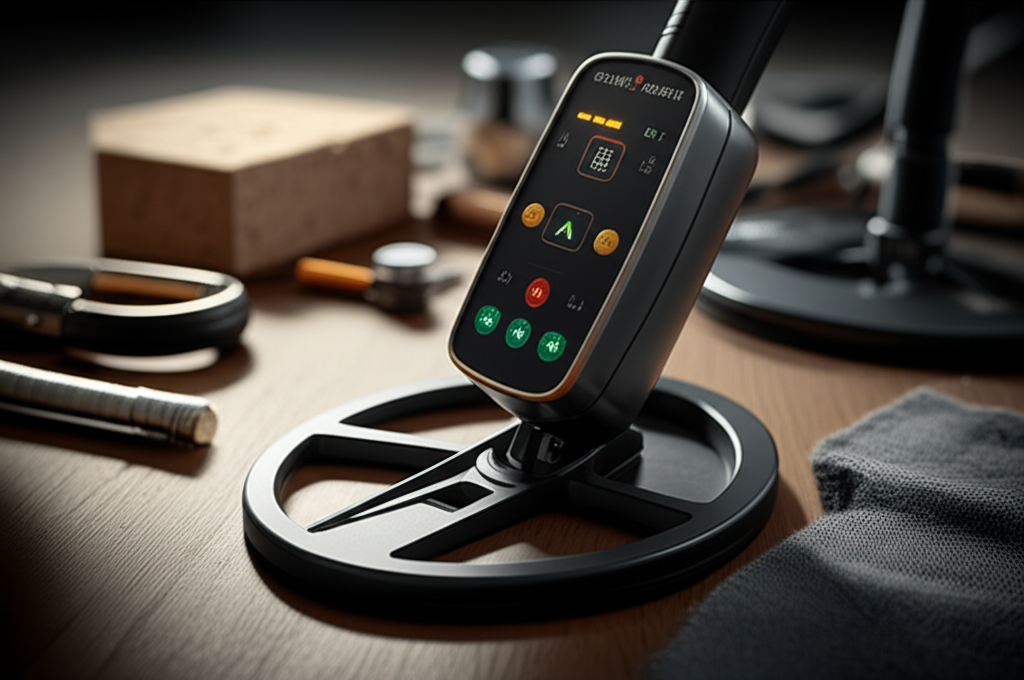
Generate an ultra-luxurious, modern, photorealistic 16:9 featured image for a blog article on the to

The most important setting is often considered to be ground balance. Properly balancing your detector to the ground conditions helps eliminate false signals and allows you to hear weaker targets more clearly.

Can a metal detector find gold?

Yes, many metal detectors are specifically designed for gold prospecting and can detect gold nuggets, flakes, and jewelry. Certain detectors are more sensitive to the low conductivity of gold than others.

How deep can a metal detector find metal?

The depth a metal detector can reach varies greatly depending on the detector’s power, the coil size, the target’s size and composition, and ground conditions. Generally, larger coils and more powerful detectors can reach greater depths, typically from a few inches to a couple of feet for larger targets.

What is the difference between a VLF and a PI metal detector?

VLF (Very Low Frequency) detectors use two coils (transmitter and receiver) and are generally better at discrimination and handling mineralized ground. PI (Pulse Induction) detectors use a single coil and are typically more powerful, detecting deeper and through mineralized ground but with less discrimination ability.

Is it legal to metal detect everywhere?

No, it is not legal to metal detect everywhere. Many historical sites, parks, and private properties have restrictions. Always research local laws and obtain permission before detecting on private land.

How can I improve my metal detecting finds?

Improve your finds by practicing regularly, learning your detector’s sounds and settings, slowing down your sweep speed, using a pinpointer effectively, and researching potential locations with good historical data.

Conclusion

The question of whether a metal detector can “see through metal” often leads to a misunderstanding of how these incredible devices actually function. They don’t have supernatural powers, but rather rely on the scientific principles of electromagnetism to detect changes in the earth’s magnetic field caused by metallic objects. While a detector can penetrate soil, water, and other non-metallic materials, it cannot bypass existing metal to find something behind it. Mastering metal detecting involves understanding these limitations, learning to interpret signals, and utilizing tools like pinpointers and discrimination settings wisely. With dedication and practice, you’ll become adept at navigating the underground world and uncovering its hidden treasures.

Author

  • belayet hossain
    Belayet Hossain

    Belayet Hossain is a Tool Analyst and Workspace Optimization Expert with an MSc in Computer Science & Engineering. Augmented by certifications in Vibe Coding and AI Marketing, he evaluates home office gear and industrial tools through a lens of technical efficiency and modern utility. Belayet identifies which tools offer true smart value and which are merely passing trends. Connect with Belayet Hossain on Facebook, Twitter, Linkedin, or read my complete biography.

Leave your thoughts here!Cancel reply

BIG Discounts at Amazon.com!
Save 50.0% on select products from Nanbone with promo code NQQQQ9KE, through 2/28 while supplies last.
Don't Miss Latest Updates

Subscribe to Updates

Get the latest blogs, updates, news and many more from ToolGuider.com!

loader

Email Address*

Don't Miss
Metal detecting

Academy Metal Detectors: Prices, Reviews & Best Picks

Metal detecting Updated:August 28, 2026

How Deep Can a Metal Detector Detect? Realistic Depth Guide

uPVC Windows and Doors: Homeowner’s Buying Guide

How to Install Tilt and Turn PVC Windows: A Practical Step‑by‑Step Guide

Are Old Glass Bottles Worth Anything? How to Identify Valuable Bottles

50 pesos 1821 to 1947 fake? How to Spot a Genuine Gold Coin

Recommended
Metal detecting

How Deep Can a Metal Detector Detect? Realistic Depth Guide

Metal detecting Updated:August 21, 2026
Home improvement

uPVC Windows and Doors: Homeowner’s Buying Guide

Home improvement Updated:August 20, 2026
Home improvement

How to Install Tilt and Turn PVC Windows: A Practical Step‑by‑Step Guide

Home improvement Updated:August 13, 2026
Metal detecting

Are Old Glass Bottles Worth Anything? How to Identify Valuable Bottles

Metal detecting Updated:August 5, 2026
Metal detecting

50 pesos 1821 to 1947 fake? How to Spot a Genuine Gold Coin

Metal detecting Updated:July 3, 2026
Metal detecting

3D Metal Detectors Explained: How They Work, Accuracy, Prices & Best Models

Metal detecting Updated:June 24, 2026
Metal detecting

Best Relic Hunting Metal Detectors (2026 Field-Tested)

Metal detecting Updated:June 13, 2026
Metal detecting

Antique Mason Jars Value Guide: Dates, Logos & Rare Colors

Metal detecting
Jump to
  • Air Conditioners (2)
  • Antiques & Collectibles (6)
  • Autos & Vehicles (3)
  • Baby (13)
  • Baby tools (4)
  • Beverages (1)
  • Biological Sciences (1)
  • Bowls & Dishes (10)
  • Brewing Techniques (2)
  • Business & Industrial (6)
  • Cabinetry (1)
  • Camping (1)
  • Car maintenance (1)
  • Chairs (2)
  • Cleaning Tips & Hacks (8)
  • Construction (13)
  • Construction & Power Tools (2)
  • Consumer Electronics (2)
  • Cooking & Recipes (1)
  • Cookware & Diningware (3)
  • Corner Home Office Setup (1)
  • Cuisines (1)
  • Cutting Boards (8)
  • Desk (2)
  • Desk Setup Inspiration (1)
  • Dishwashing & Cleaning (3)
  • Drinkware & Teaware (1)
  • Dust Collection (1)
  • Editors choice (18)
  • Floating Shelves (1)
  • Food & Drink (3)
  • Food Service (1)
  • Gardening (2)
  • Genetics (1)
  • Health & Fitness (1)
  • Health And Household (6)
  • Hobbies & Leisure (3)
  • Home & Garden (17)
  • Home decor (24)
  • Home improvement (34)
  • Home office decor (3,404)
  • Home Office Wellness (1)
  • Home Tools (1)
  • Hospitality Industry (1)
  • House Painting & Finishing (3)
  • Household Supplies (2)
  • Hunting (3)
  • Hunting & Shooting (1)
  • HVAC & Climate Control (2)
  • Industrial And Scientific (24)
  • Industrial Materials & Equipment (3)
  • Japanese Teapots (3)
  • Kitchen & Dining (34)
  • Kitchen Cleaning & Maintenance (3)
  • Kitchen Renovation (3)
  • Kitchen Tools (24)
  • Laundry (2)
  • Metal Cleaning (836)
  • Metal detecting (2,871)
  • Metal Detector (19)
  • Metals & Mining (2)
  • Minimalist Desk Setup (5)
  • Minimalist Office Decor (1)
  • Modern Home Office Ideas (1)
  • Office Accessories & Decor (4)
  • Other (1)
  • Outdoor (5)
  • Packaging (1)
  • Pest Control (1)
  • Power Energy (5)
  • Power tools (9)
  • Precious Metals (1)
  • Resources (3)
  • Reviews (26)
  • Science (1)
  • Shipping & Logistics (1)
  • Shopping (2)
  • Small Home Office Ideas (2)
  • Storage & Shelving (1)
  • Tea & Coffee (6)
  • Teapots (8)
  • Teaware (8)
  • Tech & Gadget Setup Ideas (1)
  • Tools & Devices (5)
  • Tools Blogs Trending Now (331)
  • Tools Tips (12)
  • Under $100 Home Office Setup (1)
  • Vehicle Codes & Driving Laws (1)
  • Vehicle Parts & Accessories (2)
  • Vehicle Parts & Services (2)
  • Wooden Bowls (10)
Stay In Touch
  • Facebook
  • Twitter
  • Pinterest
  • Instagram
  • YouTube
  • Vimeo
Recommended
Latest updates
  • Academy Metal Detectors: Prices, Reviews & Best Picks
  • How Deep Can a Metal Detector Detect? Realistic Depth Guide
  • uPVC Windows and Doors: Homeowner’s Buying Guide
  • How to Install Tilt and Turn PVC Windows: A Practical Step‑by‑Step Guide
  • Are Old Glass Bottles Worth Anything? How to Identify Valuable Bottles
  • 50 pesos 1821 to 1947 fake? How to Spot a Genuine Gold Coin
  • 3D Metal Detectors Explained: How They Work, Accuracy, Prices & Best Models
  • Best Relic Hunting Metal Detectors (2026 Field-Tested)
  • Antique Mason Jars Value Guide: Dates, Logos & Rare Colors
  • 2p New Pence Value: Is Your Coin The Rare 1983 Error?
Japanese Teapots

Japanese Teapots: Best Types, Top Amazon Picks & Expert Buying Guide

Crafted Culinary Elegance: The Aesthetic and Use of Handmade Cutting Boards

Practical Sophistication: Exploring the Best Marble Cutting Boards

Chop, Serve, Impress: Exploring the Best of Butcher Block Cutting Boards

Kitchen Artistry: The Top 5 End Grain Cutting Board for Your Kitchen

Home improvement

uPVC Windows and Doors: Homeowner’s Buying Guide

How to Install Tilt and Turn PVC Windows: A Practical Step‑by‑Step Guide

How to Decorate a Minimalist Workspace for Creators (2026)

Best Soft-Toned Tech Desk for Content Creators (2026 Guide)

How to Design a Hobby Space Where Safety Comes First

Subscribe to Updates

Get the latest Blogs, Updates, News from ToolGuider.com.

loader

Email Address*

Facebook X (Twitter) Pinterest
  • About us
  • Latest Tools Blogs
  • Disclaimer
  • Privacy Policy
  • Write for us
  • Contact us
  • Sitemap
© 2026 Designed by Belayet Hossain.

Type above and press Enter to search. Press Esc to cancel.