


Published on: October 7, 2025 | Updated on: October 7, 2025
Deep Search Metal Detector: Your Key to Unlocking Ultimate Hidden Treasures
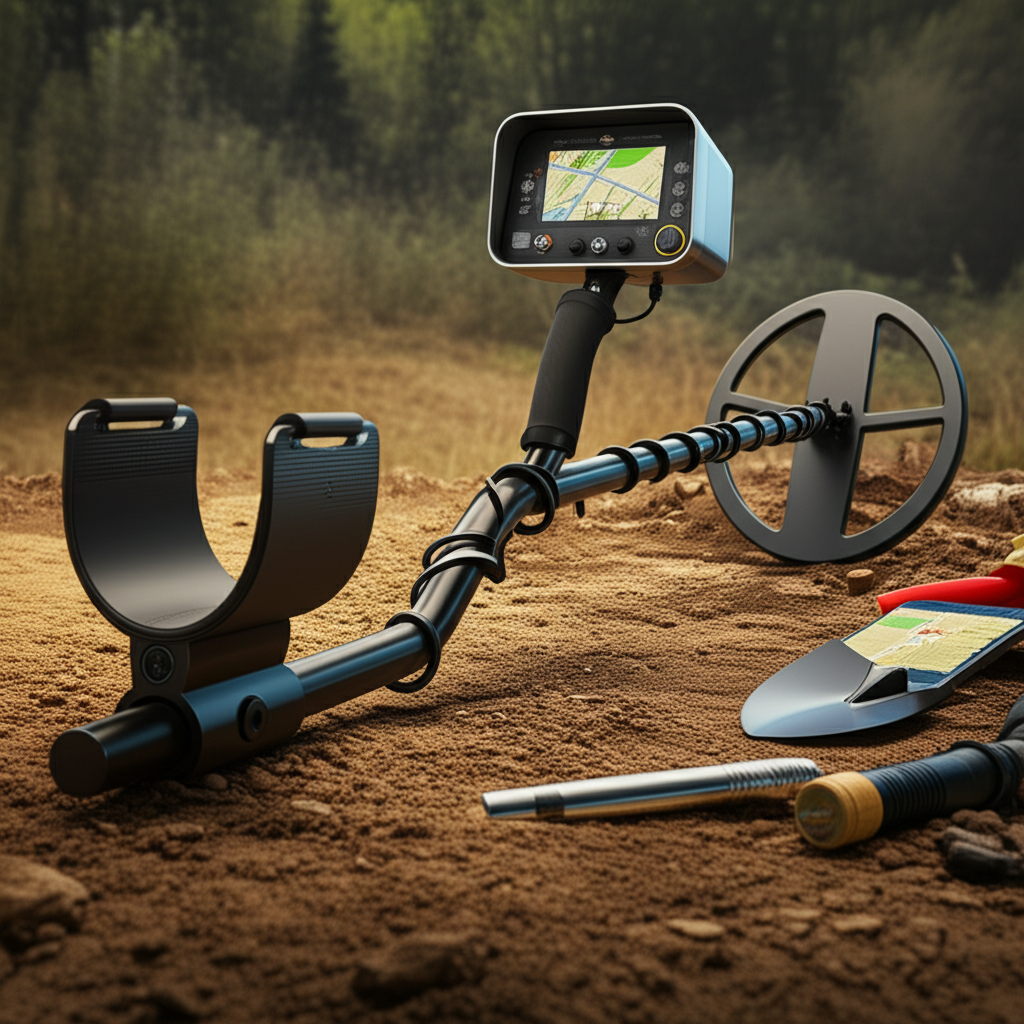
Unlock the secrets of the earth with a deep search metal detector. These advanced tools go beyond shallow targets, revealing lost coins, historical relics, and even gold deposits buried deep beneath the surface, transforming your treasure hunting expeditions.
Ever felt that frustrating tug of your metal detector finding only bottle caps and foil just inches down? You know there’s more out there – older coins, forgotten relics, maybe even a gold nugget. The key to reaching those elusive, deeper targets lies in understanding and utilizing the power of a deep search metal detector. It’s a common hurdle for many detectorists, but with the right knowledge, you can significantly increase your chances of uncovering those truly significant finds. This guide will walk you through everything you need to know to make your next hunt a success.
Contents
- 1 What Makes a Metal Detector “Deep Search”?
- 2 The Science Behind Deeper Detection
- 3 Choosing the Right Deep Search Coil
- 4 Top Deep Search Metal Detector Technologies
- 5 Key Features for Maximizing Depth
- 6 Deep Search Metal Detector Brands and Models to Consider
- 7 Mastering Deep Search Techniques
- 8 Digging Tools for Deep Treasures
- 9 Navigating Mineralized Ground and Trashy Areas
- 10 Frequently Asked Questions About Deep Search Metal Detectors
- 11 Conclusion: Unearthing History with Your Deep Search Companion
- 12 Author
What Makes a Metal Detector “Deep Search”?
A deep search metal detector is designed with enhanced sensitivity and specialized circuitry to penetrate deeper into the ground than standard detectors. These machines are engineered to ignore common shallow trash items, allowing them to focus on larger, more conductive targets that are buried further down. This specialization is crucial for serious treasure hunters aiming for historically significant artifacts or valuable precious metals.
The effectiveness of a deep search metal detector often comes down to its operating frequency, coil size, and advanced processing capabilities. Lower frequencies tend to penetrate deeper, while larger coils can cover more ground and detect larger targets at greater depths. The sophisticated electronics help to filter out ground mineralization and unwanted signals, letting you focus on what’s truly hidden.
The Science Behind Deeper Detection
Understanding the basic principles of how metal detectors work helps appreciate the advancements in deep search technology. Metal detectors generate an electromagnetic field. When this field encounters a metallic object, it induces a current within that object, which in turn generates its own magnetic field. The detector’s receiver coil then senses this secondary magnetic field, alerting the user.
Deep search detectors optimize this process. They often use Pulse Induction (PI) or advanced Very Low Frequency (VLF) technologies. PI detectors send out powerful pulses of current, creating strong magnetic fields that can reach impressive depths, especially in mineralized ground. Advanced VLF detectors use sophisticated signal processing to differentiate between desirable targets and ground noise, allowing for greater depth on conductive metals.
Choosing the Right Deep Search Coil
The coil is arguably the most critical component for deep searching. The size, shape, and type of coil dramatically affect how deep your detector can penetrate and what types of targets it can find. A larger coil generally offers greater depth of detection for larger targets, but it can also be less sensitive to small items and may struggle with target separation in trashy areas.
For true deep searching, consider larger diameter coils, often 11 inches or more. Elliptical coils can be advantageous for navigating cluttered terrain or covering larger areas more efficiently. Some specialized deep search coils are designed with specific frequencies or technologies to maximize depth on particular types of targets, like gold nuggets or large historical relics.
Large Diameter Coils (11″ and up): Best for maximum depth on larger targets.
Elliptical Coils: Good for maneuverability and covering ground.
DD Coils: Offer good depth and excellent ground balancing capabilities, ideal for mineralized soils.
Monoloop Coils: Can offer good depth but may be more susceptible to ground mineralization.
When selecting a coil, always check its compatibility with your specific metal detector model. Using an incompatible coil can lead to poor performance or even damage to your detector.
Top Deep Search Metal Detector Technologies
Modern deep search metal detectors incorporate cutting-edge technologies to enhance performance. Understanding these can help you make an informed decision. Very Low Frequency (VLF) detectors are common, but advanced multi-frequency models are becoming increasingly popular for their versatility. Pulse Induction (PI) detectors excel in highly mineralized ground and offer exceptional depth.
Multi-frequency detectors transmit at several frequencies simultaneously or allow you to switch between them. This allows them to be effective on a wide range of targets, from small gold nuggets to larger, deeper coins and relics. PI detectors, on the other hand, are often favored by gold prospectors and beach hunters for their ability to cut through conductive salt water and iron-rich soils where VLF detectors struggle.
Key Features for Maximizing Depth
Beyond the core technology, several features contribute to a detector’s deep search capabilities. Ground balancing is paramount, allowing the detector to ignore the signals from minerals in the soil, which can mask deeper targets. Adjustable discrimination helps filter out unwanted junk signals, so you can focus on potential treasures. Target ID numbers can provide clues about the type of metal, aiding in deciding whether to dig.
Some advanced deep search detectors also feature iron bias settings, allowing you to hear iron targets clearly, which can be useful for distinguishing between iron trash and desirable non-ferrous metals at depth. Noise cancelation is another important feature, helping to eliminate interference from other electronic devices or even other metal detectors.
Deep Search Metal Detector Brands and Models to Consider
The market offers a range of excellent deep search metal detectors, each with its strengths. For serious relic hunting and coin shooting at depth, brands like Minelab, Garrett, and Nokta Makro consistently produce high-performing machines. Many of these brands offer models specifically designed for deeper penetration.
Minelab’s Equinox series, for example, with its multi-frequency capabilities, offers impressive depth across various conditions. Garrett’s AT series, particularly the AT Gold and AT Max, are known for their ruggedness and depth. Nokta Makro’s Legend and Simplex+ series also provide excellent performance for their price point, with some models offering deep search capabilities.
For specialized gold prospecting, detectors from XP (like the Deus II) and Minelab (like the GPX series) are top-tier choices, offering extreme sensitivity to small gold nuggets at significant depths. Researching reviews and field tests for specific models that align with your intended hunting grounds is highly recommended.
Mastering Deep Search Techniques
Owning a deep search metal detector is only half the battle; mastering the techniques to use it effectively is crucial. This involves proper coil control, understanding audio cues, and patient digging. Always swing your coil slowly and deliberately, ensuring complete ground coverage without overlap or too much height above the surface.
Listen intently to your detector’s audio. Deeper targets often produce fainter, more drawn-out signals. Learn to interpret these nuances. When you get a solid signal, don’t be too quick to dismiss it as junk, especially if your detector is set to discriminate heavily. Sometimes, valuable items are found alongside iron.
Slow and Steady Coil Swings: Ensure full ground coverage.
Listen to Faint Signals: Deeper targets can sound subtle.
Ground Balance Regularly: Essential for accurate readings in varying soil conditions.
Adjust Sensitivity Carefully: Too high can lead to false signals, too low misses targets.
Digging Tools for Deep Treasures
Finding a deep target is exciting, but recovering it requires the right digging tools. For deeper finds, you’ll likely need more than just a small hand trowel. A sturdy digging trowel or a specialized digging shovel designed for metal detecting is essential. These tools are built to penetrate tough soil and extract plugs cleanly.
For very deep targets, especially in hard-packed ground or areas with roots, a digging pick or a soil probe can be invaluable. A soil probe allows you to pinpoint the exact location of the target before you start digging extensively, minimizing ground disturbance. Always practice responsible digging techniques, filling your holes neatly and leaving no trace behind.
Sturdy Digging Trowel: For general-purpose digging.
Metal Detecting Shovel: Designed for cleaner plug removal.
Soil Probe: To pinpoint targets before digging.
Pinpointer: Absolutely essential for locating the target within the excavated soil or hole.
A good pinpointer is non-negotiable. It drastically reduces the time spent searching for a target in the dug soil or hole.
Deep search metal detectors often encounter challenging environments like highly mineralized soil or areas littered with old junk. Mineralization can trick a detector into thinking there’s metal present when there isn’t, or it can mask real targets. This is where effective ground balancing and careful sensitivity adjustments come into play.
Trashy areas require patience and good target separation. A detector with excellent target ID and fast recovery speed can help you distinguish between good and bad targets. Sometimes, it’s better to switch to a smaller coil or a higher frequency if you’re overwhelmed by shallow junk, even if it means sacrificing a little depth on larger items.
Frequently Asked Questions About Deep Search Metal Detectors
What is the typical depth range of a deep search metal detector?

A deep search metal detector can typically detect targets from 8 inches down to 2 feet or even deeper for very large objects. The exact depth depends heavily on the detector’s technology, coil size, target size, and ground conditions.
Can a deep search metal detector find small gold nuggets?
While some deep search detectors are optimized for large targets, specialized gold prospecting detectors, which are a type of deep search machine, are highly sensitive to small gold nuggets. Multi-frequency detectors can also be effective for gold.
Are deep search metal detectors harder to use than regular ones?
They can sometimes be more complex due to advanced features, but the core operation is similar. Mastering their full potential might require more practice, especially with ground balancing and interpreting signals in challenging conditions.
Do I need a special coil for deep searching?
Yes, larger diameter coils (11 inches and up) are generally recommended for maximizing depth. DD coils are often preferred for their performance in mineralized soil.
What kind of treasures can I expect to find with a deep search metal detector?
You can find older, larger coins, historical relics, caches of coins, jewelry, and potentially gold nuggets or larger gold items, especially in areas with a history of human activity or known gold deposits.
How does ground mineralization affect deep search detection?
High ground mineralization can create false signals or mask real targets, reducing a detector’s effective depth. Proper ground balancing is crucial to overcome this and allow the detector to accurately sense deeper metallic objects.
Should I dig every signal with a deep search detector?
Not necessarily. While it’s wise to be more cautious with deep signals and less likely to dismiss them as junk, you still need to consider the target ID and audio characteristics. Experienced detectorists learn to make informed decisions about which signals warrant digging.
Conclusion: Unearthing History with Your Deep Search Companion
Investing in a deep search metal detector is a significant step for any serious treasure hunter or relic enthusiast. It opens up a world of possibilities, allowing you to explore beneath the surface layers that often yield only modern trash. By understanding the technology, choosing the right equipment, and honing your techniques, you’ll be well on your way to uncovering those truly remarkable, deeply buried treasures. Remember, patience, practice, and the right deep search metal detector are your greatest allies in the quest for hidden history. Happy hunting!
