


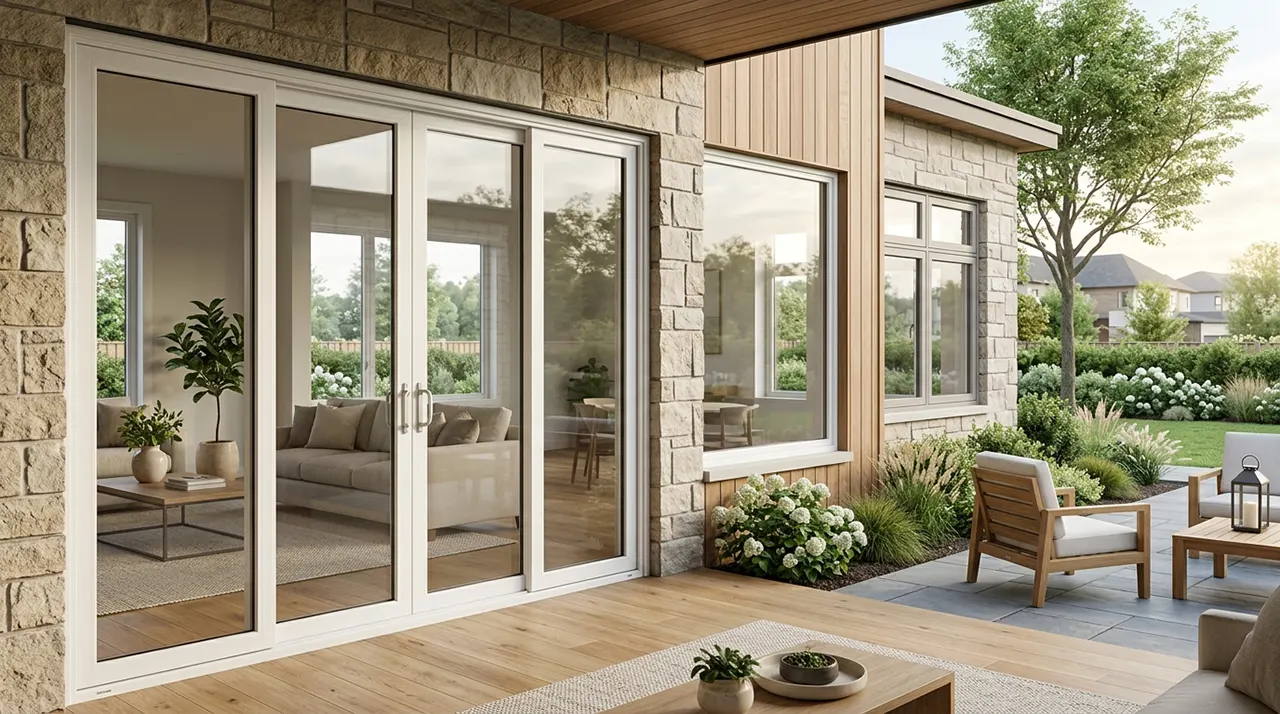
uPVC windows and doors are made from unplasticized polyvinyl chloride, a rigid form of PVC used for window and door frames. In the U.S., similar products are commonly described as vinyl windows and doors. Their performance depends on more than the frame material, so buyers should also compare glazing, U-factor, SHGC, air leakage, installation, and overall product quality.
uPVC Windows and Doors: What Homeowners Should Know Before Buying
If you are researching uPVC windows and doors, you may notice a terminology problem right away. The term uPVC is common in the UK and many other markets, while U.S. window companies often use vinyl for similar frame products.
That can make product research confusing. Are uPVC and vinyl the same thing? Are these windows suitable for an American home? And does choosing a uPVC frame automatically mean you are getting an energy-efficient window?
Not necessarily.
The frame material matters, but it is only one part of the finished window or door. Glass, glazing, frame design, seals, hardware, installation, and certified performance ratings can all affect the result. ENERGY STAR, for example, evaluates qualifying windows and doors using performance requirements that include U-factor and, where applicable, Solar Heat Gain Coefficient (SHGC), with requirements based on climate and glazing level.
This guide explains what uPVC windows and doors are, how the terminology fits the U.S. market, where they work well, what their limitations are, and what to check before you buy.
What Are uPVC Windows and Doors?
uPVC windows and doors use rigid, unplasticized polyvinyl chloride for their frames. Unlike flexible PVC products, uPVC is designed as a stiff building material that can be formed into profiles for window and door systems. In the U.S., you will often see comparable products described simply as vinyl windows or vinyl doors.
The important point is that the frame is not the entire product. A window is a system made from several parts that work together. The frame holds the glazing, while seals, hardware, drainage features, and installation details help control air, water, heat, and operation.
That is why two windows made with similar vinyl or uPVC frames can have different performance.
What Does uPVC Mean?
uPVC stands for unplasticized polyvinyl chloride. The “unplasticized” part means plasticizers are not added to make the material flexible.
For homeowners, the technical definition matters less than what it means in practice: uPVC provides a rigid frame material that can be manufactured into profiles for windows and doors.
The frame can then be combined with different types of glazing, hardware, seals, and other components.
This creates an important buying lesson:
Do not treat “uPVC” as a performance rating. Treat it as a description of the frame material.
A high-quality window needs to perform as a complete assembly.
Is uPVC the Same as Vinyl in the U.S.?
For ordinary window-shopping purposes, uPVC and vinyl refer to closely related frame materials and terminology, but the terms are not always used in exactly the same way by every manufacturer.
In the U.S., “vinyl window” is the term most homeowners are likely to encounter. Industry standards also explicitly recognize vinyl/PVC framing as one of the materials used in fenestration products. FGIA’s standards history, for example, includes earlier specifications covering aluminum, vinyl (PVC), and wood windows and glass doors.
So if you search for uPVC windows and doors in the USA, it makes sense to also search for:
- Vinyl windows
- Vinyl doors
- Vinyl replacement windows
- Vinyl patio doors
- PVC window frames
This broader terminology can help you find more relevant U.S. products and specifications.
How Do uPVC Window and Door Systems Work?
A uPVC window or door starts with a shaped frame profile. The profile provides the structure around the glass or insulated glazing unit.
The finished system may include:
- Frame and sash profiles
- Insulating glass
- Low-E coatings
- Gas-filled glazing
- Weather seals
- Drainage channels
- Locks and other hardware
- Reinforcement where required
- Installation components
Each part has a job.
For example, better insulating glass can reduce heat transfer through the glazed area, while properly designed seals can help limit unwanted air movement. Installation also matters because a well-rated product can still perform poorly if it is incorrectly installed.
NFRC ratings are useful here because they provide standardized performance information for comparing fenestration products. ENERGY STAR says its qualified windows, doors, and skylights must be independently tested, certified, and verified according to NFRC procedures.
So when comparing uPVC windows, do not stop at the frame description. Look at the complete product and its documented performance.
Why Do Homeowners Choose uPVC Windows and Doors?
uPVC can be attractive to homeowners because it combines a rigid frame with relatively low maintenance and a wide range of window and door designs. It can also be paired with modern glazing systems that provide strong thermal performance.
But these benefits should be viewed as potential advantages, not guarantees. Product design and installation still determine how well a particular window performs.
Thermal Performance
A well-designed uPVC or vinyl window can form part of an energy-efficient window system.
The frame itself is only one part of that equation. The glazing package and the complete window assembly matter too.
ENERGY STAR uses U-factor to describe insulating performance. A lower U-factor indicates greater resistance to heat transfer through the window. SHGC describes how much solar heat enters through the product. The right combination depends partly on the home’s climate.
That makes a simple rule useful:
Choose the performance characteristics for your climate, not simply the frame material you like.
A homeowner in a cold climate may place more emphasis on reducing heat loss. Someone in a hot, sunny climate may care more about limiting unwanted solar heat gain while still maintaining good insulation.
Low Maintenance
One reason homeowners consider uPVC or vinyl frames is that they generally do not require the routine painting associated with many painted wood frames.
That can make them attractive for replacement projects where the homeowner wants a simpler maintenance routine.
However, low maintenance does not mean maintenance-free.
Glass still needs cleaning. Hardware may need attention over time. Drainage paths should not be blocked by dirt or debris, and seals and moving components can eventually require inspection or replacement.
Resistance to Moisture and Corrosion
uPVC does not rust like steel and is not vulnerable to corrosion in the same way as some metal materials.
That can be useful around areas exposed to moisture.
Still, the frame is only one part of the building envelope. Poor installation, failed seals, blocked drainage, or water entering around the opening can cause problems regardless of the frame material.
The better question is not simply “Is uPVC waterproof?”
It is:
“How well does the complete window or door system manage water, air, and drainage?”
That distinction becomes especially important in areas exposed to heavy rain, wind-driven water, or severe weather.
Are uPVC Windows and Doors Energy Efficient?
uPVC windows and doors can be energy efficient, but the frame material alone does not determine performance. The glass, glazing configuration, seals, frame design, and installation all matter. For U.S. homeowners, the most useful way to compare products is to look at their certified performance ratings, especially U-factor and SHGC.
A current NFRC directory shows how much performance can vary among vinyl products. For example, listed vinyl windows can have U-factors ranging from around 0.15 to above 0.40, depending on the product and glazing configuration. That is why simply choosing a “vinyl” or “uPVC” frame tells you very little about the finished window’s efficiency.
What U-Factor Means
U-factor measures how quickly heat moves through a window. Lower is better.
If you live in a cold climate, a lower U-factor can help reduce heat loss through the window. ENERGY STAR notes that U-factor measures the insulating ability of a window and that lower values indicate better insulation.
For example, two vinyl windows may look almost identical from the outside but have very different U-factors because they use different glass, coatings, gas fills, or frame designs.
So when comparing quotes, do not ask only:
“Is this a uPVC window?”
Ask:
“What is the NFRC-certified U-factor for this exact configuration?”
That small change in how you compare products can prevent a misleading apples-to-oranges comparison.
What SHGC Means
Solar Heat Gain Coefficient, or SHGC, measures how much solar heat passes through the window. Lower values block more solar heat.
This matters particularly in sunny and warm parts of the United States.
A window with a lower SHGC can reduce unwanted solar heat entering the home, which may help in cooling-dominated climates. But lower is not automatically better for every house. Climate, window orientation, shading, and heating needs all matter.
ENERGY STAR therefore uses climate-specific performance requirements rather than one universal window specification for every U.S. location.
Why the Glass Matters
The glass can make a major difference to a window’s performance.
Common configurations include:
- Double-pane insulated glass
- Triple-pane insulated glass
- Low-E coatings
- Argon-filled glazing
- Krypton-filled glazing
Current NFRC listings show this difference clearly. Some vinyl products use ordinary clear glass, while others combine vinyl frames with Low-E coatings and argon or krypton gas fills and achieve substantially lower U-factors.
That means you should compare the complete glass package, not just the frame.
A practical buying rule is simple:
If two quotes have different glass packages, do not compare their prices until you understand what you are getting.
Why the Frame Matters Too
The frame still plays an important role.
A well-designed vinyl/uPVC frame can contribute to thermal performance, structural stability, weather resistance, and proper operation. Some NFRC-listed vinyl products also use reinforcement within the frame, showing that “vinyl” does not describe one identical construction method.
Look at:
- Frame construction
- Reinforcement
- Sash design
- Sealing system
- Drainage
- Hardware
- Glazing configuration
The best product is not necessarily the one with the thickest frame or the most features. It is the one whose complete design fits the home’s requirements.
How to Read an NFRC Label
The NFRC label gives you a much better starting point than a sales description.
Key ratings include:
| Rating | What it tells you | Better direction |
|---|---|---|
| U-factor | How well the window insulates | Lower |
| SHGC | How much solar heat enters | Lower generally reduces solar gain |
| Air Leakage | How much air passes through joints | Lower |
| Visible Transmittance | How much visible light enters | Higher |
| Condensation Resistance | Resistance to condensation | Higher |
NFRC explains that its label provides these performance measurements, while ENERGY STAR uses U-factor and SHGC for qualification.
Do not try to maximize every number at once. The right combination depends on your climate and the specific opening.
What Types of uPVC Windows and Doors Are Available?
uPVC and vinyl frames can be used with several window and door styles. The best choice depends on the opening, ventilation needs, available space, appearance, and how you want to operate the unit.
Double-Hung Windows
Double-hung windows have two movable sashes that slide vertically.
They are common in U.S. homes and can provide ventilation from the top, bottom, or both.
They can be a practical choice when you want a familiar appearance and easy operation without requiring the sash to project outward.
Casement Windows
Casement windows are hinged and typically open outward.
Because the sash can open widely, they can provide strong ventilation when conditions allow. Their hardware and seals also make the installation and maintenance details important.
Casements can be especially useful where you want a large unobstructed glass area and direct airflow.
Sliding Windows
Sliding windows use sashes that move horizontally.
They can work well where outward-opening windows are impractical, such as locations close to walkways or other obstacles.
The trade-off is that the opening configuration differs from a casement, so ventilation and cleaning access should be considered before choosing one.
Tilt-and-Turn Windows
Tilt-and-turn windows use a dual-action mechanism.
The sash can usually tilt inward for ventilation or turn inward for a larger opening and easier access to the exterior glass.
This style is less familiar to many U.S. homeowners than double-hung or casement windows, but it can be useful when ventilation, cleaning access, and flexible operation are priorities.
For a detailed installation guide, see the related article on how to install tilt-and-turn PVC windows.
Sliding Patio Doors
uPVC or vinyl can also be used for sliding patio doors.
Here, frame strength, glass area, hardware, weather seals, and the quality of the track system become especially important because the door is larger and is operated frequently.
Do not evaluate a patio door exactly like a small window. The opening size and operating mechanism create different performance and durability requirements.
Hinged Exterior Doors
Hinged doors can use uPVC/vinyl components along with insulated panels or glazing.
The right configuration depends heavily on the door’s purpose. An entry door, patio door, and utility door may have different requirements for security, insulation, weather resistance, and appearance.
What Colors and Finishes Are Available?
uPVC and vinyl windows are no longer limited to one basic white appearance. Manufacturers offer different colors, finishes, and wood-look options, although the exact selection varies by product line.
The important point is to check the specific manufacturer’s available finishes rather than assuming every color is available for every window style.
White and Neutral Finishes
White remains a common choice because it works with many exterior styles and is easy to coordinate with existing trim.
Neutral colors can also make replacement windows less visually disruptive when the goal is to update the windows without changing the home’s overall appearance.
Wood-Look Finishes
Some vinyl/uPVC products use finishes designed to resemble painted or stained wood.
These can provide a more traditional appearance without requiring the same type of routine painting associated with many wood frames.
However, appearance should be judged from actual samples when possible. A printed brochure or screen image may not accurately represent the finished texture or color.
Dark Contemporary Colors
Black, bronze, gray, and other darker finishes are popular choices for contemporary homes.
But darker frames deserve more careful consideration than simply choosing a color you like. The final product should be evaluated for the manufacturer’s approved finish, warranty conditions, and suitability for the intended installation.
What to Consider When Choosing a Finish
Before choosing a color, check:
- Exterior siding or masonry
- Interior trim
- Existing doors
- Roof and exterior finishes
- Home’s architectural style
- Manufacturer’s color availability
- Warranty terms
- Whether the same finish is available for matching doors
A useful rule is to choose the finish after confirming the right window design and performance. Color is important, but it should not drive the technical specification.
Why the Whole Window Matters More Than the Frame Name
The current NFRC directory provides a useful real-world illustration. Different vinyl products use different combinations of clear glass, Low-E coatings, air or gas fills, reinforcement, and frame configurations, and their published performance values differ accordingly.
That leads to one of the most important ideas in this article:
“uPVC” tells you what the frame is made from. It does not tell you how good the finished window is.
For a U.S. homeowner, the better comparison is the complete product:
frame + glass + glazing + seals + hardware + certified ratings + installation.
The same principle applies when comparing doors.
uPVC vs. Aluminum, Wood, and Fiberglass
uPVC, often sold as vinyl in the U.S., is attractive because it can provide low maintenance and good thermal performance without the upkeep associated with painted wood. But it is not automatically the best frame material for every home. Aluminum, wood, and fiberglass each have strengths that may matter more for a particular climate, architectural style, opening size, or performance goal.
| Frame material | Main strength | Main trade-off | Often suits |
|---|---|---|---|
| uPVC / vinyl | Low maintenance and good thermal performance | Less material flexibility for some designs | Practical replacement projects |
| Aluminum | Slim profiles and structural strength | Conducts heat readily unless thermally improved | Modern designs and large openings |
| Wood | Natural appearance and customization | More maintenance | Traditional and historic homes |
| Fiberglass | Strength, stability, and thermal performance | Often costs more | Premium projects and demanding applications |
The important lesson is not to ask which material is universally “best.” Compare the complete window system, its certified ratings, installation requirements, appearance, and expected use.
Current ENERGY STAR guidance specifically tells homeowners to consider frame material alongside climate, performance ratings, color, and other design factors.
uPVC vs. Aluminum
Aluminum can be attractive when you want a slim frame or a modern architectural appearance. Its strength can also make it useful for larger glazed openings.
The drawback is thermal conductivity. A basic aluminum frame can transfer heat more readily than a well-insulated vinyl/uPVC frame. Modern thermally improved aluminum systems can address this, so it is not fair to compare all aluminum windows with all vinyl windows as though they were identical.
Choose carefully when: thin profiles and large glass areas matter more than the lowest-maintenance option.
uPVC vs. Wood
Wood has an advantage that uPVC cannot fully reproduce: genuine natural material and a traditional appearance.
It can also be painted or stained, giving homeowners more control over the finish.
The trade-off is maintenance. Exposed wood needs more attention to its finish and protection from moisture. uPVC can be more attractive when the priority is reducing routine maintenance.
Choose wood when: appearance, traditional character, or architectural authenticity is a major priority.
Choose uPVC when: you want a simpler maintenance routine and a practical frame material.
uPVC vs. Fiberglass
Fiberglass is another strong option for homeowners who want durability and good thermal performance.
It can be especially appealing for premium replacement projects where the buyer is willing to pay more for a particular combination of strength, appearance, and dimensional stability.
That does not make fiberglass automatically better. A well-specified vinyl window can be a sensible choice when its performance ratings, design, and installation meet the project’s needs.
Choose fiberglass when: premium construction, strength, and long-term dimensional stability are high priorities.
Choose uPVC/vinyl when: you want a practical balance of performance, maintenance, and cost.
How Much Do uPVC Windows and Doors Cost?
There is no single U.S. price for a uPVC window or door. The final cost depends on the opening size, style, glass package, frame configuration, hardware, finish, installation, and local labor. Current U.S. consumer guidance also shows that vinyl-window pricing can vary widely by project, so a simple “price per window” figure can be misleading.
What Affects Window Cost?
The biggest factors usually include:
- Window size
- Number of windows
- Window style
- Double- or triple-pane glazing
- Low-E glass
- Gas fill
- Frame configuration
- Color or specialty finish
- Hardware
- Grilles or decorative features
- Removal of old windows
- Installation complexity
A basic fixed window and a large custom casement window should not be expected to cost the same simply because both use vinyl frames.
What Affects Door Cost?
Doors can involve additional cost because of their larger size, hardware, security requirements, glass area, and operating mechanism.
For example, a sliding patio door has a track and roller system that must operate smoothly, while a hinged exterior door has different hardware and weather-sealing requirements.
ENERGY STAR also evaluates doors somewhat differently from windows because door performance criteria depend partly on glazing level, meaning how much of the door contains glass.
Why Installation Can Change the Final Price
Installation is not a minor add-on.
The existing opening may need repair or modification. The installer may need to deal with old flashing, water damage, uneven framing, insulation gaps, or exterior and interior trim.
A cheaper window installed poorly can become a more expensive project if it develops air or water problems.
That is why two quotes should be compared as complete installed systems, not just by the price of the window itself.
How to Compare Quotes Fairly
Ask each supplier for the same basic information:
- Exact window or door model
- Frame material
- Glass configuration
- U-factor
- SHGC
- Air leakage rating, when available
- Color and finish
- Hardware
- Installation scope
- Warranty
- Removal and disposal costs
- Any required structural work
This makes it much harder for a low initial quote to hide missing features.
What Should You Check Before Buying uPVC Windows and Doors?
Before buying, compare the exact product configuration, not just the material name. Look for certified performance information, understand how the product fits your climate, check the glazing and frame construction, and make sure installation and warranty terms are clear. NFRC provides a searchable database where buyers can examine certified product ratings and configurations.
Check the NFRC Ratings
For an ENERGY STAR-certified product, the NFRC label provides several useful measurements.
U-factor: Lower means better insulation.
SHGC: Lower means less solar heat passes through the product.
Air leakage: Lower means less air passes through joints.
Visible transmittance: Higher means more visible light passes through.
Condensation resistance: Higher means greater resistance to condensation.
Do not judge a window from one number alone.
For example, a homeowner in a cold northern climate may prioritize a low U-factor, while someone in a hot, sunny climate may place more emphasis on controlling solar heat gain.
Match Performance to Your Climate
Your ZIP code matters.
ENERGY STAR uses different performance criteria for different U.S. climate zones because the best balance between keeping heat inside and blocking unwanted solar heat is not the same everywhere.
As a general example, ENERGY STAR’s consumer guidance points northern homeowners toward lower U-factors and southern homeowners toward lower SHGC values.
Do not copy a neighbor’s window specification without considering your own climate and home’s orientation.
Compare the Glass Package
Ask what is actually between the frame.
A window may use:
- Double-pane glass
- Triple-pane glass
- Low-E coatings
- Argon gas
- Krypton gas
- Different spacer systems
NFRC-certified product records demonstrate how changing these components can change the final U-factor and SHGC. For example, current listings show vinyl windows with different gas fills and Low-E configurations producing different certified ratings.
This is why “double-pane” by itself is not enough information.
Two double-pane windows can have different performance.
Check the Frame and Hardware
Look beyond the word “uPVC.”
Ask about:
- Frame construction
- Reinforcement
- Sash design
- Weather seals
- Drainage
- Locking system
- Hinges or rollers
- Hardware warranty
The NFRC database allows searches by product characteristics such as frame type, glazing layers, Low-E configuration, spacer, and gas fill.
That is useful when two products look similar but have different specifications.
Check Installation Requirements
A good window still needs a good installation.
Before signing a contract, find out:
- Who will install it?
- Is installation included?
- What happens if the opening has hidden damage?
- Is old-window removal included?
- Who handles exterior trim?
- How is water managed around the opening?
- Is the installation covered by a separate warranty?
Do not assume the manufacturer’s product warranty automatically covers installation problems.
Review the Warranty and Documentation
Get the warranty in writing.
Check what it covers and for how long. Pay attention to exclusions for:
- Glass
- Hardware
- Finish
- Labor
- Installation
- Misuse
- Unauthorized modifications
Also ask for the exact product documentation rather than relying only on a salesperson’s description.
Common uPVC Window and Door Buying Mistakes
The biggest mistakes usually happen when homeowners compare products using one simple number or one sales claim.
Choosing Only by Price
The cheapest quote is not necessarily the cheapest project.
A low price may reflect a simpler glass package, fewer features, lower installation scope, or different warranty terms.
Compare the same specifications before deciding.
Assuming Every uPVC Window Performs the Same
This is one of the easiest mistakes to make.
Current NFRC records show substantial variation among certified vinyl products and configurations. The frame material can be the same while the glass, gas fill, Low-E coating, reinforcement, and resulting ratings differ.
Material name ≠ product performance.
Ignoring SHGC
Homeowners often focus on U-factor because it is easier to understand as an insulation number.
But SHGC can matter greatly in sunny climates.
A window that blocks unwanted solar heat can reduce the amount of heat entering through the glass. The correct target still depends on climate, orientation, shading, and the home’s heating and cooling needs.
Comparing Frames but Not Glass
Two quotes may both say “vinyl replacement window,” yet offer completely different glazing.
Ask for the exact glass specification and certified ratings.
Overlooking Installation Quality
A replacement window is part of the building envelope.
If the installation leaves gaps, creates drainage problems, or fails to manage water correctly, the homeowner can have problems even when the window itself has strong laboratory ratings.
Choosing a Style That Does Not Suit the Opening
A beautiful window can still be the wrong choice.
Consider:
- Available wall space
- Ventilation needs
- Cleaning access
- Furniture placement
- Exterior obstacles
- Emergency egress requirements where applicable
- How often the window will be operated
A large casement, for example, behaves differently from a double-hung window. A tilt-and-turn window has different operating and installation requirements again.
What Does NAFS Mean for a Homeowner?
NAFS is a North American performance standard for windows, doors, and skylights. The current 2026 edition, NAFS-26, was published on June 1, 2026, and supersedes the 2022 edition. FGIA describes it as a material-neutral standard, so it is not a test designed only for uPVC or vinyl products.
You do not need to memorize the standard to buy a window.
The practical lesson is simpler:
Ask whether the product has the appropriate performance documentation for its intended use and installation.
For larger projects or homes exposed to demanding weather, asking the supplier about the product’s applicable performance class and NAFS documentation can be worthwhile.
When uPVC May Not Be the Best Choice
uPVC can be a strong practical choice, but there are situations where another material may make more sense.
Consider alternatives when you need:
- Extremely slim frame profiles
- A particular architectural appearance
- Genuine wood construction
- Certain large custom openings
- A specific premium finish
- A design that is better suited to another framing system
Climate also matters. Current U.S. guidance emphasizes choosing window performance according to local climate rather than assuming one specification works everywhere.
The goal is not to find the “best” frame material.
The goal is to find the best complete window or door system for the house.
Are uPVC Windows and Doors Right for Your Home?
uPVC windows and doors can be a sensible choice when you want low-maintenance frames, good thermal performance, and a wide range of practical designs. They become less attractive when your project depends on extremely slim profiles, a specific architectural material, or another frame’s structural or aesthetic qualities. The best choice depends on the complete system, not the frame label alone.
A simple decision test is:
Climate + glass + frame + ratings + opening + installation + warranty + budget.
If those eight factors line up, uPVC or vinyl may be a strong fit.
If they do not, another material may make more sense.
When uPVC Is a Good Fit
uPVC/vinyl is worth considering if you want:
- Low routine frame maintenance
- Good thermal insulation
- Multiple window styles
- A practical replacement-window solution
- Resistance to moisture and corrosion
- A wide range of finishes
- A relatively straightforward cleaning routine
Current U.S. ENERGY STAR listings include many certified vinyl windows and doors with different U-factors and SHGC values, showing that the material can support a range of performance levels.
When You Should Consider Another Material
Look at alternatives if your project prioritizes:
- Very narrow frame profiles
- A genuine wood appearance
- Historic architectural authenticity
- Certain large or highly customized openings
- A particular premium material
- A design that another framing system handles better
The right decision is not about finding the most expensive material. It is about matching the product to the job.
A Simple Buying Decision
Before you accept a quote, ask for the exact product information.
For windows:
- Frame material
- Window style
- Glass configuration
- U-factor
- SHGC
- Air leakage rating
- Visible transmittance
- Condensation resistance
- NFRC certification
- Installation scope
- Warranty
For doors:
- Door type
- Frame material
- Glazing percentage
- U-factor
- SHGC where applicable
- Hardware
- Weather seals
- Installation
- Warranty
NFRC’s current directory lets consumers verify the rating information shown on a product label.
Frequently Asked Questions
1. Are uPVC windows the same as vinyl windows?
For most U.S. homeowners, uPVC and vinyl refer to closely related window-frame terminology. “Vinyl window” is the more common term in the U.S., while “uPVC” is widely used in other markets. The exact material formulation and construction can vary by manufacturer, so buyers should still check the product documentation rather than assuming every vinyl or uPVC window is identical.
2. Are uPVC windows good for American homes?
Yes, uPVC or vinyl windows can be suitable for American homes. The important issue is whether the specific product has appropriate performance for the home’s climate and installation. ENERGY STAR evaluates qualifying windows using certified performance measurements, including U-factor and SHGC.
3. Are uPVC windows energy efficient?
They can be. Energy efficiency depends on the complete window, including the frame, glass, Low-E coatings, gas fill, seals, and installation. Current NFRC records show vinyl windows with different glazing configurations and significantly different U-factor and SHGC values.
4. How long do uPVC windows last?
A reasonable current estimate for vinyl windows is roughly 20 to 40 years, although actual service life depends on product quality, installation, climate, exposure, operation, and maintenance. Extreme heat and other demanding conditions can affect longevity.
Treat any lifespan number as an estimate, not a guarantee.
5. Are uPVC windows low maintenance?
Generally, yes. They do not require the same routine painting as many wood frames. However, low maintenance does not mean maintenance-free. Clean the frames and glass, keep drainage paths clear, inspect seals and hardware, and address operating problems before they become larger issues.
6. Can uPVC windows come in different colors?
Yes. Depending on the manufacturer and product line, vinyl/uPVC windows can be available in white, neutral colors, darker finishes, and wood-look options. Color availability varies by product. Dark finishes also deserve extra attention in hot, sunny locations because darker surfaces can absorb more solar energy.
7. Are uPVC doors durable?
They can be durable when properly designed, manufactured, installed, and maintained. Door performance depends on more than the frame. Hardware, hinges or rollers, glazing, weather seals, reinforcement, and installation all affect how the finished door performs.
8. Are uPVC windows better than aluminum?
Neither is universally better. uPVC/vinyl can offer low maintenance and good thermal performance, while aluminum can provide slim profiles and strong structural characteristics. The right choice depends on the opening, climate, appearance, performance requirements, and budget.
9. How much do uPVC windows cost?
There is no reliable single U.S. price for uPVC windows. Size, style, glazing, frame configuration, finish, hardware, installation, removal, and local labor can all change the final cost. Current consumer pricing guides also show substantial variation in vinyl-window replacement costs.
10. Are uPVC windows suitable for hot climates?
They can be, but the glass specification matters greatly. In hot, sunny areas, homeowners should pay particular attention to SHGC, because it indicates how much solar heat passes through the window. Lower SHGC generally means less solar heat transmission.
Conclusion: Choose the Window System, Not Just the Material
uPVC windows and doors can offer a useful combination of low maintenance, thermal performance, design flexibility, and practical durability. But “uPVC” is not a guarantee of quality.
For a U.S. home, start with the climate and the opening. Then compare the glass, U-factor, SHGC, frame construction, installation, warranty, and certification.
If two products have the same frame material but different performance ratings, they are not the same product in any meaningful buying decision.
The smartest approach is simple: compare the complete window or door system, not just the label on the frame.
For readers considering a tilt-and-turn design, the related guide on how to install tilt-and-turn PVC windows provides a useful next step.
