


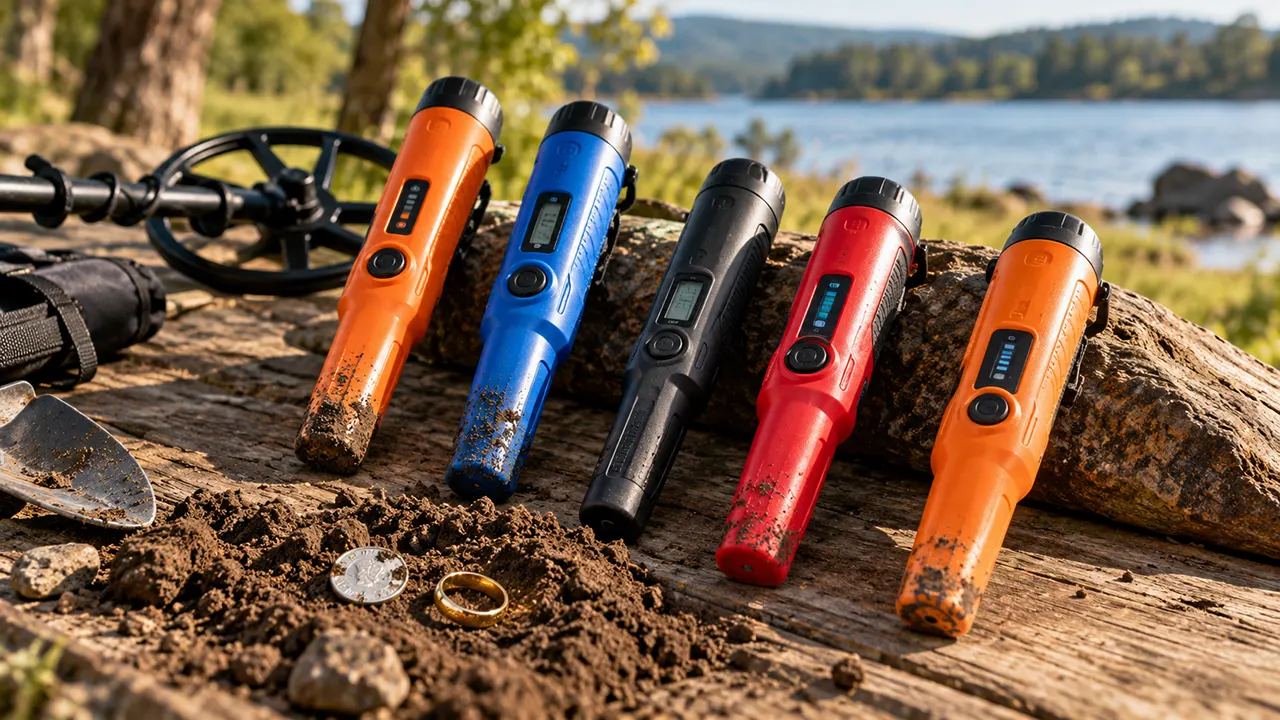
A coin is buried in a small plug of soil. Your metal detector found it, but you still cannot see it. You check the hole, turn over the dirt, and scan the area again. This is where a pinpointer metal detector becomes useful. It helps narrow the target’s location so you can recover it with less guesswork.
A handheld pinpointer is a small metal detector designed for close-range target recovery. It complements your main detector rather than replacing it. The right model can make coin hunting, jewelry recovery, beach detecting, and relic hunting easier to manage.
This guide compares five options: the Garrett PRO-Pointer AT, CKG, DR.ÖTEK MT6 Pro, SUNPOW NXGD02, and Dmyond rechargeable pinpointer. It also explains which features matter, how waterproof ratings affect your choice, and when a more expensive model may be worthwhile.
Affiliate disclosure: ToolGuider may earn a commission from qualifying purchases through links in this article, at no extra cost to you. Product details are based on manufacturer information, supplied Amazon listing details, and published research. We have not personally tested these products.
What Is a Pinpointer Metal Detector?
A pinpointer is a handheld electronic detector that helps you locate metal objects within a small area after your main detector identifies a target. You can move its probe around the hole, soil plug, or loose dirt until its audio, vibration, or visual signal helps you narrow down the target’s position.
A standard metal detector searches a wider area using a sweeping coil. A pinpointer focuses on the final recovery stage. This makes it useful for locating small coins, rings, jewelry, and other metal objects hidden in soil or sand.
Is a pinpointer worth buying?
A pinpointer is worth considering if you regularly dig targets but struggle to find them once you remove the soil. It is especially useful for coin hunting, jewelry recovery, and searches in compact holes.
You can detect without one, but you will need to rely on your main detector, careful soil handling, and repeated scans. A pinpointer adds a dedicated tool for narrowing down the target’s location.
Best Pinpointer Metal Detectors Compared
The best choice depends on your budget, hunting environment, preferred alerts, and need for rechargeable power. The five options below cover a range of prices and features.
| Model | Approximate US price | Power | Main features | Best suited for |
|---|---|---|---|---|
| Garrett PRO-Pointer AT | $109.99 reference price | 9V battery on standard model | Retuning, sensitivity adjustment, audio and vibration | General-purpose detecting |
| CKG waterproof pinpointer | $40.99 | 9V battery | LCD signal bar, 360-degree detection, three alert modes | Buyers who want visual feedback |
| DR.ÖTEK MT6 Pro | $33.28 | 9V battery | LCD, LED light, three alert modes, interference cancellation | Budget-conscious beginners |
| SUNPOW NXGD02 | $32.99 | Rechargeable 800 mAh battery | USB-C charging, three alert modes, advertised 15-hour runtime | Rechargeable convenience |
| Dmyond rechargeable pinpointer | $25.59 | Rechargeable 800 mAh battery | LCD, three alert modes, advertised 12-hour runtime | Buyers with a tight budget |
Prices are reference figures from the supplied Amazon listing details and published product research, not guaranteed current checkout prices. Offers, sellers, and availability can change. The standard Garrett PRO-Pointer AT should not be confused with other Garrett editions that may have different power specifications.
1. Garrett PRO-Pointer AT: Best All-Around Candidate
The Garrett PRO-Pointer AT is a well-established option for detectorists who want a dedicated recovery tool from a recognized metal detecting brand. Garrett lists waterproofing to 20 feet (6 meters), automatic or manual retuning, sensitivity adjustment, and proportional audio and vibration alerts. Check Garrett’s official specifications.
Why consider it
- Waterproof construction for land and shallow-water detecting within its rated depth.
- Retuning helps narrow the detection field or compensate for the surrounding environment.
- Audio and vibration alerts provide feedback without requiring a display.
- A scraping blade and built-in LED light support target recovery in soil and dim holes.
What to consider: Its reference price is considerably higher than those of the four budget-oriented alternatives in this guide. Buyers who detect only occasionally on dry land may not need to spend as much.
Best for: Detectorists who want an established general-purpose model and value adjustable sensitivity, retuning, and a documented waterproof rating.
2. CKG Waterproof Pinpointer: Best for LCD Feedback on a Budget
The CKG pinpointer combines a handheld probe with an LCD signal bar and three alert modes. Its supplied Amazon listing advertises IP68 waterproofing, 360-degree detection, a built-in LED light, and a working distance of 3.15 inches. It also claims detection of coins at approximately 3.5 inches and larger objects at up to 5 inches.
These figures are manufacturer or seller claims, not independently measured results. Actual detection distance can vary with the target’s size, shape, orientation, and surrounding conditions.
Why consider it
- The LCD signal bar offers an additional visual cue as you approach a target.
- Audio, vibration, or combined alerts let you adapt feedback to your surroundings.
- The listing includes a belt holster, wrist lanyard, and 9V battery.
- Its stated waterproof depth makes it a candidate for wet-sand and shallow-water use, provided the rating applies to the exact unit and its seals remain intact.
What to consider: The claimed maximum detection depth should not be treated as a guaranteed result for small coins. Its lower price also does not establish that it will outperform more expensive models.
Best for: Buyers who want an LCD, several alert choices, and a waterproof probe without moving into premium pricing.
3. DR.ÖTEK MT6 Pro: Best Budget Option With an LCD
The DR.ÖTEK MT6 Pro is another feature-rich budget candidate. The supplied Amazon listing shows a red version priced at $33.28, with a 4.5-star rating and 3,158 reviews at the time of the supplied snapshot. Its listed features include an LCD screen, LED light, 360-degree detection, three alert modes, and one-touch interference cancellation.
Why consider it
- The LCD gives you a visual signal alongside audio and vibration.
- The three alert modes help you choose feedback that suits your environment.
- The one-touch interference-cancellation feature is intended to help reduce unwanted signals.
- The listed package includes a 9V battery, belt loop, retractable hanging wire, and user manual.
What to consider: A large review count is useful context, but it does not prove that every unit will perform identically. Verify the exact model, selected color, current seller, and waterproofing instructions before ordering.
Best for: New detectorists who want several useful features at a relatively low listed price.
4. SUNPOW NXGD02: Best Rechargeable Candidate
The SUNPOW NXGD02 is aimed at buyers who prefer charging a built-in battery instead of carrying spare disposable batteries. Its supplied Amazon listing describes an 800 mAh rechargeable battery, USB-C charging, three alert modes, and a claimed runtime of up to 15 hours.
The listing also advertises IP68 waterproofing to 10 feet and 360-degree side-scan detection. Treat the runtime as a manufacturer claim rather than a guaranteed duration under every operating condition.
Why consider it
- USB-C charging may be convenient if you already carry compatible charging equipment.
- The rechargeable battery reduces the need to buy replacement 9V batteries.
- Audio, vibration, or combined alerts provide flexibility.
- The included holster, security lanyard, and charging cable support everyday use.
What to consider: Rechargeable operation is convenient, but a built-in battery depends on its condition and eventual replacement options. Check the warranty terms and follow the manufacturer’s charging and waterproofing instructions.
Best for: Beginners and regular hobbyists who prefer rechargeable equipment and want several alert modes at a budget price.
5. Dmyond Rechargeable Pinpointer: Best Low-Cost Candidate
The Dmyond rechargeable pinpointer is the lowest-priced option in this comparison based on the supplied Amazon snapshot. Its listing shows $25.59, a 4.3-star rating, and 1,076 reviews. The described features include an 800 mAh rechargeable battery, LCD signal display, three alert modes, and a claimed runtime of up to 12 hours.
Why consider it
- Its listed price makes it an accessible option for first-time detectorists.
- The LCD and three alert modes provide more feedback choices than a basic audio-only wand.
- USB-C charging reduces reliance on disposable batteries.
- The supplied listing advertises waterproofing to 10 feet.
What to consider: The advertised maximum detection depth is up to 4 inches, but real results depend on the target and conditions. Confirm the exact waterproof rating and inspect the seals before submersion.
Best for: Buyers who want a rechargeable pinpointer at a low initial price and do not need premium-brand features.
Which Pinpointer Features Actually Matter?
A longer feature list does not always mean a better purchase. Focus on the features that solve a problem you regularly encounter while detecting.
Sensitivity and retuning
Sensitivity controls affect how readily the device responds to nearby metal. Higher sensitivity may help with small targets, but it can also make the probe respond to nearby objects or create unwanted signals in difficult conditions.
Retuning resets or adjusts the detector’s response. On models that support it, this can help narrow the detection field around a target or compensate for environmental interference.
Start with a stable setting. If the pinpointer gives repeated signals when no target is present, follow the manufacturer’s instructions for retuning or reducing sensitivity.
Audio, vibration, and LCD alerts
Audio alerts are easy to notice in quiet surroundings. Vibration is useful when sound is difficult to hear, such as near wind or surf. An LCD provides a visual signal, but it does not automatically make a pinpointer more accurate.
Choose the alert system you will find easiest to use while digging. If you often detect in noisy places, vibration or combined alerts may be more practical than sound alone.
Waterproof ratings
Waterproofing matters if you search wet sand, work around streams, or recover targets from shallow water. Check the stated submersion depth rather than relying on the word “waterproof” alone.
The Garrett PRO-Pointer AT is listed for submersion to 20 feet, while the supplied CKG, DR.ÖTEK, SUNPOW, and Dmyond listings advertise IP68 protection with their own stated limits. Follow the instructions for the exact model, and inspect battery covers, seals, and charging ports before water use.
After saltwater detecting, rinse the device as directed by its manufacturer and let it dry before storage or charging. Never assume that an IP rating makes a damaged or improperly sealed device safe to submerge.
Battery type and runtime
A replaceable 9V battery is convenient if you carry spares. A rechargeable model may reduce ongoing battery purchases and make charging easier at home or between trips.
Compare the manufacturer’s stated runtime, charging method, battery replacement options, and warranty. Published runtimes are estimates and may vary with settings, temperature, and use.
Build quality and accessories
A comfortable grip, secure holster, visible body color, and lanyard can matter during a long detecting session. A replaceable protective tip may also help if you regularly scrape through rough soil.
Before buying, check what comes in the package and whether replacement parts are available. Do not assume accessories are interchangeable between brands or models.
How to Choose a Pinpointer for Your Type of Metal Detecting
Coin hunting in parks and yards
For coins in ordinary soil, prioritize stable sensitivity, a clear alert, and comfortable handling. A display is optional if audio and vibration already give you enough feedback.
You may not need a high-end model if you detect only occasionally. Start with a suitable budget option and spend more only if you need features it lacks.
Relic hunting in iron-heavy ground
Iron-contaminated areas can produce confusing signals. Adjustable sensitivity and effective retuning may help you work through the recovery process, but a pinpointer should not be treated as a substitute for the target-identification capabilities of your main detector.
If you often search difficult ground, compare the available controls rather than choosing solely by advertised detection depth.
Beach detecting and shallow water
Choose a pinpointer with a clearly documented submersion rating that covers your intended use. Wet sand, splashes, and underwater recovery are different conditions, so a device that handles rain may not be suitable for submersion.
For underwater work, verify the exact depth limit and all sealing instructions before entering the water.
Beginners and family detecting
A simple interface, visible body, manageable weight, and clear alerts can make a pinpointer easier to learn. A rechargeable budget model may be appealing, while a replaceable-battery model can be useful when charging is inconvenient.
For a broader detector purchase, see our guide to the best metal detector for beginners.
How to Use a Pinpointer to Recover Targets More Precisely
- Locate the target with your main detector. Confirm the approximate position before digging.
- Open the hole carefully. Remove a manageable amount of soil and keep the plug nearby.
- Scan the hole with the pinpointer. Move the probe slowly around the sides and bottom.
- Check the removed soil. If the target is not in the hole, scan the plug and loose dirt.
- Narrow the location. Use the device’s audio, vibration, or visual signal to guide the final recovery.
- Restore the site. Replace the soil and leave the area as tidy as possible.
Follow local detecting rules and obtain permission where required. Some public lands prohibit metal detecting or the removal of objects, so check the rules for your specific location before starting.
Common Pinpointer Problems and How to Avoid Them
Why does a pinpointer keep beeping?
Unwanted signals can result from nearby metal, sensitivity settings, interference, or a device that needs retuning. Move away from obvious metal objects and follow the model’s reset or retuning procedure. If the problem continues, consult the manufacturer’s troubleshooting instructions.
Why does a pinpointer miss a small target?
Detection range varies with the target’s size, shape, orientation, and surroundings. Move the probe slowly, check the soil plug as well as the hole, and avoid treating a seller’s maximum-depth claim as a guaranteed result.
How do you maintain a waterproof pinpointer?
Clean the probe according to the manual, inspect seals and battery covers, and avoid charging a device while it is wet. Replace damaged seals or accessories as directed by the manufacturer. A waterproof rating does not protect a device whose enclosure has been compromised.
Frequently Asked Questions
Can a pinpointer find small gold items?
Yes, a pinpointer can respond to small gold objects if they are within its detection range. The result depends on the object’s size, shape, orientation, and the device’s characteristics. A pinpointer does not identify gold simply because it detects a metal target.
Do pinpointers work with every metal detector?
Most standalone pinpointers can be used alongside a wide range of metal detectors because they operate independently. Wireless audio or integrated controls may require compatible equipment, so verify those requirements if you want more than basic standalone operation.
Is a rechargeable pinpointer better than a battery-powered model?
Neither is automatically better. Rechargeable models offer charging convenience and reduce disposable battery use. Models with replaceable batteries allow you to carry spares and resume detecting quickly when a battery runs low. Choose according to your routine and the manufacturer’s documented battery specifications.
Can you use a pinpointer in wet sand?
You can use a pinpointer in wet sand if the device is suitable for those conditions. If you plan to submerge it, verify its stated waterproof depth and follow the manufacturer’s instructions. Do not infer underwater suitability from splash resistance alone.
How deep can a pinpointer detect?
There is no single detection depth that applies to every pinpointer or target. The distance depends on the device, target size, orientation, and surrounding conditions. Treat published maximum depths as manufacturer claims, not guaranteed performance for a coin or ring.
Choose the Right Pinpointer for Your Next Hunt
If you want an established general-purpose option, start by comparing the Garrett PRO-Pointer AT with the features and price you actually need. If your budget is tighter, the CKG and DR.ÖTEK offer LCD feedback, while the SUNPOW and Dmyond provide rechargeable alternatives.
Before purchasing, verify the current price, exact model, review count, seller, and waterproof limit on the product page. The best pinpointer is the one whose verified features match the way you detect, not simply the one with the longest list of specifications.
