


Published on: October 14, 2025 | Updated on: October 14, 2025
Bounty Hunter metal detectors offer accessible treasure hunting for beginners and experienced users alike, making finding hidden coins, relics, and gold an exciting possibility with the right knowledge and tools.
Bounty Hunter metal detectors are a popular choice for treasure hunters. Many people start their detecting journey with one. They are known for being easy to use and affordable. If you’re new to finding hidden treasures, a Bounty Hunter can be a great first step. This guide will help you understand how to get the most out of your Bounty Hunter metal detector. We’ll look at what you can find and how to find it.
Why Choose a Bounty Hunter Metal Detector?
Bounty Hunter metal detectors are a smart choice for many treasure hunters. They offer good value for the money. This makes them perfect for people just starting out. You don’t need to spend a lot to begin finding interesting things.
Ease of Use for Beginners

Many Bounty Hunter models are designed with simplicity in mind. They have straightforward controls. You can learn to operate them quickly. This means less time reading manuals and more time searching.
Affordable Entry into Treasure Hunting
The cost of a Bounty Hunter metal detector is usually much lower than other brands. This lowers the barrier to entry for this hobby. You can start your adventure without a big financial commitment. It’s a great way to test if metal detecting is for you.
Reliable Performance for the Price
While not the most advanced machines, Bounty Hunter detectors perform well for their price point. They can successfully locate common targets like coins and jewelry. For casual users, they offer dependable results.
Understanding Your Bounty Hunter Metal Detector
Every Bounty Hunter metal detector has different features. Knowing these features helps you use it better. It’s like knowing how to use your tools. This makes your treasure hunting more successful.
Key Features Explained
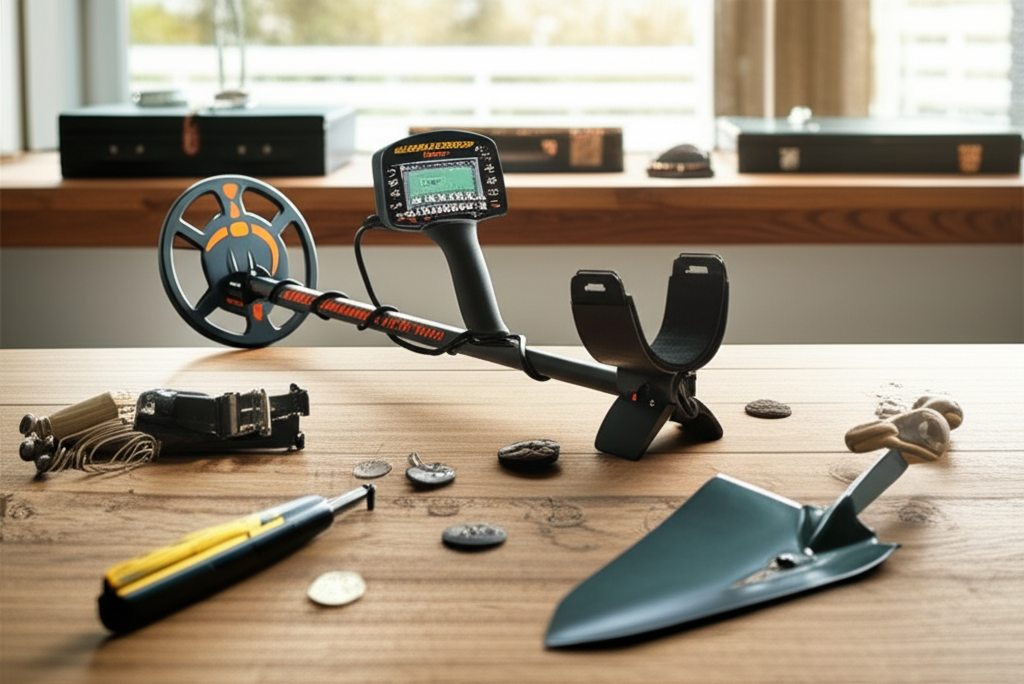
Most Bounty Hunter detectors have a few common parts. These include a control box, a search coil, and a shaft. The control box has settings for sensitivity and discrimination. The search coil is what detects metal in the ground.
Sensitivity: This setting controls how deep your detector can find metal. Higher sensitivity means deeper finds but can also pick up more noise.
Discrimination: This feature lets you ignore certain types of metal. For example, you can set it to ignore iron trash. This helps you find more of what you want.
Ground Balance: Some models have this. It helps the detector ignore minerals in the soil. This makes it work better in different places.
Different Bounty Hunter Models
Bounty Hunter offers several models. Each one has slightly different capabilities. Some are very basic, while others have more advanced features.
Entry-Level Models: These are great for absolute beginners. They are simple to operate and focus on basic coin and relic hunting.
Mid-Range Models: These often have better discrimination and depth capabilities. They might offer more target ID options.
Specialized Models: Some are designed for specific types of hunting, like gold prospecting.
Choosing the right model depends on what you want to find and where you plan to search.
Essential Accessories for Bounty Hunter Users
Using a metal detector is more than just the detector itself. Having the right accessories makes a big difference. They help you find things faster and dig them up safely.
The Indispensable Pinpointer
A pinpointer is a small, handheld detector. It helps you pinpoint the exact location of a target in the dug soil. This saves a lot of time and effort. Instead of sifting through a large plug of dirt, you can quickly find the item.
Digging Tools: Your Next Best Friend
You’ll need good digging tools. A sturdy digging trowel or a shovel is essential. For relic hunting, a specialized relic digging tool might be better. These tools help you extract your finds with minimal disturbance to the ground.
Headphones for Better Hearing
Metal detectors can make subtle sounds. Wearing headphones helps you hear these faint signals clearly. This is especially useful in noisy environments. It also helps you hear different tones that indicate different types of metal.
Carrying Bags and Pouches
Keeping your gear organized is important. A good carry bag protects your detector. A hip-worn pouch is useful for holding finds and trash. This keeps your hands free while you search.
Where to Use Your Bounty Hunter Metal Detector
The location you choose can greatly affect your finds. Different places hold different treasures. Knowing where to look is as important as having a good detector.
Parks and Public Lands
Parks are often good places to find lost coins and jewelry. People lose things when they relax or play. Always check local rules about metal detecting on public property. Some parks may have restrictions.
Beaches: A Treasure Trove of Lost Items
Beaches are fantastic for finding jewelry and coins. People often lose items while swimming or playing in the sand. Detecting on wet sand near the water can yield great results. Saltwater can affect some detectors, so check your manual.
Old Home Sites and Farmland
Searching around old, abandoned home sites can uncover historical relics. This includes old coins, buttons, and tools. Farmland can also be very rewarding, especially older farms. Always get permission from the landowner before detecting on private property.
Ghost Towns and Historical Areas
Exploring ghost towns or areas with historical significance can lead to exciting relic finds. These places are often rich with history. Remember to be respectful of historical sites. Only take items that are legally permissible to collect.
What Can You Find with a Bounty Hunter Metal Detector?
With a Bounty Hunter metal detector, you can find a variety of items. The specific finds depend on where you search and the model you use. It’s a hobby full of surprises.
Coins: The Most Common Find
Coins are the most frequent discovery for many detectorists. You can find modern currency in parks and public areas. Older, valuable coins can be found in places with a long history. Your detector’s discrimination settings help you target these.
Jewelry and Personal Items
Lost rings, bracelets, and earrings are common targets. People often lose these items without realizing it. Beaches and picnic areas are particularly good spots for jewelry. A good sensitivity setting is key for small, delicate items.
Relics: A Glimpse into the Past
Relics are historical artifacts. These can be anything from old buttons and buckles to pieces of pottery or tools. Searching old home sites and historical areas can yield amazing relics. These finds connect you to the past.
Gold: The Ultimate Prize
Some Bounty Hunter models can be used for gold prospecting. Finding gold nuggets requires specific settings and techniques. You’ll likely need to search in areas known for gold deposits. This is a more specialized type of detecting.
Mastering Discrimination and Sensitivity Settings
Getting the most out of your Bounty Hunter metal detector involves understanding its settings. Discrimination and sensitivity are two of the most important ones. Learning to adjust them helps you avoid junk and find good targets.
Using Discrimination Wisely
Discrimination tells your detector to ignore certain metals. Iron is often set to be ignored because it’s common junk. However, sometimes valuable items are made of iron. It’s important to experiment. You don’t want to miss a good find by discriminating too much.
Adjusting Sensitivity for Depth and Noise
Sensitivity controls how deep your detector can “see.” A higher setting means greater depth. But, it can also make your detector react to ground minerals or electrical interference. This causes false signals, or “chatter.”
Start with High Sensitivity: Begin with the sensitivity turned up.
Reduce if Noisy: If you hear constant false signals, lower the sensitivity gradually.
* Find the Sweet Spot: Stop when the chatter mostly disappears. This is usually the best setting for your area.
Mastering these settings takes practice. It’s a key skill for successful detecting.
The Art of Pinpointing and Recovery
Once your detector signals a target, the real work begins. Pinpointing and careful recovery are crucial. This ensures you find the item without damaging it or the environment.
Pinpointing the Target
When your detector beeps, the target is nearby. Sweep the coil slowly over the area. Move the coil from side to side and front to back. The signal will get louder and higher pitched as you get closer. This helps you narrow down the exact spot.
Careful Excavation Techniques
Use your digging tool to carefully remove a plug of soil. Do this near the center of the pinpointed area. The plug should be about the size of your search coil. Place the plug on a piece of cloth or a tarp. This keeps the area clean.
Sifting and Target Identification
Gently break apart the soil plug. Use your pinpointer to locate the target within the soil. Once found, carefully remove it with your fingers or a small tool. Avoid using sharp tools directly on the target. This can cause damage.
Replacing the Plug
After removing your find, carefully replace the soil plug. Make it look as natural as possible. This is important for preserving the site. It also helps keep the hobby enjoyable for everyone. Always fill your holes.
Legal and Ethical Considerations in Metal Detecting
Metal detecting is a rewarding hobby, but it comes with responsibilities. It’s important to follow laws and be ethical. This ensures the hobby remains enjoyable and sustainable.
Understanding Local Laws and Regulations
Laws about metal detecting vary greatly. Some places allow it freely. Others require permits or have specific restricted areas. Always research the rules for the area you plan to detect in. This includes parks, historical sites, and private land.
Obtaining Permission for Private Property
Detecting on private land without permission is illegal and unethical. Always ask the landowner for explicit permission first. Discuss what you hope to find and how you will conduct your search. Being respectful can lead to great opportunities.
Respecting Historical Sites and Artifacts
Many historical sites are protected by law. Removing artifacts from these locations can be a serious offense. Even if not legally protected, it’s good practice to leave historical items in situ. Documenting finds is often more valuable than possessing them.
Responsible Disposal of Trash
You will inevitably dig up trash. It’s your responsibility to carry it out and dispose of it properly. Leaving trash behind is a major disservice to the hobby and the environment. Always pack out more than you pack in.
Maintaining Your Bounty Hunter Metal Detector
Proper care ensures your Bounty Hunter metal detector lasts a long time. It also keeps it performing at its best. Simple maintenance is key.
Cleaning After Each Use
After a detecting session, clean your detector. Brush off dirt and debris from the search coil and shaft. Wipe down the control box with a damp cloth. Avoid harsh chemicals.
Protecting the Coil
The search coil is the most important part. Avoid banging it against rocks or hard surfaces. Consider a coil cover for added protection. This is especially useful in rocky terrain.
Battery Care
Check your batteries regularly. Replace them when they are low. Use high-quality batteries for best performance. Some detectors have rechargeable batteries, which are convenient.
Storage
Store your detector in a dry, safe place. A padded bag or its original box works well. Avoid leaving it in extreme temperatures, like a hot car. This can damage the electronics.
Frequently Asked Questions About Bounty Hunter Metal Detectors
What is the best Bounty Hunter metal detector for beginners?
The Bounty Hunter Tracker IV is often recommended for beginners. It’s simple to use, affordable, and effective for finding coins and common items.
Can I find gold with a Bounty Hunter metal detector?
Some Bounty Hunter models, like the Gold Digger, are designed for gold prospecting. However, finding significant amounts of gold often requires more specialized detectors and knowledge.
How deep can a Bounty Hunter metal detector find things?
Depth varies by model and target size. Most entry-level Bounty Hunter detectors can find coins up to 6-8 inches deep. Larger targets can be detected deeper.
Do I need a pinpointer with a Bounty Hunter detector?
While not strictly required, a pinpointer is highly recommended. It makes recovering targets much faster and easier, saving you time and effort.
Is metal detecting legal everywhere?
No, metal detecting is not legal everywhere. Laws vary by country, state, and local jurisdiction. Always check regulations for the specific area you plan to detect in.
How do I avoid digging too much trash?
Use the discrimination settings on your Bounty Hunter detector. Learn to interpret the different tones your detector makes. Practice will help you better identify potential targets.
Conclusion: Your Treasure Hunting Adventure Awaits
Your Bounty Hunter metal detector is a gateway to exciting discoveries. With its user-friendly design and affordable price, it’s an excellent tool for anyone eager to explore. Remember to learn your detector’s settings, use the right accessories, and always practice responsible detecting. Whether you’re after lost coins, historical relics, or even gold, your next hidden find could be just a sweep away. Happy hunting!
