


Published on: September 22, 2025 | Updated on: October 21, 2026
Yes, you can have a metal detector! This guide explores the exciting world of treasure hunting, helping you understand what you need to find those essential hidden treasures. From legalities to gear, we’ll equip you to start your adventure.
Are you captivated by the idea of unearthing forgotten coins, historical relics, or even precious gold? The question, “Can I have a metal detector?” often sparks this curiosity. Many people wonder if it’s a hobby they can pursue, what rules apply, and what equipment is necessary to start finding those elusive hidden treasures. It can feel a bit overwhelming at first, but I’m here to guide you through it all, step-by-step. We’ll cover everything you need to know to get started on your own treasure-hunting journey.
Can I Have a Metal Detector? Understanding the Basics
Absolutely, you can have a metal detector! The desire to find hidden treasures is a timeless human fascination, and metal detectors make this dream accessible. Knowing the basic rules and etiquette is key to enjoying this rewarding hobby responsibly.
Metal detecting is a fantastic way to connect with history and enjoy the outdoors. Before you even think about buying a detector, it’s wise to understand the general legalities surrounding its use. Most places allow recreational metal detecting, but there are often specific regulations regarding private property and protected historical sites.
Legalities and Permissions: Where Can I Use My Metal Detector?

The most crucial aspect of using a metal detector is understanding where you’re legally allowed to search for hidden treasures. This involves respecting private property rights and adhering to local, state, and national regulations concerning historical sites and public lands.
Generally, you’ll need explicit permission to detect on private land. Always approach landowners respectfully and explain your hobby; many are happy to grant access, especially if you promise to fill your holes neatly. Public beaches and parks are often permissible areas, but it’s essential to check specific park rules, as some may have restrictions.
Historical sites, archaeological areas, and protected national parks are almost always off-limits. These locations are preserved for their historical significance, and unauthorized metal detecting can lead to severe penalties, including fines and confiscation of your equipment. Researching the rules for your specific area is paramount before you even swing your detector.
- Always obtain written permission before detecting on private property.
- Check local ordinances for public parks and beaches regarding metal detecting regulations.
- Never detect on historical sites, archaeological zones, or protected lands without explicit, official authorization.
Adhering to these guidelines ensures your hobby remains enjoyable and legal, preserving the thrill of finding hidden treasures without causing harm or breaking laws.
Choosing Your First Metal Detector: Essential Hidden Treasures Gear
Selecting your first metal detector can seem daunting with so many options available. For beginners looking to unearth their first hidden treasures, a user-friendly detector with good depth and discrimination capabilities is ideal.
The market offers a range of detectors, from simple entry-level models to sophisticated machines. For someone just starting, I recommend looking for a detector that’s lightweight, easy to assemble, and has intuitive controls. Many reputable brands offer excellent beginner packages that include essential accessories.
Consider what types of hidden treasures you’re most interested in finding. If it’s mostly coins and jewelry on beaches, a detector with good saltwater capability might be a priority. If you’re drawn to historical relics in parks and fields, a machine with excellent iron discrimination and sensitivity to small targets will serve you better. Brands like Garrett, Minelab, and Nokta Makro offer fantastic entry-level options that provide great value and performance.
Don’t forget to factor in the coil size. Smaller coils are great for trashy areas and pinpointing, while larger coils offer greater depth and coverage. Many beginner detectors come with a standard 8-11 inch coil, which is a versatile starting point.
When I started, I made the mistake of buying the cheapest detector I could find. It was frustrating and didn’t find much. Investing a little more in a reputable brand made a world of difference in my success and enjoyment of finding hidden treasures.
Essential Accessories for Your Metal Detecting Adventures
Beyond the metal detector itself, a few key accessories will significantly enhance your treasure hunting experience and help you recover those hidden gems safely and efficiently.
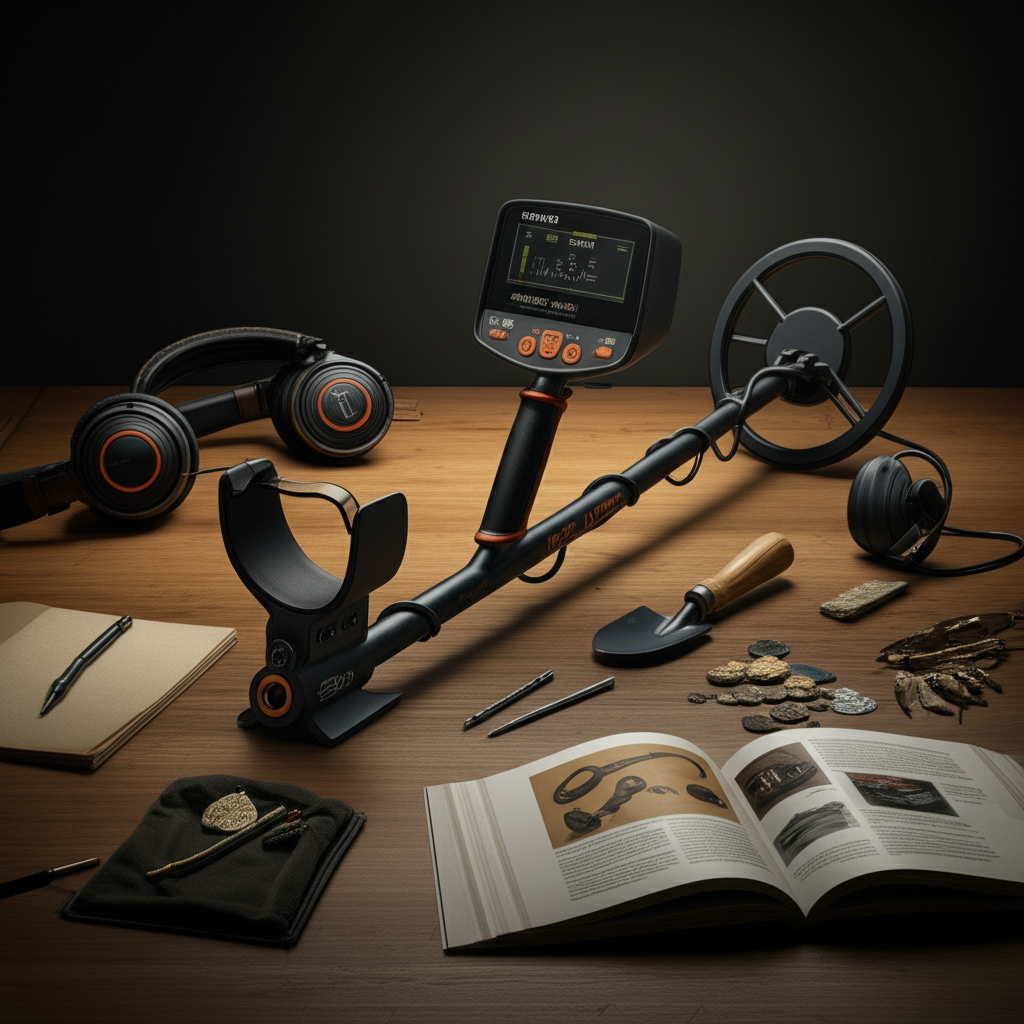
Having the right tools makes a huge difference when you get a signal. A good pinpointer is absolutely essential; it helps you zero in on the target in the plug of dirt you excavate, saving you time and frustration. Digging tools are also critical – a sturdy shovel or trowel designed for digging in various soil conditions is a must.
Other useful items include a finds pouch to store your discoveries, headphones to better hear faint signals and keep your finds discreet, and gloves for protecting your hands. A small brush can be helpful for cleaning off dirt from your finds before you even get home.
- Pinpointer: Crucial for pinpointing targets in the soil plug.
- Digging Tool: A sturdy shovel, trowel, or digging stick for excavating targets.
- Finds Pouch: A bag to collect your unearthed treasures and trash.
- Headphones: Enhance audio clarity and allow for discreet detecting.
- Gloves: Protect your hands while digging.
These accessories aren’t just conveniences; they are vital for maximizing your finds and ensuring you can properly recover the hidden treasures you locate.
The Power of the Pinpointer: Finding Small Hidden Treasures
A pinpointer is arguably the most important accessory after your metal detector itself. It’s a small, handheld device that vibrates and/or beeps when it gets close to metal, allowing you to pinpoint the exact location of your target within the soil plug.
Without a pinpointer, you’d be digging a much larger hole and sifting through dirt for ages, trying to locate that tiny coin or ring. This not only wastes time but can also damage the target and the environment. A good pinpointer drastically speeds up the recovery process and minimizes the impact of your digging.
I remember one hunt where I was digging for a faint signal, and it took me nearly 20 minutes to find a small silver dime. After I got my first pinpointer, finding that same dime took less than a minute. It truly transforms the experience of recovering small hidden treasures.
When choosing a pinpointer, look for features like sensitivity adjustment, a waterproof or water-resistant design (especially if you’ll be detecting near water), and a robust build. Brands like Garrett, Minelab, and Teknetics offer excellent options that are reliable and effective for locating even the smallest hidden treasures.
Digging Tools: Recovering Your Finds Responsibly
The way you dig is just as important as how you detect. Responsible digging ensures you can retrieve your finds without causing unnecessary damage to the ground, a crucial aspect of ethical treasure hunting.
For general park and field detecting, a durable digging trowel or a specialized digging stick is often sufficient. These tools are designed to cut clean plugs of turf that can be easily replaced. For beach detecting, a sand scoop is essential for sifting through the sand quickly and efficiently.
Always aim to cut a neat, three-sided plug of sod, lift it carefully, and then use your pinpointer to locate the target within the plug or the hole. Once the target is recovered, replace the plug carefully, ensuring the grass or soil is level and undisturbed. This practice is vital for maintaining good relations with landowners and park authorities, and it helps preserve the ground for future detecting.
Investing in a quality digging tool that suits the terrain you’ll be hunting in will make the recovery process much smoother and more successful. It’s a key step in ensuring you can actually get to those hidden treasures you’ve located.
I always carry a robust digging trowel with a serrated edge; it cuts through roots and soil with ease, making plug cutting a breeze. This ensures I can recover my finds and leave the area looking as if I was never there.
Understanding Your Metal Detector: Coils and Settings
Once you have your metal detector, understanding its various components and settings is key to unlocking its full potential for finding hidden treasures. The coil and the detector’s settings are two of the most critical elements.
The coil is the part of the detector that sweeps over the ground, emitting and receiving electromagnetic fields. Different coil sizes and types are designed for specific conditions and targets. Understanding how to adjust your detector’s settings, like sensitivity, discrimination, and ground balance, will dramatically improve your success rate.
Many beginner detectors come with a general-purpose coil, which is versatile. However, as you gain experience, you might consider purchasing additional coils for specialized tasks, like a smaller coil for highly trashy areas or a larger coil for deeper targets.
Experimenting with different settings in a test garden (an area where you bury known targets) is an excellent way to learn how your detector responds to various metals and depths. This hands-on practice is invaluable for identifying those sought-after hidden treasures.
Coil Types and Their Uses
The coil is the “eye” of your metal detector, and its performance is heavily influenced by its type, size, and frequency. Choosing the right coil for the job can make a significant difference in what hidden treasures you find.
Concentric Coils: These have a doughnut-shaped search coil. They offer good depth and pinpointing accuracy but can be more susceptible to ground mineralization. They are often favored for general-purpose detecting.
Double-D Coils: These coils have two overlapping “D” shapes. They are generally less susceptible to mineralized ground and offer excellent target separation, making them ideal for trashy sites. They are also very stable.
Search Coil Size: Smaller coils (e.g., 6-8 inches) are lighter, more maneuverable in tight spaces, and better at detecting small, shallow targets. They also excel in highly mineralized ground and trashy areas. Larger coils (e.g., 11-15 inches or more) cover more ground with each sweep and can detect targets at greater depths, making them ideal for open fields and prospecting.
Frequency: Higher frequencies (15 kHz and above) are more sensitive to small gold nuggets and thin jewelry. Lower frequencies (below 10 kHz) are better for detecting larger, deeper targets like coins and relics. Many modern detectors offer multiple frequencies or broadband technology to cover a wider range of targets.
Selecting the appropriate coil for your target type and environment will help you maximize your chances of finding hidden treasures that other coils might miss.
Mastering Your Detector’s Settings
Understanding and adjusting your metal detector’s settings is crucial for effective treasure hunting. These adjustments help you filter out unwanted junk and focus on signals that indicate valuable hidden treasures.
Sensitivity: This setting controls how deep your detector can “see.” Increasing sensitivity can help you find deeper targets, but too much can lead to false signals from electromagnetic interference (EMI) or ground mineralization. Start with a moderate setting and increase it gradually until you hear chattering or unstable signals, then back it off slightly.
Discrimination: This feature allows you to ignore certain types of metal, like iron or foil, which are often associated with trash. While useful, over-discriminating can cause you to miss desirable targets, as some valuable items (like thin gold rings) can register in the “junk” range. I prefer to use minimal discrimination and learn to interpret target IDs instead.
Ground Balance: Most detectors have an automatic or manual ground balance feature. This process tunes the detector to ignore the naturally occurring minerals in the soil, which can otherwise cause false signals. Proper ground balancing is essential for optimal performance, especially in mineralized soil.
Notch Discrimination: Some detectors allow you to “notch out” specific target ID ranges while still accepting others. This can be useful for filtering out common trash items that fall within a narrow ID range.
Learning your detector’s specific settings and how they interact is a journey. Consistent practice and referring to your detector’s manual are the best ways to master these controls and improve your ability to find hidden treasures.
Common Targets: What Hidden Treasures Can I Find?
The thrill of metal detecting often comes from the anticipation of what hidden treasures lie beneath the surface. The types of finds can vary greatly depending on where you are detecting and the history of the area.
In parks and older residential areas, you’re likely to find modern and old coins, jewelry (rings, earrings, bracelets), and various types of metal objects like pull tabs and bottle caps. In historical sites (where permitted and with proper authorization), you might unearth relics such as buttons, buckles, bullets, and tools from past eras.
If you venture into areas known for gold deposits or old mining activity, you might even be prospecting for gold nuggets. The potential for discovery is vast, making each outing an exciting adventure in search of hidden treasures.
I’ve found everything from modern pocket change to an 18th-century silver shilling and a Victorian-era mourning ring. Each find tells a story and adds to the excitement of the hunt for hidden treasures.
Coins and Jewelry: Popular Finds
Coins and jewelry are among the most sought-after hidden treasures for many detectorists. They are relatively common in populated areas, making them accessible targets for beginners and experienced hunters alike.
Old coins can be incredibly valuable, not just for their metal content but also for their historical significance and rarity. Identifying the date and mint mark on a coin can often tell you a great deal about its origin and potential worth. Similarly, lost jewelry, especially rings and necklaces made of gold or silver, can be quite valuable.
Areas like parks, schoolyards, beaches, and old picnic spots are prime locations for finding lost coins and jewelry. People tend to drop these items in high-traffic areas, and the ground can preserve them for decades or even centuries. A good metal detector with decent sensitivity to small targets is your best bet for uncovering these personal hidden treasures.
When recovering coins, especially older ones, handle them with care. Avoid aggressive cleaning methods that can damage their patina or historical value. Sometimes, a gentle rinse with water is all that’s needed.
Relics and Historical Finds
For those with a passion for history, uncovering relics offers a tangible connection to the past. These finds are the hidden treasures that tell stories of bygone eras and the people who lived them.
Relics can include anything from military buttons and buckles from Civil War battlefields (always check legality and get permission!) to antique tools, farming implements, and even personal items like pocket watches or brooches. The types of relics you find will heavily depend on the historical context of the area you are detecting.
Detecting on land that was once occupied by homesteads, old settlements, or historical event sites can yield fascinating artifacts. Always remember that detecting on protected historical sites is illegal and unethical. Focus on areas where historical activity occurred but are not officially designated heritage sites, and always obtain permission from landowners.
Unearthing a relic is a unique experience. It’s like holding a piece of history in your hands, a tangible link to the lives of those who came before us, truly special hidden treasures.
For instance, finding an old, hand-forged blacksmith’s tool on a property that once housed a farm is incredibly rewarding. It sparks the imagination about the daily life of the people who once worked that land.
Gold Prospecting: The Ultimate Hidden Treasure Hunt
For many, the ultimate dream of metal detecting is finding gold. Gold prospecting using a metal detector is a specialized form of treasure hunting that requires specific equipment and techniques.
While general-purpose detectors can find gold jewelry, dedicated gold prospecting detectors are designed to detect the tiny, low-conductivity signals of natural gold nuggets. These machines typically operate at higher frequencies and have advanced ground balancing capabilities to handle the mineralized soils often found in gold-bearing regions.
Areas known for historical gold rushes or current gold deposits are the primary targets for gold prospectors. Researching geological surveys and historical mining records can help identify promising locations. Remember that gold prospecting often involves detecting in more remote and challenging terrains, so preparedness is key.
The allure of finding a natural gold nugget, a true hidden treasure forged by the earth, is a powerful motivator for many detectorists. It’s a challenging but potentially incredibly rewarding pursuit.
Choosing a Gold Detector
If your primary goal is to find gold nuggets, you’ll need a metal detector specifically designed for gold prospecting. These detectors are optimized to pick up the faint signals of small gold particles in highly mineralized ground.
Key features to look for in a gold detector include:
- High Frequency: Typically 20 kHz and above, making them sensitive to small gold.
- Excellent Ground Balancing: Essential for handling the iron oxides and other minerals common in gold country.
- Sensitivity Control: Allows fine-tuning to avoid false signals.
- Audio Features: Advanced audio allows you to discern subtle gold signals from background noise.
- Coil Options: Smaller coils are often preferred for pinpointing small nuggets in difficult terrain.
Reputable brands like Minelab (e.g., GPX series), Garrett (e.g., AT Gold), and Nokta Makro (e.g., Gold Finder series) offer excellent gold prospecting detectors. Investing in the right equipment is crucial for success in this specialized hunt for hidden treasures.
Where to Prospect for Gold
Identifying potential gold prospecting locations requires research and an understanding of geology. You’ll want to focus on areas where gold has been found historically or where geological conditions suggest its presence.
Good places to start include:
- Old Gold Mining Districts: Research areas with a history of placer or lode mining.
- Riverbeds and Creek Beds: Gold is often carried downstream and deposited in bends, bedrock cracks, and gravel bars.
- Alluvial Fans: These fan-shaped deposits of sediment at the base of hills can concentrate gold washed down from above.
- Areas with Quartz Veins: Gold is often found within quartz veins in hard rock formations.
- Public Lands Open to Prospecting: Always verify with the relevant land management agencies (e.g., Bureau of Land Management in the US) that prospecting is permitted and understand any regulations.
Remember, gold prospecting often involves hiking in rugged terrain and requires patience. The reward of finding a natural gold nugget, a truly spectacular hidden treasure, makes the effort worthwhile for many.
Ethical Detecting and Leaving No Trace
Responsible metal detecting is about more than just finding hidden treasures; it’s about preserving the environment and respecting the hobby itself. Ethical practices ensure that metal detecting remains a positive activity for everyone.
The golden rule is to always fill your holes neatly and leave the area cleaner than you found it. This practice is crucial for maintaining access to detecting sites and for the long-term health of the environment. It also helps to dispel negative stereotypes about detectorists.
Proper disposal of trash is also a key part of ethical detecting. Carry a separate bag for trash and remove any modern junk you dig up. This contributes to cleaner parks and public spaces, making them more enjoyable for everyone.
By adhering to these principles, you not only ensure you can continue enjoying your hobby but also contribute positively to the outdoor community and the preservation of potential historical hidden treasures for future generations.
The “Leave No Trace” Principle in Practice
The “Leave No Trace” philosophy is fundamental to responsible metal detecting. It means minimizing your impact on the environment and ensuring that your presence leaves no visible evidence.
When you get a signal and decide to dig, always aim to cut a clean plug of turf or soil. Lift it carefully, and recover your target. Once you have retrieved your find and any associated trash, meticulously replace the plug, ensuring it sits flush with the surrounding ground. If necessary, lightly tamp it down to blend in.
Avoid digging excessively large holes, especially in sensitive areas. If you are unsure about how to cut a clean plug, practice in your backyard. This skill is paramount for ethical detecting and for maintaining good relations with property owners and park management.
Furthermore, pack out everything you pack in, including food wrappers, drink containers, and any non-target metal items you dig. Leaving your detecting sites clean and tidy is the hallmark of a considerate detectorist.
I always carry a small trowel and a dedicated trash bag. It’s incredibly satisfying to finish a hunt and see that the area looks untouched, knowing I’ve responsibly recovered my hidden treasures and removed unwanted litter.
Respecting Property and Culture
Beyond environmental concerns, ethical detecting involves a deep respect for private property, historical integrity, and cultural heritage. These considerations are non-negotiable.
As mentioned, always secure explicit permission before detecting on private land. This fosters goodwill and ensures continued access. On public lands, diligently research and adhere to all posted regulations regarding metal detecting, including any seasonal restrictions or prohibited zones.
Crucially, never detect in known archaeological sites, historical monuments, or areas of significant cultural heritage. These locations are protected for their scientific and historical value, and unauthorized disturbance can lead to severe legal penalties and irreparable damage to our shared past. The thrill of finding hidden treasures should never come at the expense of destroying historical context.
Familiarize yourself with local laws and regulations concerning found items (e.g., treasure trove laws). In some jurisdictions, significant finds may need to be reported to authorities or museums. Responsible detectorists are stewards of history, not plunderers.
FAQ: Your Metal Detecting Questions Answered
Here are some common questions beginners have about getting started with metal detecting and finding hidden treasures.
Can I metal detect in my backyard?
Yes, generally you can metal detect in your own backyard. It’s a great place to start learning your detector and can yield surprising finds like lost jewelry or old coins. Just be mindful of any underground utilities.
What is the best beginner metal detector?
There isn’t one single “best” for everyone, but highly recommended beginner models include the Garrett Ace series, Minelab Vanquish series, and Nokta Makro Simplex+. These offer a good balance of performance, ease of use, and affordability.
How deep can a metal detector find things?
Depth varies greatly depending on the detector, coil size, target size, and ground conditions. Most beginner detectors can find coins down to 6-10 inches, while larger coils or more advanced detectors can reach depths of 12-18 inches or more for larger targets.
Do I need a license to metal detect?
In most places for recreational use on public lands, you do not need a specific license, but you must follow local regulations. Private land always requires owner permission. Always check with your local authorities or park services for specific rules.
What should I do if I find something historically significant?
If you find an item that appears to be of significant historical or archaeological importance, the best practice is to leave it in situ if possible, document its location, and contact your local museum or archaeological society. They can advise you on the proper procedure.
Is metal detecting profitable?
While some detectorists do find valuable items that can be sold, it’s generally considered a hobby rather than a way to make significant money. The joy of discovery and the outdoor experience are the primary rewards, with occasional valuable hidden treasures being a bonus.
Conclusion: Start Your Journey to Hidden Treasures
So, can you have a metal detector? The answer is a resounding yes! The world of metal detecting offers an incredible opportunity to explore, connect with history, and unearth fascinating hidden treasures. By understanding the legalities, choosing the right equipment, practicing ethical detecting, and learning your detector’s capabilities, you’re well on your way to a rewarding adventure.
From the thrill of finding your first coin to the excitement of uncovering a historical relic, metal detecting provides endless possibilities. Remember to always be respectful of the land and its owners, leave no trace, and enjoy the process of discovery. Grab your detector, head outdoors, and start your own quest for those essential hidden treasures!
