


Published on: September 27, 2025 | Updated on: September 27, 2025
Yes, you absolutely can find arrowheads with a metal detector, but it requires the right equipment, knowledge, and techniques. This guide will equip you with essential tips to increase your success and uncover these historical treasures.
The thrill of unearthing a piece of history is what drives many of us into the world of metal detecting. Among the most sought-after relics are ancient arrowheads, tangible links to our ancestors. Many beginners wonder if their trusty metal detector is up to the task of finding these delicate, often small, targets. The good news is, with the right approach, your detector can absolutely lead you to these fascinating finds. This guide will walk you through everything you need to know to maximize your chances of discovering arrowheads.
Can You Find Arrowheads With A Metal Detector? Absolutely!
Yes, you can indeed find arrowheads with a metal detector. While they are made of stone, flint, or chert, which are non-metallic, their discovery by metal detectors is often indirect. Detectors don’t find the stone itself but rather associated metallic items or changes in the soil that indicate a buried object, or sometimes, the stone is found near metallic artifacts. Understanding how this works is key to successful arrowhead hunting.
Understanding How Metal Detectors Work for Arrowhead Hunting
Metal detectors primarily work by generating an electromagnetic field. When this field interacts with a metallic object, it causes eddy currents to flow within the metal, which in turn generates a secondary magnetic field. Your detector’s coil senses this secondary field and alerts you with an audio signal. So, directly, a detector won’t signal on a pure stone arrowhead.
However, arrowheads are often found in areas where ancient peoples lived, worked, and traveled. These locations are rich in metallic artifacts like old coins, buckles, buttons, nails, or even bits of scrap metal left behind. Your metal detector will signal these metallic items, leading you to a promising spot where an arrowhead might also be present. Furthermore, some detectors have modes that can detect mineralized ground or disturbances that might indicate a buried object, even if it’s not metallic.
Choosing the Right Metal Detector for Relic Hunting
When your primary goal is finding relics like arrowheads, the type of metal detector you use makes a significant difference. Look for detectors that offer good depth penetration and discrimination capabilities. A detector with multiple frequency options can also be beneficial, as different frequencies are better suited for detecting different target types and sizes.
Higher frequency detectors are generally better at picking up smaller, shallower targets, which can be crucial for delicate stone artifacts. Conversely, lower frequency detectors excel at depth and can penetrate deeper into the soil, potentially uncovering older or larger relics. Many modern detectors offer a balance, allowing you to adjust the frequency or utilize preset modes for relic hunting. Brands like Minelab, Garrett, and Nokta Makro offer excellent options for relic hunters.
The Importance of the Right Coil
The coil is the “eyes” of your metal detector, and choosing the right one is critical for arrowhead hunting. Smaller coils, typically in the 5-8 inch range, are excellent for pinpointing small targets and navigating through cluttered ground. They offer better sensitivity to shallow, small relics and can discriminate more effectively in areas with lots of iron trash.
Larger coils, on the other hand, cover more ground and can detect targets at greater depths. However, they can be less sensitive to very small objects and may struggle in highly mineralized soil or areas with dense iron. For arrowhead hunting, a versatile mid-sized coil (like 9-11 inches) or a smaller, specialized coil can be your best bet, depending on the terrain and expected target size. Some detectorists even carry multiple coils to adapt to different hunting conditions.
Essential Accessories for the Relic Hunter
Beyond the detector and coil, a few key accessories will significantly improve your arrowhead hunting experience. A good quality pinpointer is non-negotiable. Once your detector signals a target, a pinpointer helps you precisely locate the object within the dug plug of soil or the hole, drastically reducing recovery time and the chance of damaging a delicate find.
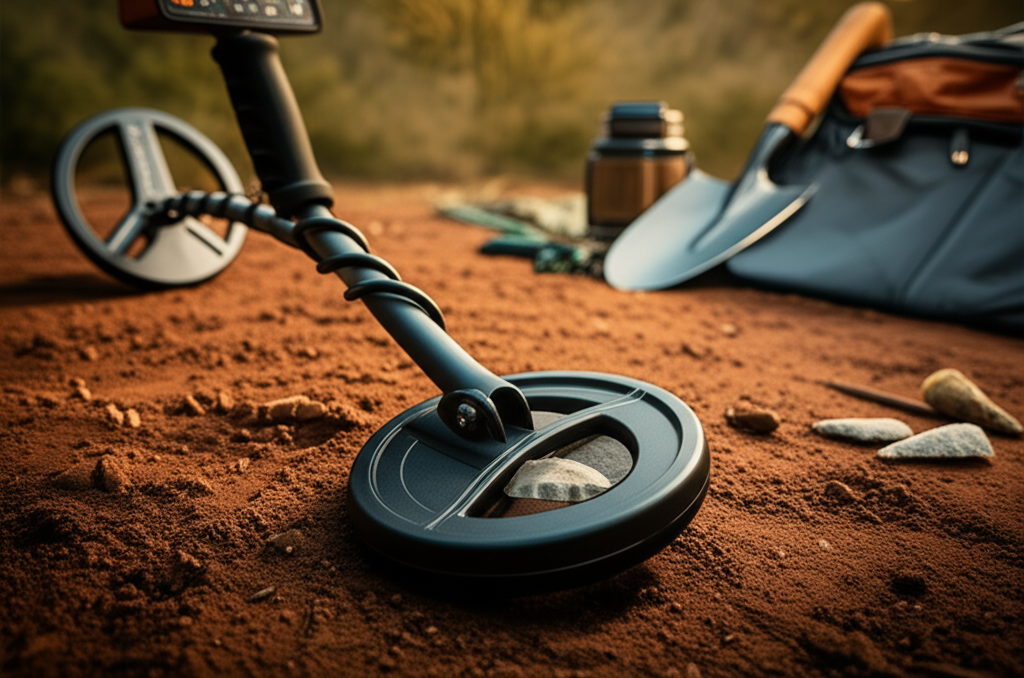
Other essential tools include a sturdy digging trowel or shovel designed for metal detecting, a finds pouch or bag to keep your discoveries safe, and a comfortable digging tool to help extract soil plugs cleanly. Gloves are also a good idea to protect your hands. Having the right gear ensures you can efficiently and responsibly recover your finds.
Understanding Target ID and Discrimination
Metal detectors provide Target Identification (TID) numbers and discriminate against certain types of metal. While TID numbers can be helpful, they are not always reliable for stone arrowheads because they are not metallic. You’ll primarily be listening to the audio signals and observing the detector’s behavior.
It’s crucial to learn your detector’s audio tones and how they change with different targets. Many relic hunters will dig targets in a wider range of TID numbers than coin shooters, especially in areas known for historical activity. Learning to distinguish between the sharp, repeatable signal of a good target and the choppy, inconsistent signal of iron trash is a skill that comes with practice. Avoid over-discriminating, as this can cause you to miss potential relic signals.
Where to Look for Arrowheads
The most successful arrowhead hunting happens in locations where ancient peoples lived, camped, or traveled. Look for areas near water sources like rivers, streams, and lakes, as these were essential for survival. Old trails, agricultural fields (especially after plowing), and known archaeological sites (where permitted) are also prime locations.
Pay attention to natural features that might have attracted ancient populations, such as sheltered areas, hillsides, or points overlooking valleys. Remember to always research local laws and obtain permission before detecting on private property or in areas with historical significance. Respecting these guidelines ensures you can continue to hunt legally and ethically.
Effective Metal Detecting Techniques for Arrowheads
When you’re out hunting for arrowheads, your technique needs to be methodical. Start by sweeping your coil slowly and deliberately over the area, ensuring good ground coverage. Overlap your sweeps to avoid missing any spots. Listen carefully to every signal your detector gives.
When you get a repeatable signal, use your pinpointer to pinpoint the exact location. Dig a clean plug of soil, being as careful as possible to preserve the soil structure and any potential artifact. Place the soil plug next to the hole and then use your pinpointer to scan the plug and the hole to locate the target. If you find a metallic object, carefully examine the surrounding disturbed soil for any non-metallic artifacts like arrowheads.
What to Do When You Find a Potential Arrowhead
If your metal detector leads you to a spot, and after careful digging, you unearth something that looks like an arrowhead, take a moment to appreciate your find. Gently brush off any excess dirt. If it’s a surface find or shallow, it might be intact.
If the object is in the ground, be extremely cautious. Stone artifacts can be fragile, especially if they have been in the ground for centuries. Avoid aggressive cleaning or scrubbing. If you suspect it’s a significant find, especially if it appears to be part of a larger artifact or in a sensitive area, consider consulting with a local archaeologist or historical society. Documenting the find’s location and context is also important for understanding its historical significance.
The Ethical and Legal Aspects of Relic Hunting
Responsible relic hunting is paramount. Always obtain permission before detecting on private land. Familiarize yourself with local, state, and federal laws regarding metal detecting and artifact recovery. Many areas, especially those with known archaeological importance, have strict regulations or are completely off-limits to metal detecting.
Never disturb or damage historical sites. If you find an item that appears to be of significant historical or archaeological value, it’s often best to report it to the appropriate authorities rather than removing it. The goal is to enjoy the hobby while preserving history for future generations. Understanding and adhering to these principles ensures the longevity of metal detecting as a recreational pursuit.
Frequently Asked Questions About Finding Arrowheads
Can a metal detector directly find a stone arrowhead?

No, a metal detector cannot directly detect stone as it works by sensing metallic objects. However, it can lead you to areas where arrowheads are likely to be found by signaling associated metallic artifacts or disturbances in the ground.
What type of metal detector is best for finding arrowheads?
Look for detectors with good sensitivity to small targets, adjustable frequencies, and decent discrimination capabilities. Models designed for relic hunting or general-purpose detecting with good performance on small targets are usually suitable.
How deep can a metal detector find an arrowhead?
The depth depends on the detector, coil, target size, and ground conditions. A good detector with a suitable coil might detect a larger arrowhead a few inches to over a foot deep, but smaller ones are typically found shallower.
Should I dig every signal if I’m looking for arrowheads?
While you might dig more signals when relic hunting compared to coin hunting, it’s still wise to use your detector’s discrimination and audio cues to identify probable trash. However, be more forgiving of marginal signals in promising locations.
What if I find something that looks like a very old or rare arrowhead?
It’s best to be cautious. Document the find’s location and context. If you suspect it’s a significant archaeological find, contact a local museum, historical society, or archaeologist for advice on proper handling and reporting.
Are there specific times of year that are better for arrowhead hunting?
Spring and fall are often ideal, especially after plowing in agricultural fields, as these activities can bring buried items closer to the surface. Dry conditions can also make digging easier and improve detector performance.
Conclusion: Your Journey to Uncovering History
So, can you find arrowheads with a metal detector? The answer is a resounding yes, with the right knowledge and approach. While your detector won’t directly beep on the stone itself, it serves as an invaluable tool for guiding you to the most promising locations and signaling associated metallic relics. By choosing the appropriate equipment, understanding your detector’s capabilities, employing effective techniques, and always prioritizing ethical practices, you can significantly increase your chances of unearthing these incredible pieces of the past. Happy hunting, and may your next signal lead you to a remarkable discovery!
