


Published on: September 27, 2025 | Updated on: October 21, 2026
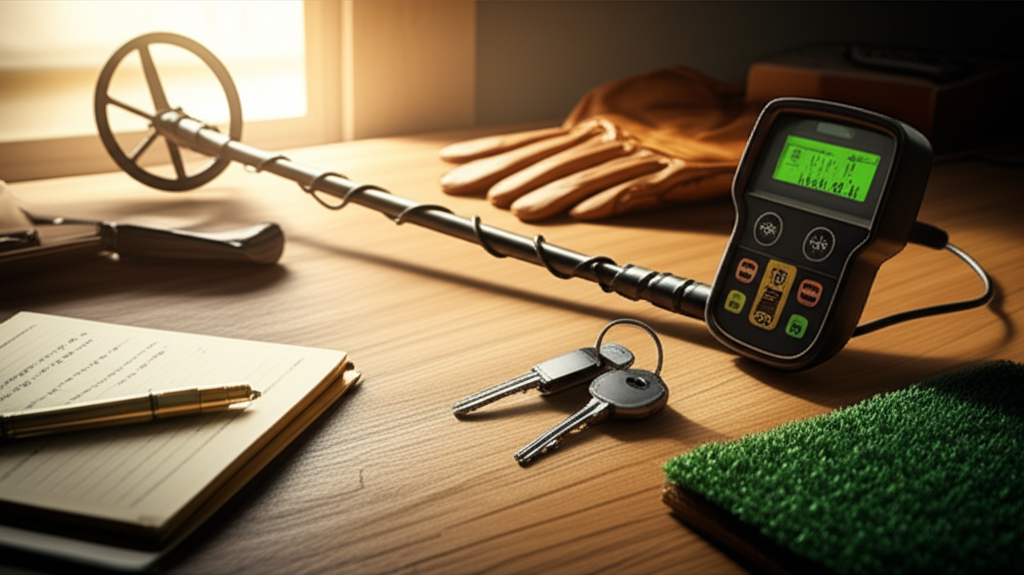
Yes, you can absolutely find lost car keys with a metal detector. This guide reveals the essential breakthrough techniques and tools to recover your misplaced keys quickly and efficiently, turning a frustrating situation into a successful search.
Losing your car keys is a modern-day nightmare. The panic sets in as you retrace your steps, a growing sense of dread accompanying each fruitless search. It’s a problem many of us face, often in the most inconvenient places. But what if there was a surprisingly simple, high-tech solution? This article will guide you through using a metal detector to find those elusive car keys, offering a clear path from panic to recovery.
The Unlikely Hero: How Metal Detectors Work for Key Recovery
Metal detectors are designed to sense metallic objects buried underground or hidden within clutter. They emit an electromagnetic field, and when this field interacts with a metal object, it creates a secondary field that the detector’s coil picks up. This generates an audible signal, indicating the presence of metal. Modern detectors are sensitive enough to pick up small items like key fobs and individual keys, even when they’re not deeply buried.
Understanding Your Metal Detector’s Capabilities

Not all metal detectors are created equal, and their effectiveness in finding car keys depends on several factors. The frequency of the detector plays a crucial role; higher frequencies are generally better for smaller, low-conductivity targets like keys. Discrimination settings are also important, allowing you to filter out unwanted iron trash while still detecting non-ferrous metals like brass or aluminum commonly found in key fobs.
Frequency Matters: High vs. Low for Small Targets
Detectors operating at higher frequencies (above 10 kHz) are typically more sensitive to small, shallow targets. This is because smaller metallic objects reflect the higher frequency waves more effectively. While lower frequency detectors excel at finding larger, deeper objects like old coins or relics, they might miss the subtle signal of a car key.
Discrimination: Tuning Out the Junk
The ability to discriminate unwanted metals is vital when searching for something specific like car keys. If your search area is littered with old nails, bottle caps, or pull tabs, a detector with good discrimination will help you ignore these signals and focus on the unique signature of your keys. This saves you time and effort digging up trash.
Essential Gear for Your Key-Finding Mission
Beyond the metal detector itself, a few key accessories can significantly improve your chances of a swift recovery. These tools are not just for serious treasure hunters; they are incredibly useful for everyday emergencies like misplaced keys. Having the right gear ready can turn a stressful situation into a manageable task.
Choosing the Right Metal Detector
For finding car keys, a mid-range or even a beginner-friendly metal detector with adjustable frequency and discrimination settings will likely suffice. You don’t necessarily need a top-of-the-line gold prospecting machine. Look for models known for their sensitivity to small targets and ease of use. Many entry-level detectors offer excellent performance for this specific task.
Pinpointers: Your Secret Weapon
A pinpointer is a small, handheld metal detector that is indispensable for pinpointing the exact location of a target once your larger detector signals it. After you’ve dug a plug of earth, the pinpointer can be swept over the soil and the target hole to quickly identify where the keys are hiding, drastically reducing digging time and minimizing damage to your lawn. I never leave home without mine when searching for anything small.
Essential Digging Tools
While you might not be excavating ancient artifacts, you’ll still need appropriate digging tools. A small garden trowel or a dedicated digging tool designed for metal detecting is perfect. These allow you to carefully excavate the soil where the signal is strongest without causing excessive damage to your property. Remember to always fill your holes neatly.
Step-by-Step: Finding Your Lost Car Keys
The process of using a metal detector to find car keys is straightforward, but following a methodical approach will yield the best results. It’s about systematic searching and careful observation of your detector’s signals. Don’t rush; patience is key, just like when hunting for old coins or relics.
Step 1: Define Your Search Area
First, identify the most likely places you could have lost your keys. Think about where you were walking, sitting, or what you were doing when you last remember having them. This could be your yard, a park, a beach, or even a parking lot. Narrowing down the search area significantly increases your efficiency.
Step 2: Set Up Your Metal Detector
Configure your metal detector for the task. Start with a moderate sensitivity setting and a discrimination level that filters out common iron trash but is low enough not to reject keys. If your detector has a specific “jewelry” or “small targets” mode, try that. It’s often a good starting point.
Step 3: Conduct a Systematic Sweep
Begin sweeping the detector slowly and methodically over your defined search area. Overlap each sweep by about half the coil’s width to ensure complete coverage. Listen carefully to the audio signals and watch the target display if your detector has one. A distinct, repeatable signal is what you’re looking for.
Step 4: Pinpoint the Target
When your detector signals a potential target, mark the spot. Sweep the coil over the area again to confirm the signal is strong and consistent. Use your pinpointer to narrow down the exact location within the marked spot. This is where the pinpointer truly shines, saving you from digging a large hole.
Step 5: Carefully Excavate
Once the pinpointer confirms the target’s location, carefully dig a small plug of soil or excavate the area. Be gentle, especially if you’re on grass. Place the excavated soil nearby so you can easily sift through it.
Step 6: Isolate and Recover
Use your pinpointer to scan the excavated soil and the hole. The pinpointer will guide you to the exact location of the keys. Gently remove them, and be sure to fill in any holes you’ve made, leaving the area as you found it.
Common Challenges and How to Overcome Them
Even with the right tools and techniques, finding lost items can present challenges. Understanding these common obstacles can help you adjust your strategy and maintain focus. Metal detecting, whether for treasure or keys, is a learning process.
Dealing with Iron Trash
Areas with a lot of iron contamination, like old campsites or parks, can be frustrating. If your detector is overloading with signals, you may need to increase your discrimination settings. However, be cautious, as too much discrimination can filter out your target. Sometimes, it’s better to dig a few trash targets if you’re confident in the signal.
Shallow vs. Deep Targets
Keys can be lost at various depths. If your detector isn’t picking up a signal where you expect it, try lowering the coil closer to the ground or increasing sensitivity slightly. If you suspect they are deeper, you might need a detector with better depth capabilities or a larger coil.
Water and Wet Conditions
If you lost your keys near water or in wet soil, this can affect your detector’s performance. Many detectors have ground balancing features to compensate for mineralization in the soil, which can be more pronounced when wet. Waterproof detectors or coils are also available if this is a frequent concern.
When to Call in the Professionals (or Just Get a Better Detector)
While a basic metal detector can often do the trick, there are times when you might consider more advanced options or professional help. If you’ve tried multiple times without success, it might be time to re-evaluate your approach or equipment.
Upgrading Your Detector
If you find yourself frequently losing small items or are serious about metal detecting as a hobby, investing in a detector with better target separation, higher frequency, and advanced discrimination might be worthwhile. Brands like Minelab, Garrett, and Nokta Makro offer excellent options for various budgets.
Professional Recovery Services
In rare cases, if the keys are lost in a particularly difficult or large area, and you’ve exhausted your own efforts, professional metal detecting services exist. These individuals have specialized equipment and extensive experience, though this is usually a last resort for car keys.
Can You Find Car Keys With A Metal Detector: Expert Tips and Tricks
Drawing on years of experience in the field, I’ve learned a few tricks that can make finding lost car keys significantly easier. These aren’t complex techniques, but rather practical insights that seasoned detectorists rely on. Applying these can save you time and frustration.
Listen to Your Detector’s Tone
Different metals produce different tones on most detectors. Learn to distinguish the sound of non-ferrous metals (like aluminum, brass, and zinc, often found in key fobs) from iron. A clear, high-pitched tone is usually a good sign.
Coil Control is Crucial
Maintain a consistent sweep speed and keep the coil parallel to the ground. Hovering the coil too high will reduce sensitivity, while digging it into the ground can cause false signals. A smooth, consistent motion is best for accurate detection.
Check Your Battery Levels
A low battery can significantly impair a metal detector’s performance, leading to weaker signals or complete failure. Always ensure your batteries are fresh or fully charged before heading out on a search.
The “Wiggle” Technique
If you’re getting a faint signal, try slightly wiggling the coil back and forth over the target area. Sometimes, this subtle movement can help clarify a weak signal and confirm the presence of a target.
Metal Detector Settings for Car Keys: A Practical Guide
Getting your metal detector settings right is paramount. It’s a balance between detecting your target and avoiding nuisance signals. I’ve found that starting with general settings and then fine-tuning based on the specific environment is the most effective approach.
Sensitivity: Maximize Detection, Minimize Noise
Start with sensitivity set to a medium-high level. If you experience excessive chatter or false signals, gradually reduce it until the detector runs smoothly. Finding that sweet spot is key to detecting faint signals without being overwhelmed by noise.
Discrimination: Filter the Unwanted
For car keys, I recommend setting discrimination to ignore iron and possibly foil. Most key fobs are made of aluminum or brass, which will still register. If you’re in an area with a lot of pull tabs, you might need to adjust discrimination carefully.
Ground Balance: Adapt to Your Environment
If your detector has manual or automatic ground balance, use it. This process tunes the detector to the specific mineral content of the soil, reducing false signals caused by ground mineralization and improving target detection. This is especially important in parks and beaches.
Can You Find Car Keys With A Metal Detector: Real-World Scenarios
Let’s look at a couple of common situations where a metal detector could be your best friend for finding lost car keys. These examples highlight the versatility of this tool beyond just treasure hunting.
Scenario 1: Lost in the Backyard
You were gardening, playing with the kids, or just relaxing in your yard and now your keys are gone. A metal detector can quickly scan your lawn, flowerbeds, or patio areas. The pinpointer is invaluable here for locating keys buried just an inch or two deep in the grass without leaving a mess.
Scenario 2: Dropped at the Park
You sat on a park bench, walked along a path, or had a picnic, and your keys vanished. Metal detectors are excellent for covering open grassy areas or along pathways. Their ability to distinguish between signals can help you find keys even if there’s some light surface trash.
FAQ: Your Burning Questions About Finding Car Keys with a Metal Detector
Q1: Will any metal detector work for finding car keys?
Most modern metal detectors can detect car keys, but those with higher frequencies and good discrimination are more effective for small, shallow targets. Entry-level to mid-range detectors are usually sufficient.
Q2: How deep can a metal detector find car keys?
This depends on the detector’s power, coil size, and the target’s size and orientation. Typically, a good detector can find keys buried from a few inches up to about 6-8 inches deep.
Q3: What if my car keys have a plastic fob?
The metal detector will pick up the metal components within the key fob, such as the internal circuitry, battery contacts, or the metal key itself. The plastic casing won’t be detected, but the metal parts will.
Q4: Should I use a specific search mode for keys?
If your detector has a “jewelry,” “small targets,” or “coins” mode, it’s often a good starting point. These modes are usually optimized for detecting smaller metallic items.
Q5: How do I avoid digging up junk when searching for keys?
Utilize your detector’s discrimination settings to filter out common trash like iron nails and pull tabs. A pinpointer is also crucial for precisely locating the target before digging.
Q6: What is the best type of coil for finding car keys?
Smaller coils, especially those in the 6-8 inch range, are generally more sensitive to small targets and offer better target separation in cluttered ground. Concentric coils can also be very effective for small items.
Conclusion: Your Keys Are Within Reach
The question, “Can you find car keys with a metal detector?” has a resounding answer: yes! It’s not just possible; it’s often a highly effective and surprisingly quick solution to a common modern problem. By understanding your metal detector’s capabilities, utilizing the right accessories like a pinpointer, and employing systematic search techniques, you can transform a stressful key-loss situation into a successful recovery. Don’t let lost keys derail your day; a metal detector might just be the essential breakthrough you need to get back on the road.
Final Words
Losing your car keys is a moment of pure frustration, but with the right approach and a good metal detector, that frustration can be short-lived. This guide has armed you with the knowledge to turn your detector from a treasure-hunting tool into a personal key-finding assistant. Remember to be patient, methodical, and to always have your pinpointer ready. Happy hunting, and may you find those keys swiftly!
