


Published on: September 27, 2025 | Updated on: October 21, 2026
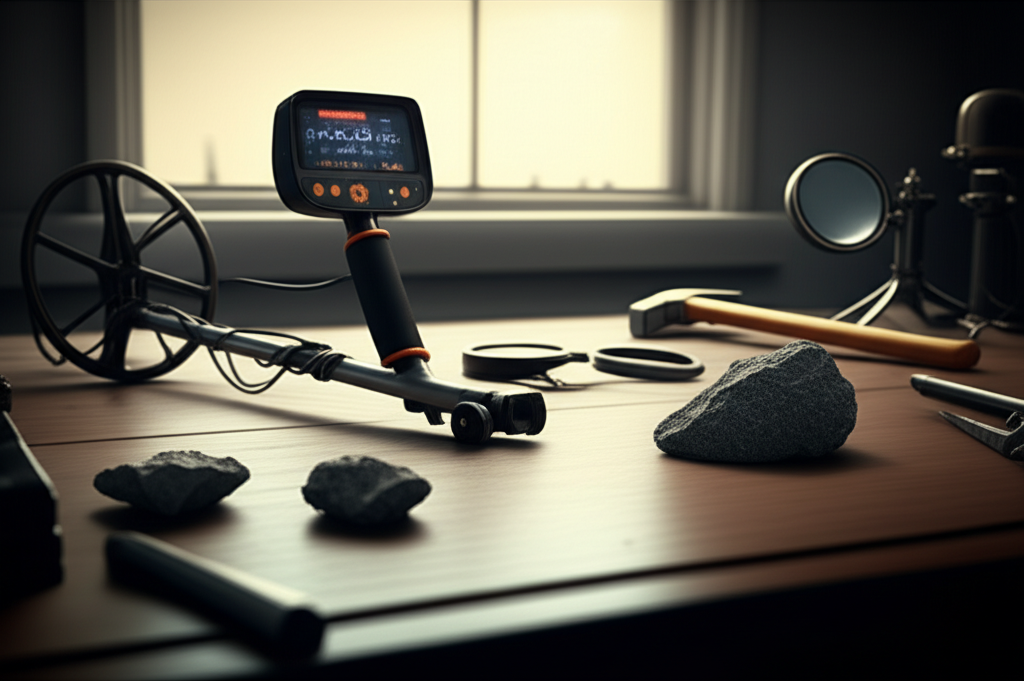
Yes, you can find meteorites with a metal detector, but it requires specific knowledge and the right equipment. This guide explores the science behind detecting meteorites and the techniques detectorists can use to unearth these extraterrestrial treasures.
The allure of finding something from outer space, a genuine meteorite, is a dream for many treasure hunters. It’s a common question among detectorists: can you find meteorites with a metal detector? The answer is a resounding yes, but it’s not as simple as sweeping your coil over random ground. Many detectorists have found meteorites, often by chance, but understanding how they behave and how to search for them can turn that chance into a calculated endeavor. This article will guide you through the fascinating world of meteorite hunting with your metal detector, from understanding their properties to employing effective search strategies.
The Science Behind Meteorite Detection
Meteorites are rocky or metallic objects that originate from outer space and survive their passage through Earth’s atmosphere to land on the surface. Their composition is key to why a metal detector might pick them up. Most meteorites are stony, but a significant portion, particularly those easier to detect, are iron or stony-iron meteorites, which contain substantial amounts of iron and nickel. These metallic components are what make them respond to the electromagnetic fields generated by your metal detector.
Understanding the magnetic properties of meteorites is crucial. Many meteorites, especially iron meteorites, are magnetic. This magnetism is a direct result of their high iron content. When your metal detector’s coil emits an electromagnetic field, these magnetic materials within a meteorite can alter that field, generating a signal that your detector interprets as a target.
Iron Meteorites: The Detectorist’s Best Friend

Iron meteorites are the most readily detectable type of meteorite using standard metal detecting equipment. They are composed primarily of an iron-nickel alloy, making them highly conductive and strongly magnetic. Their metallic nature means they will produce a clear, strong signal on most metal detectors, often similar to that of a large iron object. This makes them stand out, provided you can differentiate them from terrestrial iron.
Stony-iron meteorites, such as pallasites and mesosiderites, also contain significant metallic components. While their stony matrix might dampen the signal slightly compared to pure iron meteorites, the metallic veins and structures within them will still generate a detectable response. Their unique composition offers a blend of metallic and mineral signals.
Stony Meteorites: A Trickier Proposition
The most common type of meteorite, stony meteorites (chondrites and achondrites), present a greater challenge for metal detectorists. These meteorites are predominantly composed of silicate minerals, which are generally non-metallic and non-magnetic. Consequently, they produce very weak or no signals on typical metal detectors. While advanced detectors with specialized settings might pick up subtle conductivity differences, finding stony meteorites with a standard metal detector is rare.
However, even stony meteorites can contain trace amounts of metallic iron-nickel. These small inclusions, while not always strong enough to trigger a loud signal, can sometimes be detected. This is where understanding your detector’s sensitivity and learning to interpret faint signals becomes important.
Choosing the Right Metal Detector for Meteorite Hunting
While almost any functioning metal detector can potentially find a meteorite, certain features and types of detectors will significantly increase your chances. The primary goal is to find objects that are metallic and potentially magnetic, often buried in areas where terrestrial iron contamination might be less prevalent.
A sensitive detector with good depth penetration is essential. You’ll want a machine that can pick up even faint signals from metallic objects. Many detectors offer different frequency settings; higher frequencies are generally better for smaller targets, while lower frequencies offer more depth. For meteorites, a balance or the ability to adjust frequencies is beneficial.
Key Detector Features to Consider
When selecting a metal detector for meteorite hunting, prioritize machines with adjustable discrimination, sensitivity, and ground balance. Adjustable discrimination helps you ignore common iron trash, while sensitivity allows you to tune into fainter signals. Proper ground balance is crucial for mineralized soils, which can interfere with signals and mask potential targets.
Many detectorists opt for VLF (Very Low Frequency) detectors for general prospecting and coin shooting, which can also work for meteorites. Pulse Induction (PI) detectors, on the other hand, are less affected by mineralized ground and can offer greater depth and sensitivity to conductive targets, making them a strong contender for meteorite hunting, especially in challenging environments.
Specialized Detectors and Coils
Some detectorists utilize specialized detectors designed for prospecting, which often have enhanced sensitivity and depth capabilities. For meteorite hunting, consider using a larger coil for better ground coverage and depth, or a smaller coil for pinpointing faint signals in iron-rich areas. Some coils are specifically designed for detecting highly conductive targets, which would be ideal for iron meteorites.
The type of coil also matters. Concentric coils offer good target separation, while Double-D coils provide better stability in mineralized ground. For meteorite hunting, a DD coil might offer more consistent performance across varied terrains, helping you to pick up faint signals without excessive chatter from ground mineralization.
Where to Search for Meteorites
The location is paramount when searching for meteorites. Unlike coin or relic hunting, where historical sites are key, meteorite hunting often involves looking in areas where meteorites are likely to fall and survive. Deserts, arid plains, and areas with little vegetation are prime locations because meteorites are less likely to be eroded or buried deeply by soil and plant growth.
Consider areas that have been scientifically documented as meteorite fall zones or strewn fields. These are locations where meteorites from a specific event have been found. While these areas are often well-explored, new finds are still possible, especially with advanced detection technology.
Understanding Meteorite Falls and Strewn Fields
A meteorite fall is an event where a meteorite is observed to enter the atmosphere and land. A strewn field is the area over which the fragments of a single meteorite fall are scattered. Identifying known strewn fields can significantly narrow down your search area and increase your odds of finding a meteorite. Websites like the Meteoritical Bulletin Database can be invaluable resources for this information.
When a large meteorite enters the atmosphere, it often breaks apart. The fragments can be spread over a considerable area, creating a strewn field. The size and shape of this field depend on the meteorite’s trajectory and atmospheric conditions.
Deserts and Arid Environments
Deserts and arid regions are considered some of the best places on Earth to find meteorites. The lack of rainfall and vegetation means that meteorites that fall in these areas are less likely to corrode or be buried by soil. They can lie on the surface for thousands or even millions of years, becoming oxidized and often developing a dark fusion crust.
The contrast between a dark meteorite and the lighter desert soil can also make them easier to spot visually. However, the intense heat and potential for magnetic soil can make metal detecting challenging, requiring careful calibration of your detector.
The Importance of Scientific Data
Leveraging scientific data is crucial for effective meteorite hunting. Researchers have identified numerous meteorite fall sites and strewn fields globally. Accessing these databases and maps can provide you with a starting point for your search. Remember, these locations are often scientifically significant, so it’s important to respect any regulations or guidelines regarding collecting.
Many universities and scientific organizations maintain databases of meteorite finds. These resources are invaluable for identifying potential search locations and understanding the geological context of where meteorites have been found historically.
Techniques for Detecting Meteorites
Once you have your detector and a promising location, it’s time to employ specific techniques. Meteorite hunting often requires a different approach than searching for coins or relics. The key is to be methodical and patient, looking for signals that deviate from the norm and being prepared to investigate them thoroughly.
Pay close attention to your detector’s signals. A strong, clear signal on an iron meteorite might mimic a large piece of junk iron. However, the sound, depth, and behavior of the signal can sometimes offer clues. Learn to differentiate between terrestrial iron and potential meteorites.
Identifying Potential Signals
When your metal detector signals, especially in an area with less iron trash, take note. Iron meteorites can produce loud, deep signals. However, differentiating them from terrestrial iron often comes down to experience and careful examination of the target. If your detector has an iron bias or tone, you might be able to use this to your advantage.
Some detectorists recommend using a “sweep and sweep” technique where you sweep the coil over the target from different directions. This can help you confirm the target’s shape and size and differentiate it from a shallow, irregular piece of iron.
The Role of a Pinpointer
A pinpointer is an indispensable tool for any detectorist, and it’s especially useful for meteorite hunting. Once you’ve located a target with your main detector, a pinpointer helps you precisely pinpoint its location in the soil plug. This saves time and effort, and more importantly, prevents damage to a potential meteorite.
When you dig a plug, use your pinpointer to scan it thoroughly. This ensures you retrieve the target without leaving it behind in the hole or accidentally damaging it with your shovel.
Visual Inspection and Field Testing
Beyond the metal detector’s signal, visual inspection is critical. Meteorites often have a distinct appearance. They may have a dark, fused crust (fusion crust) from their fiery entry through the atmosphere. They can also be pitted or show regmaglypts, which are thumbprint-like indentations caused by ablation.
In the field, you can perform simple tests to help identify potential meteorites. A magnet is a crucial tool. Most meteorites (especially iron and stony-iron types) are magnetic. If your suspected find doesn’t attract a magnet, it’s unlikely to be a meteorite, though some stony meteorites have weak magnetism.
Differentiating Meteorites from Terrestrial Iron
This is perhaps the most challenging aspect of meteorite hunting with a metal detector. Earth is littered with iron objects – nails, horseshoes, scrap metal, old farm equipment, and more. Your metal detector will readily pick these up, and they can easily be mistaken for meteorites, or vice versa.
The key lies in understanding the unique characteristics of meteorites. While a metal detector identifies the metallic content, your observational skills and simple field tests will help you distinguish genuine extraterrestrial material from common terrestrial iron.
Fusion Crust and Oxidation
A fresh meteorite will have a fusion crust, a thin, glassy or dull black layer formed by the intense heat of atmospheric entry. Over time, this crust can weather away, especially in humid environments. However, its presence is a strong indicator. Terrestrial iron, on the other hand, rusts and flakes, forming a reddish-brown oxide layer.
The surface texture is also a clue. Meteorites often have a somewhat irregular, pitted surface, with regmaglypts. Common iron objects tend to have more regular shapes or signs of manufacturing.
Magnetic Properties and Density
As mentioned, most meteorites are magnetic. However, so is a lot of terrestrial iron. The difference might lie in the strength and uniformity of the magnetism. A meteorite’s density is also typically higher than that of terrestrial rocks, but comparable to iron. If you find a metallic object that feels unusually heavy for its size, it’s worth investigating further.
When you find a metallic target, try to determine its shape and size. Is it a regular sphere or cube, or something more irregular and perhaps elongated? This can help you assess if it’s a manufactured item or a natural object.
Tools and Accessories for the Meteorite Hunter
Beyond your metal detector and pinpointer, a few other tools can make your meteorite hunting experience more successful and enjoyable. These accessories are designed to help you excavate, preserve, and identify potential finds.
A sturdy digging tool is essential for retrieving targets from various soil types. Gloves can protect your hands, and a collection bag or container is necessary for storing your finds. A magnifying glass can be helpful for examining surface details.
Essential Digging Tools
For meteorite hunting, especially in harder soils or rocky terrain, a robust digging trowel or shovel is necessary. Look for tools with a serrated edge that can cut through roots and compacted soil. A garden trowel with a comfortable grip and a pointed tip can be very effective.
When you get a signal, you’ll need to dig a neat plug. A good digging tool will allow you to do this cleanly, minimizing disturbance to the ground and making it easier to locate the target within the soil plug.
Collection and Preservation
Once you’ve unearthed a potential meteorite, it’s important to handle it carefully and store it appropriately. Use a soft cloth or brush to remove excess dirt, and avoid using water or chemicals, which can damage the fusion crust or alter the meteorite’s composition.
For transport, place the find in a padded container or a sturdy bag. If you suspect it might be a meteorite, it’s best to keep it dry and avoid prolonged exposure to humid air, which can accelerate terrestrial weathering.
What to Do If You Find a Suspected Meteorite
Finding a suspected meteorite is an exciting moment! However, it’s crucial to proceed with caution and follow the right steps. Don’t assume you have a meteorite; many terrestrial objects can look similar. Proper identification is key.
The first step is to document your find thoroughly. Take clear photographs of the object in situ (where you found it) and after excavation. Note the location using GPS coordinates if possible.
Field Tests and Initial Identification
Perform the simple field tests mentioned earlier: the magnet test for magnetism, and visual inspection for fusion crust, regmaglypts, and irregular shape. If it passes these initial checks, it warrants further investigation. Avoid scratching or damaging the object in an attempt to test its hardness.
Many meteorite hunters learn to recognize common terrestrial mimics, such as slag, iron concretions, or old iron objects that have weathered in unusual ways. If your find strongly resembles one of these, it’s likely not a meteorite.
Seeking Expert Identification
The definitive identification of a meteorite usually requires laboratory analysis. If you have a strong candidate, the next step is to contact a reputable meteorite identification service or a university geology department. They have the expertise and equipment to analyze your find.
Be aware that many institutions charge a fee for analysis, especially for non-academic finds. Some organizations offer free preliminary identification based on good quality photographs and descriptions. Always ensure you are dealing with a credible source.
Legal and Ethical Considerations
When venturing out to hunt for meteorites, it’s important to be aware of the legal and ethical implications. Rules regarding collecting can vary significantly depending on the land ownership and the specific location.
Always obtain permission before detecting on private land. For public lands, research the regulations in place. Some areas may have restrictions on collecting, especially if they are protected historical or geological sites.
Land Ownership and Permissions
Detecting on private property without explicit permission is trespassing and can lead to legal trouble. Always approach landowners, explain your hobby, and secure their consent before setting foot on their land. Offering to share any interesting finds can sometimes foster goodwill.
For public lands, such as state or national parks, regulations can be strict. Many prohibit the removal of any natural or historical artifacts. It’s your responsibility to know and adhere to these rules.
Reporting Significant Finds
If you are fortunate enough to find a meteorite, especially a significant one, consider reporting it to the scientific community. This can contribute to our understanding of space and Earth’s history. Many meteorite hunters collaborate with scientists, sharing their discoveries for research purposes.
Reporting a find can also help authenticate it and potentially lead to its recognition. Many important meteorites have been found by amateur detectorists who then worked with researchers.
Can You Find Meteorites With A Metal Detector: The Final Verdict
So, can you find meteorites with a metal detector? Absolutely, yes! It’s not a guaranteed outcome of every metal detecting trip, and it’s far from easy, but the possibility is very real. The key is understanding that your metal detector primarily finds the metallic components within meteorites. Iron meteorites and stony-iron meteorites are your best bet, thanks to their significant iron-nickel content, which is highly conductive and magnetic.
While stony meteorites are much harder to detect, even they can contain trace metallic inclusions. Success hinges on using the right equipment—sensitive detectors, appropriate coils, and a reliable pinpointer—combined with knowledge of meteorite behavior, likely locations like deserts and strewn fields, and careful signal interpretation. The thrill of potentially unearthing a piece of cosmic history makes the challenge of meteorite hunting with a metal detector incredibly rewarding for those willing to put in the effort and learn the specialized skills involved.
Frequently Asked Questions (FAQ)
Q1: Are all meteorites detectable with a metal detector?
A1: No, only meteorites with significant metallic content, such as iron and stony-iron meteorites, are reliably detectable. Stony meteorites, which are most common, are largely non-metallic and produce very weak or no signals.
Q2: What type of metal detector is best for finding meteorites?
A2: A sensitive VLF or Pulse Induction (PI) detector with adjustable settings for sensitivity and discrimination is ideal. PI detectors are often preferred for their depth and ability to handle mineralized ground.
Q3: Where are the best places to look for meteorites?
A3: Deserts, arid plains, and areas with minimal vegetation are considered prime locations because meteorites are less likely to erode or become buried. Known meteorite strewn fields are also excellent search areas.
Q4: How can I tell if a rock I found is a meteorite?
A4: Look for a dark fusion crust, regmaglypts (thumbprint-like indentations), a metallic interior (test with a magnet), and a density heavier than typical terrestrial rocks.
Q5: Can I use my regular coin-hunting detector to find meteorites?
A5: Yes, you can. While not specifically designed for meteorites, a good coin-hunting detector can pick up signals from iron meteorites. However, you’ll need to be more discerning about the signals you investigate.
Q6: What should I do if I find a suspected meteorite?
A6: Document its location, perform basic field tests (magnetism, visual inspection), and if it seems promising, seek expert identification from a geological institution or a reputable meteorite identification service.
Q7: Is it legal to collect meteorites?
A7: Legality depends on land ownership and local regulations. Always get permission for private land and research rules for public lands, as collecting may be prohibited in certain areas.
Conclusion
Embarking on the quest to find meteorites with a metal detector is an adventure that blends technology with keen observation and a touch of cosmic curiosity. While the metallic heart of iron and stony-iron meteorites makes them receptive to your detector’s signals, it’s the detectorist’s knowledge and patience that truly unlock their potential discovery. By understanding the science behind these extraterrestrial visitors, choosing the right gear, and employing smart search strategies in promising locations, you significantly increase your chances of unearthing these hidden gems. Remember to always respect the land, follow ethical collecting practices, and when in doubt, seek expert identification to confirm your extraordinary finds. The universe is vast, and with the right approach, a piece of it could be waiting for you just beneath the surface.
