


Published on: September 28, 2025 | Updated on: September 28, 2025
Can You Make a Living Panning for Gold? Essential Breakthrough
Yes, it’s possible to make a living panning for gold, but it demands significant dedication, skill, realistic expectations, and often, supplemental income. This guide reveals the essential breakthroughs and practical realities of gold panning as a profession.
The allure of striking it rich, the glint of gold in a pan – it’s a dream for many. But can you truly build a sustainable career from panning for gold? It’s a question I get asked a lot, and the honest answer is complex. While romantic notions often overshadow the reality, with the right approach, knowledge, and a healthy dose of perseverance, making a living panning for gold isn’t an impossible fantasy. This article will break down what it takes to turn this passion into a profession, covering the essential breakthroughs you need to know.
The Golden Truth: Is a Living from Panning Realistic?
Many people dream of a life where they pan for gold, finding enough to cover their bills and live comfortably. The reality is, while some individuals do manage to make a living, it’s far from easy and often involves more than just a pan and a river. It requires understanding geology, locating promising areas, and putting in long, hard hours.
For most, panning for gold is a rewarding hobby, but turning it into a full-time income is a serious endeavor. It demands an entrepreneurial spirit, much like any other small business, with its own set of challenges and rewards.
Prospecting Fundamentals: Beyond the Basic Pan
Panning is just one tool in a prospector’s arsenal. To truly make a living, you need to understand where gold is likely to be found and how to extract it efficiently. This means learning about placer deposits, understanding how water moves gold, and recognizing the geological signs that indicate its presence.
Beyond the pan, a good understanding of sluice boxes, highbankers, and even dredges (where legal) becomes crucial for processing larger amounts of material. These tools significantly increase your recovery rate, which is vital when time is money.
Understanding Gold Deposits: Where to Look

Gold is found in various geological settings, but for panning, we’re primarily interested in placer deposits. These are areas where gold has been eroded from its original lode source and transported by water. Look for areas where the water slows down, such as inside bends of rivers, behind large rocks, or in bedrock cracks.
Concentrations of heavy minerals, often found alongside gold, can be a good indicator. These “pay streaks” are where the gold has settled due to its weight. Learning to identify these subtle clues is a key breakthrough for any serious gold prospector.
Essential Tools for Serious Panning
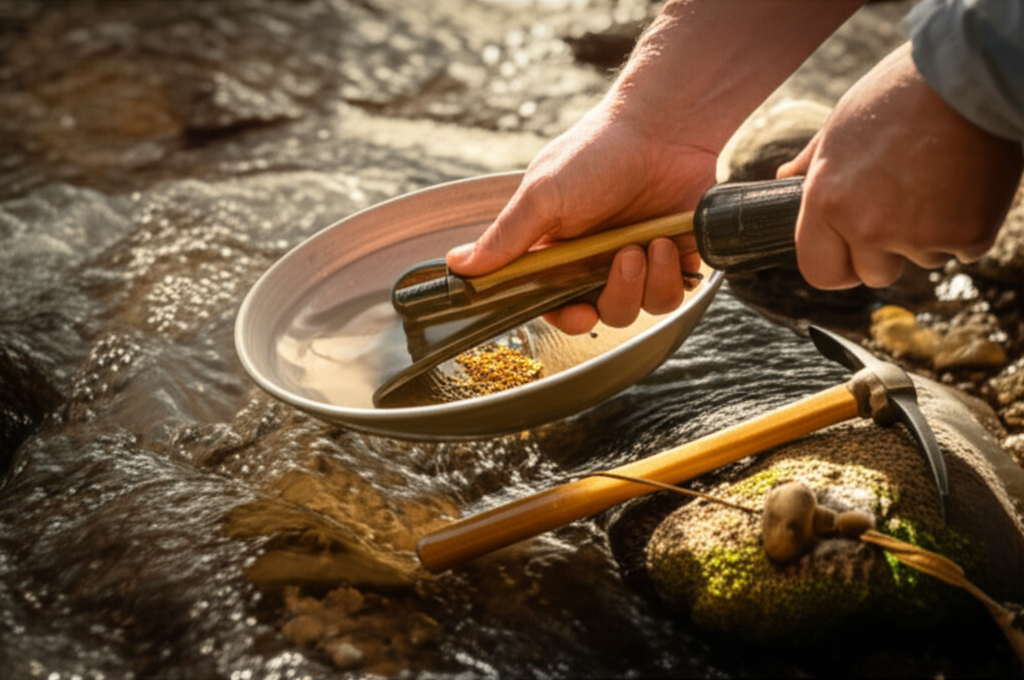
While a simple pan is the starting point, a professional gold panner needs more. Investing in a good quality plastic or metal pan with riffles is essential for efficient gold recovery. A classifier or sieve helps remove larger rocks, allowing you to focus on the smaller material that might contain gold.
A good snuffer bottle is vital for carefully collecting tiny gold flakes. A sturdy digging tool, like a shovel or a crevice tool, will help you access potential gold-bearing material. Don’t forget a durable bucket to carry your material and a comfortable pair of waders for working in the water.
The Economic Realities: How Much Gold is Enough?
The biggest hurdle to making a living panning for gold is the sheer amount of gold you need to recover to make it financially viable. Gold prices fluctuate, but even at high market rates, you need to extract a significant quantity to cover your expenses and earn a wage. This means assessing the potential yield of an area before investing too much time.
It’s crucial to have realistic expectations about daily returns. Some days will be incredibly fruitful, while others might yield very little. This unpredictability is a significant factor in whether this can be a sole source of income.
Calculating Your Potential Earnings
To make a living, you need to do the math. Consider the current market price of gold per ounce. Then, estimate how much material you can process in a day and the average gold recovery rate for that material. This calculation will quickly show you the scale of operation required.
For example, if gold is $2000 per ounce and you need to earn $100 a day after expenses, you need to recover approximately 1/20th of an ounce (1.4 grams) daily. This might sound achievable, but processing enough material to find that amount consistently can be very labor-intensive.
The Cost of Doing Business
Beyond your initial tools, there are ongoing costs. Fuel for vehicles to reach remote prospecting sites, maintenance for equipment, permits and claims fees, and supplies all add up. You also need to factor in the cost of your time – your labor is your most valuable asset.
Many successful gold prospectors supplement their income by selling high-quality gold nuggets or specimen pieces, which command a premium over the raw market price. This requires not only finding gold but finding visually appealing pieces.
One of the most critical aspects of professional gold panning is understanding the legal framework. In many areas, you can’t just pan anywhere. You need to be aware of mining claim laws, land ownership, and environmental regulations. Prospecting on someone else’s property or mining claims without permission is illegal and can lead to severe penalties.
Securing your own claims can be an expensive and time-consuming process, but it ensures your right to prospect in a productive area. Always research the specific laws in your chosen region before you start.
Understanding Mining Claims
Mining claims grant you the exclusive right to explore for and extract minerals on a specific piece of land. These claims can be staked on federal or state lands, depending on the location. The process involves marking the boundaries of your claim and filing the necessary paperwork with the relevant government agency.
Maintaining a claim usually involves annual fees or assessment work, ensuring you are actively working the ground. This is a significant commitment for a full-time prospector. You can learn more about mining claim procedures through resources like the Bureau of Land Management (BLM) in the United States.
Environmental Responsibility
Responsible prospecting is not just good practice; it’s often legally required. This means minimizing your impact on the environment. Avoid disturbing riverbanks excessively, properly dispose of waste, and be mindful of fish spawning areas and water quality.
Using hand tools and limiting the use of heavy machinery helps maintain a lower environmental footprint. Many prospecting organizations offer guidance on best practices for environmentally sound operations.
Beyond the Pan: Advanced Gold Recovery Techniques
While panning is the foundational skill, making a living often requires scaling up. This involves using equipment that can process much larger volumes of gravel more efficiently than a single pan. Mastering these techniques is a significant breakthrough for increasing your output.
These methods allow you to cover more ground and extract gold from areas that would be impractical to pan alone. They represent the next step for anyone serious about turning gold prospecting into a profession.
The Power of the Sluice Box
A sluice box is essentially a long channel with riffles and matting designed to capture gold as water flows through it. You shovel gravel into the top, and the water carries it down, leaving the heavier gold behind in the riffles. This is a much faster way to process material than hand-panning.
Properly setting up and operating a sluice box, understanding water flow, and knowing when to “clean out” your sluice are essential skills. A well-functioning sluice can dramatically increase your gold recovery.
Highbankers and Power Sluices
Highbankers, also known as power sluices, take sluicing to the next level. They use a pump to bring water from the river up to the sluice box, which is set up on the bank (hence “highbanker”). This allows you to work areas away from the immediate water’s edge, often where richer deposits are found.
These machines require more investment and maintenance but offer a significant increase in processing capacity. They are a common tool for serious prospectors looking to maximize their recovery.
The Prospector’s Lifestyle: Challenges and Rewards
Making a living panning for gold isn’t just about finding gold; it’s about embracing a particular lifestyle. This often involves working outdoors in remote locations, dealing with unpredictable weather, and facing physical challenges. It requires self-discipline and a deep passion for the pursuit.
While the financial rewards can be inconsistent, the rewards of self-sufficiency, connection with nature, and the thrill of discovery are immense. It’s a life that appeals to those who value freedom and adventure over a traditional 9-to-5 job.
Work-Life Balance (or Lack Thereof)
The “work” in gold prospecting often blends into your life. You might spend days or weeks in the field, far from modern conveniences. This can be isolating for some, while others thrive on the solitude and self-reliance.
Balancing this lifestyle with family and other commitments requires careful planning and communication. It’s a demanding but potentially deeply fulfilling way to live.
The Thrill of the Find
There’s an undeniable rush that comes with seeing that glint of gold in your pan or sluice. This thrill of discovery is a primary motivator for many gold prospectors. It’s the culmination of hard work, knowledge, and a bit of luck.
This inherent reward, combined with the satisfaction of self-sufficiency, often outweighs the financial uncertainties for those who choose this path. It’s a pursuit driven by passion as much as by profit.
Maximizing Your Finds: Essential Breakthrough Techniques
To truly make a living, you need to constantly refine your techniques and learn from every outing. This means analyzing your results, understanding why certain spots produced gold and others didn’t, and adapting your approach accordingly. Continuous learning is key.
This iterative process of testing, learning, and improving is what separates hobbyists from those who can sustain themselves. It’s about working smarter, not just harder.
Reading the Landscape
Understanding how gold moves and settles in a river system is crucial. Look for natural traps where heavy materials accumulate. This includes bedrock cracks, low spots in the riverbed, and the “tails” of obstructions like large boulders.
Pay attention to the type of gravel and sand. Areas with a concentration of black sands (magnetite and other heavy minerals) are often good indicators of gold presence. Learning to read these subtle signs is a breakthrough skill.
Effective Panning and Clean-Up
Mastering the art of panning is fundamental. It’s not just about shaking the pan; it’s about a controlled, methodical process of washing away lighter material while carefully retaining the gold. Practice is essential to develop the right touch.
Regular clean-up of your sluice box or highbanker is also vital. Don’t wait too long, or you risk losing accumulated gold. A systematic approach to cleaning and collecting your findings ensures you don’t lose any of your hard-earned treasure.
Beyond Gold: Diversifying Your Income Streams
For many who prospect full-time, gold panning is often just one part of their income. Diversifying your revenue streams can make the lifestyle much more sustainable and less financially precarious. This is a critical breakthrough for long-term success.
Think about how your prospecting skills and experiences can be leveraged in other ways. This allows for a more stable financial foundation while you pursue your passion.
Selling Gold Nuggets and Specimens
High-quality gold nuggets, especially those with unique shapes or attached to quartz, can fetch a significantly higher price than the raw market value of the gold itself. Many prospectors build a reputation for finding and selling these premium items. This requires good photography skills and knowledge of the collector’s market.
Building relationships with dealers, collectors, or even selling directly to the public through online platforms can be lucrative. This adds a significant premium to your recovered gold.
Guiding and Education
If you develop expertise in gold prospecting, you can share that knowledge with others. Offering guided prospecting trips, workshops, or online courses can be a fantastic way to generate income. Many beginners are eager to learn from experienced prospectors.
This not only provides a stable income but also reinforces your own knowledge and can lead to valuable networking opportunities within the prospecting community. Sharing your passion can be profitable.
Content Creation and Affiliate Marketing
Modern technology offers new avenues. Creating content about your prospecting adventures – through blogs, YouTube videos, or social media – can attract a following. This can lead to income through advertising, sponsorships, and affiliate marketing, where you earn commissions by recommending prospecting gear.
ToolGuider itself thrives on this model, reviewing and recommending the best gear for outdoor enthusiasts. This approach allows you to share your expertise and earn income from your passion without directly selling the gold you find.
The Future of Gold Panning as a Profession
The landscape of gold prospecting is constantly evolving. Technological advancements in detection equipment and processing tools continue to emerge. However, the fundamental principles of understanding geology and efficient recovery remain paramount.
While the romantic ideal of a lone prospector striking it rich might be rare, the possibility of making a living through dedicated, skilled, and diversified prospecting is very real. It requires a modern approach that blends traditional techniques with entrepreneurial thinking.
Frequently Asked Questions
Is gold panning a full-time job for anyone?
Yes, a small number of dedicated individuals make a living panning for gold, but it requires significant skill, hard work, and often, supplemental income sources. It’s not a path for the faint of heart or those expecting easy riches.
How much gold can you realistically pan in a day?
This varies wildly depending on location, skill, and luck. Some days you might find nothing, while other exceptionally productive days could yield a few grams. A consistent daily average is hard to predict but often measured in fractions of a gram for small-scale panning.
What are the biggest challenges in making a living panning for gold?
The biggest challenges include the unpredictable nature of finds, the sheer amount of material that needs to be processed, the physical demands of the work, and navigating legal and environmental regulations. Income instability is a major hurdle.
Do I need special permits to pan for gold?
Often, yes. Regulations vary by state and country. You may need permits for recreational panning, and definitely for commercial operations or if you intend to stake claims. Always check with local land management agencies and mining authorities.
What is the most important skill for a professional gold panner?
Beyond the physical skill of panning, the most crucial skill is understanding geology and how to identify promising prospecting locations. Knowing where to look efficiently saves immense amounts of time and effort.
Can I use metal detectors for gold prospecting?
Absolutely. While panning focuses on placer deposits in water, metal detectors, especially specialized gold detectors, are excellent for finding larger gold nuggets in dry creek beds, on hillsides, or even buried in the ground where lode deposits might be. They are a vital tool for many professional prospectors.
How much money do I need to start gold panning professionally?
You can start with a basic panning kit for under $100. However, to operate professionally and increase your chances of making a living, investing in better equipment like sluices, highbankers, and potentially a vehicle for remote access could range from a few hundred to several thousand dollars.
Conclusion
Can you make a living panning for gold? The answer is a resounding “yes, but…” It’s not a get-rich-quick scheme, but rather a demanding, potentially rewarding profession for those with the right mindset and skills. Success hinges on realistic expectations, continuous learning, mastering efficient recovery techniques, understanding the economics, and often, diversifying your income. By treating gold prospecting as a serious business – one that requires geological knowledge, entrepreneurial drive, and a deep respect for the environment – you can significantly increase your chances of building a sustainable living from the pursuit of gold.
