


Published on: September 28, 2025 | Updated on: October 21, 2026
Yes, you can absolutely metal detect on Florida beaches! While some restrictions apply, this guide reveals the best spots, essential gear, and crucial tips for uncovering hidden gems like coins, jewelry, and relics along Florida’s stunning coastline.
Florida’s beaches beckon treasure hunters with the promise of lost coins, sparkling jewelry, and forgotten relics. Many newcomers wonder, “Can you metal detect on Florida beaches?” The answer is a resounding yes, but with a few important considerations. Navigating the rules and knowing where to look can make all the difference between a frustrating day and a fruitful adventure. This guide will equip you with everything you need to know to maximize your finds and enjoy your time detecting on the sun-drenched sands of the Sunshine State.
Unlocking Florida’s Sandy Treasures: Your Beach Detecting Roadmap
This comprehensive guide will walk you through the essentials of metal detecting on Florida beaches, from understanding regulations to choosing the right equipment and finding those hidden gems. We’ll cover everything you need to know to embark on a successful and rewarding treasure hunting experience.
Can You Metal Detect On Florida Beaches? The Official Word
Florida beaches offer fantastic opportunities for metal detecting, with most public areas being permissible, though local regulations and specific park rules must always be checked. Understanding these guidelines is the first step to a successful hunt, ensuring you comply with laws and respect the environment. Ignoring them can lead to fines or confiscation of your finds.
While the general sentiment is positive, it’s crucial to understand that regulations can vary. State parks, county beaches, and city shorelines might have their own specific rules. Always conduct research on the specific beach you plan to visit before heading out. A quick search for “[Beach Name] metal detecting regulations” is usually a good starting point.
Federal vs. State vs. Local Regulations
Navigating the layers of regulations can seem daunting, but it’s manageable. Federal laws primarily govern protected historical sites, which are generally off-limits. State laws often provide a broader framework, while local ordinances can be the most specific and impactful for beach detecting.
Understanding these distinctions helps you focus your efforts. For instance, a general state rule might permit detecting, but a specific city ordinance could prohibit it in certain zones or during peak hours. It’s always best to err on the side of caution and confirm with the local authorities if unsure.
Key Areas to Avoid
Certain areas are almost universally off-limits for metal detecting. These include protected historical sites, archaeological zones, wildlife nesting areas, and areas within a specified distance of piers or underwater structures where your digging might cause damage. Always be mindful of posted signs and designated protected zones.
Respecting these boundaries is not only legal but ethical. It helps preserve the natural beauty and historical integrity of Florida’s coastlines for everyone to enjoy.
Essential Gear for Florida Beach Detecting
Equipping yourself with the right tools is paramount for success on the beach. The salty, wet environment demands specific types of equipment that can handle the conditions and effectively locate targets. Investing in quality gear will significantly improve your chances of finding those coveted hidden gems.
The Best Metal Detectors for Sandy Shores
When metal detecting on Florida beaches, a detector with good discrimination capabilities and the ability to handle saltwater is crucial. Many modern detectors offer excellent performance in this environment, distinguishing between trash and treasure effectively. Look for models that are waterproof or submersible, as you’ll likely encounter wet sand and possibly shallow water.
My personal experience points to several brands that consistently perform well on the beach. Brands like Minelab, Garrett, and Nokta Makro offer fantastic options designed for various budgets and experience levels. Features like multiple frequency options and saltwater modes are definite advantages.
| Detector Model | Key Features for Beach Detecting | Price Range |
| :——————– | :————————————————————- | :————- |
| Minelab Equinox Series | Waterproof, multi-frequency, excellent discrimination, versatile | $$$ |
| Garrett AT Pro | Waterproof, robust, good depth, easy to use | $$ |
| Nokta Makro Simplex+ | Waterproof, affordable, excellent performance for the price | $ |
Waterproof Coils: Your Underwater Advantage
A waterproof coil is non-negotiable for beach detecting. It allows you to swing your detector through the surf and shallow water where many items are lost. Different coil sizes offer varying advantages; smaller coils are better for pinpointing in trashy areas, while larger coils provide greater depth and coverage.
The right coil can make a significant difference in what you find. I’ve found that a DD (Double-D) coil design generally performs better in mineralized saltwater environments than a concentric coil. This design helps to cancel out ground mineralization and reduce false signals.
Pinpointers: The Treasure Finder’s Best Friend
Once your detector signals a target, a pinpointer is essential for locating it quickly and accurately in the sand. Without one, you’ll spend a lot of time digging large plugs of sand, disturbing the beach unnecessarily. A good pinpointer saves time, effort, and is crucial for efficient recovery.
Invest in a waterproof pinpointer; you’ll be grateful when you’re working in wet sand or the shallow surf. Brands like Garrett, Nokta Makro, and Vibra-Quake offer reliable options. Their small size and sensitivity allow you to pinpoint the exact location of your target within the dug sand plug.
Digging Tools: Sand Scoops and Shovels
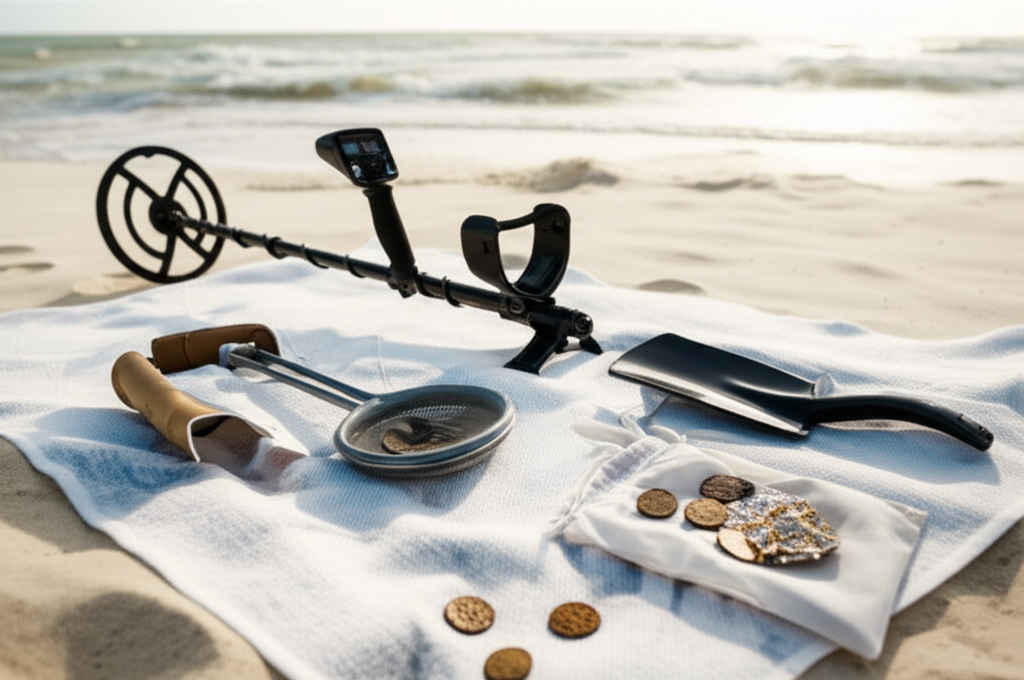
Specialized digging tools are a must for beach detecting. A sturdy sand scoop, often made of stainless steel or durable plastic with drainage holes, is ideal for sifting through wet sand. For drier sand or slightly deeper targets, a beach shovel can be useful.
Ensure your digging tools are corrosion-resistant. Stainless steel is a great choice for scoops, and plastic shovels designed for sand are lightweight and effective. Always try to dig neat plugs that can be easily replaced to minimize your impact on the beach.
Mastering the Techniques: Finding the Sweet Spots
Knowing where to swing your detector is just as important as the gear you use. Florida’s beaches are dynamic environments, and understanding where items are likely to be found will dramatically increase your success rate. Focus your efforts on areas where people typically lose items.
The “Wet Sand” Goldmine
The wet sand, just at the edge of the receding tide, is often the most productive zone. This is where waves have churned up the sand, potentially revealing targets that were previously buried. Detecting here requires patience and a good waterproof detector setup.
Items lost higher up on the dry sand can be washed down by the tide and settle in this transitional zone. It’s a constant cycle of deposition and erosion, making it a prime hunting ground for coins, rings, and other small, dense items.
Dry Sand and Dunes: High and Dry Finds
While wet sand is popular, don’t overlook the dry sand and dune areas. People often lose items while walking, sunbathing, or playing games on the dry beach. Higher traffic areas like near concessions, restrooms, and parking lots are particularly promising.
Be extremely cautious when detecting near or in dunes. Many dune systems are protected to prevent erosion. Always check local regulations regarding dune access and detecting. Stick to established paths and areas where detecting is clearly permitted.
Tidal Pools and Surf Zones
The tidal pools and the shallow surf zone can yield incredible finds. As the tide goes out, it can expose items that have been submerged for a long time. This area is best explored with a fully submersible detector and coil.
Be aware of your surroundings and the strength of the waves. Safety is paramount, so never venture into water that feels too deep or rough. A good pair of wading boots can also be beneficial for stability and protection.
Understanding Beach Mineralization and Saltwater Effects
Florida’s beaches, like many coastal areas, present unique challenges due to high salt content and mineralized sand. These conditions can cause “chatter” or false signals on less capable detectors, making discrimination difficult. Choosing the right equipment and settings is key to overcoming these obstacles.
Ground Balancing for Salty Sand
Proper ground balancing is essential for filtering out the effects of saltwater and mineralized sand. Most beach-ready detectors have automatic or manual ground balance features. Taking the time to correctly ground balance your detector will significantly reduce false signals and improve target accuracy.
Saltwater is conductive, and mineralized sand can mimic the signals of metal. A detector that can effectively “see through” these ground conditions will perform much better. This is where detectors with multiple frequency options often shine, allowing you to tune into the best frequency for the specific conditions.
Dealing with Iron Trash
Beaches are notorious for iron trash – bottle caps, pull tabs, and old nails. Effective discrimination settings on your detector will help you filter out these common targets, allowing you to focus on more valuable finds like coins and jewelry. However, be careful not to discriminate too much, as some desirable targets can have iron content.
Learning to identify the sounds and visual cues of different targets is a skill that develops with practice. Many detectorists develop a “feel” for what a coin sounds like versus a pull tab. Experimenting with your discrimination settings in a known target area is highly recommended.
Legal Considerations and Ethical Detecting
Responsible detecting ensures that we can continue to enjoy this hobby for years to come. Adhering to laws and practicing good etiquette is crucial for maintaining access to Florida’s beautiful beaches for metal detecting. Always remember that you are a guest on public land.
Respecting Private Property and Restricted Areas
Never detect on private property without explicit permission. This includes areas adjacent to beaches that may be privately owned. Always be aware of posted signs indicating restricted areas, historical sites, or environmentally sensitive zones.
Your detector is a tool for discovery, not for trespassing or damaging property. Respecting boundaries is fundamental to being a responsible detectorist and maintaining good community relations.
Proper Digging and Fill Techniques
When you get a target, dig neatly. Use your sand scoop to remove a clean plug of sand, keeping it intact if possible. Locate your target with your pinpointer and retrieve it carefully. Crucially, always fill your holes completely, leveling the sand as you found it.
This practice minimizes your impact on the beach environment and prevents hazards for other beachgoers. Leaving your digging site as undisturbed as possible is a sign of a considerate detectorist.
Reporting Significant Finds
In some cases, you may uncover historically significant artifacts or items of considerable value. It’s often a legal and ethical requirement to report such finds to the appropriate authorities, such as the local historical society or state archaeological division.
While most beach finds are common items like coins and jewelry, being aware of this possibility is important. Familiarize yourself with local reporting requirements before you start detecting.
Popular Florida Beaches for Metal Detecting
Florida boasts miles of coastline, and some beaches are legendary among detectorists for their potential. While every beach can yield finds, certain locations have a reputation for producing a higher volume of lost items due to their popularity and historical significance.
Clearwater Beach: A Tourist Hotspot
Clearwater Beach is consistently ranked among the top beaches in the US, attracting millions of visitors annually. This high foot traffic means a consistent loss of coins, jewelry, and other personal items. The wide sandy shores and often calm waters make it an excellent spot for beginners and experienced detectorists alike.
Its popularity, however, also means it can be more crowded and potentially have more “trash” to sift through. Focusing on areas away from the most congested spots, especially during off-peak hours, can yield better results.
Siesta Key Beach: The Quartz Sand Gem
Known for its incredibly fine, powdery quartz sand, Siesta Key is another highly popular destination. The unique composition of the sand can sometimes make targets easier to spot visually once unearthed. Its vast expanse offers plenty of room to spread out and explore.
Like Clearwater, the sheer volume of visitors means plenty of potential finds. Early mornings or late afternoons are often the best times to avoid crowds and detect in peace.
South Beach, Miami: Urban Beach Treasure
South Beach is famous for its vibrant atmosphere and beautiful shoreline, attracting a diverse crowd. This urban beach environment means a constant flow of people, leading to lost valuables. The energy of South Beach translates to a dynamic detecting experience.
Be aware that urban beaches can sometimes have stricter regulations or more patrols. Always confirm local ordinances and be prepared for a potentially trashier environment.
Sanibel Island: Shelling and More
While famous for its shelling, Sanibel Island also offers opportunities for metal detecting. The island’s natural beauty and history suggest potential for finding older coins and relics, in addition to modern lost items. Its reputation for shelling means many visitors are focused on the sand, increasing the chance of lost items.
Remember to check specific regulations for Sanibel Island and its various public beach access points, as rules can be quite specific here.
Advanced Tips for Maximizing Your Finds
Once you’ve got the basics down, these advanced tips can help you refine your technique and uncover those truly hidden gems. Experience is the best teacher, but applying these strategies will accelerate your learning curve.
Researching Historical Significance
Look into the history of the beaches you plan to detect. Older beaches, sites of former piers, or areas near historical shipwrecks can hold older coins and relics. Online archives, local historical societies, and old maps can provide invaluable clues.
Understanding the past use of an area can unlock potential. For instance, if a beach was a popular picnic spot a century ago, you might find older coins or personal items from that era.
Detecting During Low Tide and After Storms
Low tide exposes more of the beach, revealing areas that are usually underwater. Detecting during extreme low tides can be very productive. Similarly, storms can churn up the sand and unearth targets that have been buried for years.
Keep an eye on tide charts and weather forecasts. After a significant storm, the beach can be an entirely new landscape, often revealing treasures previously hidden deep beneath the surface.
Using Multiple Frequencies
Many modern detectors offer multi-frequency capabilities. Utilizing different frequencies can help you locate different types of targets and perform better in varying ground conditions. Lower frequencies tend to penetrate deeper and are good for larger objects, while higher frequencies are more sensitive to smaller targets like gold jewelry.
Experimenting with your detector’s frequency settings based on the type of targets you’re seeking and the beach conditions is a key strategy for advanced detection.
FAQ: Your Burning Beach Detecting Questions Answered
Q1: Is it legal to metal detect on all Florida beaches?
A1: Generally, yes, on most public beaches. However, always check specific local ordinances for the beach you plan to visit, as some areas may have restrictions or require permits.
Q2: What is the best time of day to metal detect on a Florida beach?
A2: Early mornings or late afternoons, especially during the week, offer fewer crowds. Low tide periods are also excellent for uncovering more targets.
Q3: What kind of finds can I expect on Florida beaches?
A3: You can find modern and older coins, jewelry (rings, necklaces, earrings), watches, fishing lures, and occasionally historical relics.
Q4: Do I need a permit to metal detect on Florida beaches?
A4: Most public beaches do not require a permit for recreational metal detecting, but some state parks or specific managed areas might. Always verify with the local park authority.
Q5: How do I deal with the saltwater and mineralized sand?
A5: Use a detector designed for saltwater use, ensure it’s properly ground balanced, and utilize discrimination settings to filter out unwanted signals from the conductive environment.
Q6: Should I dig up all my targets?
A6: Dig targets that signal as non-ferrous metals (like gold, silver, copper). Learn to recognize iron signals and leave them in the ground. Always fill your holes neatly.
Q7: What’s the most important rule when metal detecting on the beach?
A7: Respect the beach and its users. Always fill your holes, pack out your trash, and adhere to all local regulations and etiquette.
Conclusion: Your Florida Beach Treasure Awaits
So, can you metal detect on Florida beaches? Absolutely! With the right preparation, equipment, and knowledge of the local landscape and regulations, Florida’s beaches offer an incredible playground for the aspiring treasure hunter. From the bustling shores of Clearwater to the unique sands of Siesta Key, opportunities abound. Remember to always prioritize safety, respect the environment, and adhere to local rules. The thrill of uncovering a lost coin, a forgotten piece of jewelry, or a historical relic makes every swing of the coil worthwhile. Happy hunting!
