



Published on: November 5, 2025 | Updated on: November 5, 2025
Metal Detector For Jewelry: Essential Hidden Gems
Finding a metal detector for jewelry requires understanding specific features like frequency, discrimination, and sensitivity to unearth precious finds without digging up junk. This guide reveals the best tools and tips for jewelry hunters.
Are you dreaming of finding lost rings or shiny necklaces? Metal detecting for jewelry can be a rewarding hobby. Many people lose precious items without even knowing it. Finding these treasures can feel like striking gold. But choosing the right metal detector makes all the difference. This guide will help you pick the perfect tool. We will cover what to look for. We will also share tips for success. Get ready to uncover hidden gems.
Why Choose a Specific Metal Detector for Jewelry?
Not all metal detectors are made the same. Some are built for finding old coins. Others are better for large relics. For jewelry, you need a detector that can find small, thin metal objects. These items often have low conductivity. A specialized detector offers better sensitivity. It also helps ignore junk metal. This saves you time and effort.
A good jewelry metal detector needs to be sensitive. It must detect small gold and silver items. These are often thin and delicate. Many general-purpose detectors might miss them. They might also get confused by iron trash. A dedicated jewelry detector has features to avoid this. It helps you pinpoint those shiny finds.
Key Features to Look for in a Jewelry Metal Detector
When hunting for jewelry, certain features are crucial. These help the detector pinpoint small, valuable targets. Understanding these will guide your choice. It ensures you get the best performance. Let’s break down what matters most.
High Frequency Operation
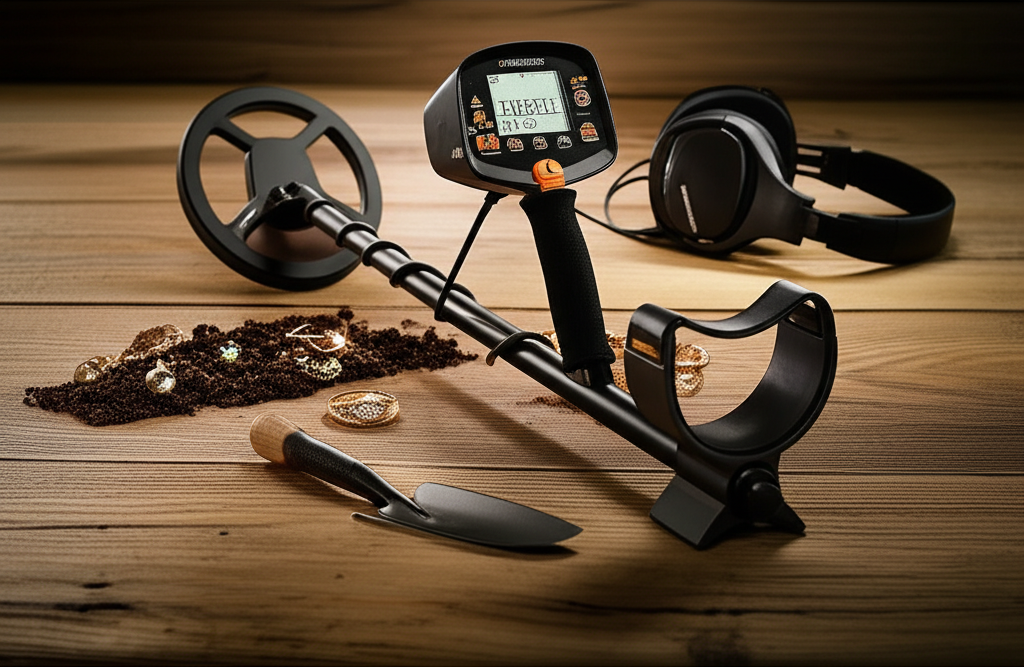
Frequency is measured in kilohertz (kHz). Jewelry, especially small rings and earrings, is often made of gold or silver. These metals have specific electrical properties. A higher frequency detector is more sensitive to these properties. This makes it excellent for detecting small, thin targets like jewelry.
Most general detectors operate between 5-15 kHz. For jewelry, look for detectors operating at 15 kHz or higher. Some advanced models even go up to 40 kHz or more. This higher frequency allows them to pick up tiny gold nuggets and delicate jewelry pieces that lower frequencies might miss.
Discrimination Settings
Discrimination allows the detector to ignore certain types of metal. This is very important when hunting for jewelry. You want to find gold, silver, and platinum. You do not want to dig up every rusty nail or pull tab. Good discrimination helps filter out unwanted iron trash.
Look for a detector with adjustable discrimination. This lets you fine-tune what it ignores. Some detectors have pre-set modes for jewelry. Others offer a notch discrimination feature. This lets you specifically exclude certain unwanted signals. It means less digging through junk.
Ground Balance
Ground balance is how a detector handles minerals in the soil. Different soils have different mineral content. This can affect the detector’s performance. It can cause false signals or mask targets. Automatic ground balance is a convenient feature. Manual ground balance offers more control for experienced users.
For jewelry hunting, especially near beaches or saltwater, good ground balancing is vital. Saltwater can be very conductive. It can interfere with target signals. A detector with excellent ground balance can overcome this. It allows you to hunt effectively in challenging environments.
Sensitivity Control
Sensitivity controls how deeply the detector can find targets. Higher sensitivity means it can detect objects buried deeper. However, too much sensitivity can lead to false signals. This is especially true in areas with a lot of metal trash. You need to be able to adjust it.
A good jewelry detector will have adjustable sensitivity. This allows you to balance depth and stability. You can increase it in cleaner areas. You can decrease it in trashy areas to get cleaner signals. This fine-tuning is key to successful jewelry hunting.
Waterproof Coil and Detector
Jewelry is often found near water. Beaches, lakes, and rivers are common places. A waterproof coil is essential for this. Some detectors are fully submersible. This allows you to hunt in shallow water. It opens up many more hunting spots.
Even if you don’t plan to hunt underwater, a waterproof coil is useful. It allows you to rinse the detector. It also lets you hunt in wet grass or after rain. This flexibility is a big advantage for any detectorist.
Top Metal Detector Types for Jewelry Hunting
Different types of metal detectors excel in different scenarios. Understanding these types helps you choose the right one for your jewelry hunting goals. Each has its strengths and weaknesses.
All-Purpose Detectors with Jewelry Modes
Many beginner-friendly detectors are designed for general use. They often include special modes for finding jewelry. These modes typically adjust frequency and discrimination settings automatically. They are a good starting point for new hobbyists.
These detectors offer a balance of features. They can find coins, relics, and jewelry. They are usually easier to learn and use. Brands like Garrett, Minelab, and Nokta Makro offer excellent options in this category. They provide a solid foundation for various types of detecting.
High-Frequency Specialized Detectors
These detectors are built with jewelry in mind. They operate at higher frequencies than standard models. This makes them incredibly sensitive to small gold items. They are perfect for beach hunting and areas where gold jewelry is likely to be lost.
While excellent for jewelry, they might not be as good at finding larger, deeper targets like coins or relics. Their high frequency can also be more affected by ground mineralization. They are a specialized tool for a specific job.
Pulse Induction (PI) Detectors
Pulse induction detectors are known for their depth and ability to handle highly mineralized ground. They are often used for gold prospecting and beach hunting. PI detectors are not as good at discriminating between different metals as VLF (Very Low Frequency) detectors. They tend to detect all metals.
However, some PI detectors have settings that can help differentiate targets. They are very powerful for finding gold jewelry, especially in saltwater environments. They can be a great choice if you plan to hunt heavily mineralized beaches.
Understanding Different Brands and Models
Many reputable brands offer excellent metal detectors for jewelry. Each brand has its own strengths. Researching popular models can help you narrow down your choices. I’ve found that different brands cater to different needs and budgets.
Garrett: Known for user-friendly designs and reliable performance. The Garrett AT Gold is a popular choice for jewelry hunters due to its high frequency and waterproof design. Their ACE series also offers good value for beginners.
Minelab: Offers advanced technology with features like Multi-IQ (simultaneous multi-frequency). The Minelab Equinox series is highly versatile. It performs exceptionally well on jewelry in various conditions. The Vanquish series is a more budget-friendly option.
Nokta Makro: Provides robust, feature-rich detectors at competitive prices. The Nokta Makro Simplex+ is a great waterproof option for beginners. Their Gold Finder series is specifically designed for gold and jewelry.
Fisher: A long-standing brand with a good reputation. The Fisher CZ-21 is a classic submersible detector popular for beach jewelry hunting.
When considering a model, read reviews from other jewelry hunters. Look for real-world performance reports. This will give you the best insight.
Essential Accessories for Jewelry Detectors
A great metal detector is only part of the equation. Having the right accessories can significantly improve your success rate. These tools help you locate, recover, and protect your finds. I always carry a few key items with me.
Pinpointers
A pinpointer is a small, handheld detector. It helps you pinpoint the exact location of a target once you’ve dug a plug of soil. This is incredibly useful for finding tiny jewelry items. Without one, you could spend ages sifting through dirt.
Look for a pinpointer with good sensitivity and a vibration alert. Some are waterproof, which is great for beach hunting. Brands like Garrett, Nokta Makro, and Minelab make reliable pinpointers. Having one is non-negotiable for serious jewelry hunters.
Digging Tools
You will need tools to carefully excavate your finds. A good digging tool should be sturdy but also allow for precise digging. This is important to avoid damaging delicate jewelry. Beach shovels are great for sandy areas. Soil knives or trowels work well in parks and fields.
Consider a tool with a serrated edge for cutting through roots. A digging tool with measurement markings can also be helpful. Always aim to dig clean plugs of soil. This makes it easier to replace the turf and leave no trace.
Headphones
Headphones are crucial for hearing faint signals. They also help block out ambient noise. This allows you to focus on the detector’s audio cues. Many detectors come with a speaker, but headphones offer a much better experience.
Look for comfortable, durable headphones. Many are designed specifically for metal detecting. Wireless options are also available, offering more freedom of movement. Good headphones can make the difference between hearing a target and missing it.
Carry Bag and Protection
A sturdy carry bag protects your detector during transport and storage. It keeps your equipment organized and safe. Many bags have compartments for accessories. Some detector coils also come with protective covers. These prevent scratches and damage to the coil.
Protecting your investment is important. A good bag ensures your detector lasts longer. It also makes it easier to carry everything to your hunting spot.
Where to Hunt for Jewelry
Knowing where to look is as important as having the right detector. Jewelry can be lost in many places. Thinking like the person who lost it helps. I’ve found some of my best pieces in surprising spots.
Beaches
Beaches are prime locations for jewelry hunting. People often remove rings and bracelets before swimming or playing. They can slip off unnoticed. The sand shifts constantly, revealing and burying items. Saltwater environments require detectors with good ground balancing.
Look for areas near lifeguard stands, piers, and popular swimming spots. Also, check the high tide line. This is where items washed ashore might settle. Always be aware of local regulations regarding metal detecting on beaches.
Parks and Playgrounds
Parks are another excellent hunting ground. People relax, play sports, and picnic there. Rings can come off during active play. Small earrings can fall unnoticed. Playgrounds are especially good spots for finding children’s jewelry.
Focus on areas where people sit or congregate. Look around benches, picnic tables, and under swings. Remember to get permission if required. Many parks have specific rules about detecting.
Old Home Sites and Yards
Old houses, even ruins, can hold forgotten treasures. Jewelry might have been lost or buried over time. If you have access to old properties (with permission!), they can be very rewarding. Even older backyards can yield results.
Be mindful of property rights. Always get explicit permission before detecting on private land. Researching the history of a property can sometimes provide clues.
Waterways and Lakeshores
Rivers, lakes, and streams are also places where jewelry can be lost. People might drop items while boating, swimming, or fishing. The water can move items around. Detecting in shallow water requires a waterproof detector or coil.
Be aware of water safety. Never hunt in currents that are too strong. Always check local regulations for detecting in waterways.
Techniques for Successful Jewelry Hunting
Beyond having the right gear, your detecting technique matters. Using smart strategies increases your chances of finding those elusive pieces. I’ve learned a lot from trial and error.
Slow and Steady Sweeping
Sweep your coil slowly and deliberately over the ground. Overlap each sweep by about half the coil’s width. This ensures you cover the area thoroughly. Slow sweeping helps the detector pick up faint signals from small targets.
Rushing can cause you to miss targets. Take your time and focus on covering the ground systematically. This methodical approach pays off.
Listening Carefully to Audio Cues
Pay close attention to the sounds your detector makes. Different tones can indicate different types of metal. Learn to distinguish between a strong, clear signal and a faint, broken one. Practice is key to interpreting these sounds accurately.
Many detectors have visual displays too. These can show target IDs or conductivity. However, the audio signal is often the primary way to identify a target. Trust your ears.
Using Your Pinpointer Effectively
Once your detector signals a target, use your pinpointer. Turn it on and slowly move it around the area. The closer it gets to the target, the stronger the signal will become. This dramatically reduces the time spent searching in the soil plug.
Be methodical with your pinpointer. Start wide and then narrow your search. This ensures you don’t miss the tiny item.
Digging Clean Plugs
When you get a target signal, dig a clean plug of soil. Use your digging tool to carefully cut around the target area. Lift the plug gently. Then, use your pinpointer to locate the target within the plug or the hole.
This technique minimizes disturbance to the ground. It makes it easy to replace the turf perfectly. Leaving no trace is crucial for maintaining good relations with landowners.
Working in Grids
For larger areas, like fields or beaches, working in a grid pattern is best. Mentally divide the area into sections. Sweep your coil systematically through each section. This ensures you don’t miss any spots.
Mark your progress as you go. This prevents you from re-detecting areas or missing sections. A grid pattern ensures thorough coverage.
Common Mistakes to Avoid
Even with the best equipment, beginners can make mistakes. Avoiding these common pitfalls will improve your success. I’ve made many of them myself when I started.
Using the Wrong Frequency
Hunting for small gold jewelry with a low-frequency detector is difficult. You might miss valuable targets. Ensure your detector’s frequency is suitable for jewelry. High frequencies are generally better for this purpose.
Using a detector designed for large relics might not be sensitive enough for thin gold chains. Always match your detector to your target.
Not Learning Your Detector
Every metal detector has a learning curve. Don’t expect to master it on day one. Read the manual thoroughly. Practice in your yard with known targets. Learn what different signals sound like.
Understanding your detector’s settings and capabilities is vital. This knowledge helps you make better decisions in the field.
Digging Every Signal
While exciting, digging every signal can be frustrating. You’ll end up with a lot of trash. Learn to use your detector’s discrimination settings wisely. Listen to the audio cues and target IDs. Develop a feel for which signals are likely to be jewelry.
Sometimes, a marginal signal might be jewelry. But often, faint or choppy signals are junk. Use your judgment.
Not Respecting Property Rights
Always get permission before detecting on private property. Trespassing can lead to legal trouble and give all detectorists a bad reputation. Respect ‘No Trespassing’ signs.
Check local regulations for public parks and beaches. Some areas have restrictions. Being a responsible detectorist is important.
Ignoring Your Pinpointer
A pinpointer is an essential tool for jewelry hunting. Skipping this step wastes time and can lead to lost targets. Learn to use it effectively. It will save you a lot of frustration.
It helps you find tiny items quickly and accurately. Don’t leave home without it.
Frequently Asked Questions
What is the best metal detector frequency for jewelry?
The best frequency for jewelry is generally high, typically above 15 kHz. Higher frequencies are more sensitive to small, thin metal objects like gold rings and earrings. Some specialized detectors operate at 40 kHz or even higher.
Can I use a coin detector to find jewelry?
Some coin detectors can find jewelry, especially if they have adjustable discrimination and a higher frequency. However, detectors specifically designed for jewelry or with a dedicated jewelry mode will perform better. They are more sensitive to small gold and silver items.
Is it legal to metal detect on the beach?
Legality varies by beach. Many public beaches allow metal detecting, but some have restrictions. Always check with local authorities or park services before detecting. Some beaches may require permits or have designated areas.
How deep can a metal detector find jewelry?
Depth depends on the detector, coil size, target size, and ground conditions. A good jewelry detector can find items several inches deep. Larger coils and higher sensitivity settings can increase depth, but may also pick up more interference.
Should I get a waterproof metal detector for beach hunting?
Yes, a waterproof detector or at least a waterproof coil is highly recommended for beach hunting. This allows you to detect in wet sand and even shallow water. Saltwater can be challenging for metal detectors, so good ground balancing is also important.
What’s the difference between VLF and PI detectors for jewelry?
VLF (Very Low Frequency) detectors are generally better at discriminating between trash and targets. They work well in most conditions. PI (Pulse Induction) detectors are powerful and excel in highly mineralized ground like saltwater beaches, but they have less discrimination.
Conclusion: Your Path to Unearthing Hidden Gems
Finding the right metal detector for jewelry is key to success. By understanding features like high frequency, discrimination, and ground balance, you can make an informed choice. Remember to pair your detector with essential accessories like pinpointers and digging tools. Explore promising locations like beaches and parks. Practice good techniques, and avoid common mistakes. With the right metal detector for jewelry and a bit of patience, you’ll be well on your way to discovering those precious hidden gems. Happy hunting!
