



Published on: November 5, 2025 | Updated on: November 5, 2025
Metal Detector for Locating Property Pins: Essential, Proven
Finding property pins can be tough. A good metal detector makes it easy. This guide shows you the best tools and how to use them to find those hidden markers quickly and reliably, saving you time and frustration.
Losing track of property pins can be a real headache. These small markers are vital for boundaries. They can get buried deep or covered by grass and debris. Using the right metal detector is the smartest way to find them. It saves you digging blindly and wasting effort. This guide will walk you through choosing and using a metal detector specifically for locating property pins.
Why You Need a Metal Detector for Property Pins
Property pins are essential markers. They define your land boundaries. Without them, disputes can arise. Digging randomly to find them is time-consuming. It can also damage your lawn. A metal detector is designed to find buried metal objects. It can easily detect the iron or steel of a property pin. This makes finding them fast and accurate.
Understanding Property Pins and Metal Detection
Property pins are typically made of metal. They are often rebar or iron rods. Sometimes they have a plastic cap. The metal content is what a metal detector finds. Metal detectors work by sending out an electromagnetic field. When this field hits metal, it creates a signal. The detector’s coil picks up this signal. It then alerts you with a sound or visual display.
Key Features to Look for in a Property Pin Detector
When choosing a metal detector for property pins, certain features are key. You need a detector that is sensitive to small metal objects. It should also be able to ignore trash metal like nails. Look for detectors with good depth penetration. This helps find pins buried deeper. Simple operation is also important, especially for beginners.
Sensitivity and Depth
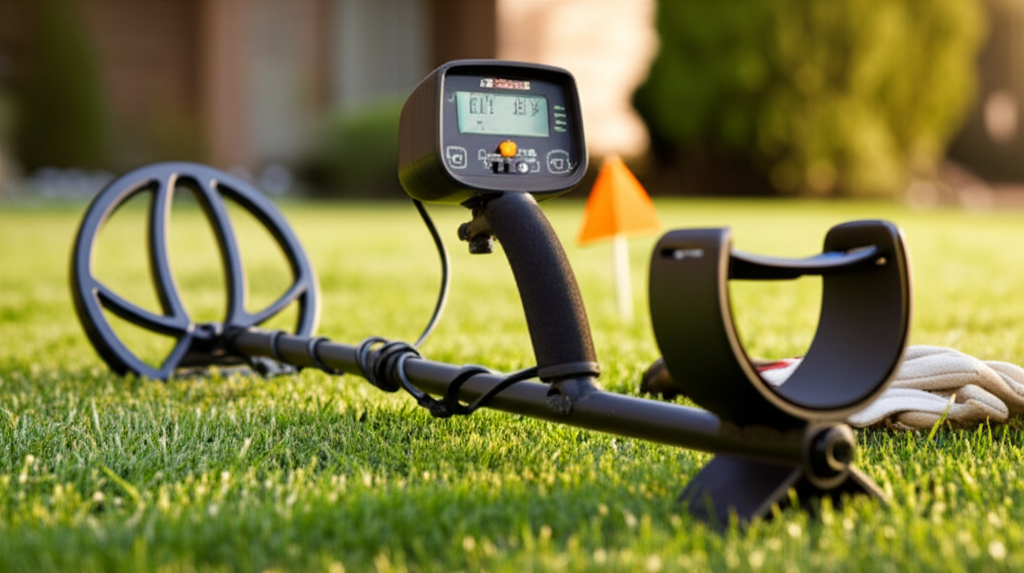
Higher sensitivity means the detector can pick up fainter signals. This is crucial for small or deeply buried pins. Depth capability tells you how deep the detector can sense metal. For property pins, a detector that can reach at least 6-12 inches is usually sufficient. Some advanced models go much deeper.
Discrimination Settings
Discrimination lets you ignore certain types of metal. For property pins, you want to ignore iron trash. This prevents the detector from constantly signaling on old nails. Good discrimination helps you focus on valuable targets. It makes finding the pin much easier.
Ground Balance
Ground balance helps the detector ignore minerals in the soil. Soil can contain iron and other minerals. These can cause false signals. Automatic or manual ground balance adjusts the detector. This improves accuracy in different soil types.
Coil Size and Type
Smaller coils are often better for pinpointing. They can get into tighter spaces. However, larger coils can detect deeper. For general property pin finding, a medium-sized coil (around 8-10 inches) is a good balance. Concentric coils are good for depth. DD coils are better in mineralized ground.
Recommended Metal Detectors for Property Pins
Several metal detectors perform well for finding property pins. I’ve used many myself over the years. Brands like Garrett, Minelab, and Nokta Makro offer excellent options. They have models suited for this specific task.
Garrett AT Pro / AT Gold
The Garrett AT Pro and AT Gold are very popular. They are waterproof. This means you can use them in wet grass or shallow water. They offer good depth and discrimination. I found many old fence posts with mine. They are robust and reliable for tough outdoor use.
Minelab Equinox Series
The Minelab Equinox series is a multi-frequency detector. This means it works on several frequencies at once. It’s excellent for finding small targets. It also performs well in varied ground conditions. I’ve found small gold nuggets with it. It’s a versatile machine for many types of detecting.
Nokta Makro Simplex+
The Nokta Makro Simplex+ is a great budget-friendly option. It is also waterproof. It offers good performance for its price. It has simple controls that are easy to learn. For beginners, this is a fantastic starting point.
Using a Pinpointer with Your Metal Detector
A pinpointer is a small, handheld detector. It is used once you think you’ve found the target. You use your main detector to get close. Then you switch to the pinpointer. You wave it over the soil. It will beep faster as you get closer to the metal. This helps you pinpoint the exact location.
Why a Pinpointer is Crucial
Imagine digging a large hole. You’re trying to find a small pin. A pinpointer dramatically reduces digging time. It helps you narrow down the target area. This saves your lawn and your energy. I never dig a target without one now.
Types of Pinpointers
There are vibrating and audio pinpointers. Some offer both. Vibration is useful if you are in a noisy environment. Audio is standard. Look for one that is waterproof if you work in wet conditions.
Step-by-Step Guide to Finding Property Pins
Finding a property pin with a metal detector is straightforward. Follow these steps for best results.
1. Prepare Your Detector
Turn on your metal detector. Set it to a general search mode. Ensure discrimination is set to ignore iron. Ground balance the detector if needed. This is often automatic on newer models.
2. Scan the Area Systematically
Start at one corner of your suspected boundary. Sweep the detector coil slowly back and forth. Overlap each sweep by about half the coil width. Move in a grid pattern. Cover the entire area where the pin might be.
3. Listen for Signals
Pay attention to any clear, repeatable signals. A property pin will usually give a strong, steady tone. Trash metal might give a choppy or inconsistent sound. Try to distinguish between them.
4. Pinpoint the Signal
Once you get a strong signal, try to pinpoint its exact location. Sweep the coil from different directions. The loudest signal usually indicates the center of the target. Mark this spot.
5. Use Your Pinpointer
Take out your handheld pinpointer. Turn it on. Carefully probe the marked spot. Move the pinpointer around the surface. It will beep faster and louder as you get closer.
6. Excavate Carefully
Once the pinpointer indicates the exact spot, start digging. Use a small trowel or digging tool. Dig a small plug of soil around the target. Try to keep the sod intact. This makes repair easier.
7. Locate the Pin
Gently remove the soil plug. Use your pinpointer to scan the soil and the hole. The pin should be visible or easily found with the pinpointer.
8. Replace the Sod
Once the pin is found and clear, carefully replace the soil plug. Press it down firmly. You can water the area to help it settle.
Troubleshooting Common Issues
Sometimes, finding pins isn’t as simple as it seems. You might encounter a few common problems.
No Signal Found
This could mean the pin is deeper than your detector can reach. It might also be made of a material that is hard to detect. Check your detector’s depth capabilities. Try a different coil if you have one.
Too Many False Signals
This usually happens with too much trash metal. Adjust your discrimination settings. Try to sweep the coil higher off the ground. Sometimes, changing the frequency on a multi-frequency detector helps.
Signal is Weak or Unclear
The pin might be corroded or damaged. It could also be very deep. Try different sweep patterns. Ensure your detector is properly tuned and ground balanced.
Maintaining Your Metal Detector
Proper maintenance keeps your detector working well. Always clean it after use. Wipe down the coil and shaft. Store it in a dry place. Check the battery regularly. Refer to your detector’s manual for specific care instructions.
Beyond Property Pins: Other Uses
Metal detectors are versatile tools. Once you have one, you can use it for many things. You can search for old coins in parks. You can hunt for historical relics in fields. Prospecting for gold is another popular use. It’s a great way to explore the outdoors.
Frequently Asked Questions
Can any metal detector find property pins?
While many detectors can, some are better than others. Detectors with good sensitivity and depth are best. Simple, entry-level models can work well too.
How deep can a metal detector find a property pin?
This depends on the detector and the pin. Most standard detectors can find pins buried 6-12 inches deep. Deeper pins may require more advanced equipment.
What if the property pin is made of plastic?
Property pins are almost always metal. If it has a plastic cap, the metal rod underneath is what the detector finds. Truly non-metallic markers are rare for property lines.
Do I need a special metal detector for property pins?
Not necessarily. Many general-purpose metal detectors work well. Look for good sensitivity and depth. Pinpointers are highly recommended to aid in finding the exact spot.
How do I avoid digging up trash when looking for a pin?
Use the discrimination feature on your detector. Set it to ignore iron. This will help filter out common trash like nails. A pinpointer also helps narrow the search area.
What is the best time of year to look for property pins?
Any time is good, but after rain can be helpful. The soil is softer, making digging easier. It can also wash away loose debris covering the pin.
Conclusion: Your Property Pin Locator Solution
Finding property pins doesn’t have to be a frustrating chore. With the right metal detector and a simple technique, you can locate them efficiently. A good detector, perhaps paired with a handy pinpointer, makes the job easy. It saves you time, effort, and potential lawn damage. Investing in a reliable metal detector for locating property pins is a proven solution. It ensures your property boundaries are always clearly marked.
