


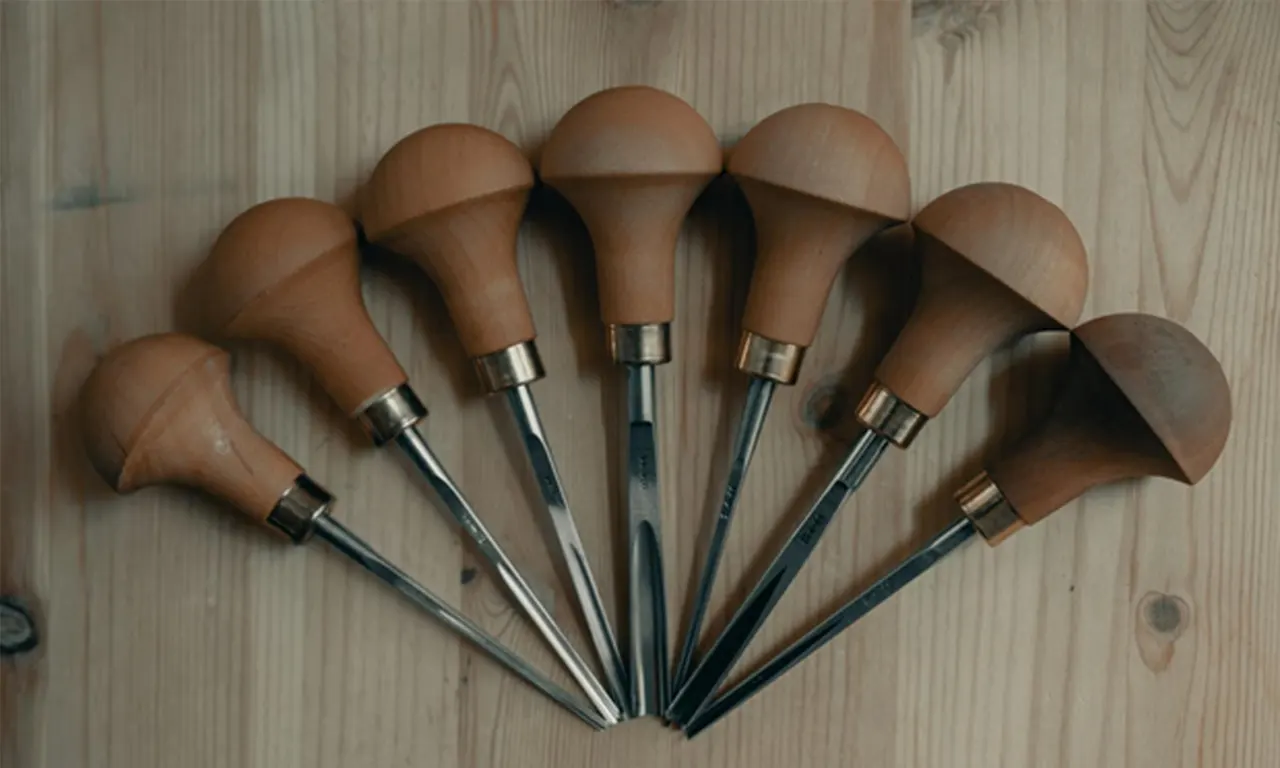
Wood carving is a captivating, accessible hobby that invites DIY enthusiasts to unleash their creativity by transforming ordinary pieces of wood into beautiful, often functional items. Whether you’re crafting intricate sculptures or practical utensils, the satisfaction of creating something with your hands is gratifying.
Having the right wood carving tools is pivotal in the success of this art form, making the carving process smoother and helping you refine your skills. Consider these must-have tools for your journey into wood carving, as well as some nice-to-have finishing equipment.
The Foundational Wood Carving Tools for Every DIY Carver
While expert wood carvers utilize a range of specialized tools, your initial introduction to the art requires only a few essential items to encourage steady progress and ultimately result in a remarkable DIY wood carving. Mastering these foundational tools sets you on the path to creating beautiful wood pieces and building your skills to a level where introducing others becomes the natural next step.
1. A Safety Glove
Before you even pick up other wood carving tools, invest in a good whittling safety glove for your non-dominant hand. Carvers often use gloves made from high-tech, cut-resistant fibers like Kevlar. Wearing a safety glove — especially when starting — allows you to carve with confidence and ensures your hand will remain safe during intricate detailing and heavy sessions.
2. A Whittling Knife
The whittling knife — also commonly called a carving knife — is the primary tool for shaping wood and a must-have for every wood carver’s toolkit. Its short, straight blade caters to your general-purpose carving needs, allowing for the precise carving, slicing, and shaping of wood. This tool is ideal for removing material and detailing small areas, offering DIYers the versatility to tackle a wide range of projects, from intricate designs to functional items like spoons or small figurines.
3. A Chisel Set
A basic chisel set is another must-have tool for DIY carvers starting out. When paired with a mallet, a chisel enables you to accomplish various wood carving tasks, from efficiently removing larger chunks to creating flat planes.
Chisels are powerful in shaping and refining your projects, making carving larger surfaces and producing clean edges more accomplishable. These make up a satisfactory starting set:
- A straight, flat chisel
- A half-round chisel
- A V-shape chisel
- A bent, curved chisel
- A compact mini wood chisel
- A palm chisel
4. A Set of Gouges
Gouges are indispensable for any wood carver, specifically to scoop out wood seamlessly. They’re essentially curved chisels used to create the hollows, curves and organic shapes that stand out in finished wood-carved projects. As you set out to gain experience, three gouges should suffice:
- A shallow gouge: #3 or #5 sweep
- A medium gouge: #7 sweep
- A deep u-gouge: #9 or #11 sweep
5. A Carver’s Mallet
A carver’s mallet is typically rounded and crafted from either wood or dense rubber. This tool provides controlled striking power for chisels and gouges, allowing for precise applications without damaging your tool handles.
When investing in a mallet for wood carving, look for one that feels balanced, without being too front-heavy. It should have a comfortable handle and a head that will withstand wear and tear. For beginner carvers, consider a wooden mallet that weighs around 8-12 ounces, unless you’re working with tougher wood types.
Other Considerations Before You Start Carving
When preparing to start your new DIY hobby, ensure your workspace provides the optimum environment for successful and safe crafting. Include the following to fashion a seamless working area:
- A sturdy and stable workbench or table that provides a solid carving foundation without shaking or wobbling
- A vise or clamp to hold your materials in place while you carve and a nonslip mat to prevent its movement when unclamped
- An ergonomic work surface design that allows for 90-degree elbow positioning while working when seated, reducing the chances of fatigue and discomfort
Tools for Detail and Finishing
While foundational tools set the stage for wood carving, detail-oriented instruments can elevate your projects from rough shapes to exquisite finishes. Mastering these will allow you to add intricate elements that truly define your wood carving skill.
6. A Detail Knife
The detail knife is a necessity for any wood carver seeking precision. With its very fine point, it excels in producing intricate work for delicate designs and finishing touches. This knife moves well in tight corners and executes fine lines, making it invaluable in projects that require great detail. Mastering the use of a detail knife can take your wood carving to new creative heights.
7. Sharpening Supplies
Keeping your tools sharp is essential for both safety and effective carving. Invest in a sharpening stone and honing compound to maintain a razor-sharp edge on your knives and tools.
Regular honing enhances cutting performance, ensuring smoother and more precise cuts while reducing effort and the potential for accidents. Investing time in sharpening your tools could yield better artistry and make your DIY experience more fruitful and enjoyable.
Sourcing Quality Wood for Your Projects
Using the right wood for carving is as important as having quality tools in your carving arsenal. With over 818 million acres of forestland in the United States, sourcing your wood domestically makes sense. Firstly, it’s easily accessible without the need for shipping delays, while also serving local communities without sacrificing quality.
Common wood carving options for DIYers practicing their new craft include lime, alder and poplar. These are all softer hardwoods that make starting out less challenging. Pine is a softwood known for its affordability and availability that is also an excellent carving option. However, the choice is really yours to make.
If you’re looking to carve spoons or other functional items, you’ll want a harder wood with a straight, fine, denser grain, so basswood, American cherry or butternut are likely better options. All these wood types are readily available throughout the U.S., so there’s no need to import your materials to enjoy your new hobby.
One hard and fast rule for the best carving results is to source your wood while it’s still green and containing moisture, without excessive knots. Reject dried-out and rotting wood, as you won’t do your carving confidence any favors using these. If you’re storing your wood at home, raise it off the ground and cover it to protect it from the elements.
Start Basic and Grow to an Expert Wood Carving Level
Every DIY wood carver has the potential to develop their skills and experience using essential wood carving tools to become truly great at their craft. The fact that you have chosen to try wood carving means you already have the creative element to envision projects and success. Hence, you’re already a good wood carver — all you need to do going forward is transfer that creativity and self-belief into practice. Enjoy creating your own wood carving masterpieces.
