


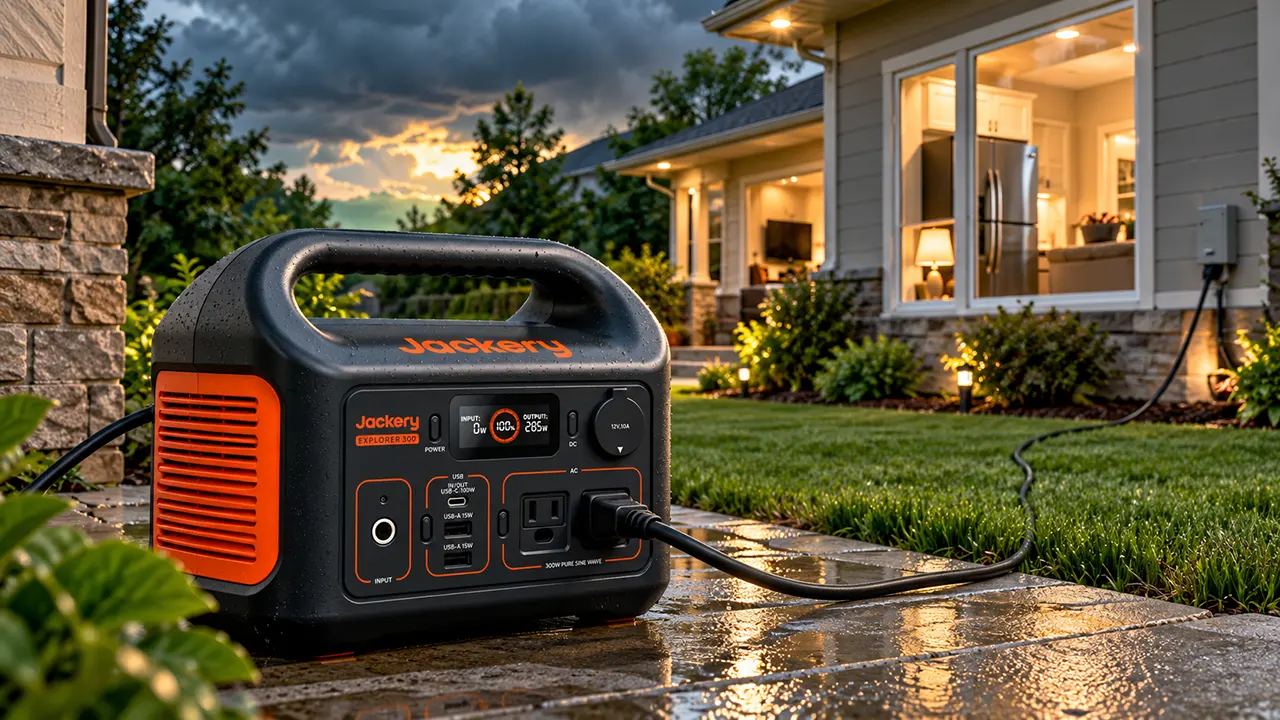
A portable generator can keep your refrigerator cold, your lights on, and essential equipment running when the power goes out. But it can also create serious carbon monoxide, fire, and electrical hazards when used incorrectly.
The safest approach is to choose a generator based on your actual power needs, understand its safety features, place it correctly, and use the right connection method.
The U.S. Consumer Product Safety Commission (CPSC) continues to warn consumers about portable-generator hazards during storms and power outages. Its 2026 hurricane-season guidance says portable generators should be operated outdoors, at least 20 feet from homes and buildings, with exhaust directed away from windows, doors, and vents.
This guide explains how portable generators work, what they can run, how to choose one, and the most important safety rules to follow.
What Is a Portable Generator?
A portable generator is a fuel-powered machine that produces electricity for temporary use. Unlike a permanently installed standby generator, it can be moved and stored when it is not needed.
Most portable generators use gasoline, propane, or more than one fuel type. They are commonly used during:
- Power outages
- Hurricanes and severe storms
- Winter storms
- Emergency situations
- Camping and outdoor activities
- Temporary work sites
A portable generator can provide useful backup power, but it is not automatically capable of powering everything in a home.
The generator’s available wattage, output voltage, connection method, and the appliances you want to run all matter.
Portable generator vs. standby generator
A portable generator normally needs to be manually moved, fueled, started, and connected when needed.
A standby generator is permanently installed and connected to the home’s electrical system. It can start automatically when utility power fails.
For occasional outages, a portable generator can be a more flexible option. For whole-home automatic backup, a permanently installed system may be more appropriate.
What Can a Portable Generator Run?
The answer depends on the generator’s available power and the starting requirements of the equipment.
Common emergency loads include:
| Appliance or device | Why you may want to power it |
|---|---|
| Refrigerator | Keep food cold |
| Freezer | Protect frozen food |
| Lights | Basic household lighting |
| Wi-Fi router | Internet and communication |
| TV | Emergency information |
| Furnace | Heating during cold weather |
| Sump pump | Help prevent basement flooding |
| Well pump | Maintain water supply |
| Window air conditioner | Cooling |
| Selected kitchen appliances | Essential cooking needs |
The important point is that you do not necessarily need to power your entire home.
During an outage, many homeowners choose a group of essential loads and size the generator around those needs.
Running watts vs. starting watts
Two numbers matter when you size a portable generator:
Running watts are the power an appliance needs while operating.
Starting watts, sometimes called surge watts, are the additional power some equipment needs when its motor starts.
This matters for equipment such as refrigerators, pumps, and air conditioners. A generator may have enough running capacity for several appliances but still struggle if multiple motor-driven appliances start at the same time.
Consumer Reports recommends accounting for both normal operating demand and the higher starting demand of appliances with motors.
Before buying a generator, make a list of the equipment you actually need during an outage and check the manufacturer’s wattage information.
How to Choose the Right Portable Generator
Choosing a generator is not simply a matter of buying the model with the highest wattage.
Consider these factors.
1. Determine how much power you need
Start with the appliances and devices you consider essential.
Add their running-watt requirements, then account for the starting wattage of equipment with motors.
If you are unsure about an appliance’s electrical requirements, check its rating plate, owner’s manual, or manufacturer’s specifications rather than guessing.
2. Choose the right fuel
Portable generators commonly use gasoline, propane, or multiple fuel types.
Gasoline is widely available and can provide strong output, but gasoline storage requires careful handling.
Propane can be convenient for longer-term storage because it does not degrade in the same way as gasoline.
Dual-fuel generators can operate on gasoline or propane, giving you more flexibility during an extended outage.
The best fuel choice depends on availability, storage, runtime requirements, and the generator you select.
3. Consider an inverter generator
An inverter generator produces electricity through a different power-conversion system than a conventional portable generator.
Inverter models are often attractive when lower noise, portability, and power quality are important.
A conventional generator may make more sense when you need higher output at a lower purchase cost.
Do not assume one type is always better. Match the generator technology to the equipment you intend to operate and your operating environment.
4. Check runtime
Runtime depends on factors such as:
- Fuel capacity
- Load
- Engine efficiency
- Fuel type
- Operating mode
A generator that can run for many hours at a light load may run for much less time when heavily loaded.
Look at the manufacturer’s runtime specification and note the load percentage used for the rating.
5. Consider noise
Generator noise matters if you live close to neighbors or plan to use the generator for extended periods.
Compare the manufacturer’s stated noise level and operating conditions rather than relying only on marketing terms such as “quiet.”
6. Check voltage and outlets
Some portable generators provide 120-volt output. Others offer 120/240-volt capability.
If you intend to use a transfer switch or power equipment requiring 240 volts, verify that the generator and connection equipment are compatible.
7. Look for a CO shutoff feature
A carbon monoxide shutoff system can provide an additional safety layer.
CPSC’s 2026 guidance specifically recommends looking for portable generators with a CO shutoff safety feature.
However, a CO shutoff feature does not make indoor operation safe. Correct generator placement remains essential.
8. Consider electric start and portability
Features such as:
- Electric start
- Wheels
- Folding handles
- Remote controls
- Multiple outlets
can make a heavy generator easier to use.
But convenience features should come after the basic requirements of correct capacity, safe operation, and appropriate connection equipment.
Portable Generator Safety Rules You Should Never Ignore
Portable-generator safety is not optional.
Carbon monoxide is an odorless, colorless gas that can cause sudden illness and death. The CDC specifically warns that portable generators produce CO and should never be used inside a home or garage.
Never use a portable generator indoors
Never operate a portable generator inside:
- Your home
- Garage
- Basement
- Crawlspace
- Shed
- Other enclosed or partially enclosed areas
Opening a door or window does not make generator operation indoors safe. CPSC warns that these spaces can accumulate lethal concentrations of CO.
Keep the generator at least 20 feet away
Current CPSC and CDC guidance says to operate portable generators outdoors at least 20 feet from homes or from windows, doors, and vents, with exhaust directed away from openings.
Do not assume that a porch, carport, or open garage is far enough away.
CPSC specifically warns against operating a portable generator on a porch or in a carport because of the risk of CO poisoning.
Point exhaust away from the home
The generator’s exhaust should be directed away from the house and other buildings.
Pay attention to:
- Windows
- Doors
- Exterior vents
- HVAC openings
- Neighboring buildings
Wind direction and changing weather can also affect where exhaust travels.
Use working CO alarms
Have working carbon monoxide alarms in the home, particularly near sleeping areas.
CDC recommends battery-operated or battery-backup CO detectors when using a generator.
A CO alarm is another layer of protection. It does not replace safe generator placement.
Follow the manufacturer’s instructions
Read the owner’s manual before operating the generator.
Pay particular attention to instructions covering:
- Fuel
- Oil
- Electrical connections
- Wet-weather operation
- Extension cords
- Maintenance
- Storage
- CO safety features
CPSC advises consumers to follow generator labels, warnings, and the owner’s manual and to maintain the generator so it is ready when needed.
Take wet-weather risks seriously
Rain and electrical equipment can create a dangerous combination.
Do not improvise a shelter or operating setup that conflicts with the manufacturer’s instructions.
CPSC advises following the manufacturer’s instructions regarding electrical shock hazards during wet weather.
What Is Generator CO Shutoff?
A CO shutoff system is a safety feature designed to automatically stop a portable generator when dangerous carbon monoxide conditions are detected.
It is important to understand what this feature does and does not do.
A CO shutoff can reduce the risk of CO poisoning. It does not make it acceptable to operate the generator inside a house, garage, basement, shed, or other enclosed space.
CPSC’s 2026 guidance says models certified to the latest PGMA G300-2023 and UL 2201-2023 standards include CO safety technologies designed to reduce CO poisoning risk. CPSC also notes that UL 2201-certified models have reduced CO emissions in addition to a CO shutoff feature.
Think of CO shutoff as an additional safety layer, not a replacement for safe placement.
UL 2201 vs. PGMA G300: What’s the Difference?
These standards can be confusing because both are associated with portable-generator safety.
At a high level:
| Standard | Main focus | What it means for shoppers |
|---|---|---|
| UL 2201 | Portable-generator CO emissions and shutoff | Provides requirements related to reduced CO emissions and CO shutoff |
| ANSI/PGMA G300 | Portable-generator safety and performance | A broader standard covering safety and performance requirements |
The ANSI/PGMA G300-2023 standard includes requirements for a CO shutoff system and requires notification following a CO shutoff event or certain system faults.
CPSC’s current 2026 guidance specifically points consumers toward models certified to PGMA G300-2023 and UL 2201-2023 when considering CO safety technologies.
For a deeper technical explanation, see our dedicated guide to UL 2201 generator CO shutoff.
How to Connect a Portable Generator to a House
This is one of the most important electrical-safety questions to understand before buying a generator.
There are two fundamentally different situations:
Powering individual appliances
You can use appropriate outdoor-rated extension cords to connect compatible appliances directly to the generator, following the generator and cord manufacturer’s instructions.
Powering household circuits
Connecting a generator to selected circuits in a home’s electrical system requires properly installed transfer equipment.
What is a transfer switch?
A transfer switch is electrical equipment that separates the generator supply from the utility supply and allows selected circuits to be powered by the generator.
A generator inlet may provide the connection point between the portable generator and the home’s transfer equipment.
What about an interlock?
Some electrical systems use an interlock arrangement that prevents the utility supply and generator supply from being connected in an unsafe configuration.
The exact equipment and installation requirements depend on the home’s electrical system and applicable electrical codes.
Never backfeed through a household outlet
Do not connect a portable generator to a household electrical outlet using an improvised cord.
This can create dangerous backfeeding, energize wiring unexpectedly, and expose utility workers or other people to electrical hazards.
If you want to connect a portable generator to your home’s electrical system, use appropriately installed transfer equipment and consult a qualified electrician.
Do not treat household generator wiring as a DIY shortcut.
Does a Portable Generator Need Surge Protection?
Surge protection can be useful for protecting sensitive electronics, but it does not solve generator-placement or electrical-connection problems.
A surge protector does not make it safe to:
- Run a generator indoors
- Overload a generator
- Backfeed a house
- Use damaged electrical cords
- Ignore manufacturer instructions
For a broader discussion of protecting household electrical equipment, see our guide to whole-home surge protection.
The important distinction is simple:
Generator safety protects people and the electrical system. Surge protection helps protect equipment from electrical surges.
They address different risks.
Portable Generator Maintenance and Storage
A generator is only useful during an outage if it actually starts and operates correctly.
Before an emergency
Inspect the generator and follow the manufacturer’s maintenance schedule.
Check:
- Engine oil
- Fuel
- Battery, if equipped
- Air filter
- Spark plug
- Cords and connections
- Tires and handles
- Visible damage
- CO safety-system indicators
Do not wait until a hurricane or winter storm is approaching to discover that the generator will not start.
Fuel storage
Follow local requirements and the fuel-storage instructions provided by the generator and fuel-container manufacturers.
Never store gasoline casually inside living areas.
Fuel vapors can ignite, creating a serious fire hazard.
Test the generator
A periodic test run can help identify:
- Starting problems
- Battery problems
- Fuel problems
- Oil leaks
- Electrical problems
- Damaged cords
- Other faults
Follow the owner’s manual for the correct testing and maintenance procedure.
Portable Generator Safety Checklist
Before starting
- Generator is outdoors.
- Generator is at least 20 feet from the home and appropriate openings.
- Exhaust is directed away from the home.
- Doors, windows, and vents are not in the exhaust path.
- CO alarms are working.
- Generator has been inspected.
- Fuel and oil levels are appropriate.
- Cords are rated for the intended use.
- Electrical loads have been planned.
- You understand the generator’s operating instructions.
During operation
- Do not operate the generator indoors.
- Do not overload the generator.
- Keep the generator away from people and pets.
- Follow the manufacturer’s wet-weather instructions.
- Monitor the generator for abnormal operation.
- Never defeat or bypass a CO shutoff system.
After operation
- Shut down the generator according to the owner’s manual.
- Allow the generator to cool before handling fuel.
- Store fuel safely.
- Inspect the generator for damage.
- Follow the manufacturer’s storage instructions.
Portable Generator Buying Checklist
Before comparing models, make sure you know:
- Required running watts
- Required starting watts
- Fuel type
- Expected runtime
- 120V or 120/240V requirements
- Inverter or conventional design
- CO shutoff
- Applicable safety certifications
- Noise level
- Portability
- Electric-start requirements
- Outlet configuration
- Transfer-switch compatibility
- Warranty
- Manufacturer support
The most powerful generator is not automatically the best generator.
The right portable generator is the one that provides enough capacity for your essential loads while fitting your fuel, noise, portability, connection, and safety requirements.
Frequently Asked Questions About Portable Generators
Can you run a portable generator in a garage?
No. CPSC and CDC guidance says portable generators should never be operated inside a garage or other enclosed space. Opening the garage door does not make generator operation safe.
How far should a portable generator be from a house?
Current CPSC guidance says to operate a portable generator outdoors at least 20 feet from homes and buildings, with exhaust directed away from windows, doors, and vents. CDC guidance similarly recommends keeping generators at least 20 feet from windows, doors, and vents.
Can a portable generator power a house?
It can power selected household loads or, with properly designed and installed transfer equipment, selected household circuits. Whether it can support the entire home depends on the generator’s capacity and the home’s electrical demand.
What is generator CO shutoff?
It is a safety system designed to automatically shut down a portable generator when dangerous carbon monoxide conditions are detected. It is an additional safety feature, not permission to operate a generator indoors.
What is UL 2201?
UL 2201 is a standard addressing portable-generator carbon monoxide performance, including CO emission rate and shutoff capability. CPSC’s 2026 guidance specifically identifies UL 2201-certified models as having reduced CO emissions in addition to a CO shutoff feature.
What is PGMA G300?
ANSI/PGMA G300 is a portable-generator safety and performance standard. The 2023 edition includes requirements related to CO shutoff systems and their notifications.
Do you need a transfer switch for a portable generator?
You need appropriate transfer equipment if you want to connect a portable generator to a home’s electrical system. The correct equipment and installation depend on the home’s electrical system and applicable requirements.
Can you connect a portable generator directly to a house?
Do not connect a generator to a household electrical outlet as an improvised way to power the house. Unsafe connections can cause backfeeding and serious electrical hazards. Use properly installed transfer equipment and consult a qualified electrician for connection to household circuits.
What size portable generator do I need?
That depends on the appliances and circuits you need during an outage. Calculate their running watts and account for starting watts from motor-driven equipment such as refrigerators and pumps.
Is an inverter generator better than a conventional generator?
Not universally. Inverter generators can be attractive when lower noise, portability, and power quality are priorities. Conventional generators may offer higher output or lower purchase cost. Choose based on your actual requirements rather than the generator type alone.
Choose a Portable Generator With Safety and Capacity in Mind
A portable generator can be an extremely useful source of backup power, but buying the right one involves more than comparing wattage and price.
Start with the loads you actually need. Calculate running and starting power. Choose the fuel and generator type that fit your situation. Then pay close attention to CO safety features, operating distance, electrical connections, and maintenance requirements.
Most importantly, remember the basic rule:
A portable generator belongs outside, away from the home, with its exhaust directed away from windows, doors, and vents.
If you already know how much power you need, you can now compare portable generators based on capacity, fuel, runtime, CO safety, connection options, and overall fit for your home.
