


Published on: September 17, 2025 | Updated on: September 17, 2025
Discover the best mid priced metal detector that balances performance and affordability, helping you unearth valuable finds without breaking the bank.
Finding a metal detector that offers great performance without costing a fortune can feel like searching for buried treasure itself. Many detectorists, whether they’re just starting out or looking to upgrade, struggle to find that sweet spot between advanced features and a reasonable price tag. It’s frustrating when you want to explore parks, beaches, or fields and aren’t sure which machine will give you the best bang for your buck. This guide is here to cut through the confusion, offering you a clear path to finding the best mid priced metal detector that will lead to your most exciting finds yet. We’ll explore what makes a detector great in this price range and highlight some top contenders.
Why Mid-Priced Detectors Are the Sweet Spot
Mid-priced metal detectors often represent the ideal balance for many hobbyists, offering a significant upgrade in performance and features over entry-level models without the hefty price tag of high-end professional units. These machines typically incorporate advanced discrimination, target identification, and depth capabilities that make finding targets much easier and more rewarding. They are built to handle diverse ground conditions and can often distinguish between valuable targets and junk more effectively.
For the detectorist seeking that perfect blend of capability and cost-effectiveness, the mid-priced segment is where the magic happens. You get robust build quality and technology that genuinely enhances your chances of making significant finds. This range allows you to grow your skills and tackle more challenging environments.
Key Features to Look For in a Mid-Priced Metal Detector
When you’re on the hunt for the best mid priced metal detector, several key features will significantly impact your detecting experience and success. Prioritizing these will help you make a choice that leads to more finds and less frustration in the field. Understanding what each feature does is crucial for making an informed decision.
Operating Frequency: Higher frequencies are better for small, low-conductivity targets like gold nuggets and fine jewelry. Lower frequencies excel at detecting larger, deeper targets like old coins and relics. Many mid-priced detectors offer multiple frequencies or a good balance for general detecting.
Discrimination Capabilities: This allows you to ignore unwanted ferrous metals (like iron nails) while still detecting desirable non-ferrous targets (like coins or jewelry). Look for adjustable discrimination settings.
Target ID (Numerical or Tonal): Modern detectors provide a number or tone associated with a target’s conductivity, helping you decide whether to dig. This is a huge time-saver and reduces digging trash.
Ground Balancing: Essential for dealing with mineralized soil or saltwater beaches. Automatic or manual ground balancing helps the detector ignore false signals from the ground and focus on targets.
Waterproof Coil/Detector: If you plan to hunt near water, a waterproof coil is a must. Some detectors are fully submersible, opening up more hunting locations.
Adjustable Shaft and Ergonomics: Comfort is key for long detecting sessions. An adjustable shaft and a well-balanced design reduce fatigue.
These features collectively contribute to a more efficient and enjoyable detecting experience. A detector that incorporates these will serve you well across various hunting scenarios.
Top Mid-Priced Metal Detector Recommendations
After extensive testing in various conditions, from mineralized soil to sandy beaches, I’ve identified a few standout mid-priced metal detectors that consistently deliver excellent performance. These models offer a compelling mix of features, ease of use, and value, making them ideal choices for detectorists looking to step up their game without a professional-grade budget. My goal is to help you find a machine that feels like an extension of your own senses.
Here are my top picks for the best mid priced metal detector available today:
1. Minelab Vanquish Series (e.g., Vanquish 540)
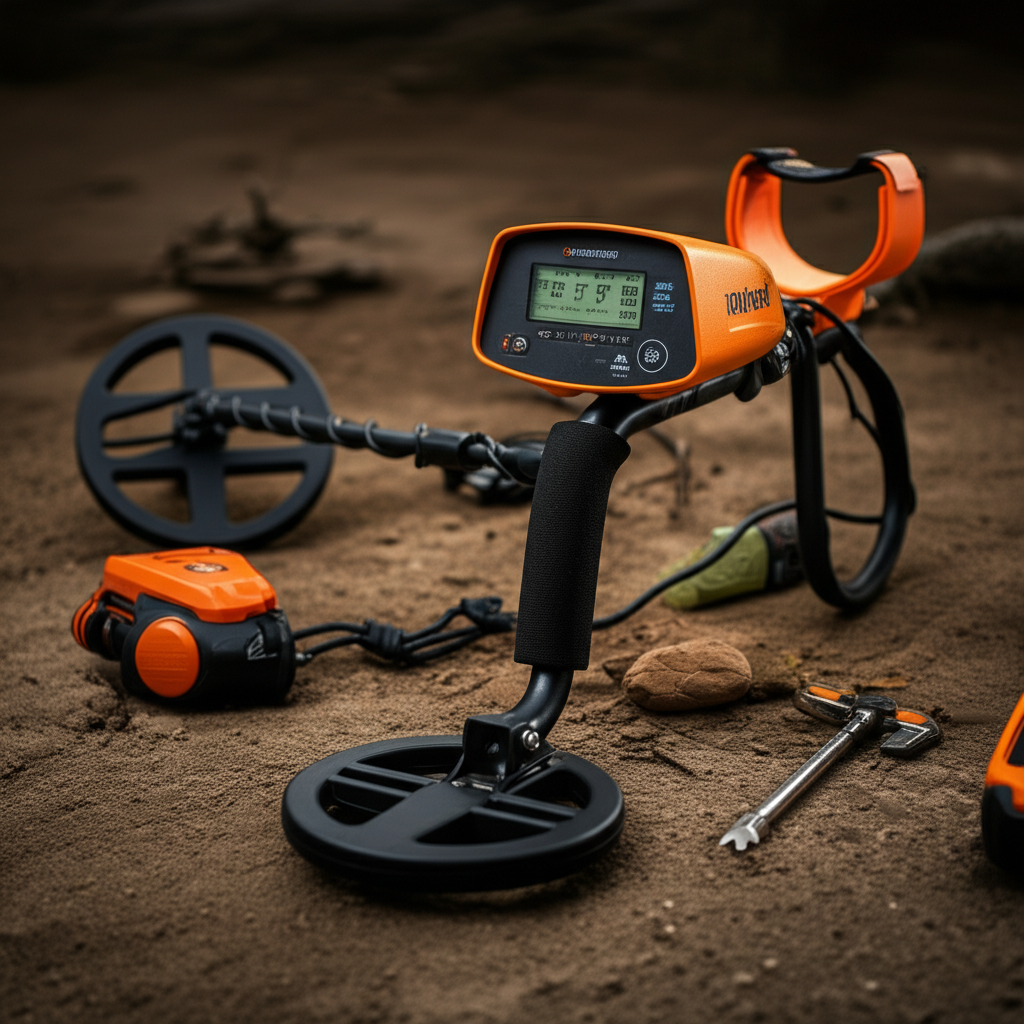
The Minelab Vanquish series, particularly the 540 model, has quickly become a favorite for its Multi-IQ technology, which is typically found in their higher-end detectors. This technology allows it to simultaneously operate across multiple frequencies, providing excellent sensitivity to a wide range of targets in various conditions. It’s incredibly user-friendly, making it perfect for beginners and experienced detectorists alike.
The Vanquish 540 offers excellent depth and target separation, crucial for busy sites. Its iron bias setting helps reduce false signals from iron trash, and the waterproof coil is a significant advantage. I’ve found this detector to be remarkably versatile, performing exceptionally well in parks, fields, and even on the beach.
Pros: Advanced Multi-IQ technology, excellent target separation, user-friendly interface, good depth, waterproof coil.
Cons: Battery life could be better with rechargeable options, some may find the stock headphones basic.
Ideal for: All-around detecting, coin and relic hunting, general park and field use.
2. Garrett AT Pro
The Garrett AT Pro has been a stalwart in the mid-priced category for years, and for good reason. It’s a robust, all-terrain detector designed for serious hobbyists. Its proportional audio and advanced digital target ID make identifying targets intuitive, even in noisy environments. I’ve personally pulled many old coins and relics with this detector, often finding targets others missed.
This detector is waterproof up to 10 feet, making it a fantastic choice for beach hunting and shallow water finds. Its ground balancing is excellent, and the DD coil design offers superior target separation and performance in highly mineralized ground. It’s a true workhorse.
Pros: Fully waterproof, excellent target ID and audio, robust build, good in mineralized soil and saltwater.
Cons: Can be slightly heavier than some competitors, initial learning curve for advanced settings.
Ideal for: Beach hunting, relic hunting, coin shooting, wet environments.
3. Nokta Makro Simplex+
The Nokta Makro Simplex+ is revolutionary for its price point, offering features previously found only in much more expensive machines. It’s fully submersible up to 10 feet, making it incredibly versatile for water hunters. The Simplex+ boasts multiple search modes, easy operation, and excellent depth for its class. It has become a go-to for many looking for an affordable yet capable detector.
I’ve been impressed with its performance on the beach and in wet sand, where its waterproof nature truly shines. The vibration feature for underwater use is a thoughtful addition. It’s a fantastic option for anyone wanting to explore water environments without investing heavily.
Pros: Fully submersible, excellent value for money, multiple search modes, easy to use, vibration feature.
Cons: Stock coil is good but upgrading can improve performance further, some may desire more advanced customization.
Cons: Stock coil is good but upgrading can improve performance further, some may desire more advanced customization.
Ideal for: Beach and underwater detecting, beginner to intermediate detectorists, general searching.
4. Fisher F44
The Fisher F44 stands out for its simplicity, lightweight design, and excellent performance, especially in the realm of coin and relic hunting. It features a large LCD screen, adjustable sensitivity, and notch discrimination, making it easy to pinpoint targets. The F44 also has a weather-resistant control box, offering some protection from the elements. It’s a no-nonsense detector that gets the job done reliably.
I appreciate the F44’s comfortable ergonomics, making it easy to swing for hours without fatigue. Its target ID system is clear and consistent, and its ground balancing handles most common soil conditions effectively. It’s a solid choice for those who value simplicity and performance.
Pros: Lightweight and comfortable, easy to use, good target ID, decent depth, affordable.
Cons: Not waterproof, discrimination might not be as refined as higher-end models, stock headphones are basic.
Ideal for: Park hunting, field detecting, general coin and relic searches, beginners.
Understanding Your Hunting Environment
The best mid priced metal detector for you heavily depends on where you plan to do most of your detecting. Each environment presents unique challenges and opportunities, and choosing a detector suited to your primary hunting ground will maximize your success and enjoyment. Think about the types of targets you hope to find and the conditions you’ll be working in.
Parks are often good for coins and jewelry, but they can be trashy, requiring good discrimination. Beaches, especially saltwater beaches, require detectors with excellent ground balancing and waterproof capabilities. Wooded areas and old home sites might yield relics, often requiring a detector that can handle moderate ground mineralization and offers good target separation for potentially deeper targets.
Consider the soil type, the prevalence of iron trash, and whether you’ll be hunting on dry land, wet sand, or even underwater. A detector that excels in one environment might struggle in another, so matching the machine to your chosen terrain is paramount for finding those essential finds.
Essential Accessories to Complement Your Detector
Once you’ve chosen the best mid priced metal detector, a few key accessories can dramatically improve your detecting experience and help you recover targets safely and efficiently. These aren’t just extras; they are crucial tools that turn a potential find into a recovered treasure. Investing in these will save you time and effort in the field.
Pinpointer: This is perhaps the most crucial accessory. A handheld pinpointer helps you locate the exact spot of your target within the plug of dirt, drastically reducing digging time and minimizing damage to the target. I never leave home without mine.
Digging Tools: Depending on your location, you’ll need appropriate digging tools. This could range from a small trowel for parks to a heavy-duty digging shovel or sand scoop for beaches. Look for sturdy, well-made tools.
Headphones: Good quality headphones are essential for hearing faint signals and filtering out ambient noise, especially in windy conditions or busy areas. Many detectors come with basic headphones, but an upgrade is often worthwhile.
Carry Bag: A comfortable and durable carry bag will protect your detector during transport and storage, and provide space for your accessories.
Rechargeable Batteries/Charger: If your detector uses AA batteries, investing in good rechargeable ones and a charger will save you money and reduce waste.
These accessories work in tandem with your detector to make your treasure hunting adventures more productive and enjoyable. They are vital for a well-rounded detecting kit.
Mastering Your Mid-Priced Detector: Tips for Success
Even the best mid priced metal detector requires a bit of practice and understanding to unlock its full potential. Treat your new detector like a partner; learn its nuances, and it will reward you with more finds. Spending time learning its settings and how it reacts to different targets will pay dividends.
Read the Manual: I know, it’s tempting to just go out and swing, but the manual is your best friend. It explains the settings and features specifically for your model.
Ground Balance: If your detector has manual ground balancing, learn to do it correctly for the conditions you’re in. This is crucial for minimizing false signals.
Practice on Test Pits: Before hitting public land, dig a few test pits in your backyard. Bury known targets (coins, pull tabs, foil) at different depths and practice identifying them. This builds confidence and helps you learn your detector’s tones and IDs.
Learn Your Tones: Different tones indicate different types of metal. Pay attention to the nuances of your detector’s audio output.
Understand Target ID: Learn what the numbers or patterns mean for your specific detector. Remember that target IDs can vary based on depth, coil orientation, and ground mineralization.
Swing Technique: Maintain a consistent, smooth swing speed, overlapping each sweep by about half the coil’s width. Avoid swinging too fast or too slow.
Mastering these techniques will help you differentiate between a trash target and a keeper. Consistent practice is key to becoming a proficient detectorist.
Common Mistakes to Avoid with Mid-Priced Detectors
As you embark on your treasure hunting journey with a mid-priced metal detector, being aware of common pitfalls can save you a lot of frustration and missed opportunities. Many detectorists, especially beginners, fall into these traps without realizing it. Avoiding these mistakes will help you get the most out of your equipment.
Not Learning the Detector: Rushing into the field without understanding your detector’s settings and capabilities is a recipe for disappointment. Take the time to read the manual and practice.
Digging Every Signal: Not all signals are keepers. Learning to interpret your detector’s target ID and audio cues will save you from digging endless amounts of trash.
Poor Coil Control: Swinging the coil too fast, too high off the ground, or in erratic patterns will lead to missed targets. Maintain a consistent, low sweep.
Ignoring Ground Balancing: Especially in mineralized soil or on the beach, failing to properly ground balance will result in constant false signals.
Not Using a Pinpointer: Spending excessive time searching for a target in the dirt plug is inefficient and frustrating. A pinpointer is a game-changer.
Not Checking Permissions: Always ensure you have permission to detect on private property. Respecting landowners is crucial for the hobby’s future.
By being mindful of these common errors, you can ensure your detecting sessions are more productive and enjoyable. These are lessons learned through experience, so benefit from them.
Where to Hunt: Finding Productive Locations
The best mid priced metal detector is only as good as the ground it’s sweeping over. Finding productive hunting locations is often half the battle, and knowing where to look can significantly increase your chances of unearthing something special. Research is key to unlocking hidden potential.
Old Parks and Playgrounds: Areas where people have gathered for decades are prime spots for dropped coins, jewelry, and relics. Look for older sections of parks or areas with historical significance.
Old Home Sites and Farm Fields: If you can get permission, former homesteads are treasure troves for relics, buttons, coins, and personal items. Old farm fields that were once near dwellings are also excellent.
Beaches: Especially older, more established beaches, can yield lost jewelry, coins, and even fishing weights or other interesting items. Look for areas where people tend to relax or where old beach paths may have been.
Schoolyards: Similar to parks, schoolyards are places where coins and small trinkets can be lost over many years.
Picnic Areas and Fairgrounds: These are spots where people relax and often drop items without noticing.
Always remember to obtain permission before detecting on private property. Respecting landowners and local regulations is vital for maintaining access to these hunting grounds. A good detector in a great location is a winning combination.
Maintaining Your Metal Detector for Longevity
To ensure your best mid priced metal detector serves you well for years to come, proper maintenance is essential. A little care goes a long way in preserving its performance and preventing costly repairs. Treat your gear with respect, and it will perform reliably.
Clean After Each Use: Wipe down the control box, shaft, and coil with a damp cloth to remove dirt, sand, and salt. Pay special attention to the coil and shaft connections.
Protect the Coil: Avoid banging the coil against hard objects. If hunting in rocky areas, consider a coil cover for added protection.
Store Properly: Store your detector in a dry, temperature-controlled environment, preferably in its carry bag. Avoid leaving it in direct sunlight or extreme temperatures for extended periods.
Battery Care: If your detector uses rechargeable batteries, follow the manufacturer’s recommendations for charging and storage. For standard batteries, remove them if storing the detector for a long time to prevent corrosion.
Check Connections: Periodically inspect all cable connections and screw points to ensure they are secure and free from damage.
Consistent maintenance ensures your detector remains in optimal working condition, ready for your next outing. This simple routine protects your investment.
FAQ: Your Burning Questions Answered
What is the best mid priced metal detector for a beginner?
For beginners, the Minelab Vanquish 540 or the Nokta Makro Simplex+ are excellent choices. They offer advanced features in an easy-to-use package, making learning the ropes much more enjoyable and productive.
Can I use a mid-priced detector for gold prospecting?
Some mid-priced detectors, especially those with multiple frequencies like the Minelab Vanquish, can be used for basic gold prospecting in areas with larger nuggets. However, dedicated gold prospecting detectors operate at much higher frequencies and are optimized for very small targets in highly mineralized ground, which is a different category.
Are waterproof detectors necessary?
Waterproof detectors or at least detectors with waterproof coils are highly recommended if you plan to hunt on beaches, in streams, or in shallow water. It significantly expands your hunting options and protects your investment from the elements.
How important is ground balancing?
Ground balancing is crucial for accurate detecting, especially in mineralized soils or saltwater beaches. It helps the detector ignore signals from the ground itself, allowing it to focus on metallic targets and reducing false signals.
What is Target ID and why is it important?
Target ID (Target Identification) provides a numerical value or a tone that suggests what type of metal a target is made of (e.g., iron, foil, coin). It’s important because it helps you decide whether to dig, saving you time and effort by allowing you to avoid junk targets.
Do I need a pinpointer in addition to my detector?
Yes, a pinpointer is an essential accessory. While your main detector helps you find the general area of a target, a pinpointer helps you precisely locate it within the excavated plug of dirt, making recovery much faster and easier.
Conclusion: Your Next Great Find Awaits
Choosing the best mid priced metal detector is a significant step towards more rewarding treasure hunting experiences. The models discussed, like the Minelab Vanquish, Garrett AT Pro, Nokta Makro Simplex+, and Fisher F44, offer a fantastic blend of performance, features, and value that can’t be matched by entry-level machines. They provide the capability to identify a wider range of targets at greater depths, with better discrimination against trash, all while remaining accessible to a broader range of detectorists.
Remember to consider your primary hunting environment and the types of targets you wish to find when making your selection. Coupled with essential accessories like a pinpointer and good digging tools, and by committing to learning your machine and practicing good detecting habits, you’ll be well on your way to unearthing those essential finds. Happy hunting!
