


Published on: September 24, 2025 | Updated on: September 24, 2025
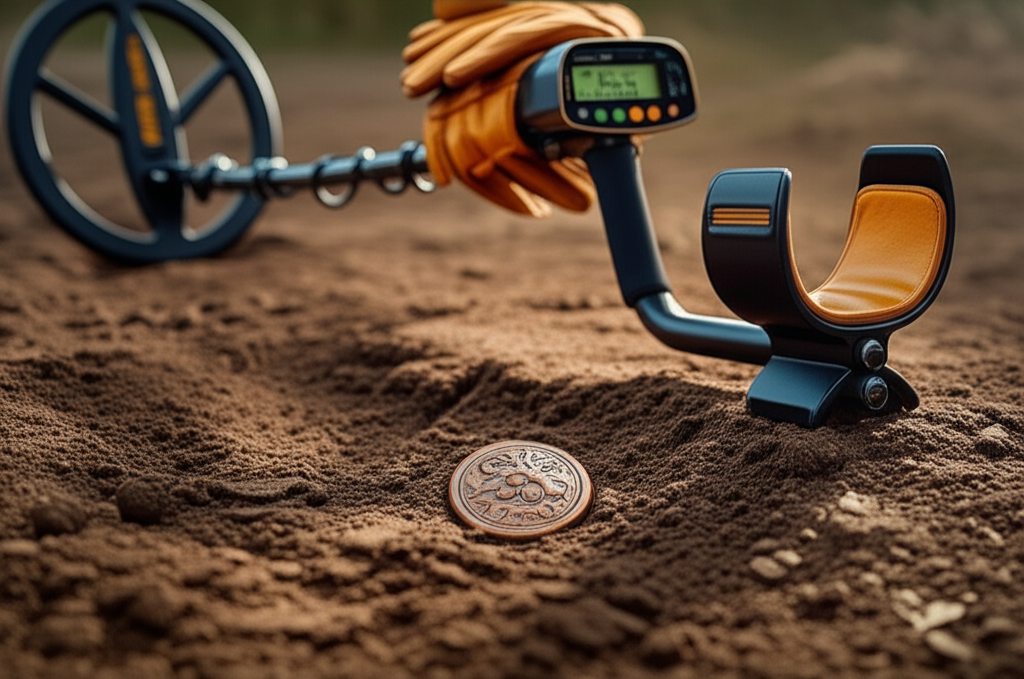
Yes, metal detectors absolutely can detect bronze! This article breaks down why and how, helping you identify this ancient and valuable metal with confidence, whether you’re hunting for coins, relics, or artifacts.
Can Metal Detectors Detect Bronze? Essential Breakthrough!
As a detectorist who’s spent countless hours digging in the dirt, I’ve fielded this question more times than I can count: “Can metal detectors detect bronze?” It’s a fair question, especially when you’re sifting through signals, trying to distinguish between a modern pull-tab and a genuine piece of history. The good news is, absolutely! Most metal detectors are perfectly capable of detecting bronze. It’s not about if they can, but how they do it and how you can best tune your detector to find it. This guide will walk you through everything you need to know, from the science behind it to practical tips for maximizing your bronze finds.
The Science of Detecting Bronze: How Your Detector Sees It
Metal detectors work by emitting an electromagnetic field from a coil. When this field encounters a conductive object, like bronze, it induces a current within that object. This current then generates its own magnetic field, which is detected by the metal detector’s coil, creating a signal. Bronze, being a metal alloy primarily composed of copper and tin, is highly conductive. This conductivity is what makes it a target for your detector.
Different metals have varying degrees of conductivity and magnetic properties, which affect how a detector responds. Your detector’s ability to differentiate between metals relies on these characteristics, often expressed as target ID numbers or tones. Understanding this basic principle is the first step to confidently identifying bronze targets.
Bronze: A Metal Detectorist’s Delight
Bronze has been used by humans for millennia, making it a treasure trove for relic hunters and archaeologists. From ancient coins and weaponry to statues and everyday tools, bronze artifacts are scattered across historical sites. Because of its common use throughout history, finding bronze can lead to incredibly significant discoveries.
Its durability means that even after centuries underground, bronze objects often remain intact enough to be detected and recovered. This makes it a consistent and rewarding target for detectorists interested in historical finds.
Understanding Your Detector’s Capabilities for Bronze
Most modern metal detectors are designed to detect a wide range of metals, and bronze is certainly included. The key lies in understanding how your specific detector interprets bronze signals. Detectors use various technologies, including Very Low Frequency (VLF) and Pulse Induction (PI), each with its strengths.
VLF detectors, common for general detecting, often differentiate metals based on their conductivity and ferrous properties. PI detectors, often preferred for challenging ground conditions like saltwater beaches, are generally less discriminatory but can offer deeper penetration. Your detector’s manual will be your best friend here, detailing its target ID range and how it handles different metal types.
VLF vs. Pulse Induction: Which is Better for Bronze?

VLF (Very Low Frequency) Detectors: These are the most common type of detector for hobbyists. They operate with two coils: a transmitter and a receiver. By analyzing the phase shift and strength of the signal returned, VLF detectors can provide a target ID number, helping you distinguish between different metals. Bronze typically falls into the mid-to-high conductivity range, often registering as a non-ferrous target.
Pros: Good discrimination, lighter weight, generally more affordable.
Cons: Can struggle in highly mineralized soil or saltwater.
PI (Pulse Induction) Detectors: These detectors send out short, powerful pulses of magnetic energy. They measure the decay of the induced current in the target. PI detectors are less affected by ground mineralization and saltwater, making them excellent for challenging environments. They generally don’t offer the same level of discrimination as VLF detectors but can achieve greater depths.
Pros: Excellent depth, unaffected by mineralization and saltwater.
Cons: Poor discrimination (detects all metals), often heavier and more expensive.
For general bronze hunting, especially in parks and fields, a VLF detector with good discrimination is usually ideal. If you’re hunting in areas with significant ground noise or mineralized soil, a PI detector might be your best bet for sheer depth.
Key Detector Settings for Targeting Bronze
Tuning your metal detector correctly is crucial for identifying specific targets like bronze. The primary settings you’ll want to adjust are Sensitivity, Discrimination, and Ground Balance.
Sensitivity: This controls how deep and how faint a signal your detector can pick up. While higher sensitivity can find deeper targets, it can also lead to more false signals, especially in noisy environments. It’s a balance; start with a moderate setting and increase it if conditions allow.
Discrimination: This setting tells your detector to ignore certain types of metal, usually iron and foil. For bronze, you’ll want to set discrimination carefully. Too much discrimination might filter out desirable non-ferrous targets like bronze coins or relics. Often, setting discrimination low or using a “notch” feature to exclude only iron is best for finding a broader range of non-ferrous targets, including bronze.
Ground Balance: This feature helps your detector ignore the natural mineralization in the soil, which can otherwise cause false signals. Most detectors have automatic ground balance, but manual ground balance can often be fine-tuned for optimal performance. Properly balancing your detector to the ground conditions will improve its ability to detect subtle conductivity changes from targets like bronze.
Experimenting with these settings in a test garden before heading out is highly recommended. Bury a few known bronze items (like an old bronze coin or a piece of bronze hardware) and practice identifying them with different settings.
Recognizing Bronze Signals: Tones and Target IDs
Understanding how your detector communicates is key. Most modern detectors use audio tones and a visual target ID number to indicate the type of metal detected.
Audio Tones: Bronze typically produces a clear, mid-to-high-pitched tone on many detectors, often in the non-ferrous range. This is usually distinct from the low-pitched growl of iron targets. Pay attention to the quality and consistency of the tone. A strong, repeatable tone is a good sign of a solid target.
Target ID Numbers: These numerical values vary between detector manufacturers, but generally, bronze items will register in a specific range. For example, on a Minelab detector, a bronze coin might register in the high 70s or 80s. On a Garrett, it might be in the 50-70 range. Consult your detector’s manual to understand its specific target ID chart. You’ll find that older bronze coins often fall into a similar range as copper coins.
Learning to interpret these signals takes practice. The best way is to dig a variety of targets and confirm what they are. This builds your “ear” and visual recognition for different metals.
Common Bronze Finds and Their Characteristics
When you’re out detecting, what kind of bronze artifacts might you encounter? The possibilities are vast and depend heavily on your location and its history.
Ancient Coins: Many ancient civilizations, from Roman to Greek to early American periods, minted coins using bronze alloys. These are highly sought after by collectors and historians.
Relics and Artifacts: Bronze was widely used for weaponry (arrowheads, spearheads), tools, jewelry, statues, and decorative items. Historical battlefields, old homesteads, and ancient settlements are prime locations for these finds.
Modern Bronze Items: While less historically significant, you might also find modern bronze items like decorative garden statues, plumbing parts, or even certain types of hardware. These can still be valuable or interesting finds.
The condition of the bronze will affect its signal. Heavily corroded or encrusted bronze might present a weaker signal than a clean piece.
Tools to Complement Your Bronze Hunting
Beyond your metal detector, a few other tools can significantly enhance your success in finding and recovering bronze.
Pinpointer: Once you’ve located a target area, a pinpointer is invaluable. This small, handheld device helps you pinpoint the exact location of the object within the excavated plug of soil, reducing digging time and minimizing the risk of damaging the artifact. Most pinpointers are sensitive to all metals, including bronze.
Digging Tools: A sturdy trowel or shovel is essential for excavating your targets. For relic hunting, a specialized digging tool with a serrated edge can help cut through roots and tough soil.
Coil Selection: Different search coils can also impact your ability to find bronze. Smaller coils offer better pinpoint accuracy and can maneuver in tight spaces, while larger coils provide greater depth and wider coverage. For areas with lots of small targets or complex debris, a smaller coil might be advantageous for isolating bronze items.
Having the right gear ensures that when your detector signals bronze, you have the best chance of recovering it safely and efficiently.
Challenges and Considerations When Detecting Bronze
While detecting bronze is generally straightforward, there are a few challenges to be aware of.
Ground Mineralization: As mentioned, highly mineralized soil can mask weaker signals or cause false positives. This is where proper ground balancing or using a PI detector becomes important.
Depth: The deeper a bronze object is, the weaker its signal will be. Older, larger items might be detectable at greater depths than smaller, more recent ones. Using a larger coil or a more powerful detector can help with deep targets.
Target Overlap: In areas with many buried targets close together, your detector might struggle to separate individual signals. This is common in old trash dumps or heavily used historical sites. Using a smaller coil or a different detection mode can sometimes help.
* Discrimination Settings: The biggest pitfall for beginners is setting discrimination too high. If you’re trying to find bronze relics or old coins, you might accidentally filter them out by trying to avoid all “trash.”
Careful observation of your detector’s signals and a willingness to dig questionable targets will help you overcome these challenges.
Case Study: A Successful Bronze Find
I remember one particular outing in an old park known for its history. My detector, a mid-range VLF model, was giving me a consistent mid-range non-ferrous signal, fluctuating around the high 70s. It wasn’t a loud, screaming signal, but it was stable and repeatable. I dug carefully, using my pinpointer to zero in on the target. After excavating a small plug, the pinpointer led me to a small, green lump of earth. Upon closer inspection and a bit of careful brushing, it revealed itself to be a beautifully preserved Roman bronze coin, an incredible find! This experience reinforced for me that even seemingly faint signals can yield significant bronze treasures if you listen to your detector and dig diligently.
Frequently Asked Questions About Detecting Bronze
Q1: Will my beginner metal detector find bronze?
Yes, most beginner metal detectors are capable of detecting bronze. They are designed to pick up a wide range of metals, and bronze’s conductivity makes it a detectable target.
Q2: How can I tell if a signal is bronze and not something else?
You’ll learn to recognize bronze signals by listening to the audio tones and observing the target ID numbers on your detector’s display. Bronze typically produces a clear, mid-to-high-pitched tone and registers in a specific non-ferrous range, which varies by manufacturer.
Q3: Should I use discrimination when looking for bronze?
It’s best to use discrimination cautiously. Setting it too high might filter out valuable bronze targets. Many detectorists prefer to set discrimination low to ignore only iron, or use a “notch” filter to exclude specific trash signals, while still picking up bronze.
Q4: What’s the best metal detector for finding bronze?
Many detectors can find bronze. For general detecting and relic hunting, a good quality VLF detector with decent discrimination is often recommended. If you’re in areas with heavy mineralization or saltwater, a Pulse Induction (PI) detector might offer better performance.
Q5: Can metal detectors find very old bronze artifacts?
Yes, metal detectors can find very old bronze artifacts, but depth and signal strength depend on the object’s size, condition, and how deeply it’s buried. Deeper targets will produce fainter signals.
Q6: What are common bronze finds in the United States?
In the US, common bronze finds include older copper pennies (many were bronze alloys), Civil War era buttons, buckles, musket balls, and various relic fragments from homesteads and historical sites.
Conclusion: Embrace the Bronze Hunt!
So, to answer the burning question: can metal detectors detect bronze? Unequivocally, yes! Your metal detector is a powerful tool for uncovering the rich history buried beneath your feet, and bronze artifacts are a significant part of that story. By understanding how your detector works, learning to interpret its signals, and using the right settings and tools, you can confidently add bronze coins, relics, and other historical treasures to your collection. Don’t let uncertainty hold you back; get out there, practice, and embrace the exciting possibility of finding bronze. Happy hunting!
