


Published on: October 7, 2025 | Updated on: October 7, 2025
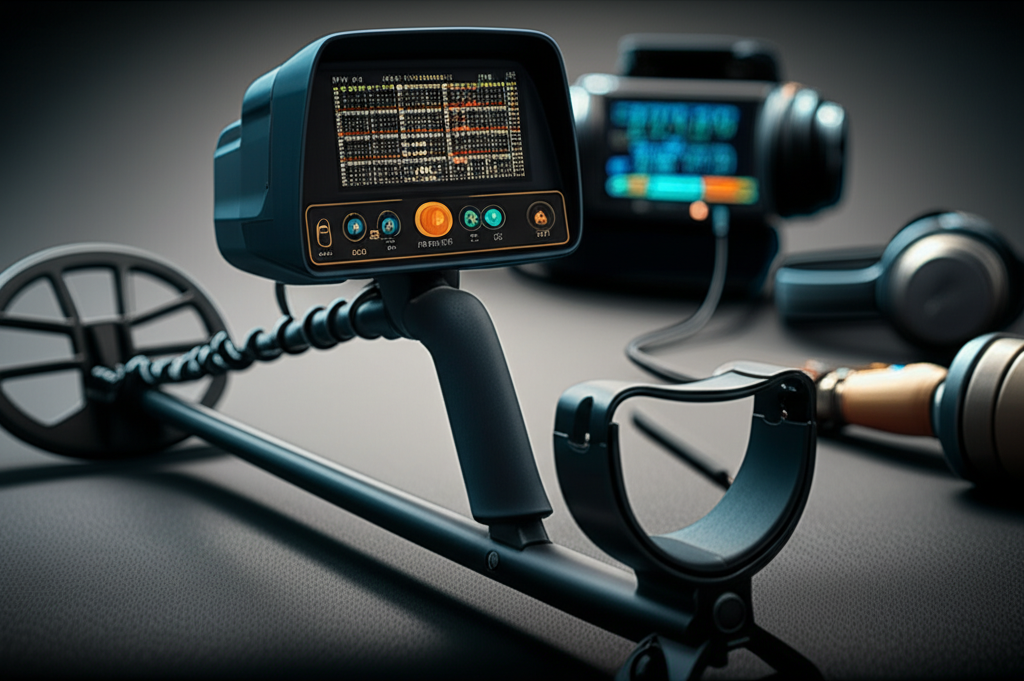
The deepest metal detector isn’t just a dream; it’s a reality thanks to cutting-edge technology. This article explores what makes a detector ‘deep,’ the innovations driving this breakthrough, and how to choose the best one for your treasure hunting needs, ensuring you find those elusive targets others miss.
Have you ever swung your detector over a promising spot, only to come up empty, wondering if something valuable was just out of reach? It’s a common frustration for many detectorists. The desire to find deeper targets – older coins, larger relics, or richer gold nuggets – is a driving force in our hobby. Fortunately, significant advancements in metal detecting technology are pushing the boundaries of detection depth. We’re going to break down what makes a metal detector truly “deep” and guide you toward finding the best tool for your specific hunting grounds.
What Exactly Makes a Metal Detector “Deep”?
A metal detector’s depth capability is its ability to sense metallic objects buried beneath the surface. This isn’t a simple metric; it’s influenced by a combination of the detector’s design, its operating frequency, the size and type of coil used, and even the ground conditions. A detector marketed as “deep” generally signifies that it can reliably pick up targets at greater depths than standard models. This enhanced capability is crucial for uncovering historical artifacts and valuable treasures that have been hidden for years.
The Science Behind Deeper Detection

Several key technological elements contribute to a metal detector’s depth. These include the strength of its transmit and receive signals, the sophistication of its signal processing, and its ability to discriminate between different types of metal. Advanced detectors use more powerful transmitters and more sensitive receivers, allowing them to ‘hear’ the faint signals from deeper targets. Furthermore, their internal circuitry is designed to filter out unwanted noise from mineralized soil, which can obscure faint signals.
Understanding Target Size and Type
It’s important to remember that depth is also relative to the target itself. A large iron object will register at a much greater depth than a small silver dime. Likewise, the conductivity of the metal plays a significant role. Highly conductive metals like silver and copper tend to transmit signals more effectively, allowing for greater detection depth. Understanding this relationship helps set realistic expectations for what any given detector can achieve.
The Evolution of Deep-Seeking Technology
For years, detectorists have sought ways to find targets buried deeper than their current equipment allowed. Early detectors were relatively simple, but constant innovation has led to remarkable improvements. The quest for the deepest metal detector has driven manufacturers to invest heavily in research and development. This has resulted in technologies that significantly enhance a detector’s ability to penetrate the ground.
Advanced Signal Processing
Modern detectors employ sophisticated digital signal processing (DSP) to analyze the faint echoes received from buried targets. This advanced processing can differentiate between target signals and ground noise, effectively boosting the signal-to-noise ratio. This means weaker signals from deeper objects are more likely to be recognized and reported to the user. This is a fundamental leap from older analog systems.
Multi-Frequency Technology: A Game Changer
One of the most significant breakthroughs enabling deeper detection is multi-frequency technology. Instead of operating on a single frequency, these detectors can transmit and receive signals across a range of frequencies simultaneously or sequentially. Lower frequencies are better at detecting larger, deeper objects, while higher frequencies excel at finding small, shallow targets. By combining these, multi-frequency detectors offer unparalleled depth and versatility. Some of the best multi-frequency detectors on the market today utilize this very technology.
Ground Balancing Innovations
Mineralized soil, especially in areas with high iron content, can cause false signals and mask real targets. Modern deep-seeking detectors feature advanced automatic and manual ground balancing capabilities. These systems precisely tune the detector to the specific soil conditions, allowing it to ignore the ground’s interference and focus on metallic signals, even from significant depths. This precision is vital for accurate deep searching.
Choosing the Right Coil for Maximum Depth
While the detector’s internal technology is paramount, the coil is the “eye” of the metal detector, and its design directly impacts depth. Different coil types and sizes are optimized for various scenarios, but for maximum depth, specific considerations are key. Using the right coil can often be the difference between finding a deep target and missing it entirely.
Larger Coils for Deeper Penetration
Generally, larger diameter coils offer greater depth of detection. A larger coil generates a wider and stronger electromagnetic field, which can penetrate the ground more deeply. However, larger coils are also heavier, less maneuverable in cluttered areas, and can be more susceptible to ground mineralization. For open fields and searching for larger, deeper targets, a larger coil is often the preferred choice.
Elliptical vs. Round Coils
Both elliptical and round coils have their advantages. Round coils tend to offer more uniform ground coverage and are often preferred for their stability. Elliptical coils, particularly larger ones, can offer slightly better depth penetration due to their shape and are often more agile in tight spaces or areas with more trash. The choice often comes down to the user’s preference and hunting environment.
DD Coils for Superior Performance
Double-D (DD) coils are a popular choice for deep seeking due to their excellent ground balancing capabilities and ability to handle mineralization. Their design helps to create a more focused electromagnetic field, which can improve target separation and depth in challenging soil conditions. Many of the top-performing deep metal detectors come equipped with DD coils.
Understanding Operating Frequencies
The frequency at which a metal detector operates is a critical factor in its performance, particularly concerning depth and target identification. Different frequencies are sensitive to different types of targets and penetrate the ground to varying degrees. Selecting a detector with an appropriate frequency range for your intended targets is essential for maximizing your finds.
Low Frequencies for Depth
Lower frequency detectors (typically below 10 kHz) are generally better at detecting larger, conductive targets like silver coins and larger relics at greater depths. They penetrate the ground more effectively, making them ideal for general treasure hunting and relic hunting in open areas. These detectors are often the workhorses for those seeking older, buried items.
High Frequencies for Small Targets
Higher frequency detectors (above 15 kHz) are more sensitive to small, low-conductivity targets such as small gold nuggets and thin jewelry. While they may not achieve the same sheer depth as low-frequency detectors, their sensitivity to small items is unmatched. This makes them invaluable for gold prospectors and jewelers.
The Power of Multi-Frequency
As mentioned, multi-frequency detectors combine the benefits of both low and high frequencies. By operating across a spectrum, they offer a balanced approach, providing good depth for larger targets while retaining sensitivity for smaller ones. This versatility makes them an excellent choice for detectorists who encounter a wide variety of potential finds in diverse environments. Many of the latest “deepest metal detector” models are multi-frequency.
Key Features of a Deepest Metal Detector
Beyond the core technology, several specific features can significantly enhance a metal detector’s ability to find deep targets. When looking for the deepest metal detector, pay close attention to these functionalities. They are designed to optimize performance in challenging conditions and maximize the chances of locating those elusive buried treasures.
Adjustable Sensitivity and Gain Settings
High sensitivity settings allow the detector to pick up fainter signals from deeper targets. However, excessive sensitivity can lead to overwhelming false signals in mineralized ground. A good deep-seeking detector will have adjustable sensitivity and gain controls, allowing you to fine-tune performance for optimal depth without unnecessary noise. This control is fundamental for successful deep hunting.
Discrimination and Notch Filtering
While deep targets are the goal, you don’t want to dig every piece of iron. Advanced discrimination allows the detector to ignore common trash items like iron nails, while still signaling valuable targets. Notch filtering lets you exclude specific target IDs that are consistently undesirable. Effective discrimination is key to making your digging more efficient, especially when hunting in areas with a lot of old trash.
Target ID (TID) and Depth Indicator
Modern detectors often provide a Target ID number and sometimes a depth estimate. While not always perfectly accurate for very deep targets, these indicators can help you decide whether a target is worth investigating. A consistent TID reading for a deep signal can give you confidence that you’re onto something significant. This helps prioritize your digging efforts.
Waterproofing and Durability
Many of the best deep metal detectors are fully submersible or at least waterproof up to the control box. This allows for detecting in rivers, lakes, and shallow saltwater beaches, expanding your hunting grounds. Robust construction ensures the detector can withstand the rigors of field use, from dense brush to rocky terrain.
Top Contenders for the Deepest Metal Detector
While the term “deepest metal detector” can be subjective and depend on specific conditions, certain models consistently stand out for their exceptional depth capabilities. These detectors incorporate the latest technologies and are favored by experienced detectorists seeking to push the limits of detection. Researching these models is a great starting point for finding your next deep-seeking machine.
Minelab Equinox Series
The Minelab Equinox series, particularly models like the Equinox 800 and 900, are renowned for their multi-frequency technology (Multi-IQ). This allows them to perform exceptionally well across a wide range of targets and ground conditions, offering impressive depth and target separation. They are a favorite among hobbyists and professionals alike for their versatility.
Garrett AT Max
Garrett’s AT Max is a robust, all-terrain detector designed for serious treasure hunters. Its single-frequency operation (13.7 kHz) is optimized for finding coins and relics at good depths. The built-in Z-lynk wireless technology and advanced ground balancing make it a reliable choice for challenging environments. It’s a solid option for those focusing on mid-range depth.
Nokta Makro Legend
The Nokta Makro Legend is another powerful multi-frequency detector that offers excellent depth and performance at a competitive price point. It features advanced features like ground balancing, adjustable iron volume, and multiple search modes, making it a versatile tool for various hunting scenarios. Its ability to handle different ground types is a significant advantage.
XP Deus II
The XP Deus II is a highly advanced wireless detector that uses a unique submersible multi-frequency system. Its lightweight design and exceptional performance in detecting deep targets, especially in mineralized ground, have made it a top choice for many experienced detectorists. The interchangeable coils and wireless headphones offer a streamlined experience.
Factors Affecting Detection Depth in Real-World Scenarios
It’s crucial to understand that the advertised depth of a metal detector is often under ideal conditions. In the real world, several factors can significantly influence how deep a target can actually be detected. Being aware of these variables will help you interpret your detector’s performance and adjust your techniques accordingly.
Ground Mineralization
Highly mineralized soil, common in many areas, contains iron oxides and other minerals that can create their own electromagnetic signals. This “hot” ground can mask faint signals from desirable targets, effectively reducing the detector’s depth. Multi-frequency detectors and those with advanced ground balancing excel in these conditions.
Target Orientation and Shape
The way a target is buried affects its signal strength. A coin lying flat will present a larger surface area to the detector’s coil than one buried on its edge. Similarly, the shape and composition of the object play a role. Irregularly shaped relics might be harder to detect at maximum depth compared to a solid, conductive sphere.
Interference from Other Metals
In areas with a lot of old iron or other buried metal trash, signals can overlap. This can make it difficult for the detector to isolate a specific target, especially if it’s deep and faint. Sophisticated target separation and discrimination features are essential for navigating these cluttered environments.
Coil Size and Type
As discussed earlier, the coil is a critical component. A coil that is too small for the target or too large for the ground conditions can limit depth. For instance, using a small coil in highly mineralized ground can lead to instability and reduced performance.
Tips for Maximizing Depth with Your Detector
Even with the most advanced deep-seeking metal detector, proper technique is essential. Applying the right strategies can help you eke out every inch of depth from your equipment. These tips are born from countless hours in the field, testing and refining my approach to finding buried treasures.
Master Your Detector’s Settings
Take the time to thoroughly understand your metal detector’s manual and settings. Experiment with sensitivity, ground balance, and discrimination in different scenarios. Learn how each adjustment affects performance and what works best for your specific hunting environment. This knowledge is invaluable for unlocking your detector’s full potential.
Use the Right Coil for the Job
Always consider the type of targets you’re seeking and the environment you’re hunting in when choosing a coil. For maximum depth in open fields, a larger diameter coil is often the best bet. In trashy areas or for smaller targets, a smaller or specialized coil might be more effective, even if it sacrifices a little depth.
Swing Technique Matters
Maintain a slow, steady, and consistent coil swing. Overlapping your sweeps ensures complete ground coverage. Avoid swinging too fast, as this can cause you to miss faint signals from deep targets. Keep the coil as close to the ground as possible without actually scraping it.
Listen Carefully to Signals
Pay close attention to the nuances of your detector’s audio feedback. Faint, repeatable signals, even if they sound weak, can indicate a deep target. Learn to distinguish between a solid, repeatable target sound and a fleeting false signal. Sometimes, a deep target will give a soft, drawn-out tone.
Digging Deep: Tools and Techniques
When you get a strong signal that you suspect is deep, careful excavation is key. Use a robust digging tool, like a quality trowel or shovel, to create a neat plug. Carefully remove the soil, checking it with your pinpointer as you go. Avoid excessive disturbance of the surrounding soil, which could damage artifacts or make recovery difficult.
The Future of Deep Metal Detecting
The advancements we’ve seen in metal detecting technology are remarkable, and the future promises even more exciting developments. Manufacturers are continuously pushing the boundaries, driven by the desire to create the deepest metal detector yet. We can anticipate further refinements in signal processing, battery life, and perhaps even entirely new detection methodologies.
AI and Machine Learning Integration
Artificial intelligence and machine learning are starting to play a role in detector design. These technologies could enable detectors to learn from their environment and adapt their performance in real-time, leading to even better target identification and depth. Imagine a detector that can intelligently filter out specific types of ground noise or distinguish between different relic signatures.
Lighter and More Ergonomic Designs
As technology advances, we’ll likely see detectors that are even lighter and more comfortable to use for extended periods. This will make deep hunting more accessible and less physically demanding. Integrated wireless systems and improved battery technology will continue to enhance the user experience.
New Coil Technologies
Expect to see innovations in coil design, potentially leading to enhanced depth and target separation. New materials and electromagnetic field shaping techniques could offer breakthroughs in how effectively detectors can penetrate the ground. The pursuit of the deepest metal detector will undoubtedly drive coil innovation.
Frequently Asked Questions (FAQ)
What is the single most important factor for a metal detector’s depth?
While many factors contribute, the detector’s internal signal processing power and the coil’s electromagnetic field strength are arguably the most critical for achieving maximum depth.
Can a larger coil always detect deeper than a smaller coil?
Generally, yes, larger coils can penetrate deeper. However, very large coils can become unwieldy and less sensitive to smaller targets or in mineralized ground, so the coil size needs to match the target and conditions.
How does ground mineralization affect detection depth?
Ground mineralization creates interfering signals that can mask faint target signals, effectively reducing the depth at which a detector can reliably find objects. Advanced ground balancing is crucial for overcoming this.
Are multi-frequency detectors truly better for depth than single-frequency detectors?
Multi-frequency detectors offer a balanced performance, excelling in varied conditions and for different target types, often providing superior overall depth and versatility compared to many single-frequency detectors.
How deep can a metal detector realistically detect a coin?
This varies greatly, but high-end detectors can detect standard-sized coins (like a US quarter) up to 12-18 inches deep under ideal conditions. Larger, more conductive targets can be detected much deeper.
Should I buy a detector specifically advertised as the “deepest metal detector”?
It’s wise to research reviews and understand the technology behind such claims. The “deepest” label often refers to performance under specific, ideal conditions. Look for models with proven multi-frequency capabilities and advanced signal processing.
Conclusion: Unearthing More with Advanced Technology
The pursuit of the deepest metal detector is an ongoing journey, fueled by technological innovation and the detectorist’s desire to uncover more. From advanced signal processing and multi-frequency capabilities to optimized coil designs, modern detectors are more capable than ever of finding targets buried deeper than previously thought possible. By understanding the principles behind deep detection, choosing the right equipment, and employing effective techniques, you can significantly enhance your success rate. Whether you’re hunting for historical relics, lost jewelry, or precious gold, investing in a detector designed for depth will open up new possibilities and lead to more rewarding finds in the field. Happy hunting!
