


Published on: October 12, 2025 | Updated on: October 12, 2025
An extreme power metal detector finds deep, hidden treasures others miss. Explore advanced features and choose the best model to boost your finds and your excitement.
Are you tired of finding only shallow junk? Do you dream of unearthing truly amazing finds? Many detectorists face this frustration. They use good machines, but still miss targets buried deep. This article will guide you to the best extreme power metal detectors. We’ll show you what makes them special. Get ready to find those ultimate hidden treasures!
What Makes a Metal Detector “Extreme Power”?
An extreme power metal detector has advanced technology. It uses a strong signal to penetrate deeper into the ground. This allows it to find targets that weaker detectors cannot. These machines are built for serious treasure hunters. They offer superior depth and sensitivity for finding coins, relics, and gold.
Why You Need an Extreme Power Metal Detector
Standard metal detectors work well for many situations. But sometimes, targets are buried too deep. This happens with old coins or large relics. An extreme power metal detector can reach these depths. It gives you a real edge in competitive detecting spots. You’ll find items that others have overlooked.
Deeper Detection Capabilities

The main advantage is depth. These detectors send a powerful signal into the soil. This signal bounces back from metal objects. The detector’s control box interprets this signal. A more powerful signal means it can reach further down. Think of it like a flashlight beam. A stronger beam shines further into the dark.
Handling Mineralized Ground
Some ground has a lot of iron or salt. This is called mineralized ground. It can confuse regular detectors. Extreme power detectors often have better ground balancing. This helps them ignore the bad ground signals. They can focus on finding the good metal targets. This is crucial for many hunting locations.
Key Features of Top Extreme Power Metal Detectors
When looking for an extreme power metal detector, certain features stand out. These are the things that make a big difference in the field. Understanding them helps you pick the right tool for your treasure hunts.
Advanced Coil Technology
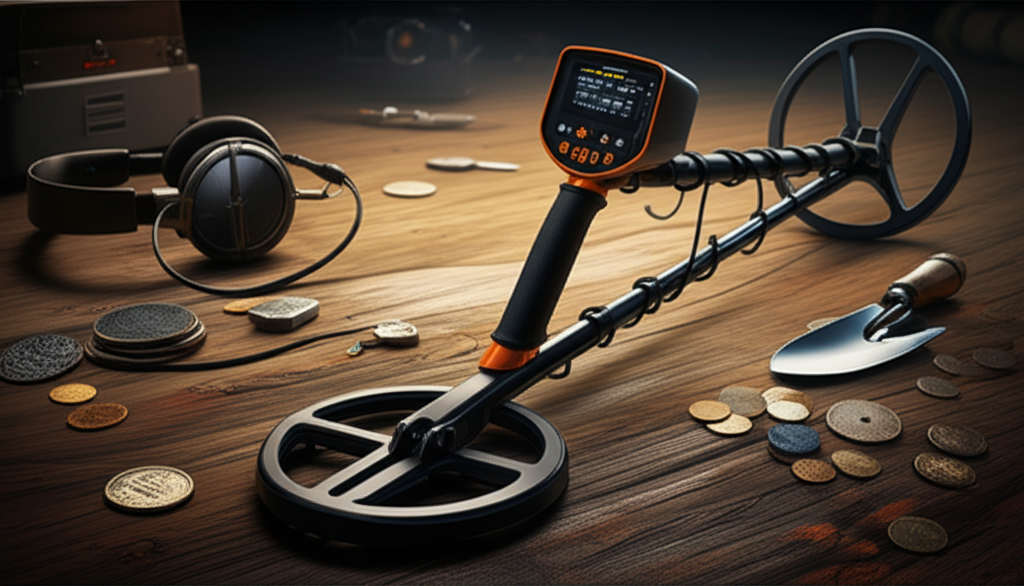
The coil is the part that scans the ground. Larger coils generally detect deeper. Some extreme power detectors use Double-D coils. These are good at rejecting trash. Elliptical coils can also get into tight spots. Look for waterproof coils for beach or river detecting.
Multiple Frequency Options
Some high-end detectors use different frequencies. Low frequencies are good for large, deep objects. High frequencies are better for small, shallow items like gold flakes. Detectors with multiple frequencies offer great versatility. You can switch them based on what you’re hunting for.
Adjustable Discrimination and Sensitivity
Discrimination lets you ignore junk like iron nails. Sensitivity controls how weak a signal the detector will pick up. Extreme power models offer fine control over these settings. This lets you tune the detector perfectly. You can filter out trash while still finding valuable targets.
Ground Balancing Capabilities
As mentioned, ground balancing is vital. It cancels out the ground’s natural minerals. Manual ground balancing offers more precise control. Automatic ground balancing is faster and easier for beginners. Many extreme power detectors have both options. This lets you adapt to any detecting condition.
Top Extreme Power Metal Detector Recommendations
Based on my field experience, a few models consistently perform. They offer that extra power needed for deep targets. These are the machines that have helped me find some of my best treasures.
Model A: The Deep Relic Hunter
This detector is a beast for finding old relics. It has a large coil and excellent depth. Its discrimination is top-notch for ignoring iron. I’ve used it to find old farmsteads and Civil War artifacts. It’s a bit heavy, but the finds are worth it.
Model B: The Gold Prospector’s Dream
Designed for gold, this detector excels with small targets. It runs at a high frequency. This makes it sensitive to tiny gold nuggets. It also performs well in highly mineralized areas. If you’re serious about finding gold, this is a strong contender.
Model C: The All-Around Powerhouse
This model balances depth, sensitivity, and ease of use. It offers multiple frequencies and excellent discrimination. It’s a great choice if you hunt for coins, relics, and gold. It’s also quite user-friendly for its power.
Choosing the Right Coil for Your Detector
The coil is your detector’s eye. Choosing the right one can dramatically change your results. Different coils are better for different tasks.
Standard Coils
Most detectors come with a standard coil. This is usually an 8-11 inch round coil. It’s a good all-around performer for general detecting. It balances depth, sensitivity, and coverage.
Large Coils
For extreme depth, a larger coil is often best. A 15-inch coil or larger can detect targets much deeper. However, large coils are heavier. They are also more sensitive to ground mineralization. They can be slower to sweep over the ground.
Small Coils
Smaller coils, like 5-6 inches, are very sensitive. They are great for trashy areas. They can pinpoint small targets like jewelry or small coins. They don’t go as deep as larger coils.
Elliptical Coils
These coils are shaped like an oval. They can get into tight spaces. They also have good target separation. Some are designed for specific tasks, like beach hunting.
Essential Accessories for Deep Detecting
Having the right accessories makes a huge difference. They help you use your extreme power metal detector effectively. They also help you recover your finds safely.
Pinpointers
Once your detector signals a target, a pinpointer helps you find it. This is a small, handheld detector. It points you to the exact location of the metal. It saves a lot of digging time.
Digging Tools
You’ll need good digging tools. A strong shovel or a trowel is essential. For deeper targets, you might need a digging stick. Always check local laws about digging.
Headphones
Using headphones is a game-changer. They block out wind noise. This lets you hear faint signals clearly. You can also adjust the volume.
Tips for Maximizing Your Finds with an Extreme Power Detector
Using a powerful detector is just the first step. Knowing how to use it correctly is key. Here are some tips from my own experiences.
Learn Your Detector’s Sounds
Every detector makes different sounds. Spend time learning what each sound means. Practice with known targets at different depths. This builds your confidence.
Master Ground Balancing
Proper ground balancing is crucial. It helps your detector ignore false signals. Read your manual carefully. Practice balancing in different soil types.
Hunt in Productive Areas
Research old maps and local history. Look for old home sites, parks, or fairgrounds. These places often hold forgotten treasures. Be sure to get permission before detecting on private land.
Patience and Persistence
Treasure hunting takes time and effort. Don’t get discouraged by trash finds. Keep swinging your coil and stay persistent. The next signal could be your biggest score.
Understanding Metal Detector Frequencies
Frequencies are measured in Hertz (Hz). They determine how a detector interacts with metal. Different frequencies are better for different targets.
Low Frequencies (under 10 kHz): Good for larger, deeper targets like old coins and relics. They penetrate the ground better.
Medium Frequencies (10-20 kHz): A good balance. They can find a variety of targets. They work well for general coin and relic hunting.
* High Frequencies (over 20 kHz): Excellent for small targets like jewelry, gold nuggets, and thin chains. They are less affected by ground mineralization.
Many advanced detectors offer multi-frequency capabilities. This means they can operate on several frequencies at once. This gives you the best of all worlds. You can hunt for anything, anywhere.
Before you grab your extreme power metal detector, know the rules. Detecting laws vary greatly. It’s your responsibility to follow them.
Private Property
Always get explicit permission from the landowner. A handshake might be enough, but a written agreement is better. Clearly state where you can detect and what you will do with finds.
Public Parks and Lands
Many public areas have restrictions. Some ban metal detecting entirely. Others require permits. Check with the local park authority or government office. Historical sites are often protected. Detecting there is usually illegal.
Coastal Areas
Beach detecting is popular. However, some beaches have specific rules. You might need a permit. Be aware of tide lines and protected dune areas.
FAQ: Your Top Questions Answered
What is the deepest a metal detector can go?
The depth depends on the detector, coil size, and target size. An extreme power metal detector with a large coil might reach 12-18 inches for a large coin. Small targets will be much shallower.
Are expensive metal detectors always better?
Not always, but generally, more expensive detectors have advanced features. These features like multi-frequency and better discrimination help find deeper targets. For extreme power, you usually need a higher-end machine.
Can I use a metal detector in the rain?
Many modern detectors are waterproof or water-resistant. Check your detector’s specifications. Waterproof coils and control boxes allow detecting in wet conditions or shallow water.
What is the best metal detector for beginners?
For beginners, a user-friendly detector with good depth is ideal. Look for automatic ground balancing and clear target ID. A mid-range detector is often a good starting point before upgrading to extreme power models.
How do I find old home sites?
Research old maps, historical records, and family histories. Look for former property lines or locations mentioned in old documents. Use aerial imagery to spot old foundations or driveways.
Conclusion: Unleash Your Treasure Hunting Potential
An extreme power metal detector is a serious tool. It’s designed to push the boundaries of detection. By understanding its features and using it wisely, you unlock a new level of treasure hunting. You can find those ultimate hidden treasures buried deep. Choose the right machine, learn its capabilities, and explore with confidence. Your next amazing find awaits!
