


Published on: November 9, 2025 | Updated on: November 9, 2025
Metal Detector to Find Keys: Essential Breakthrough
Losing your keys is frustrating. A metal detector can be your best friend to find them quickly and easily, saving you time and stress. This guide shows you how.
Finding lost keys can feel like searching for a needle in a haystack. It’s a common problem that causes a lot of worry. But what if there was a simple tool that could make this task much easier? This article will guide you through choosing and using a metal detector specifically for finding lost keys. We’ll cover everything you need to know to turn a stressful situation into a successful recovery. Get ready to learn how a metal detector can be your essential breakthrough.
Why Use a Metal Detector for Lost Keys?
A metal detector is designed to sense metal objects underground or in other materials. Keys are made of metal, so they are perfect targets for a detector. This tool can scan large areas quickly, much faster than searching by hand. It helps you pinpoint the exact location, saving you digging time.
This technology can find keys even if they are buried a few inches deep. It works well in grass, dirt, sand, and even shallow water. Using a metal detector takes the guesswork out of searching. It offers a reliable way to retrieve your lost essential items.
Choosing the Right Metal Detector for Keys
Not all metal detectors are the same. For finding keys, you don’t need a super-advanced or expensive model. A simple, user-friendly detector will work best. Look for one that is lightweight and easy to operate.
Key features to consider include adjustable sensitivity and discrimination. Sensitivity helps the detector pick up small metal objects like keys. Discrimination allows you to ignore junk metal, like bottle caps, so you can focus on your target. Many beginner-friendly models offer these settings.
Types of Metal Detectors for Key Finding
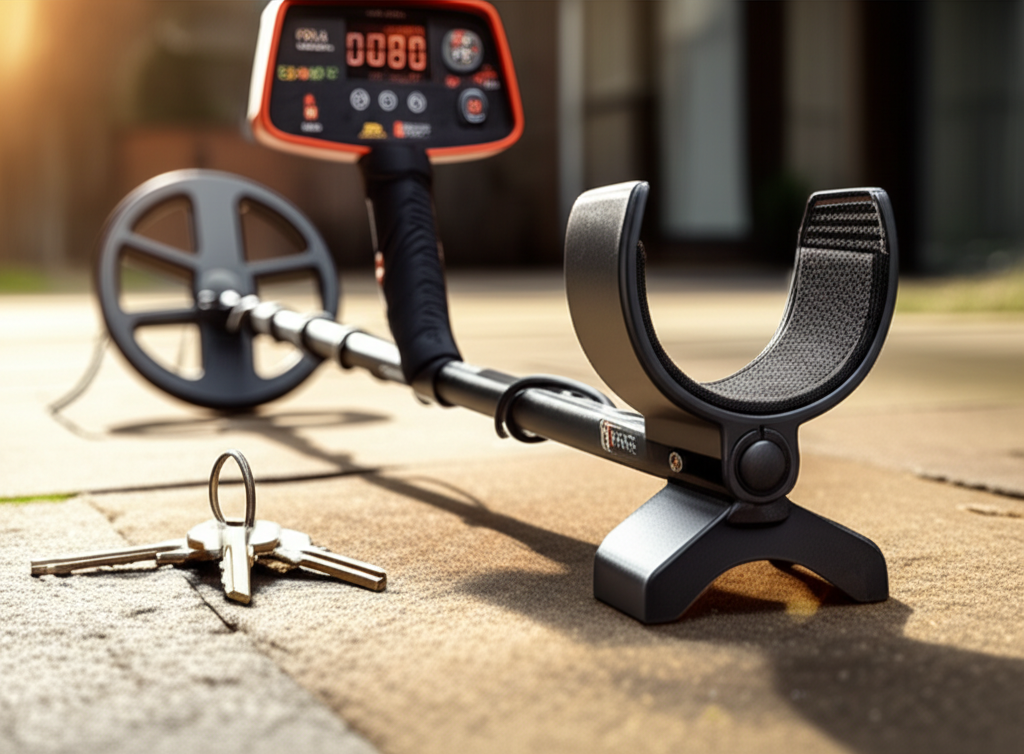
There are several types of metal detectors. For finding keys, a VLF (Very Low Frequency) detector is usually a good choice. These are common, affordable, and effective for finding common metals like brass, steel, and nickel, which are used in keys. Pulse Induction (PI) detectors are better for highly mineralized ground or saltwater, which isn’t typically where keys are lost.
Another helpful tool is a pinpointer. This is a small, handheld metal detector. It helps you narrow down the exact spot once your main detector signals. Pinpointers are crucial for finding small targets like keys quickly once you’ve found the general area.
Key Features to Look For
When selecting a metal detector to find keys, prioritize ease of use and target identification. An adjustable stem is important so people of different heights can use it comfortably. A visual display or audio tones that indicate the type of metal detected can be very helpful.
Look for a detector with a decent search coil size. A coil around 8-10 inches in diameter offers a good balance between covering ground and pinpointing small items. Simple controls and clear instructions are also vital for a stress-free experience. Many brands like Garrett, Minelab, and Bounty Hunter offer great entry-level options.
How Metal Detectors Work to Find Keys
Metal detectors work by creating an electromagnetic field. This field extends into the ground. When this field encounters a metal object, like your keys, it causes a reaction. The detector’s control box interprets this reaction.
This interpretation is usually communicated through an audible tone or a visual indicator on a screen. Different tones or readings can suggest the type of metal detected. The strength of the signal often indicates how close the object is or how deep it might be buried.
The Role of the Search Coil
The search coil is the part of the metal detector that you swing over the ground. It contains transmitter and receiver coils. The transmitter coil sends out the electromagnetic field. The receiver coil picks up any changes in that field caused by metal objects.
A well-designed search coil can detect targets at various depths. For finding keys, a smaller coil might be more precise. It can help you isolate the key’s signal from other nearby metal trash. Many detectors allow you to swap out coils for different situations.
Understanding Target Signals
When your metal detector finds metal, it sends out a signal. This signal is usually a sound. The pitch and volume of the sound can tell you something. A clear, strong tone often means a good target. A faint or choppy tone might be junk metal or a very deep target.
Many modern detectors have a digital display. This display shows a number or a VDI (Visual Discrimination Index) number. This number helps identify the type of metal. Keys typically fall into a mid-range VDI number, often in the ferrous or non-ferrous categories.
Using Your Metal Detector to Find Lost Keys
Once you have your metal detector, it’s time to use it. First, ensure the detector is properly assembled and the batteries are fresh. Turn it on and perform a ground balance if your detector requires it. This process helps the detector ignore the natural minerals in the soil.
Then, adjust the sensitivity to a medium or high setting. Set the discrimination to ignore iron if possible, but be careful not to exclude steel keys. Start swinging the coil slowly and systematically over the area where you think you lost your keys. Overlap your sweeps to cover the ground thoroughly.
Step-by-Step Key Recovery Process
1. Identify the Search Area: Think carefully about where you last had your keys. Was it in the yard, a park, or by your car?
2. Turn on and Tune Your Detector: Power up your metal detector and perform any necessary ground balancing.
3. Set Your Discrimination: Set discrimination to ignore trash like pull tabs or bottle caps, but be cautious not to exclude key material.
4. Sweep the Area: Swing the coil slowly and methodically over the suspected area. Overlap each sweep by about half the coil’s width.
5. Listen for Signals: Pay close attention to the audio tones. A repeatable, clear tone is a good sign.
6. Pinpoint the Target: Once you get a repeatable signal, use slow, short sweeps to narrow down the exact spot. Try sweeping from different directions.
7. Use a Pinpointer: If you have a pinpointer, use it to precisely locate the target in the soil or grass.
8. Carefully Dig: Dig a neat plug of soil or use a small trowel. Place the soil on a tarp or cloth to avoid losing the target.
9. Check the Plug/Soil: Use your detector or pinpointer to check the soil plug and the hole for the target.
10. Recover Your Keys: Once found, retrieve your keys and carefully replace the soil plug.
Tips for Effective Searching
Always search in a grid pattern. This ensures you don’t miss any spots. Slow down your swing speed; faster swings can cause you to miss targets. Listen carefully to all signals, as even faint ones can be important.
When you get a signal, try pinpointing it by sweeping the coil from different directions (north-south, east-west). This helps you find the center of the target. Be patient; finding lost items takes time and practice.
Troubleshooting Common Issues
Sometimes your metal detector might give false signals. This can happen due to electrical interference, hot rocks, or buried metal trash. If you get a chattery or inconsistent signal, try adjusting the sensitivity or discrimination settings. Moving slower can also help.
Another issue is missing targets. This can occur if you swing the coil too fast, the target is too deep, or the detector’s settings are not optimized. Always ensure your detector is properly ground balanced for the area you are searching. If keys are very deep, you might need a detector with more depth capability.
Dealing with False Signals
False signals can be annoying, but they are part of metal detecting. If you get a signal that doesn’t seem right, try digging a small test hole first. Sometimes it’s just a piece of foil or a nail. If the signal disappears when you dig a little, it was likely junk.
If the signal persists and you suspect it’s your keys, dig carefully. Use your pinpointer to confirm the target’s location within the dug soil or hole. Don’t get discouraged by false signals; they are opportunities to learn your detector better.
Maximizing Depth and Accuracy
To find keys buried deeper, you might need to adjust your detector’s settings. Increasing sensitivity can help, but it might also increase false signals. Some detectors have different search modes that can enhance depth. Using a larger search coil can sometimes reach deeper targets, but it might be less precise for small items.
Accuracy comes from careful sweeping and pinpointing. Always overlap your sweeps and slow down as you approach a target. Using a pinpointer is the best way to achieve pinpoint accuracy. It helps you find the target within inches of soil.
Best Metal Detectors for Finding Keys (Under $300)
For beginners looking to find keys without breaking the bank, several excellent options exist. These detectors offer good performance and are easy to use. They provide essential features like adjustable sensitivity and basic discrimination.
The Garrett ACE 200 is a popular choice. It’s lightweight, easy to operate, and offers clear audio signals. Another great option is the Minelab Vanquish 340. It uses multi-frequency technology for better target identification and is very user-friendly. The Bounty Hunter TK4 Tracker IV is a very affordable and simple detector, perfect for basic key finding.
Garrett ACE 200
The Garrett ACE 200 is designed for simplicity and effectiveness. It features three search modes and four sensitivity adjustments. Its digital target ID helps you identify targets, and it comes with a decent search coil. This detector is robust enough for various terrains.
It offers a clear audio response and a depth indicator. The ACE 200 is a solid choice for anyone starting out or needing a reliable detector for common finds like keys. It represents great value for its performance.
Minelab Vanquish 340
Minelab’s Vanquish 340 stands out with its Multi-IQ technology. This means it uses multiple frequencies simultaneously, improving its ability to find different types of metal in various conditions. It has automatic noise canceling and automatic ground balancing. This makes it incredibly easy to use right out of the box.
The Vanquish 340 is lightweight and foldable, making it portable. It provides clear audio options and a pinpoint mode. It’s an excellent detector for finding keys and much more.
Bounty Hunter TK4 Tracker IV
If budget is a major concern, the Bounty Hunter TK4 Tracker IV is a strong contender. It’s a very basic detector but performs well for its price. It features a discrimination control to reject unwanted metal targets. It uses a visual target indicator and an audio tone.
This detector is straightforward to use and requires minimal setup. It’s ideal for casual searching in parks or yards. While it might not have advanced features, it can certainly help you find lost keys.
Essential Accessories for Key Finding
Beyond the metal detector itself, a few accessories can significantly improve your experience. A pinpointer is almost essential for locating small targets like keys quickly. A small digging tool, like a garden trowel or a specialized digging tool, is needed to retrieve targets without damaging them.
A finds pouch or bag is useful for storing your recovered items. Gloves can protect your hands, especially if you encounter sharp objects. A small brush can help clean dirt off your keys once found.
The Indispensable Pinpointer
A pinpointer is a small, handheld device. You use it to scan the soil plug or hole once your main detector has indicated a target. It will beep or vibrate more intensely as you get closer to the metal object. This saves a lot of time and reduces the amount of digging required.
Pinpointers are incredibly useful for finding small, shallow targets like keys, coins, or jewelry. They are usually waterproof, allowing you to search in wet conditions. Investing in a good pinpointer is highly recommended for any detectorist. Many brands like Garrett, Nokta Makro, and Teknetics make quality pinpointers.
Digging Tools and Other Gear
For digging, a small, sturdy garden trowel is a good starting point. If you plan to do a lot of detecting, consider a specialized digging tool called a “digger” or “shovel.” These are designed to cut neat plugs of soil, making it easier to restore the area afterward. Always try to leave the area as you found it.
A finds pouch attaches to your belt and allows you to keep your hands free. It’s perfect for storing any interesting finds or trash you collect. Consider bringing a small backpack to carry your detector, water, and other supplies.
Where to Use Your Metal Detector to Find Keys
The best places to use a metal detector for lost keys are areas where people commonly lose them. This includes your own yard, parks, playgrounds, beaches, and even parking lots. Think about where you might have been walking or sitting.
Be aware of local regulations regarding metal detecting. Some public areas may prohibit it. Always get permission before detecting on private property. Respecting these rules ensures you can continue enjoying the hobby.
Searching Your Yard and Property
Your own yard is often the first place to look. You might have dropped keys while gardening, playing with kids, or just walking around. Systematically search your lawn, garden beds, and pathways. Pay attention to areas near doors and driveways.
If you have a large property, divide it into sections. Search each section thoroughly before moving on. Remember that keys can be buried by lawnmowers or simply fall into the grass.
Public Parks and Recreational Areas
Parks are common places to lose keys. People often sit on benches, play sports, or walk their dogs. Beaches are another excellent location, especially near popular spots or picnic areas. Always check for local rules about metal detecting in parks and on beaches.
Playgrounds can be treasure troves, but be mindful of children. If you find something, try to recover it carefully. If you find a child’s lost toy or item, try to reunite it with its owner if possible.
Legal and Ethical Considerations
Metal detecting is a hobby enjoyed by many, but it comes with responsibilities. Always research local laws and regulations. Some areas have restrictions on where and when you can detect. Private property always requires explicit permission from the owner.
When you find something, especially historical artifacts, know the laws regarding ownership and reporting. For lost keys, the primary ethical consideration is to restore the area you searched. Fill in any holes neatly and leave no trace of your activity. This ensures continued access and respect for the hobby.
Respecting Property and Landowners
Always obtain permission before detecting on private land. A friendly conversation can go a long way. Explain what you do and assure them you will respect their property. If they agree, be sure to fill all holes and leave the area clean.
In public parks, check signage or contact local authorities. Some parks allow detecting, while others ban it. Respecting these rules is crucial for maintaining good relations and access for all detectorists.
Responsible Digging and Site Restoration
Responsible digging is a cornerstone of ethical metal detecting. When you get a signal, dig a neat, U-shaped plug of soil. Carefully lift the plug and place it to the side on a cloth or tarp. This makes it easy to replace the soil later.
After recovering your target, carefully replace the soil plug. Make sure it sits flat and looks natural. Brush away any loose dirt. The goal is to leave the site looking undisturbed. This practice is often called “leave no trace.”
FAQ: Finding Keys with a Metal Detector
Can any metal detector find keys?
Yes, most metal detectors can find keys because keys are made of metal. Simpler, less expensive models are often sufficient for this task.
How deep can a metal detector find keys?
Typical beginner detectors can find keys buried a few inches to about 6-8 inches deep. Deeper targets require more advanced machines.
What settings should I use on my metal detector for keys?
Start with medium sensitivity and try to discriminate out iron if your keys are not iron. Pay attention to mid-range target ID numbers.
Do I need a special detector for finding keys in the grass?
No, a standard VLF metal detector works well in grass. A pinpointer is very helpful for pinpointing the target in thick grass.
What if I find other metal objects besides my keys?
This is common. Use your detector’s discrimination feature to ignore trash. When you get a good signal, dig carefully and use a pinpointer to confirm.
Is it hard to learn how to use a metal detector to find keys?
No, finding keys is a great beginner project. Most detectors are designed to be user-friendly, and this guide provides steps to help you.
* Can I use a metal detector in the rain?
Some metal detectors are waterproof or water-resistant. Always check your detector’s manual. Searching in light rain is often possible if the control box is protected.
Conclusion: Your Keys Are Within Reach
Losing your keys is no longer a cause for panic. With the right metal detector, finding them becomes an achievable task. You’ve learned that a simple, user-friendly detector is all you need. Key features like adjustable sensitivity and discrimination are important. Accessories like pinpointers and good digging tools make the process much easier.
Remember to search systematically and ethically. Always respect property and restore the search area. Your metal detector is more than just a tool; it’s your essential breakthrough to recovering lost items quickly. Happy hunting, and may your key searches be successful!
