


Published on: November 9, 2025 | Updated on: November 9, 2025
Metal Detector Treasure Find: Essential Tools For Breakthrough Dives
Unlock your next amazing metal detector treasure find with the right gear. This guide reveals the crucial tools, from detectors to digging aids, that transform good hunts into legendary discoveries. Learn what makes a breakthrough dive happen.
Metal detecting is a thrilling hobby. It promises the excitement of uncovering lost history and hidden treasures. Yet, many detectorists struggle to make those truly memorable finds. Often, the difference between a good day and a legendary one isn’t luck, but the right tools. Having the best metal detector is just the start. Essential accessories can dramatically improve your success rate. This guide will walk you through the vital gear needed for breakthrough dives. We’ll cover everything from advanced detectors to the smallest, but most critical, tools.
What Makes a Metal Detector Treasure Find Breakthrough?
A breakthrough metal detector treasure find is more than just finding something old. It’s about discovering something significant, rare, or historically important. This could be a large cache of coins, a historically valuable relic, or even gold nuggets. These finds often require more than just a basic detector. They need the right equipment to detect faint signals, pinpoint targets accurately, and recover them safely. The right tools help you overcome the challenges of different ground conditions and target depths. They turn a casual search into a serious treasure hunt.
Choosing Your Primary Detector for Deeper Dives
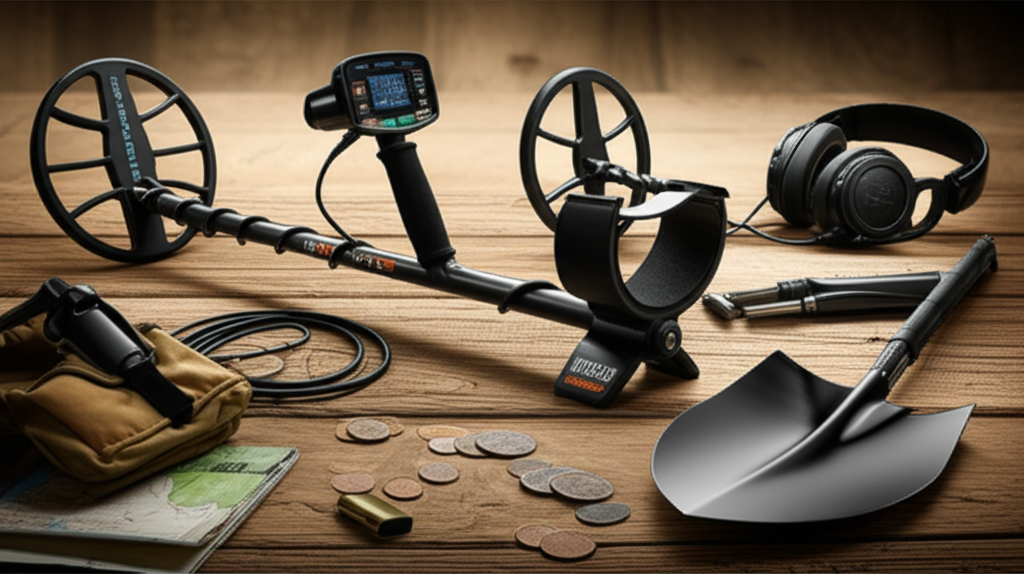
Your metal detector is your main tool for any treasure find. For breakthrough dives, you need a detector that can go deeper and discriminate targets better. Advanced features like multiple frequencies, adjustable ground balance, and superior target separation are key. Brands like Minelab, Garrett, and Nokta Makro offer models designed for serious treasure hunters. These detectors often come with specialized coils that enhance depth and sensitivity. Consider the types of targets you seek. Are you after old coins, relics, or gold? Different detectors excel in different areas.
Understanding Detector Frequencies and Their Impact

Frequency is how many times your detector sends out a signal per second. Lower frequencies (around 5-10 kHz) are great for detecting larger, deeper targets like old coins and relics. Higher frequencies (15 kHz and above) are better for smaller, shallower targets like gold nuggets and thin jewelry. Many modern detectors offer multiple frequencies or adjustable frequency settings. This allows you to adapt to different hunting conditions and target types. Choosing a detector with flexible frequency options broadens your treasure-finding potential.
The Importance of Ground Balance
Ground balance helps your detector ignore minerals in the soil. Soil minerals can create false signals, masking real targets. Manual or automatic ground balance features are crucial, especially in mineralized ground. This is common in areas with iron ore or saltwater beaches. Proper ground balancing allows your detector to see deeper into the ground. It helps you distinguish between soil mineralization and actual metal targets. This is vital for making those deeper, breakthrough finds.
Specialized Coils: Extending Your Detector’s Reach
The coil is your detector’s “ear.” Changing coils can significantly boost performance for specific treasure hunting scenarios. Larger coils generally detect deeper, but can be less sensitive to small targets. Smaller coils are more sensitive to small items and better at separating targets close together. Elliptical coils are excellent for trashy areas, allowing you to maneuver between junk targets. For breakthrough dives, consider a larger coil for depth or a specialized gold prospecting coil. Always check coil compatibility with your detector model.
Monoloop vs. Double-D Coils
Both monoloop and Double-D coils have their pros and cons. Monoloop coils tend to offer slightly more depth and sensitivity. They are often preferred by experienced gold prospectors. However, they can be more susceptible to ground mineralization. Double-D coils offer excellent stability in mineralized ground and better target separation. They are also less prone to “hot rocks.” Many detectorists use both types of coils depending on the hunting location. Understanding their differences helps you choose the best one for your next dive.
Pinpointers: The Key to Fast and Accurate Recovery
Once your detector signals a target, a pinpointer is essential. This is a small, handheld device that helps you pinpoint the exact location of the target in the soil plug. Without a pinpointer, digging can be slow and frustrating, often damaging the find. A good pinpointer will quickly narrow down the search area within your dug plug. This saves time and reduces the risk of scratching coins or damaging relics. It’s a small tool that makes a huge difference in recovery success.
Types of Pinpointers
Pinpointers come in various forms, including vibrating and audible models. Some are waterproof, which is great for beach hunting or wet conditions. Pulse induction (PI) pinpointers are generally more sensitive but can be more expensive. Very low-frequency (VLF) pinpointers are common and effective for most treasure hunting. Look for one with adjustable sensitivity and a durable construction. A good pinpointer is an indispensable part of any serious detectorist’s toolkit for a successful metal detector treasure find.
Digging Tools: Recovering Your Finds Safely
Finding a target is only half the battle; recovering it without damage is crucial. You need sturdy and appropriate digging tools. For general coin and relic hunting, a strong digging trowel or shovel is necessary. For deeper targets or compacted soil, a soil probe can help you locate the exact depth of the target before digging a large hole. Always consider the environment you are in. Use tools that minimize disturbance to the ground. Respecting the land is as important as finding treasure.
Choosing the Right Shovel or Trowel
A serrated edge on a shovel or trowel can help cut through tough roots and soil. Stainless steel is durable and less prone to rust. For beach hunting, a sand scoop is invaluable. It allows you to sift through sand quickly to find targets. For relic hunting in parks or fields, a sharp digging tool that can cut clean plugs is ideal. Always ensure your digging tools are robust enough for the terrain you plan to hunt. This prevents breakage and makes recovery much easier.
Essential Accessories for Enhanced Detection
Beyond the detector, coils, and digging tools, several accessories can significantly improve your metal detector treasure find experience. Headphones are vital for hearing faint signals and filtering out ambient noise. A digging pouch or backpack keeps your finds and tools organized. A cleaning kit helps preserve your discoveries. Even a simple tool like a nail-free nail puller can be useful for removing targets from tough soil. These small additions streamline your hunt and protect your finds.
The Power of Headphones
Good quality metal detecting headphones are a game-changer. They allow you to hear subtle target signals that you might miss with the detector’s built-in speaker. This is especially true in noisy environments like parks or windy beaches. They also help preserve battery life on some detectors. Look for comfortable, durable headphones designed for outdoor use. Many feature adjustable volume and excellent sound clarity. They are an essential accessory for serious treasure hunters.
Understanding Your Finds: Research and Identification
Making a metal detector treasure find is exciting, but knowing what you’ve found is even better. Having resources for research is important. This could include books on coin identification, local history guides, or online forums. Knowing the history of your finds adds immense value to the hobby. It connects you to the past and makes each discovery more meaningful. Proper identification also helps in determining the value and historical significance of your treasures.
Before you head out for a breakthrough metal detector treasure find, understand the rules. Many locations have specific regulations regarding metal detecting. Public parks, historical sites, and private property all have different rules. Always obtain permission before detecting on private land. Research local laws to ensure you are compliant. Responsible detecting respects property rights and historical preservation. This ensures the hobby remains enjoyable and accessible for everyone.
Frequently Asked Questions About Metal Detector Treasure Finds
What is the best metal detector for beginners?
For beginners, a good all-around detector like the Garrett Ace 300 or Nokta Makro Simplex+ is often recommended. They are easy to use, offer good performance for the price, and can find a variety of targets.
How deep can a metal detector find treasure?
The depth a metal detector can find treasure depends on many factors. These include the detector’s technology, the coil size, the target’s size and material, and the ground mineralization. Basic detectors might find coins a few inches deep, while advanced models with large coils can detect larger items a foot or more deep.
Is it legal to metal detect anywhere?
No, it is not legal to metal detect everywhere. Many public lands, historical sites, and private properties have restrictions or require special permits. Always check local laws and get permission before detecting.
What is the most common treasure found metal detecting?
The most common items found are modern coins, pull tabs, and other small pieces of trash. However, with persistence, older coins, jewelry, and historical relics are also frequently found.
How do I improve my metal detecting skills?
Practice is key. Learn your detector’s sounds and settings. Hunt in different locations. Join a local detecting club to learn from experienced detectorists. Read books and watch tutorials on metal detecting techniques.
What is a pinpointer and why do I need one?
A pinpointer is a small handheld device that helps you locate a target precisely within the soil you’ve dug. You need one to speed up recovery, reduce the chance of damaging your find, and make your digging much more efficient.
Conclusion: Your Path to Legendary Finds
Making a remarkable metal detector treasure find is within reach with the right strategy and tools. From selecting a powerful detector with advanced features to utilizing specialized coils and indispensable pinpointers, each piece of gear plays a crucial role. Don’t underestimate the importance of robust digging tools and essential accessories like headphones. By understanding your equipment, respecting regulations, and practicing your skills, you are well on your way to making your own legendary discoveries. Happy hunting!
