


Published on: September 1, 2025 | Updated on: September 1, 2025
Maximize productivity and style in a small room by cleverly arranging two desks, transforming it into a dual-function workspace with smart furniture and layout solutions.
Creating a functional home office in a small room can feel like a puzzle, especially when you need to accommodate two separate workspaces. Many of us dream of a dedicated spot for focused work, but a shared living space or a compact room often presents a significant challenge. You might be a remote worker needing a professional setup, a student requiring study space, or a couple sharing a home office. Whatever your situation, fitting two desks into a small room doesn’t have to mean sacrificing comfort, style, or productivity. This guide will walk you through ingenious space-saving strategies and smart furniture choices to help you design a harmonious and efficient dual-desk setup. Let’s unlock the potential of your small room and create a workspace that works for everyone.
Why Two Desks in One Small Room is a Common Challenge

Fitting two distinct workspaces into a limited square footage is a frequent hurdle for many professionals and students. This setup is often necessary for couples working from home, families needing separate study areas, or individuals requiring specialized workstations. The primary difficulty lies in balancing the need for ample desk surface and comfortable seating with the constraints of a small footprint, avoiding a cluttered or cramped environment.
The goal is to create two functional zones without making the room feel overcrowded or impeding movement. This requires careful consideration of furniture size, layout, and storage solutions. Let’s explore how to overcome these challenges and create a truly efficient dual-desk setup.
Assessing Your Space and Needs
Before diving into furniture selection, it’s crucial to thoroughly evaluate the dimensions and layout of your small room. Measure every available wall, noting window placements, door swings, and existing architectural features that might affect furniture arrangement. Understanding the flow of traffic within the room is also essential to avoid creating bottlenecks. Consider the primary functions each desk will serve; will one be for intense computer work and the other for creative tasks like drawing or writing?
Your personal working style and habits are equally important. Do you prefer standing or sitting? Do you need ample surface area for multiple monitors or just a laptop? Identifying these needs will guide your furniture choices and layout decisions, ensuring both workspaces are tailored to their intended users and functions. This foundational step is key to a successful dual-desk setup.
Smart Furniture Choices for Two Desks in a Small Room
Selecting the right furniture is paramount when aiming for two desks in a small room. Opt for desks that are appropriately sized, perhaps narrower or shallower than standard options, to fit comfortably without overwhelming the space. Consider vertical space with wall-mounted desks or floating shelves to minimize the floor footprint. Folding or foldable desks can also be excellent solutions, offering flexibility when not in use.
When choosing desks, think about their shape and how they can be configured. Corner desks can cleverly utilize often-underused space, while slim, straight desks can be placed against walls. For a more integrated feel, consider desks with built-in storage or modular designs that can be adapted to your specific layout. The goal is to find pieces that are functional, space-efficient, and aesthetically pleasing, complementing your overall room design.
Space-Saving Desk Styles to Consider
- Wall-Mounted Desks: These attach directly to the wall, freeing up floor space and creating a minimalist look. They are perfect for smaller areas and can be adjusted to ergonomic heights.
- Corner Desks: L-shaped or triangular corner desks maximize the use of room corners, often providing more surface area than a straight desk of a similar footprint.
- Floating Desks: Similar to wall-mounted desks but often appearing to ‘float’ without visible supports, these offer a sleek, modern aesthetic and are great for maintaining an open feel.
- Fold-Down Desks: These desks fold up against the wall when not in use, completely disappearing and reclaiming valuable room space.
- Ladder Desks: Combining shelving and a desk surface, these vertical solutions offer storage and a workspace without taking up much floor area.
These desk styles are designed to optimize your layout, ensuring you can comfortably fit two workstations without sacrificing precious room. They offer a practical approach to maximizing functionality in limited spaces.
Innovative Layout Strategies for Dual Workspaces
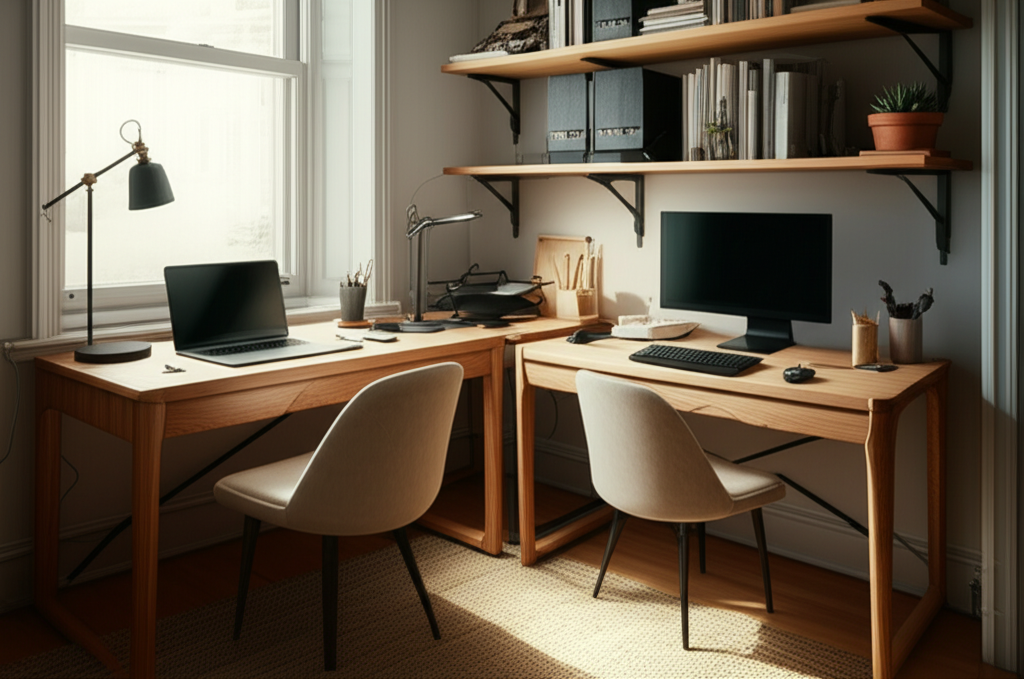
The arrangement of your two desks is crucial for functionality and flow within the small room. One popular strategy is to place desks back-to-back, creating a shared central point that can be efficient for connecting power and for distinct zones. Another approach is positioning them perpendicular to each other, perhaps at a right angle in a corner, which can define separate work areas clearly.
Facing desks can foster a sense of collaboration, while placing them along different walls can enhance individual focus and privacy. Consider how natural light sources affect each desk placement, aiming to give both users adequate illumination without glare. Experimenting with different orientations is key to finding the most effective layout for your specific room and needs.
Popular Layout Configurations
| Layout Style | Description | Pros | Cons |
|---|---|---|---|
| Back-to-Back | Two desks placed with their backs facing each other. | Efficient use of central space, good for shared power sources, creates distinct zones. | Can feel a bit close, requires careful cable management. |
| Corner Placement (L-Shape) | Desks positioned at a right angle in a corner. | Maximizes corner space, clearly separates work areas, good natural light potential. | May limit seating options, can feel a bit enclosed. |
| Facing Walls | Each desk placed against a different wall, facing outwards. | Maximizes individual focus, minimizes distractions, can feel more open. | Less collaborative feel, may require more diffused lighting. |
| Parallel Along Walls | Desks placed side-by-side along the same or opposite walls. | Can create a sense of order, good for longer rooms, allows for easy conversation. | Requires longer wall space, can feel less distinct if too close. |
Choosing the right layout can significantly impact how the room feels and functions, ensuring both workspaces are comfortable and productive. Each configuration offers unique advantages for a two desks in one small room scenario.
Maximizing Vertical Space: Storage and Shelving
In a small room, utilizing vertical space is non-negotiable for effective organization when accommodating two desks. Wall-mounted shelves, pegboards, and modular shelving units can provide ample storage for books, supplies, and decorative items without encroaching on desk surfaces or floor space. Consider tall, narrow bookshelves or stackable storage cubes that reach towards the ceiling, creating a sense of height and maximizing storage capacity.
Think about how you can integrate storage directly into your desk setup. Many modern desks come with built-in drawers or shelves, and you can also add desk organizers or monitor risers with storage compartments. Effective vertical storage keeps clutter at bay, ensuring both workspaces remain tidy and conducive to concentration. This strategy is key to making two desks in one small room feel spacious and organized.
Ergonomics for Two: Comfort and Well-being
Ergonomics is vital, especially when two people are using desks in close proximity. Ensure each workstation is set up to promote good posture and reduce strain. This means adjusting desk and chair heights so that your arms are at a 90-degree angle when typing and your feet are flat on the floor. Invest in comfortable, adjustable chairs that provide good lumbar support.
Position monitors at eye level to prevent neck strain, using monitor stands or adjustable arms if necessary. Good lighting is also an ergonomic consideration; natural light is ideal, but task lighting like desk lamps is essential for focused work, especially in the evenings. Prioritizing ergonomics ensures that both individuals can work comfortably and healthily for extended periods.
Essential Ergonomic Accessories
- Adjustable Office Chairs: Look for chairs with adjustable height, armrests, and lumbar support.
- Monitor Stands/Arms: To position screens at the correct eye level.
- Ergonomic Keyboards and Mice: To reduce wrist and hand strain.
- Footrests: For individuals whose feet don’t comfortably reach the floor.
- Laptop Stands: To elevate laptop screens for better viewing angles.
- Desk Converters: For the option to switch between sitting and standing.
Investing in these accessories can make a significant difference in comfort and long-term health for anyone working at their desk. They are crucial for maintaining well-being in any home office, particularly in a shared small space.
Lighting Solutions for a Dual-Desk Setup
Proper lighting is critical for productivity and reducing eye strain, especially when you have two desks in one small room. Natural light is always the best option, so try to position your desks to take advantage of windows. However, relying solely on natural light is often impractical, as work schedules can extend beyond daylight hours.
Ambient lighting should provide general illumination for the entire room, preventing harsh shadows. Task lighting is equally important; each desk should have its own dedicated light source, such as an adjustable desk lamp or a slender floor lamp. Consider LED lights, which are energy-efficient and offer various color temperatures to suit different tasks and moods. Good lighting can make a small room feel larger and more inviting.
Cable Management: Taming the Tech Tangle
With two desks often means double the electronics, leading to a potential spaghetti of wires. Effective cable management is essential to maintain a clean, organized, and safe workspace. This involves using cable ties, clips, sleeves, or raceways to bundle and conceal cords. Desk grommets and under-desk cable trays can also be lifesavers, keeping wires off the floor and out of sight.
Consider wireless peripherals where possible, such as wireless mice and keyboards, to reduce the number of cables. Power strips with surge protection should be mounted under desks or behind furniture to consolidate power connections. A well-managed cable system not only looks better but also reduces tripping hazards and makes it easier to clean your workspace. This attention to detail is key to a functional two desks in one small room setup.
Décor and Personalization: Making it Yours
Even in a small space, personalizing your dual-desk setup can significantly boost your mood and productivity. Choose a cohesive color palette for the room that is calming and inspiring. Incorporate elements like plants, artwork, or photos that bring you joy and make the space feel more inviting. Remember that less is often more in a small room; opt for minimalist décor to avoid visual clutter.
Consider how you can define each workspace subtly through décor. Perhaps one desk has more tech-focused accessories, while the other features more natural or artistic elements. Use area rugs to visually delineate each zone if the desks are positioned to create distinct areas. Making the space your own, while keeping it functional, is the final step in creating a home office that you’ll love spending time in.
Tips for Maintaining Order and Productivity
Once your dual-desk setup is in place, establishing routines for organization and productivity is crucial. Dedicate a few minutes at the end of each workday to tidy your desk, put away supplies, and plan for the next day. Regular decluttering sessions, perhaps weekly, will prevent small messes from accumulating into overwhelming chaos. Use your storage solutions effectively to ensure everything has a designated place.
Time management techniques, such as the Pomodoro Technique, can help maintain focus and prevent burnout. Communicate with whoever shares the workspace about noise levels, breaks, and shared resources to ensure a harmonious environment. By implementing these habits, you can ensure your two desks in one small room remain a haven of productivity and calm.
Frequently Asked Questions
- How can I prevent my two desks from making the small room feel cluttered?
- Focus on vertical storage, choose desks with minimal footprints, and maintain clear pathways. Opt for floating shelves and wall-mounted organizers to keep surfaces clear. A cohesive color scheme and good lighting also help create a sense of spaciousness.
- What is the best way to position two desks in a small room?
- Consider placing them back-to-back, in opposite corners, or along different walls to define distinct zones. Experiment with layouts to find what maximizes your usable space and minimizes visual clutter, ensuring comfortable movement.
- Should I choose identical desks or different ones?
- Identical desks can create a sense of symmetry and order, which works well in small spaces. However, different desks can be functional if they serve distinct purposes or suit individual preferences, as long as they share a similar style or color palette to maintain visual harmony.
- How do I manage cables for two workstations in a compact area?
- Utilize cable ties, clips, sleeves, and under-desk trays to bundle and hide wires. Consider wireless peripherals and wall-mounted power strips. Effective cable management is key to a tidy and safe workspace.
- What kind of lighting is best for a small room with two desks?
- Combine ambient room lighting with dedicated task lighting for each desk. Maximize natural light by positioning desks near windows, and use adjustable desk lamps for focused work. LED lights are energy-efficient and provide good quality illumination.
- How can I ensure both workspaces are ergonomic?
- Adjust chair and desk heights for each user, ensure monitors are at eye level, and provide lumbar support. Consider ergonomic accessories like footrests and keyboard trays to promote good posture and prevent strain.
Conclusion
Creating a functional and inspiring workspace with two desks in one small room is entirely achievable with the right planning and smart choices. By carefully assessing your space, selecting space-saving furniture, employing clever layout strategies, and prioritizing ergonomics and organization, you can transform even the most compact area into a productive dual-office haven. Remember to utilize vertical space for storage, manage your cables efficiently, and personalize the environment to make it truly your own. With these essential space-saving genius tips, you can overcome the challenges and enjoy a comfortable, stylish, and highly efficient home office setup that caters to everyone’s needs.
