


Published on: September 30, 2025 | Updated on: September 30, 2025
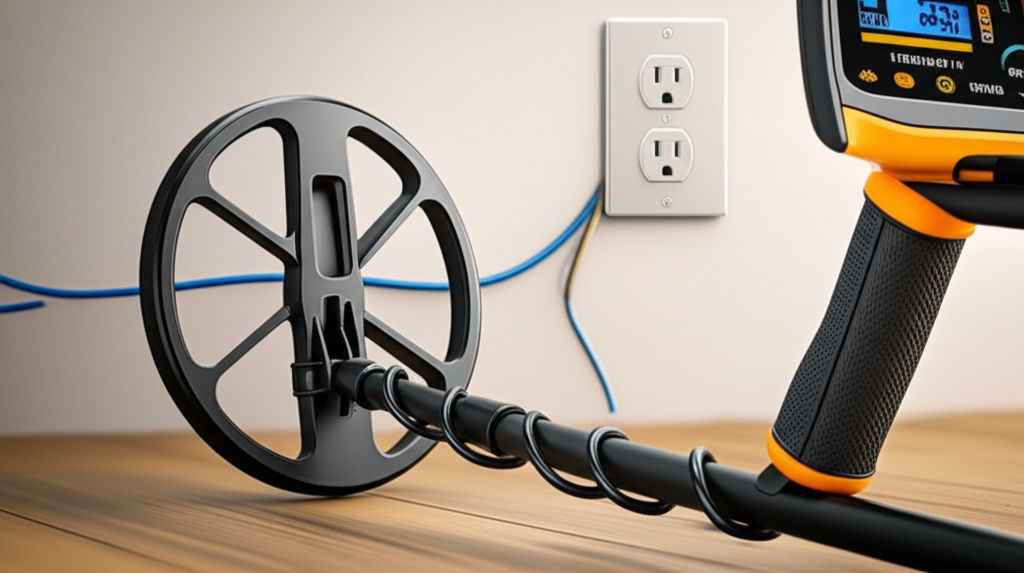
Yes, you can use a metal detector to find electrical lines, but with significant limitations and safety concerns. It’s not the primary tool for this job, and relying solely on it can be dangerous. This guide will explain how it might work, its drawbacks, and safer alternatives for locating underground utilities.
Finding buried electrical lines is a crucial step before any digging project, whether you’re a seasoned detectorist looking for old infrastructure or a homeowner planning a garden. Hitting a live wire is incredibly dangerous, and even unmarked, de-energized lines can cause significant damage. While the thought of using your trusty metal detector for this task might seem logical, the reality is a bit more complex. I’ve spent years with my detector in hand, and while it excels at finding coins and relics, its effectiveness for utility locating is limited. Let’s explore if your metal detector can help and what you really need to know to stay safe.
Contents
- 1 Why Locating Electrical Lines is Crucial
- 2 Can You Actually Use A Metal Detector To Find Electrical Lines?
- 3 The Limitations of Metal Detectors for Utility Locating
- 4 Understanding How Metal Detectors Work (and Why It Matters Here)
- 5 When a Metal Detector Might Be Useful (and How to Try)
- 6 Safer and More Effective Methods for Locating Utilities
- 7 The Dangers of Misidentifying or Missing Electrical Lines
- 8 What to Do If You Suspect You’ve Hit a Line
- 9 Choosing the Right Tool for the Job: Metal Detector vs. Utility Locator
- 10 Alternatives for Finding Other Buried Metal Objects
- 11 FAQ: Can You Use A Metal Detector To Find Electrical Lines?
- 12 Conclusion: Prioritize Safety and Use the Right Tools
- 13 Author
Why Locating Electrical Lines is Crucial
Before we dive into the “how,” it’s vital to understand the “why.” Unmarked electrical lines pose a serious threat. Hitting one can lead to electrocution, fires, and costly repairs. Even if you think an area is safe, old buried infrastructure can remain hidden for decades.
This is why proactive utility locating is non-negotiable. It’s not just about protecting your project; it’s about protecting lives and property. Ignoring this step is a gamble no one should take.
Can You Actually Use A Metal Detector To Find Electrical Lines?
The short answer is: sometimes, with significant caveats. Metal detectors are designed to find metallic objects buried in the ground. Electrical lines, especially the thicker cables that carry significant power, contain substantial amounts of metal, typically copper or aluminum wiring encased in steel conduits or sheathing. Therefore, a metal detector can register the presence of these metallic components.
However, it’s crucial to understand that a standard hobbyist metal detector is not designed for precise utility locating. Its primary function is to signal the presence of metal, not to distinguish between a buried pipe, a lost tool, or an active electrical cable. The depth and type of metal detector, the surrounding soil conditions, and the depth of the line all play a significant role in its effectiveness.
The Limitations of Metal Detectors for Utility Locating
While your metal detector might ping over a buried cable, relying on it alone is a risky proposition. Hobbyist detectors are generally designed for shallower depths and can be overwhelmed by the sheer amount of metal in a conduit, leading to weak or ambiguous signals. They struggle to differentiate between different types of metallic utilities, and distinguishing between live and dead lines is impossible.
Furthermore, many underground electrical lines are installed in non-metallic conduits (like PVC) for protection, or they may be buried at depths beyond the effective range of most hobbyist detectors. The signal can also be masked by other buried metal objects, leading to false positives or missed detections.
Understanding How Metal Detectors Work (and Why It Matters Here)
Metal detectors work by creating an electromagnetic field. When this field encounters a metallic object, it induces a current in that object. This, in turn, creates its own electromagnetic field, which the detector’s coil senses, producing an audible signal or a visual reading.
This principle is what allows a metal detector to find buried metal. For electrical lines, the metal in the wires and any protective conduit are the targets. However, the sensitivity and discrimination capabilities of your detector are key. A detector with excellent discrimination can ignore some types of metal, but it’s unlikely to be sophisticated enough to ignore all other buried metal to pinpoint an electrical line.
When a Metal Detector Might Be Useful (and How to Try)
If you’re in a pinch and have a powerful, sensitive metal detector, you might attempt to locate shallow, metallic-sheathed electrical lines. Start by sweeping the area slowly and methodically, listening for consistent signals. Pay attention to any persistent tones that don’t seem to be from shallow targets.
If you get a repeatable signal, try to trace its path by sweeping back and forth. A strong, consistent signal that runs in a straight line could indicate a buried utility. However, remember this is a highly unreliable method for electrical lines.
Testing the Signal

When you suspect you’ve found a line, test the signal’s consistency. Move the detector around the suspected area, noting where the signal is strongest. This helps to trace the general path of the metallic object.
Interpreting the Signal
Different detectors will provide different feedback. Some might give a tone, while others show a reading on a display. A strong, continuous signal in a straight line is more indicative of a utility than a faint or intermittent one.
Depth Limitations
Be aware that most hobbyist detectors have a depth limit. If the electrical line is buried deeper than your detector can reliably sense, you won’t find it. This is a critical limitation for underground utilities.
Safer and More Effective Methods for Locating Utilities
Given the limitations and risks, relying solely on a metal detector for electrical lines is strongly discouraged. There are much safer and more effective methods available. These professional tools are designed specifically for utility locating and provide far more accurate results.
Professional Utility Locating Services (Call Before You Dig)
The absolute best and safest approach is to contact your local utility locating service. In many regions, this is a free service. Dialing 811 (in the US and Canada) before you dig connects you with the appropriate agencies who will arrange for professional locators to mark underground utilities, including electrical lines, free of charge. This is the most important step for any digging project.
Handheld Electronic Utility Locators
These devices are specifically designed to detect buried utilities. They work by either detecting the electromagnetic field generated by live electrical cables or by using a transmitter/receiver system to trace metallic pipes and cables. They are far more accurate and safer than hobbyist metal detectors for this purpose.
Ground Penetrating Radar (GPR)
For very complex sites or when other methods fail, Ground Penetrating Radar (GPR) can be used. GPR sends radar pulses into the ground and analyzes the reflections to create a subsurface image. It can detect various buried objects, including non-metallic pipes and utilities, but it requires specialized equipment and trained operators.
The Dangers of Misidentifying or Missing Electrical Lines
The consequences of misidentifying or missing buried electrical lines can be severe. Electrocution is the most immediate and terrifying risk. Even low-voltage lines can cause serious injury or death, and hitting a high-voltage line can be instantly fatal.
Beyond personal safety, there’s the risk of significant property damage. Damaging an electrical line can cause widespread power outages, leading to costly repairs for the utility company and potential losses for businesses and residents. Fire is also a significant risk, as damaged cables can spark and ignite surrounding materials.
What to Do If You Suspect You’ve Hit a Line
If you suspect you have struck an underground electrical line:
1. Do NOT touch the line or any equipment near it.
2. Move away immediately. If you are operating machinery, move it away slowly and carefully.
3. Warn others to stay clear of the area.
4. Call emergency services (911 or your local equivalent) and the utility company immediately.
5. Do not attempt to repair or investigate the damage yourself.
Choosing the Right Tool for the Job: Metal Detector vs. Utility Locator
It’s essential to understand that metal detectors and electronic utility locators are designed for different purposes.
| Feature | Hobbyist Metal Detector | Professional Utility Locator |
| :——————- | :—————————————————- | :————————————————————- |
| Primary Purpose | Finding coins, relics, jewelry, small metallic objects. | Detecting and tracing underground utilities (pipes, cables). |
| Target Detection | Broad metal detection, can discriminate some types. | Specific detection of electrical fields, metallic pipes, etc. |
| Accuracy | Variable; can be imprecise for utility locating. | High accuracy for utility identification and tracing. |
| Depth Capability | Typically shallower than professional locators. | Designed for deeper utility detection. |
| Safety Focus | Not designed for utility safety detection. | Specifically designed to prevent accidental utility damage. |
| Cost | Varies widely, from under $100 to $2000+. | Typically starts from several hundred to thousands of dollars. |
A metal detector is your best friend for treasure hunting, but for safety and accuracy in locating buried lines, a dedicated utility locator or professional service is indispensable.
Alternatives for Finding Other Buried Metal Objects
While not ideal for electrical lines, your metal detector is still fantastic for finding other buried metallic treasures. If you’re interested in coins, relics, or even gold nuggets, a good metal detector is the way to go. Different detectors are specialized for different types of targets.
For instance, some detectors are highly sensitive to small gold nuggets, while others excel at finding shallow coins. Understanding your detector’s capabilities and limitations will help you maximize your finds in the hobby you love.
FAQ: Can You Use A Metal Detector To Find Electrical Lines?
Q1: Will my metal detector find underground electrical cables?
A1: It might, but it’s not reliable. Metal detectors find metal, and electrical cables contain metal. However, they can’t distinguish electrical lines from other buried metal objects, and their depth capability is often insufficient.
Q2: Is it safe to use a metal detector near electrical lines?
A2: It can be dangerous. If you’re actively trying to locate an electrical line with a metal detector and accidentally disturb it, you could be electrocuted. Always prioritize safety and use proper locating methods first.
Q3: What is the best way to find underground electrical lines?
A3: The safest and most effective way is to call your local utility locating service (like 811 in the US) before you dig. They will mark the lines for free. Professional handheld utility locators are also a more reliable option than hobbyist metal detectors.
Q4: Can a metal detector tell me if an electrical line is live?
A4: No. Metal detectors cannot determine if a buried line is carrying electricity. This is a critical safety feature that hobbyist detectors lack.
Q5: What if my metal detector finds a strong signal but I’m not sure what it is?
A5: Treat any strong, consistent signal as a potential utility. Do not dig. If you are planning to dig, always call for professional utility locating services first to ensure safety.
Q6: Are there special metal detectors for finding utilities?
A6: Yes, there are professional utility locators that use different technologies than hobbyist metal detectors. These are specialized tools designed for accurately detecting and tracing buried pipes and cables.
Conclusion: Prioritize Safety and Use the Right Tools
So, can you use a metal detector to find electrical lines? While your metal detector might register the presence of the metal within an electrical cable, it is far from an ideal or safe tool for the job. Its limitations in accuracy, depth, and the inability to distinguish between live and dead lines, or even between different types of utilities, make it an unreliable and potentially dangerous option.
For any digging project, the absolute priority must be safety. Always contact your local utility locating service (dial 811 in the US and Canada) before you put a shovel in the ground. This free service ensures that underground lines are marked, preventing accidents and costly damage. If you need to locate utilities regularly, invest in professional-grade electronic utility locators. Your metal detector is a fantastic tool for treasure hunting, but for the critical task of finding electrical lines, always rely on the right, specialized equipment and professional services. Stay safe out there!
