


Published on: October 12, 2025 | Updated on: October 12, 2025
The F75 metal detector offers a fantastic blend of features and ease of use, making it an essential breakthrough for anyone learning the ropes of metal detecting. It’s powerful, lightweight, and packed with settings that help beginners and experienced users alike find more treasures.
Metal detecting can feel a bit mysterious at first. You might wonder which machine is best for a beginner. Many people struggle to find good spots or understand what their detector is telling them. This can be frustrating, especially when you see others unearthing amazing finds. But don’t worry, choosing the right tool makes a huge difference. We’ll guide you through why the F75 metal detector is a breakthrough for learning, helping you get started with confidence and find more hidden treasures.
Why the F75 Metal Detector is a Game-Changer for Newbies
The F75 metal detector stands out as a powerful yet user-friendly option for those new to the hobby. Its intuitive design means you can start detecting almost immediately without feeling overwhelmed. This machine offers advanced features in a package that’s easy to understand. It’s like having a helpful guide right in your hands, showing you where to look and what you’re finding.
Understanding the F75 Metal Detector’s Core Strengths

This detector is known for its excellent depth and sensitivity. It can find targets buried quite deep, which is crucial for uncovering older items. The F75 also does a great job of separating different metal types, helping you distinguish between trash and treasure. These strengths make it a reliable partner for many different detecting scenarios.
Deep Target Detection
One of the F75 metal detector’s biggest advantages is its ability to sense metal objects far underground. This means you won’t miss out on those deeper, often more valuable, relics and coins. It gives you a real edge in finding targets that other, less powerful detectors might miss.
Superior Target Separation
In areas with lots of junk metal, like old home sites, separating good targets from bad is key. The F75 excels at this, thanks to its discrimination settings. You can tune it to ignore common trash items, so you can focus on digging up the good stuff.
Is the F75 Metal Detector Easy to Learn?
Yes, the F75 metal detector is surprisingly easy to get the hang of. While it has advanced options, its basic operation is straightforward. The controls are clearly labeled, and the display screen provides helpful information. You can be out detecting and understanding its signals within your first outing.
Intuitive Controls and Display
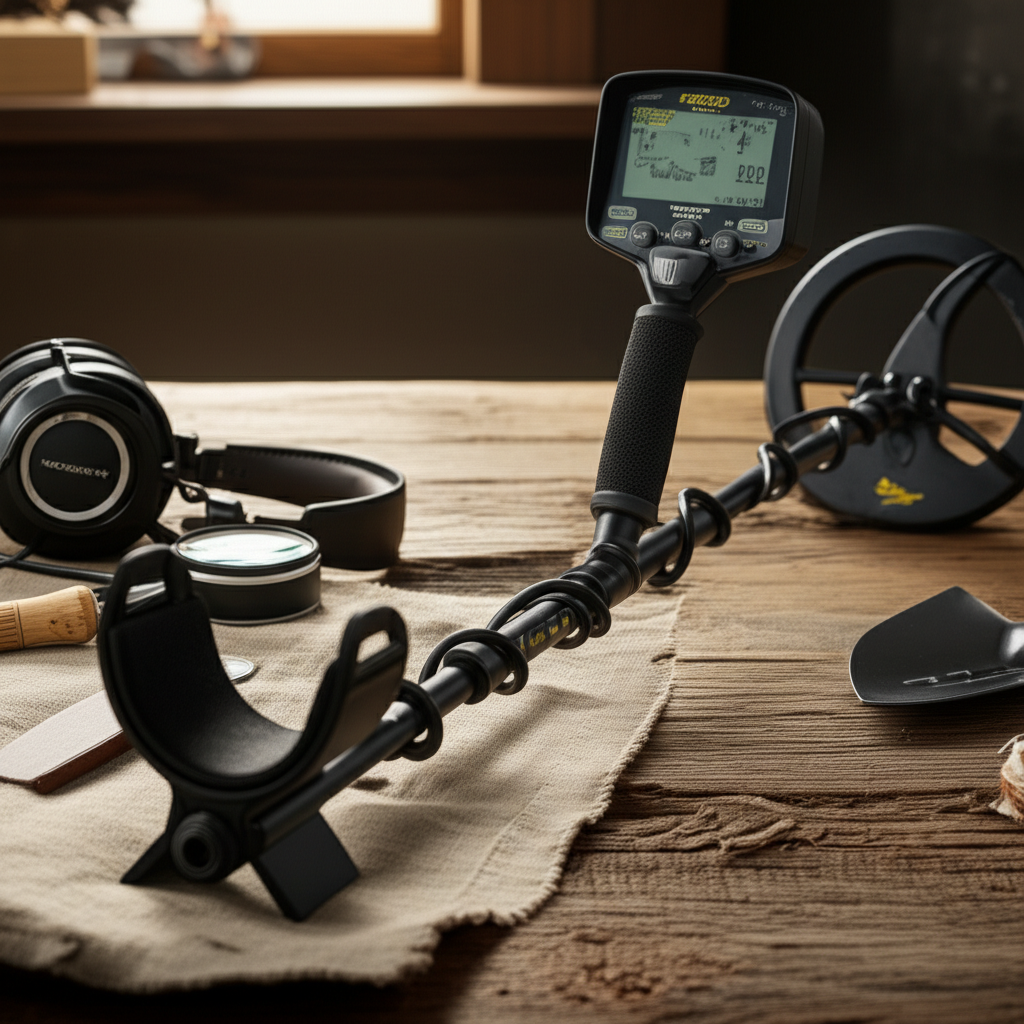
The control panel on the F75 is designed for clarity. Buttons are logically placed, and the LCD screen shows you important details like target ID numbers and signal strength. This visual feedback makes it easier to interpret what you’re finding. You get a clear picture of your target without needing to be an expert.
Quick Setup and Go Operation
You don’t need to spend hours reading a complicated manual before your first hunt. The F75 metal detector is designed for quick assembly and simple startup. Just put in the batteries, turn it on, and you’re ready to explore. This gets you into the field faster, which is great for learning.
Key Features of the F75 Metal Detector Explained
The F75 metal detector comes packed with features that boost its performance and make it a joy to use. Understanding these features helps you get the most out of your detecting sessions. They are designed to improve your chances of finding valuable items and make the process more enjoyable.
Ground Balancing for All Terrains
Every detecting location has different soil conditions. These can include minerals that can trick a metal detector into thinking there’s metal when there isn’t. The F75 metal detector has excellent ground balancing capabilities, which automatically adjust to these soil conditions. This reduces false signals and helps you get clearer readings.
Manual vs. Automatic Ground Balance
The F75 offers both manual and automatic ground balancing. Automatic is quick and easy for most situations. Manual ground balance gives you more control for tricky environments, allowing fine-tuning for maximum performance. Having both options means you’re prepared for any detecting challenge.
Adjustable Discrimination Settings
Discrimination is how a metal detector ignores unwanted metal targets, like iron nails or pull tabs. The F75 metal detector has adjustable discrimination levels. You can set it to ignore certain types of metals while still detecting others. This helps you filter out trash and focus on potentially valuable finds like coins and jewelry.
Understanding Target ID Numbers
The F75 displays a Target ID number when it detects metal. This number gives you an idea of what the metal might be. For example, coins often fall within a certain range, while iron is usually at the low end. Learning these numbers will help you decide whether to dig.
Frequency and Its Impact
The F75 metal detector operates at a frequency that is well-suited for finding a variety of targets. This frequency allows it to detect both small, high-conductivity items like gold jewelry and larger, lower-conductivity items like old coins. It’s a good all-around frequency for general detecting.
High-Frequency Benefits
While the F75 operates at a specific frequency, understanding how different frequencies affect detection is helpful. Higher frequencies are generally better for small, shallow targets. The F75’s frequency offers a good balance for various target types and depths.
The F75 Metal Detector’s Search Coil Options
The search coil is like the eyes of your metal detector. The F75 typically comes with a standard coil, but different coils can be used to enhance its performance in specific situations. Choosing the right coil can make a big difference in what you find.
Standard Elliptical Coil
The standard coil that comes with the F75 metal detector is an elliptical one. This shape is great for maneuverability, especially in grassy areas or around obstacles. It offers a good balance of depth and coverage for general searching.
Optional Larger or Smaller Coils
You can also get larger coils for wider coverage and deeper detection, or smaller coils for pinpoint accuracy in trashy areas. A larger coil covers more ground faster, while a smaller coil is excellent for separating targets close together. These options let you tailor the F75 to your specific hunting needs.
Putting the F75 Metal Detector to Work: Field Tips
Using the F75 metal detector effectively involves more than just turning it on. A few simple techniques can greatly improve your success rate. These tips come from real-world experience and will help you find more treasures.
Mastering the Sweep Technique
How you move the coil over the ground is important. You want to sweep it in a slow, steady, side-to-side motion. Keep the coil parallel to the ground at all times. This ensures consistent depth and coverage, helping the F75 metal detector pick up targets reliably.
Coil Height and Speed
Maintain a consistent height of about one inch above the ground. Swing the coil at a moderate pace, not too fast and not too slow. Too fast, and you’ll miss targets; too slow, and you might get confused signals. Finding the right speed takes a little practice.
Interpreting Audio Signals
The F75 metal detector provides audio cues to help you identify targets. Different tones usually indicate different types of metal. A high, clear tone often means a good target like a coin or piece of jewelry. A low, choppy tone might indicate iron or trash.
Using the Visual Display
Don’t rely on sound alone. The Target ID on the display screen gives you extra information. Cross-referencing the audio tone with the visual ID number helps you make better decisions about digging. It’s a powerful combination for accurate target identification.
Navigating Different Ground Conditions
Whether you’re detecting on a park lawn, a sandy beach, or a wooded area, the F75 metal detector can handle it. Remember to use the ground balancing feature, especially in mineralized soil. This ensures the detector is working at its best for the conditions.
Beach Detecting Considerations
For beach detecting, you might need a different coil to handle the wet sand and saltwater. The F75’s ability to adjust to ground conditions is also very helpful here. Always rinse your detector with fresh water after beach use.
Comparing the F75 Metal Detector to Other Options
When you’re learning, it’s good to know how your chosen detector stacks up. The F75 metal detector offers a great balance of features and price, making it a popular choice. It often performs as well as or better than detectors costing much more.
F75 vs. Beginner-Specific Models
While some detectors are marketed purely for beginners, they might lack the depth and advanced features of the F75. The F75 provides room to grow as your skills improve. You won’t quickly outgrow its capabilities like you might with a simpler machine.
F75 vs. Professional-Grade Detectors
More advanced detectors might have even more features or operate at different frequencies for specialized tasks like gold prospecting. However, they often come with a much higher price tag and a steeper learning curve. The F75 hits a sweet spot, offering professional-level performance without the extreme complexity or cost.
Essential Accessories for Your F75 Metal Detector Journey
To make your metal detecting experience with the F75 even better, a few accessories are highly recommended. These tools will help you dig your finds safely and efficiently. They are simple additions that make a big difference in the field.
Pinpointers: Your Best Friend for Locating Targets
Once you’ve dug a plug of soil, a pinpointer is invaluable. This small, handheld device helps you pinpoint the exact location of your target within the dug soil or the hole. It saves you time and reduces the size of the hole you need to dig. A good pinpointer is a must-have for any serious detectorist.
Digging Tools: Trowels and Shovels
You’ll need sturdy digging tools to retrieve your targets. A good digging trowel is essential for most coin and relic hunting. For deeper targets or tougher soil, a small shovel might be necessary. Always try to dig cleanly and fill your holes afterwards to leave the site as you found it.
The Importance of a Digger’s Pouch
A digger’s pouch or bag is useful for carrying your tools, headphones, and any finds you make. It also provides a place to put the soil you dig, keeping the area tidy.
Headphones: Hear Every Signal
Using headphones with your F75 metal detector is crucial. They block out ambient noise, allowing you to hear even the faintest target signals clearly. This is especially important in noisy environments or when hunting for small, deep targets.
Troubleshooting Common Issues with the F75 Metal Detector
Even the best metal detectors can sometimes present challenges. Knowing how to handle common issues will save you frustration and keep you detecting. The F75 metal detector is quite reliable, but here are a few things to watch out for.
False Signals and How to Reduce Them
False signals can come from electrical interference, highly mineralized ground, or hitting buried metal objects close together. Ensure your ground balance is set correctly for the area. Slowing down your sweep speed and understanding your target ID can also help differentiate real signals from false ones.
Dealing with Iron Overload
In areas with a lot of iron trash, the detector might struggle to pick out good targets. Using the discrimination settings carefully can help. Sometimes, accepting that you’ll have to dig some iron to find the good stuff is part of the process.
Notch Discrimination Explained
The F75 might have notch discrimination, which allows you to ignore a specific range of target IDs. This can be useful for skipping common trash signals while still picking up desirable targets. Experiment with these settings to find what works best.
Maximizing Your Finds with the F75 Metal Detector
The F75 metal detector is a powerful tool, but your technique and knowledge are what truly unlock its potential. By applying what you learn, you can significantly increase the number and quality of your finds. It’s about smart detecting, not just swinging a coil.
Researching Potential Hunting Locations
Before you even turn on your F75 metal detector, do some research. Old maps, historical societies, and local knowledge can point you to promising locations. Parks, old house sites, and school grounds are often great places to start.
Understanding Target Recovery Best Practices
When you get a good signal, dig carefully. Make a neat plug of soil and set it aside. Use your pinpointer to locate the target within the soil plug or the hole. Once found, place it in your pouch and carefully replace the soil plug, making the area look undisturbed. This practice is key for responsible metal detecting.
The F75 Metal Detector: Your Gateway to a Rewarding Hobby
The F75 metal detector truly represents an essential breakthrough for anyone wanting to learn metal detecting. It offers a fantastic combination of depth, sensitivity, and ease of use. This makes it accessible for beginners while still providing the performance that experienced detectorists appreciate. It’s a machine that grows with you, helping you learn the nuances of the hobby.
Pros and Cons of the F75 Metal Detector
Here’s a quick look at the advantages and disadvantages:
| Pros | Cons |
| :————————————– | :—————————————- |
| Excellent depth and sensitivity | Can be complex for absolute beginners |
| Good target separation | Not specialized for extreme conditions |
| Lightweight and comfortable to use | Audio tones can take time to learn |
| User-friendly controls and display | Standard coil might not be ideal for all |
| Good value for the performance offered | |
Why It’s a Smart Choice for Learning
The F75 metal detector provides the tools you need to succeed from day one. Its features help you understand signals and identify targets better. This hands-on learning experience is invaluable. You’ll gain confidence quickly and enjoy the thrill of discovery.
Frequently Asked Questions About the F75 Metal Detector
What is the best setting for the F75 metal detector for beginners?
For beginners, starting with the “All Metal” mode or a general “Coin” mode is recommended. Ensure the ground balance is set correctly. You can then experiment with discrimination settings as you get more comfortable with the sounds and target IDs.
Can the F75 metal detector find gold?
Yes, the F75 metal detector can find gold, especially jewelry and smaller nuggets. Its sensitivity at its operating frequency makes it capable of detecting gold. For serious gold prospecting in mineralized areas, a detector with a higher frequency might be preferred, but the F75 is a good starting point.
How deep can the F75 metal detector detect?
The F75 metal detector can detect targets up to 8-12 inches deep for coins, and potentially deeper for larger objects. Depth depends heavily on target size, orientation, soil conditions, and the coil used.
Is the F75 metal detector waterproof?
The F75 metal detector itself is not waterproof. However, the search coil is typically waterproof, allowing you to detect in shallow water or wet grass. The control box should be protected from rain and submersion.
What is the best coil for the F75 metal detector?
The standard elliptical coil is good for general use. For trashier sites or very small targets, a smaller coil (like a 5-inch DD) is excellent. For covering large areas quickly or finding deeper targets, a larger coil (like an 11-inch DD) can be beneficial.
How do I maintain my F75 metal detector?
Keep the control box clean and dry. After detecting in dirty or wet conditions, wipe down the shaft and coil. Store it in a dry place away from extreme temperatures. Always remove batteries when storing for long periods.
Conclusion
The F75 metal detector is an excellent choice for anyone starting their metal detecting journey. It offers a powerful combination of performance, ease of use, and value. This detector acts as an essential breakthrough, helping beginners quickly learn and enjoy the hobby. With its strong depth capabilities, clear target identification, and user-friendly design, the F75 metal detector empowers you to find more treasures. Embrace the learning process, practice your techniques, and you’ll soon be unearthing fascinating finds with your F75 metal detector.
