


Published on: November 4, 2025 | Updated on: November 4, 2025
Metal Detector Digging Tool: Essential Breakthrough for Every Detectorist
The right metal detector digging tool is crucial for successful treasure hunting. It helps you recover finds quickly and with minimal disturbance to the ground. This guide covers the best options and how to choose them.
Metal detecting is a fantastic hobby. You can find old coins, lost jewelry, and historical relics. But finding something with your detector is only half the battle. The real challenge often comes with digging it up. Without the proper digging tool, you can damage your finds or the ground. This can be frustrating. This guide will help you choose the perfect metal detector digging tool. We’ll explore different types and what makes them great.
Why the Right Digging Tool Matters
A good digging tool makes finding treasure easier. It helps you get to your target quickly. It also helps you dig with less damage. This is important for preserving the site. A bad tool can ruin a good find. It might also leave a mess.
Understanding Your Digging Needs
Your digging needs depend on where you hunt. Are you on soft grass or hard-packed dirt? Do you hunt in parks or forests? Knowing this helps you pick the best tool. Different ground conditions need different tools.
Common Ground Types and Tools

Soft Soil/Grass: A sturdy trowel or shovel works well. These are easy to use. They don’t disturb the grass too much.
Hard-Packed Dirt: You might need a digging iron or a strong spade. These tools can cut through tough ground.
Beaches: A sand scoop is best. It lets you sift through sand easily. It’s designed for this specific environment.
Forests/Woods: A digging spade or a military-style entrenching tool is useful. These can handle roots and tough ground.
The Best Metal Detector Digging Tools Reviewed
Many digging tools are available. Some are basic, while others have special features. I’ve used many over the years. Here are some of my favorites.
The Mighty Trowel
The trowel is a classic choice. It’s simple and effective. Many detectorists start with a good trowel. It’s great for general-purpose digging.
Pros: Lightweight, easy to use, affordable.
Cons: Can struggle in hard ground, might not be strong enough for large targets.
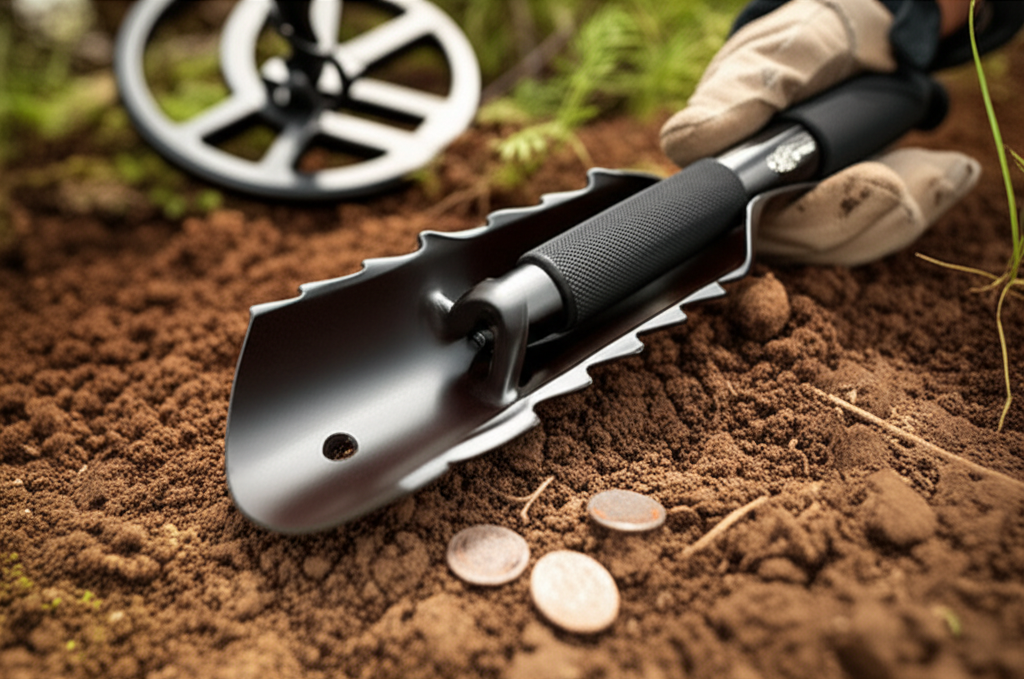
I recommend a trowel with a thick blade. Look for one with a comfortable handle. Some even have serrated edges. These can help cut through small roots. Brands like Garrett and Lesche make excellent trowels.
The Robust Digging Spade
A digging spade is more serious. It’s built for tougher jobs. It can handle hard ground and larger targets. These are essential for serious relic hunters.
Pros: Durable, powerful, great for tough ground.
Cons: Heavier, can be more disruptive to the ground.
When choosing a spade, look for strong steel. A sharp edge is also a plus. Some spades have footrests. These help you push them into the ground. Brands like Lesche and Stimpy’s are known for their quality spades.
The Versatile Entrenching Tool
An entrenching tool is like a small shovel. It’s often foldable. This makes it easy to carry. It’s good for many different situations.
Pros: Compact, multi-functional, good for various terrains.
Cons: Can be less sturdy than a dedicated spade.
Many entrenching tools can be used as a pick. This is helpful for breaking up hard soil. They are a great all-around tool for many detectorists.
The Beach Sand Scoop
If you hunt on the beach, a sand scoop is a must. It’s designed to sift sand. You can easily find your target.
Pros: Perfect for sandy conditions, efficient for beach hunting.
Cons: Not useful for other ground types.
Sand scoops come in different sizes. Some have holes to let water drain. Look for one made of strong metal. Stainless steel is a good choice. Brands like Quake and Dune offer good sand scoops.
Choosing the Right Material and Design
The material of your digging tool matters. It affects its strength and how long it lasts. The design also impacts its usability.
Materials to Consider
Stainless Steel: Very strong and resists rust. It’s a top choice for durability.
High-Carbon Steel: Also very strong. It can be sharpened. It might rust if not cared for.
Plastic: Lightweight and cheap. Not suitable for tough digging. Good for very soft sand only.
Design Features to Look For
Ergonomic Handle: A comfortable handle prevents hand fatigue.
Serrated Edge: Helps cut through roots and tough soil.
Footrest: Allows you to use your foot for extra pushing power.
Length: Longer tools offer more leverage. Shorter tools are more portable.
Essential Accessories for Digging
Besides your main digging tool, other items help. These make the digging process smoother. They also help you recover your finds safely.
Pinpointers: Your Best Friend in the Hole
A pinpointer is a small detector. It helps you find the exact location of your target. This is crucial once you’ve dug a plug. It saves a lot of time and frustration.
How they work: You wave the pinpointer over the soil plug. It beeps or vibrates when it’s near the target.
Types: Handheld pinpointers are most common. They look like small flashlights.
Top brands: Garrett, Minelab, and Nokta Makro make excellent pinpointers.
Using a pinpointer is a game-changer. It drastically reduces the time spent searching in the dirt plug. This means less disturbance to the ground.
Gloves for Protection
Digging can be tough on your hands. Gloves protect them from dirt, sharp objects, and blisters. They also improve your grip on tools.
A Pouch or Bag for Finds
You need a place to put your treasures. A finds pouch or bag keeps them safe. It also helps you carry them easily. Some pouches have multiple compartments. This helps organize different types of finds.
Techniques for Minimal Impact Digging
Good digging technique is as important as good tools. It respects the land. It also makes recovery easier.
The Plug Method
This is the most common technique.
1. Scan: Use your metal detector to find the target. Mark the spot lightly.
2. Cut: Use your digging tool to cut a U-shaped plug. Cut around the target area. Leave one side attached like a hinge.
3. Lift: Gently lift the plug. Place it aside, grass-side down if possible.
4. Probe: Use your pinpointer to locate the target in the hole or plug.
5. Recover: Carefully remove your find.
6. Replace: Put the soil back. Replace the plug. Pat it down.
This method leaves minimal trace. It’s vital for responsible detecting.
Beach Digging Techniques
On beaches, you often use a sand scoop.
1. Sweep: After detecting, use your scoop to gather sand.
2. Sift: Shake the scoop. Let the sand fall through. Keep the scoop level.
3. Check: Look for your target in the remaining sand.
4. Repeat: Continue scooping and sifting until you find it.
This is much faster than digging in sand.
Maintaining Your Digging Tools
Your digging tools will last longer with proper care. This saves you money. It also ensures they are ready when you need them.
Cleaning After Use
Always clean your tools after each outing. Remove all dirt and mud. This prevents rust. It also keeps the tools sharp.
Rust Prevention
For steel tools, a light coat of oil can prevent rust. WD-40 or a silicone spray works well. Wipe off any excess oil. Store your tools in a dry place.
Sharpening Blades
A sharp digging tool cuts better. Use a file or sharpening stone to keep blades sharp. Do this periodically, especially for spades.
Legal and Ethical Considerations
Always be aware of local laws. Some places have restrictions on digging. Always get permission before detecting on private land. Leave sites as you found them, or better. This ensures we can keep detecting.
The Future of Metal Detector Digging Tools
Technology is always changing. We might see lighter, stronger materials. Tools could become more ergonomic. Some might even have built-in sensors. For now, the focus is on durable, effective tools. The core function remains the same: getting your finds out of the ground.
Frequently Asked Questions (FAQ)
What is the best metal detector digging tool for beginners?
For beginners, a good quality trowel is often the best choice. It’s easy to use and affordable. It works well in most common detecting areas like parks and yards.
Do I really need a pinpointer?
Yes, a pinpointer is highly recommended. It saves a lot of time and effort in the hole. It helps you pinpoint your target accurately and quickly. This means less digging and less disturbance.
Can I use a garden spade for metal detecting?
A garden spade can work, but it might be too large. It can also be more disruptive to the ground. Specialized digging tools are usually smaller and designed for precision.
How deep can metal detector digging tools reach?
The depth depends on the tool’s length and your strength. Longer tools like spades offer more leverage. However, most digging tools are designed for targets within the top 12 inches of soil.
Should I dig a full plug or just a slit?
For most targets, the U-shaped plug method is best. It allows you to lift the soil and examine it easily. A slit might be sufficient for very shallow targets. Always aim for minimal ground disturbance.
Where can I buy good metal detector digging tools?
You can buy them from specialized metal detecting stores, both online and in person. Major outdoor gear retailers might also carry some options. Always check reviews before buying.
Conclusion: Your Digging Tool is Your Key to Success
Choosing the right metal detector digging tool is a vital step. It’s more than just a shovel; it’s your key to unlocking treasures. From simple trowels for casual park hunting to robust spades for relic hunting, the perfect tool exists for every detectorist. Remember to consider the ground you’ll be working, the types of targets you seek, and your own comfort. Investing in a quality metal detector digging tool, paired with a reliable pinpointer and good digging techniques, will enhance your success. It will also ensure you practice responsible detecting. Happy hunting, and may your finds be plentiful!
