


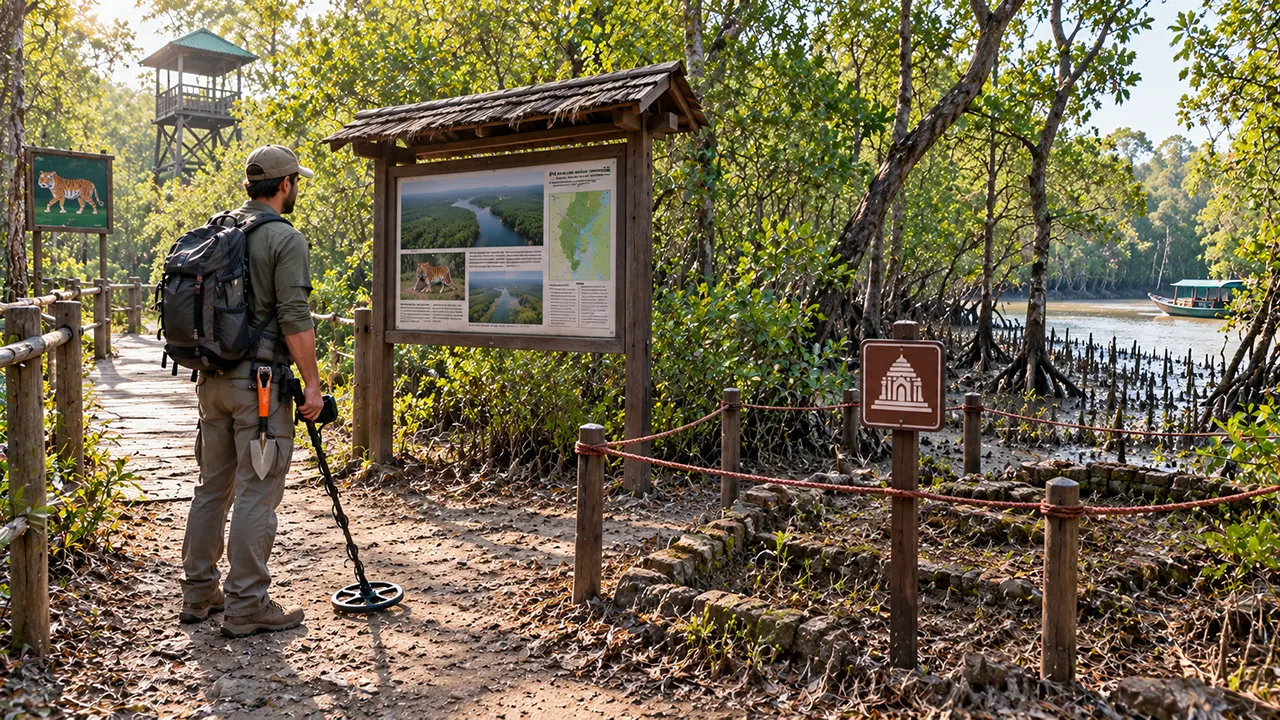
Metal detecting laws on public land vary by the agency, state, local government, and specific location. Before you switch on your detector, check whether detecting is allowed, whether digging requires permission, and whether you may keep anything you recover. Public access alone does not grant permission to search or remove objects.
What Are the Metal Detecting Laws on Public Land?
In the United States, metal detecting is allowed in some public areas and restricted or prohibited in others. National parks have strict federal restrictions, while national forests, Bureau of Land Management (BLM) properties, state parks, public beaches, and city parks follow different rules. Always verify the current policy with the agency responsible for the exact site.
Imagine finding an old coin near a public trail. The discovery may seem harmless, but the legal answer depends on where you found it, whether you disturbed the ground, and whether the object is protected. A detectorist who checks the rules before searching can avoid turning an enjoyable hobby into a costly mistake.
This guide explains the main federal laws, land-manager policies, permit requirements, and practical checks you should make before your next detecting trip.
Which US Laws Govern Metal Detecting on Public Land?
Several federal laws and regulations protect public land and historical resources. State statutes, local ordinances, park rules, and site-specific restrictions can impose additional requirements. No single federal rule gives every detectorist the same permission across all public land.
The Archaeological Resources Protection Act (ARPA)
The Archaeological Resources Protection Act of 1979 (ARPA) protects archaeological resources on covered federal and Indian lands. It generally prohibits excavating, removing, damaging, or otherwise altering or defacing archaeological resources without the required permit.
Under ARPA, an archaeological resource is material remains of past human life or activities that are at least 100 years old and archaeological in interest. The law’s definitions and other statutory requirements matter, so the age threshold alone does not determine whether an object can legally be removed.
Read the official statute: Archaeological Resources Protection Act definitions, 16 U.S.C. § 470bb and excavation and removal, 16 U.S.C. § 470cc.
A practical distinction matters here: permission to walk across federal land does not authorize archaeological excavation. Nor does finding an object outside a national park automatically make it yours to keep.
National Park Service regulations under 36 CFR 2.1
The National Park Service (NPS) generally prohibits visitors from possessing or using metal detectors in areas administered by the National Park System under 36 CFR 2.1(a)(7). The regulation forms part of the broader protection of park resources.
Read the official NPS archaeology FAQs and the applicable federal regulation before planning a visit.
State and local laws add further restrictions
States and local governments can regulate collecting, digging, archaeological sites, historic properties, and public recreation areas. A city park may allow detecting under specified conditions, while another park in the same state may prohibit it.
Check the relevant state agency, county or municipal park department, and posted site rules. A general state-level guide is useful for finding leads, but the rule published by the authority responsible for the exact property should determine your decision.
Metal Detecting Rules by Public Land Type
The agency that manages a property is often the first clue to its metal detecting rules. However, even within one agency, designated recreation areas, historic sites, wilderness areas, and local closures may have different restrictions.
National forests and US Forest Service land
The US Forest Service distinguishes recreational detecting from activities that target archaeological or historical resources. Its published guidance explains that detectors may be used on National Forest System land in areas that do not contain, and would not reasonably be expected to contain, archaeological or historical resources, provided the activity complies with applicable law.
This does not mean you can search anywhere in a national forest. The forest may prohibit detecting in particular locations, and searching for historical artifacts or treasure may require special authorization that ordinary recreational detecting does not provide.
Before visiting, open the official US Forest Service website and locate your forest’s recreation rules or contact the local ranger district. Ask specifically about detector use, digging, and collecting modern lost items.
Bureau of Land Management public lands
BLM-managed land can offer opportunities for recreational metal detecting and mineral prospecting, but the activity and location matter. Federal regulations prohibit unauthorized disturbance or removal of cultural, archaeological, and historic resources. Other collection rules apply to minerals and natural materials.
For example, using a detector to search for naturally occurring gold is not the same as searching for coins at an archaeological site. Mineral prospecting may be subject to mining claims, surface-disturbance restrictions, land-use designations, and other applicable rules.
Before detecting on BLM land:
- Confirm that the parcel is actually managed by BLM and is open to your proposed activity.
- Check whether it lies within a restricted recreation area, wilderness area, or protected cultural site.
- Ask the local BLM office whether your intended search and recovery method is allowed.
- Check active mining claims before attempting to collect minerals.
Start with the official BLM recreation and collecting guidance. Do not assume that permission to collect loose minerals also permits digging for coins or removing historical objects.
US Army Corps of Engineers recreation areas
The US Army Corps of Engineers (USACE) manages recreation facilities around many reservoirs, lakes, and waterways. Metal detecting may be permitted in some designated areas but restricted elsewhere, depending on the project’s rules and the resources being protected.
A permission to use a detector on a designated beach does not necessarily authorize digging outside that area, disturbing archaeological resources, or keeping every recovered object.
Check the specific lake or project page on the USACE website and contact its recreation office. Ask whether the policy covers detector use only or also ground disturbance and removal of finds.
State parks and state forests
State rules differ substantially. One park system may permit detecting in specified areas under defined conditions, while another may require authorization or prohibit the activity.
Do not rely solely on a general article listing which states allow metal detecting. A statewide summary may not reflect a particular park’s rules, temporary closures, historic status, or local permit requirements.
Use this process:
- Visit your state’s official parks or natural resources website.
- Search for metal detecting, artifact collection, digging, and special-use permits.
- Read the specific park’s regulations and posted notices.
- Contact the park office if the rules do not clearly address your intended activity.
State forests and state recreation lands may operate under different regulations from state parks, even when the same agency manages both.
City parks, county parks, and public beaches
Municipal parks and public beaches are not automatically open to metal detecting. Local governments may permit searches in certain recreational areas, prohibit digging, limit activity to sand or designated zones, or require advance permission.
Beach access can also be divided among municipal, state, federal, and private management. The beach’s public-facing entrance does not necessarily identify the authority that controls detecting.
Before searching, check the official park or beach website and any posted rules. Ask whether you may use a detector, whether you can recover buried targets, what tools are permitted, and whether you may retain modern coins or jewelry.
A written answer from the responsible office is especially useful when the published rules are unclear.
Do You Need a Permit to Metal Detect on Public Land?
Sometimes. Whether you need a permit depends on the land manager, location, purpose of the search, and the activity you intend to perform. A recreational search for recent losses may be treated differently from archaeological research, treasure hunting, mineral prospecting, or excavation.
When written permission or a permit may be required
A permit or other authorization may be necessary when you intend to:
- Conduct archaeological research or search for historical artifacts.
- Excavate or remove protected archaeological resources.
- Detect in an area where the managing agency requires special permission.
- Collect minerals under rules that require a permit, claim authorization, or other approval.
- Carry out an activity that disturbs protected land or resources.
The NPS requires authorization for archaeological investigations on parklands, including metal detecting as a research method. That research authorization is not a general permit for hobbyists to detect in national parks.
How to confirm the rules with the land manager
Use the agency’s official contact information rather than relying only on a forum post or an old social media comment. Describe the location and exactly what you plan to do.
You can ask:
- Is recreational metal detecting allowed at this specific location?
- Is permission required in writing?
- May I dig small plugs or recover buried targets?
- Are any areas or dates off-limits?
- May I keep recently lost coins, jewelry, or other modern objects?
- Are there restrictions on the tools I can carry?
Keep the written response and any permit with you when you visit. If the answer is unclear, do not interpret silence as permission.
Can You Dig and Keep What You Find?
Permission to use a metal detector, permission to disturb the ground, and permission to keep a recovered object are separate questions. You must establish which rules apply to all three before beginning.
Modern coins, jewelry, and recently lost objects
Modern coins and recently lost jewelry are not automatically free to collect simply because they are not archaeological artifacts. Park rules, property law, restrictions on removing government property, and local regulations may still apply.
If an item appears to be a recent loss, follow the site’s lost-property procedure when one exists. An object of obvious value may need to be turned in rather than kept.
Historical artifacts, relics, and archaeological resources
Historical objects can have legal protection even when they appear small, ordinary, or damaged. Their significance may depend on the context in which they are found, the site’s status, and the applicable laws.
Under ARPA, covered archaeological resources on public and Indian lands cannot be excavated or removed without the required legal authorization. The prohibition also addresses damage, alteration, and attempted unauthorized disturbance.
Do not assume that a coin is safe to remove just because you cannot identify its age in the field. If you encounter a possible archaeological site or artifact, stop disturbing the area and contact the responsible land manager.
Gold prospecting, mineral collection, and mining claims
Metal detecting for naturally occurring gold or other minerals is a distinct activity from searching for historical objects. On BLM land, for example, mineral collection can be subject to land-use restrictions, and minerals on an active mining claim may belong to the claim holder.
Before prospecting, confirm that the land is open to the activity, review applicable claim information, and check the limits on collection and surface disturbance. A rule allowing casual mineral collection does not grant unrestricted mining rights.
What Are the Penalties for Illegal Metal Detecting?
Penalties depend on the land manager, the rule violated, the circumstances, and whether protected resources were disturbed or removed. Consequences can include citations, fines, equipment-related enforcement, and criminal prosecution. Unauthorized archaeological excavation can carry serious federal penalties.
Federal archaeological violations and statutory penalties
Under 16 U.S.C. § 470ee, a person convicted of knowingly violating specified ARPA prohibitions may face a fine of up to $10,000, imprisonment for up to one year, or both. If the commercial or archaeological value of the resources involved and restoration costs exceed $500, the statute provides for a higher maximum fine of $20,000 and imprisonment for up to two years. Subsequent convictions can carry higher penalties.
These are statutory penalties for covered violations, not automatic fines for every instance of metal detecting. Other laws and regulations may impose different consequences.
State and local violations
A violation of state park rules or a municipal ordinance may result in a citation or other enforcement action under the applicable law. The consequences depend on the jurisdiction and the conduct involved.
Do not assume that a warning is the only possible outcome of unauthorized detecting, or that the same penalty applies in every state.
How to reduce your legal risk
The most effective protection is to confirm the rules before arriving. If a sign, map, agency response, or site regulation conflicts with a general online guide, follow the applicable official requirements and ask the responsible authority for clarification.
How to Check Whether Metal Detecting Is Legal at a Specific Location
Use this process before every trip, especially when visiting unfamiliar public land.
Step 1: Identify the landowner and managing agency
Find out whether the property belongs to a federal agency, state government, county, municipality, or private owner. A public trail or beach may cross several different properties.
Use official land-management maps and property information rather than relying only on the name of the recreation area.
Step 2: Check official regulations, maps, and closures
Look for the current recreation rules, special-use restrictions, archaeological protection notices, and any designated detecting areas. Check whether temporary closures or seasonal conditions affect your planned visit.
If the information is outdated or ambiguous, contact the agency office responsible for that specific site.
Step 3: Confirm detector use, digging, and recovery separately
Ask three distinct questions:
- May I use a metal detector here?
- May I dig or disturb the surface to recover a target?
- May I keep the type of object I expect to find?
A positive answer to the first question does not automatically answer the other two.
Step 4: Obtain written permission where required
Keep a copy of any required permit or written authorization. Confirm its boundaries, dates, conditions, and restrictions on tools or recovered objects.
If the authority will not confirm that your intended activity is permitted, choose a location with clearly established rules instead.
What Should You Do If You Find a Possible Historical Artifact?
Stop digging and leave the object and surrounding ground undisturbed. Avoid cleaning, moving, or removing the item, because its location and relationship to nearby objects may help establish its historical significance.
Contact the responsible land manager or park ranger, describe the discovery location, and follow the agency’s reporting instructions. The National Park Service specifically advises visitors to leave archaeological artifacts where they find them and notify a ranger about disturbed archaeological sites.
If you have already recovered an object and later realize it may be protected, do not attempt to hide, sell, or transport it to avoid scrutiny. Contact the relevant authority for instructions on how to handle the situation.
Metal Detecting Before You Go: A Legal Checklist
Use this checklist before taking your detector into any public area.
Pre-detecting checklist
[ 1] I identified the property’s owner and managing agency.
[2 ] I checked the current official rules for this exact location.
[3 ] I confirmed that recreational metal detecting is allowed.
[4 ] I verified whether digging and recovery tools are permitted.
[5 ] I checked restrictions on collecting and keeping recovered items.
[6 ] I obtained any required permit or written permission.
[7] I checked for closures and protected archaeological areas.
[8] I saved the official rules and contact details for the site.
Frequently Asked Questions
1. Is metal detecting legal on all public land in the US?
No. Public land includes properties managed by many different federal, state, and local authorities. Some locations prohibit detector use, while others permit it under specific conditions. Always check the current rules for the exact property, including restrictions on digging, collecting, and removing objects.
2. Can you metal detect on federal land?
It depends on the agency and the specific site. National parks generally prohibit visitors from possessing or using metal detectors, while some national forest and BLM areas may allow certain recreational or mineral-prospecting activities. Protected archaeological resources remain subject to federal law. Confirm the intended activity with the responsible land manager.
3. Can you metal detect on a public beach?
Sometimes. Certain public beaches permit detecting in designated areas, while others restrict it or prohibit digging. Some beaches are managed by federal agencies with their own rules. Check who manages the beach, whether detector use is allowed, and what restrictions apply to recovering and keeping finds.
4. Can you keep coins found on public land?
Not automatically. The answer depends on the object’s nature, where it was found, the applicable collecting rules, and any restrictions on removing property. Modern coins may be treated differently from protected archaeological objects, but age alone does not settle ownership. Check the site’s recovery policy before keeping anything.
5. Does a metal detecting permit allow you to dig?
Not necessarily. A permit may authorize detector use while limiting ground disturbance, recovery methods, or the objects that may be collected. Read the permit conditions carefully and confirm whether digging is separately authorized. Never treat permission for one activity as blanket permission for every activity associated with metal detecting.
6. Are metal detectors allowed in national forests?
The US Forest Service allows some recreational detecting in areas that do not contain, and would not reasonably be expected to contain, archaeological or historical resources, subject to applicable rules. Local restrictions may apply, and archaeological or historical searching may require special authorization. Check with the relevant ranger district before visiting.
7. Where can you find official metal detecting rules for your state?
Start with your state’s official parks, natural resources, or historic preservation agency. Then check the rules for the specific park, beach, forest, or recreation area. County and municipal websites may provide additional regulations. If the published rules do not clearly address your intended activity, contact the managing office directly.
Make Your Next Detecting Trip a Legal One
Before choosing a location, identify the authority that manages it and verify the rules for detector use, digging, and recovery. That simple preparation helps protect historical resources and gives you greater confidence that your next outing complies with the applicable requirements.
For the most reliable guidance, use official agency websites and keep a copy of any applicable written authorization. Rules can change, so verify them again before returning to a location after a long break.
