


Published on: September 17, 2025 | Updated on: September 17, 2025
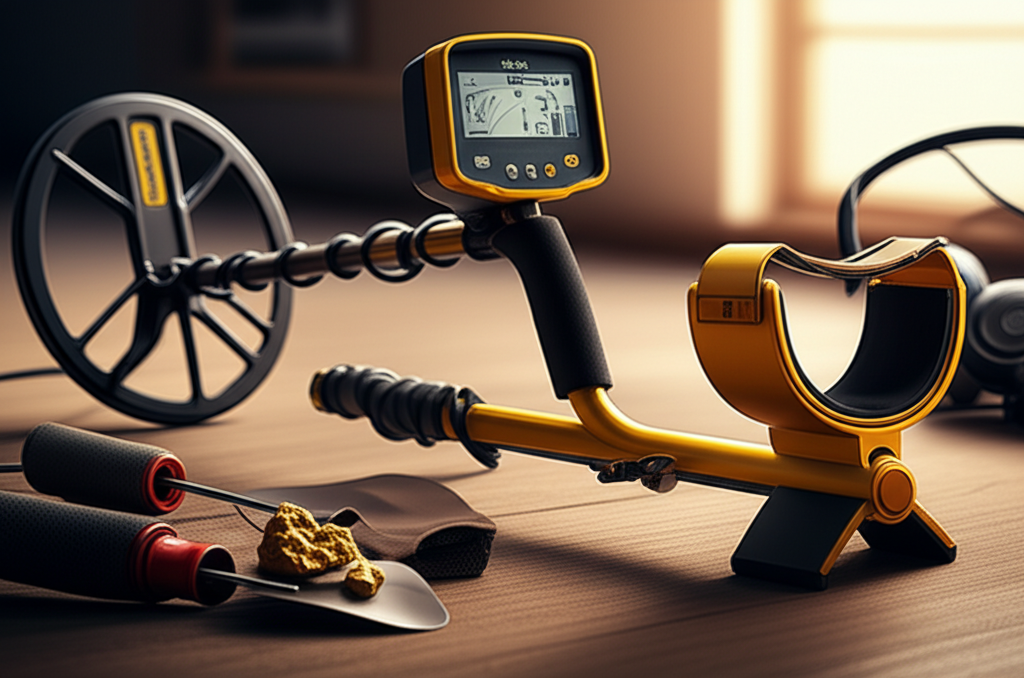
Searching for the ultimate gold detecting metal detector? This guide breaks down the top machines and essential tips to help you find more gold, from tiny flakes to nuggets, ensuring your prospecting adventures are rewarding and successful.
Gold prospecting is an exciting pursuit, but finding the right equipment can feel overwhelming. Many hobbyists struggle to pinpoint the best gold detecting metal detector that suits their needs and budget. This often leads to frustration and missed opportunities in the field. Don’t worry; I’ve spent years digging in the dirt, testing countless machines, and I’m here to share my hard-won knowledge. We’ll explore what makes a detector truly excel at gold detection, review some of the top contenders, and equip you with the insights to make an informed decision. Get ready to uncover your next big find!
Why Specialized Gold Detecting Metal Detectors Matter
When you’re serious about finding gold, a general-purpose metal detector often falls short. Gold, especially in its natural, unrefined state, presents unique challenges for detectors. It’s often found in mineralized ground that can cause false signals, and the small size of gold nuggets or flakes requires extreme sensitivity. Specialized gold detecting metal detectors are engineered with specific features to overcome these hurdles, increasing your chances of success dramatically.
These detectors boast advanced ground balancing capabilities to ignore the effects of iron-rich soils. They also feature higher operating frequencies, which are far more responsive to the faint signals of small gold targets. Understanding these core differences is the first step towards choosing a machine that will truly help you find gold.
Key Features to Look for in a Gold Detecting Metal Detector
Selecting the best gold detecting metal detector involves understanding its core functionalities. Several critical features differentiate a gold machine from a coin or relic hunter. Prioritizing these will significantly enhance your prospecting success in mineralized environments.
High Operating Frequency: Gold is a small, low-conductivity target. Detectors operating in the higher frequency range (typically 15 kHz and above, often 30-70 kHz for serious gold prospecting) are far more sensitive to these faint signals.
Advanced Ground Balancing: Gold is frequently found in highly mineralized soil, which can create “hot rocks” or ground noise that masks targets. A detector with excellent manual and automatic ground balancing capabilities can discriminate against these minerals, allowing you to hear faint gold signals.
Sensitivity and Discrimination: While you want high sensitivity to pick up tiny gold, you also need effective discrimination to filter out iron trash. However, with gold, you often want to err on the side of hearing everything and then assessing signals, as some forms of gold can be mistaken for iron if discriminated too aggressively.
Coil Selection: The coil is your detector’s “ear.” Smaller, elliptical coils are often preferred for gold prospecting as they offer better maneuverability in tight spaces and can be more sensitive to very small targets. Different coil sizes and types are crucial for varying conditions.
Audio Options: Variable audio, iron audio, and threshold control allow you to fine-tune your listening experience. This is vital for distinguishing subtle gold tones from background noise.
These features work in harmony to create a detector optimized for the challenging task of gold prospecting. Investing in a machine with these capabilities is investing in your potential finds.
Top Contenders: The Best Gold Detecting Metal Detectors on the Market
Based on my extensive field experience and the consensus among seasoned prospectors, several models consistently stand out as the best gold detecting metal detector choices. These machines offer a blend of sensitivity, ground balancing, and user-friendliness that makes them ideal for serious gold hunters.
Minelab GPZ 7000

The Minelab GPZ 7000 is often hailed as the pinnacle of gold detecting technology. It utilizes Minelab’s groundbreaking Zero Voltage Transmission (ZVT) technology, which allows for extreme depth and sensitivity across a wide range of gold nugget sizes. Its advanced digital signal processing and automatic ground balancing make it remarkably effective in the most challenging, highly mineralized terrains.
The GPZ 7000 is a significant investment, but for those serious about maximizing their gold finds, its performance is unparalleled. It’s a robust machine designed for serious prospectors who demand the best.
Minelab GPX 5000
Before the GPZ 7000, the Minelab GPX 5000 was the gold standard. It employs Dual Voltage Technology (DVT) and Smart Electronic Timing (SET) to deliver exceptional sensitivity and depth. The GPX 5000 offers multiple timing options, allowing prospectors to tailor the detector’s performance to specific ground conditions and target types.
While it might not reach the absolute depths of the GPZ 7000, the GPX 5000 remains an incredibly capable and reliable gold detector. It’s a testament to Minelab’s long-standing dominance in the gold prospecting market.
Garrett AT Gold
For a more budget-friendly yet highly effective option, the Garrett AT Gold is a fantastic choice. Operating at a higher frequency (18 kHz), it’s specifically tuned for detecting small gold nuggets. It features manual and automatic ground balancing, enhanced audio features, and is fully submersible, making it versatile for prospecting in rivers and streams as well as dry ground.
The AT Gold offers a great balance of performance and price. It’s an excellent entry point into dedicated gold prospecting for many enthusiasts.
Nokta Makro Gold Finder
Nokta Makro has made a strong impact with its Gold Finder series, offering excellent gold-finding capabilities at competitive price points. The Gold Finder 2000, for example, operates at a high frequency (26 kHz) and features advanced ground balancing and target separation. It’s designed to be user-friendly, making it accessible for beginners while still delivering the performance serious prospectors need.
This detector is a strong contender for those looking for a dedicated gold machine without breaking the bank. Its performance in various mineralized soils is impressive for its class.
Fisher Gold Bug 2
The Fisher Gold Bug 2 is legendary for its incredibly high operating frequency (71 kHz), making it one of the most sensitive detectors on the market for very small gold. It excels at finding tiny gold flakes and small nuggets that other detectors might miss. Despite its high frequency, it offers surprisingly good ground balancing and a lightweight design, making it comfortable for long days in the field.
If your primary goal is to find the smallest traces of gold, the Gold Bug 2 is a top-tier option that has proven its worth over many years. Its sensitivity is simply remarkable.
Understanding Gold Prospecting Terrains and Detector Suitability
The “best” gold detecting metal detector isn’t a one-size-fits-all solution; it heavily depends on where you plan to prospect. Different terrains present unique challenges that influence detector performance and coil selection. Understanding these environments is crucial for maximizing your finds.
Alluvial Deposits (Placer Gold)
This is where gold has been eroded from its source rock and transported by water, settling in ancient or current streambeds, gravel bars, and benches. These areas can be challenging due to wet, conductive soils and the presence of iron “shot” or black sands, which are highly mineralized.
Best Detector Types: PI (Pulse Induction) detectors are often favored for their ability to punch through highly mineralized ground and water. VLF (Very Low Frequency) detectors with excellent ground balancing and high frequencies can also perform very well, especially if the mineralization isn’t extreme.
Coil Considerations: Elliptical coils are great for maneuvering in tight creek beds. Larger coils can cover more ground on wider riverbanks.
Hard Rock Gold (Lode Gold)
This refers to gold still embedded in its original quartz veins or host rock. Prospecting for hard rock gold often involves searching exposed outcrops, hillsides, and areas where veins might be visible or inferred. The ground can be highly mineralized and contain “hot rocks” that mimic gold signals.
Best Detector Types: High-frequency VLF detectors are typically the go-to for hard rock prospecting due to their sensitivity to small targets and good target separation. PI detectors can also be used but might be overkill unless the mineralization is severe.
Coil Considerations: Smaller coils are excellent for pinpointing targets in rocky, uneven terrain and for separating closely spaced targets.
Desert and Dry Wash Areas
These arid regions often contain placer gold that has been concentrated by wind and occasional flash floods. The ground can vary from mildly mineralized to extremely hot, with significant iron content.
Best Detector Types: High-frequency VLF detectors with robust ground balancing excel here. PI detectors are also a strong choice for the most challenging, heavily mineralized desert soils.
Coil Considerations: Standard or smaller coils work well. Consider a DD coil for better performance in highly mineralized ground.
Choosing a detector suited to your target environment will significantly improve your success rate. Always research the typical geology and mineralization of the areas you intend to explore.
VLF vs. PI Detectors for Gold Prospecting: Which is Right for You?
The two primary technologies used in gold detecting metal detectors are VLF (Very Low Frequency) and PI (Pulse Induction). Each has its strengths and weaknesses, making one more suitable than the other depending on your prospecting environment and target type. Understanding this distinction is key to selecting the best gold detecting metal detector for your needs.
VLF (Very Low Frequency) Detectors
VLF detectors operate at frequencies typically between 5 kHz and 30 kHz, though dedicated gold machines often run much higher, from 15 kHz up to 70 kHz. They use two coils: a transmitter coil and a receiver coil.
Pros:
Excellent target separation – can distinguish between different targets.
Good discrimination capabilities – can filter out unwanted ferrous metals.
Generally more sensitive to smaller gold targets at shallower depths when operating at higher frequencies.
Often lighter and more user-friendly for beginners.
Cons:
Struggle in highly mineralized ground; can be overwhelmed by ground noise.
Depth penetration is generally less than PI detectors in conductive or mineralized soils.
Best for: Prospectors working in areas with moderate mineralization, focusing on small gold nuggets, flakes, and placer gold in less challenging ground. High-frequency VLF detectors are often considered the best gold detecting metal detector for many common scenarios.
PI (Pulse Induction) Detectors
PI detectors transmit short pulses of magnetic energy into the ground and measure the returning signals. They typically use a single coil or a coil set that acts as both transmitter and receiver. They operate at much lower frequencies (often in the hundreds of Hz) but deliver powerful magnetic pulses.
Pros:
Superior performance in highly mineralized ground (iron-rich soils, salt water).
Greater depth penetration, especially for larger nuggets.
Less affected by ground minerals than VLF detectors.
Cons:
Poor target separation; can struggle to differentiate between targets.
Limited or no discrimination capabilities – will signal on all metals.
Less sensitive to very small gold flakes compared to high-frequency VLF detectors.
Can be heavier and more complex to operate.
Best for: Prospectors working in extremely mineralized ground, saltwater beaches, or areas where deep penetration is crucial for larger nuggets. PI detectors are often the best gold detecting metal detector for extreme conditions.
Many serious gold prospectors own both types of detectors to adapt to different prospecting scenarios.
Essential Accessories for the Gold Prospector
Beyond the best gold detecting metal detector itself, a few key accessories can significantly enhance your prospecting experience and recovery success. These tools are not just conveniences; they are often necessities for effective gold hunting.
Pinpointer: Once your detector signals a target, a good pinpointer is indispensable for quickly and accurately locating the small piece of gold in the dug plug of dirt. A waterproof pinpointer is a bonus for working near water.
Example: Garrett Pro-Pointer AT, Nokta Makro PulseDive Pinpointer.
Digging Tools: A sturdy digging tool is essential for extracting targets. Trowels, spades, and even specialized digging claws can be useful depending on the ground conditions.
Example: Lesche digging trowel, Rogue Gold Digger.
Classifier/Sieve: For sifting through dirt and gravel to find smaller gold pieces, especially in dry wash or stream prospecting, a classifier is invaluable.
Example: Various sizes of mesh sieves.
Gold Pans: The classic tool for separating gold from dirt and black sands. Having a good quality gold pan, often with riffles, is fundamental.
Example: Established brands like Garrett, Estwing, or specialized prospecting pans.
Collection Vials/Bottles: Small, secure containers to store your precious finds.
Headphones: Crucial for hearing faint gold signals, especially in noisy environments or windy conditions. Waterproof headphones are ideal for working near water.
Spare Batteries/Power Source: Gold prospecting can be a long, demanding activity. Ensure you have a reliable way to keep your detector powered.
Investing in quality accessories complements your chosen detector and makes the entire process more efficient and rewarding.
Mastering Your Detector: Settings and Techniques for Gold
Even the best gold detecting metal detector requires skilled operation to achieve optimal results. Understanding how to properly set up your machine and employ effective techniques in the field is as important as the detector itself. My experience shows that a few key adjustments make a world of difference.
Ground Balancing
This is arguably the most critical step for gold prospecting. Incorrect ground balancing will lead to excessive chatter, false signals, or missed targets.
Manual Ground Balance: Slowly sweep the coil over the ground away from any metal objects. Adjust the ground balance until the threshold signal is smooth and quiet. Repeat this process periodically as you move to different areas.
Automatic Ground Balance: Many modern detectors have an auto track feature. Engage this and sweep the coil as instructed by the manual. It will continuously adjust to changing ground conditions.
Sensitivity Settings
Start with the sensitivity set moderately high. If the detector becomes unstable and chatters excessively, reduce the sensitivity slightly until you achieve a smooth threshold. Pushing sensitivity too high will introduce noise that masks faint gold signals.
Discrimination (Use with Caution)
For gold, it’s generally best to run with minimal or no discrimination. Gold signals can sometimes overlap with iron signals, especially in mineralized ground. Many gold prospectors prefer to dig most signals and use their pinpointer to identify the target.
Iron Mask/Iron Bias: If your detector has an “Iron Mask” feature, use it cautiously. It can help silence consistently ferrous targets but might mask very small gold close to iron.
All-Metal Mode: This is often the preferred mode for serious gold prospecting, as it ensures you hear every possible target.
Audio Settings
Familiarize yourself with your detector’s audio options.
Threshold: Adjust the background hum (threshold) to be just audible. This allows you to hear subtle changes in tone that indicate a target.
Volume Control: Keep the volume at a comfortable level to avoid ear fatigue.
Variable Audio: If available, this feature provides different tones for different target types, helping you learn to identify signals.
Sweep Technique
Maintain a consistent coil sweep speed, typically slow and steady, overlapping each sweep by about half the coil’s width. Keep the coil as close to the ground as possible without striking it, especially when using elliptical coils in uneven terrain.
Practice these settings and techniques in an area where you know there’s no gold, but there are different types of soil and possibly some ferrous trash. This will help you learn your detector’s sounds and responses.
Choosing the Right Coil for Gold Prospecting
The coil is your detector’s primary sensor, and selecting the right one can dramatically impact your success in finding gold. Different coil types and sizes are optimized for specific conditions and target sizes. When considering the best gold detecting metal detector, don’t overlook the importance of its coil.
Coil Size
Small Coils (4-8 inches): Excellent for maneuvering in tight spaces like rocky outcrops, creek beds, and heavily vegetated areas. They are often more sensitive to very small gold nuggets and flakes and provide better target separation. However, they cover less ground and have less depth than larger coils.
Medium Coils (8-11 inches): A good all-around size offering a balance between ground coverage, depth, and sensitivity. Suitable for a variety of prospecting scenarios.
Large Coils (11+ inches): Offer the best ground coverage and depth penetration, ideal for sweeping open areas and finding larger nuggets deeper in the ground. However, they are heavier, less maneuverable, and can be more susceptible to ground mineralization.
Coil Type
Monoloop (or Concentric) Coils: These have a central transmit coil and an outer receive coil arranged in a circle. They generally offer excellent depth and sensitivity to small targets but can be more affected by ground mineralization and may have less ground coverage than DD coils.
DD (Double-D) Coils: These consist of two D-shaped coils arranged side-by-side. They offer superior performance in highly mineralized ground and saltwater due to their self-shielding design, which helps cancel out ground signals. They typically provide good ground coverage but may be slightly less sensitive to very small targets at the edges compared to monoloop coils.
For general gold prospecting, especially in areas with moderate mineralization, a high-frequency monoloop coil in the 6-10 inch range is often a great starting point. In highly mineralized or wet conditions, a DD coil can be a better choice. Many gold prospectors invest in multiple coils for their detector to adapt to different terrains.
Frequently Asked Questions (FAQ) About Gold Detecting Metal Detectors
Here are answers to some common questions beginners have when looking for the best gold detecting metal detector.
Q1: Do I really need a specialized gold detector, or can my coin detector find gold?
A general-purpose coin detector might find a lost gold ring, but it’s unlikely to detect small natural gold nuggets. Specialized gold detectors operate at much higher frequencies and have superior ground balancing for detecting tiny, low-conductivity gold in mineralized soils.
Q2: How much should I expect to spend on a good gold detecting metal detector?
Prices vary significantly. Entry-level gold detectors can start around $500-$700, while high-end professional models can cost $2,000-$5,000 or more. Consider your budget and how seriously you plan to pursue gold prospecting.
Q3: What is the best frequency for gold detecting?
Higher frequencies are generally better for gold. While 15 kHz is a good starting point, many dedicated gold detectors operate between 20 kHz and 70 kHz, with the highest frequencies being the most sensitive to tiny gold flakes.
Q4: How do I deal with “hot rocks” when detecting for gold?
Hot rocks are mineralized rocks that give a strong signal similar to metal. Proper ground balancing is key. If a signal persists after carefully sweeping over it, and it sounds like a hot rock, it likely is. You may need to adjust your detector’s ground balance or reduce sensitivity.
Q5: Can I use my metal detector in a gold-bearing stream?
Yes, many gold detectors are waterproof or water-resistant. Prospecting in streams can be very productive as gold settles in bedrock cracks and behind obstructions. Ensure your detector and coil are suitable for submerged use.
* Q6: How deep can a gold detecting metal detector find gold?
Depth depends on the detector’s technology, coil size, target size, and ground mineralization. High-end PI detectors can reach significant depths for larger nuggets, while sensitive VLF detectors excel at finding small gold at shallower to moderate depths.
Conclusion: Your Path to Uncovering Gold
Finding the best gold detecting metal detector is a journey that combines understanding technology, terrain, and technique. While machines like the Minelab GPZ 7000 and GPX 5000 represent the cutting edge for serious prospectors, excellent options like the Garrett AT Gold and Nokta Makro Gold Finder offer fantastic performance for a wider range of budgets. The Fisher Gold Bug 2 remains a champion for tiny gold.
Remember that the most advanced detector won’t find gold on its own. Mastering your machine’s settings, employing patient sweep techniques, and utilizing essential accessories like pinpointers and gold pans are crucial. By arming yourself with knowledge and the right equipment, you significantly increase your odds of experiencing the thrill of finding gold. Happy hunting, and may your coil lead you to the ultimate finds!
