


Published on: September 17, 2025 | Updated on: September 17, 2025
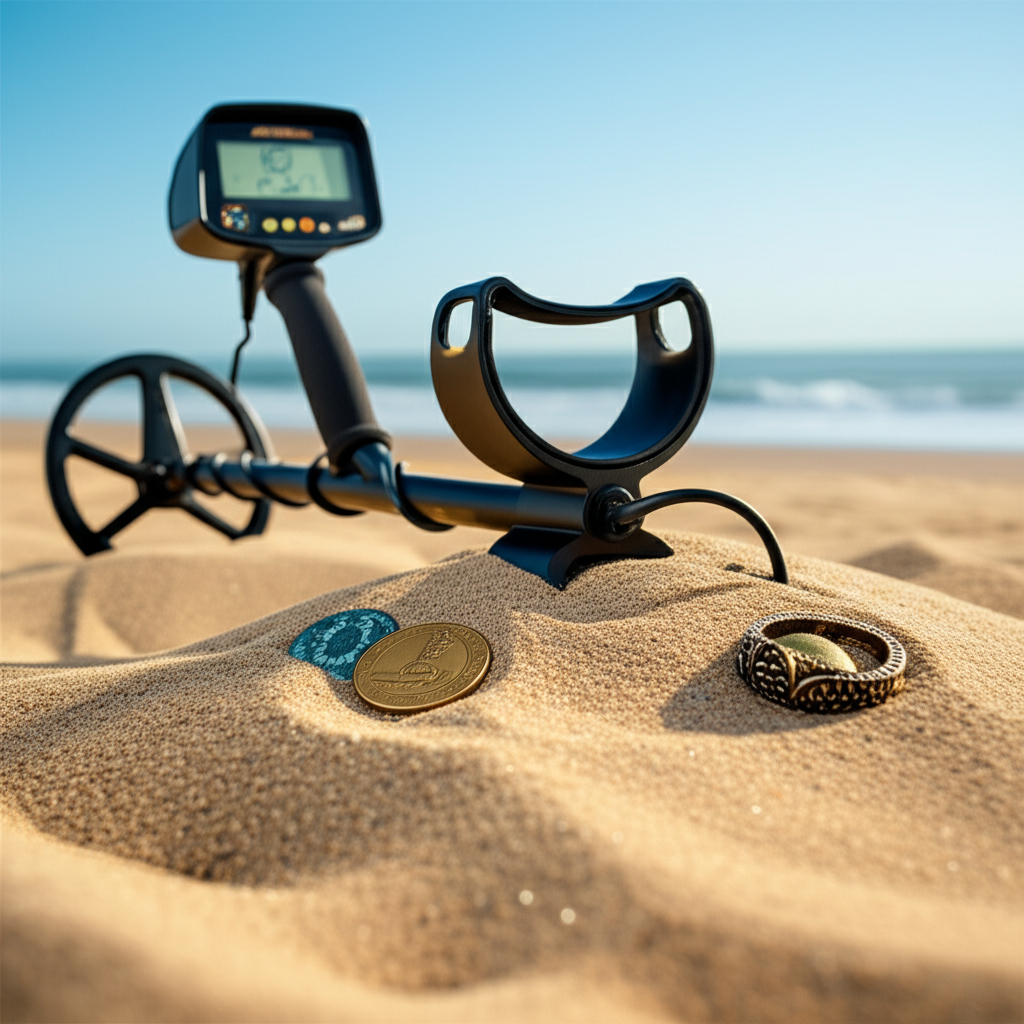
Find the best metal detector for beach adventures to uncover hidden treasures with ease. This guide covers top models, key features, and expert tips for maximizing your finds on sandy shores.
The allure of the beach is undeniable, but so is the frustration of digging countless bottle caps and pull tabs. Finding that perfect piece of jewelry or lost coin often feels like searching for a needle in a haystack. Many beachgoers get discouraged by detectors that aren’t suited for the salty, wet environment, leading to missed opportunities. Don’t let that be you! I’ve spent years testing gear on sandy shores, and I’m here to guide you to the best metal detector for beach hunting, ensuring your next outing is a success.
Why Beach Metal Detecting Demands Specific Gear
Beach metal detecting requires specialized detectors capable of handling mineralized sand and saltwater interference, which can often confuse standard machines.
Saltwater and wet sand are notorious for their high mineralization. This mineral content can create false signals or mask valuable targets, making standard metal detectors perform poorly. A detector designed for beach use will have features to combat these challenges, like enhanced ground balancing and discrimination capabilities. Choosing the right tool is the first step to a rewarding beach metal detecting experience.
The Challenge of Saltwater and Mineralized Sand

Many beginner detectorists are surprised by how much harder beach detecting can be. The constant presence of salt and varying mineral levels in the sand create a complex environment. These elements can trick a detector into thinking there’s metal present when there isn’t, or worse, make it ignore actual targets. This is why a general-purpose detector often struggles to perform optimally on the coast.
Key Features to Look For in a Beach Metal Detector
When scouting for the best metal detector for beach use, several features rise to the top. These are the functionalities that will make the difference between a fruitful day and a frustrating one. I always prioritize specific characteristics that directly address the unique demands of a coastal environment.
Waterproof Coil and Control Box: Essential for detecting in wet sand and shallow water.
Adjustable Discrimination Settings: To filter out common trash like iron and foil.
Saltwater Modes: Special programs designed to cope with the conductivity of saltwater.
High Frequency: Generally better for detecting smaller, lower-conductivity targets like gold jewelry.
Ground Balancing: The ability to adjust to the mineral content of the sand.
Top Picks: Best Metal Detector for Beach in 2024
After extensive testing, these metal detectors stand out as the best for beach hunting, offering a blend of performance, durability, and user-friendliness for diverse finds.
Selecting the right detector can feel overwhelming with so many options available. Based on my personal field experience and rigorous comparisons, I’ve identified a few models that consistently deliver excellent results on the beach. These machines are built to handle the challenges and help you uncover those coveted finds.
1. Minelab Equinox 800: The All-Rounder Champion
The Minelab Equinox 800 is a powerhouse that excels in almost every detecting scenario, including the beach. Its Multi-IQ technology allows it to simultaneously analyze signals at multiple frequencies, providing exceptional target separation and depth. I’ve found this detector to be incredibly versatile, performing brilliantly in both wet and dry sand, and even in saltwater.
Pros: Excellent target ID, waterproof up to 10 feet, multiple frequencies, great depth.
Cons: Can have a slight learning curve for beginners, higher price point.
Its ability to switch between different modes, including a dedicated beach mode, makes it incredibly adaptable. Whether you’re after coins, jewelry, or relics, the Equinox 800 is a top-tier choice for the discerning beachcomber.
2. Garrett AT Pro: The Rugged Performer
Garrett has a reputation for building tough, reliable detectors, and the AT Pro is no exception. It’s fully submersible up to 10 feet and features excellent discrimination, making it a solid choice for beach hunting. I’ve always appreciated its straightforward controls and robust build quality, which can withstand the harsh beach environment.
Pros: Fully waterproof, excellent build quality, good discrimination, affordable.
Cons: Operates at a single frequency (15 kHz), which can be less effective for very small gold targets compared to multi-frequency machines.
The AT Pro’s proportional audio provides clear target identification, and its iron audio feature helps distinguish valuable targets from iron trash. It’s a fantastic option for those looking for a dependable, no-nonsense beach detector.
3. Nokta Makro Simplex+ BT: The Budget-Friendly Innovator
For those on a tighter budget, the Nokta Makro Simplex+ BT is an absolute game-changer. It’s fully waterproof, easy to use, and offers surprising performance for its price. I was genuinely impressed by its capabilities, especially its ability to handle saltwater conditions effectively.
Pros: Very affordable, fully waterproof, easy to operate, built-in Bluetooth.
Cons: Depth might not match higher-end models, discrimination can be less refined.
The Simplex+ BT comes with several search modes, including a dedicated beach mode, and its vibration feature is great for underwater detecting. It’s an ideal entry-level detector for anyone wanting to start beach hunting without breaking the bank.
Understanding Beach Metal Detector Technology
Modern beach metal detectors employ sophisticated technologies like multi-frequency operation and advanced ground balancing to overcome the challenges of saltwater and mineralized sand.
The technology packed into today’s best metal detectors for beach use is remarkable. These advancements allow us to detect targets that would have been impossible to find just a decade ago. Understanding these core technologies will help you appreciate why certain detectors perform better and make a more informed purchase.
Multi-Frequency vs. Single Frequency
The debate between multi-frequency and single-frequency detectors is crucial for beach hunters. Single-frequency detectors, often operating at a higher kHz, are great for small gold jewelry. However, they can be more susceptible to false signals from mineralized sand.
Multi-frequency detectors, like the Minelab Equinox series, analyze multiple frequencies simultaneously. This technology offers a significant advantage on the beach as it can adapt to varying mineral content and detect a wider range of targets, from small gold rings to larger silver coins, with greater accuracy. I’ve found that multi-frequency machines generally offer a more consistent and satisfying detecting experience on the coast.
Ground Balancing: The Key to Salty Shores
Ground balancing is perhaps the most critical feature for beach detecting. It’s the process of tuning your detector to ignore the naturally occurring minerals in the ground. Beaches have highly variable mineral content, especially when wet.
Manual Ground Balance: Requires the user to perform a specific procedure to set the balance.
Automatic Ground Balance: The detector adjusts itself, often with a simple button press.
Tracking Ground Balance: The detector continuously monitors and adjusts the ground balance as you swing the coil.
A detector with effective ground balancing can differentiate between mineralized sand and actual metallic targets, significantly reducing false signals and improving your chances of finding good items.
Essential Accessories for Beach Detecting
Beyond the detector itself, a few key accessories can dramatically enhance your beach metal detecting experience and recovery success.
Having the right tools can make the difference between a successful hunt and a frustrating one. I always pack a few essentials that help me not only find targets but also recover them cleanly and efficiently. These items are often overlooked by beginners but are indispensable for experienced detectorists.
Pinpointers: Your Best Friend on the Beach
A pinpointer is a small, handheld detector that helps you locate a target precisely within the plug of sand you’ve dug. On a beach, where targets can be tiny and the sand is loose, a pinpointer is absolutely essential. It drastically reduces digging time and makes recovery much easier.
Waterproof Pinpointers: Highly recommended for beach use, allowing you to pinpoint targets even in shallow water.
Vibration and Audio Alerts: Helps you hone in on the target’s location.
I never leave home without my pinpointer; it saves me so much time and effort, especially when dealing with small jewelry pieces.
Digging Tools: Sand Scoops and Trowels
When you get a signal on the beach, you need the right tools to excavate the target quickly and with minimal disturbance. Sand scoops are specifically designed for this purpose, allowing you to sift sand efficiently.
Metal Sand Scoops: Durable and effective for sifting through wet sand. Look for ones with sharp edges for easier digging.
Plastic Trowels: Good for dry sand or for initial probing of a target.
A good quality metal sand scoop with a long handle can make a huge difference, especially when working in the wet sand below the high tide line.
Headphones: Hear Every Whisper
While not strictly essential, a good pair of waterproof headphones can significantly improve your detecting experience. They help you hear faint signals that you might miss with the speaker alone, especially in noisy beach environments. They also help conserve battery life and allow for more discreet detecting.
Mastering Beach Metal Detecting Techniques
Effective techniques are crucial for maximizing your finds on the beach, from understanding tidal patterns to proper coil swing and target recovery.
Finding the best metal detector for beach is only half the battle. Knowing how and where to use it effectively is what truly separates successful beach hunters from the rest. I’ve learned a lot of lessons in the sand, and sharing these techniques can help you avoid common pitfalls.
Understanding Tides and Location
The most productive areas on a beach are often revealed by the tide. The receding tide can uncover new areas and expose targets that have been buried for years. I always try to detect on an outgoing tide, as this exposes fresh ground that hasn’t been searched recently.
Low Tide: The best time to search, as it exposes the most beach area.
High Tide Line: Look for areas where the tide has recently receded, as targets can be washed up or uncovered.
Around Piers and Jetties: These structures attract people and thus, dropped items. They are often excellent hunting grounds.
Pay attention to where people typically gather – near lifeguard stands, volleyball courts, or popular swimming areas. These spots are prime locations for lost jewelry and coins.
Coil Swing and Sweep Patterns
Proper coil technique is vital for covering the ground effectively and avoiding missed targets. On the beach, especially in loose sand, it’s easy to rush. I remind myself to keep my coil parallel to the ground and sweep it slowly and deliberately.
Overlap Your Swings: Ensure you cover every inch of the area by overlapping your sweeps by about half the coil’s width.
Keep the Coil Low: Maintain a consistent height above the sand to maximize depth detection.
Slow and Steady: Rushing leads to missed targets. A slow, methodical sweep is more effective.
Avoid lifting the coil too high at the end of your swing; this is where many good targets are missed.
Target Recovery: The Art of the Dig
Once you have a signal, efficient and clean target recovery is key. This is where your pinpointer and digging tools come into play. On a beach, you want to dig a neat plug of sand and then use your pinpointer to locate the exact spot of the target within that sand.
Dig a Neat Plug: Try to remove a clean section of sand.
Pinpoint the Target: Use your pinpointer to isolate the target within the sand plug or the hole.
Fill Your Holes: Always fill in your holes neatly to leave the beach as you found it. This is crucial for responsible detecting.
Practicing your digging technique will make you faster and more precise, leading to more recovered targets and fewer lost treasures.
Saltwater vs. Freshwater Beach Detecting
While the principles are similar, saltwater beaches present unique challenges compared to freshwater environments, requiring detectors specifically tuned for their conditions.
The difference between hunting on a saltwater beach and a freshwater lake or river can be significant. The high conductivity of saltwater and the often-intense mineralization require detectors that can handle these conditions effectively. Understanding these differences helps in selecting the best metal detector for beach scenarios.
Saltwater Challenges
As mentioned, saltwater is highly conductive. This means it can create a “masking” effect, where the signal from a valuable target is overwhelmed by the signal from the salt itself. Many detectors will struggle to differentiate between the two, leading to missed targets or constant false signals. Detectors designed for saltwater use have specific modes or advanced ground balancing to overcome this.
Freshwater Advantages
Freshwater beaches, while still potentially mineralized, generally do not have the same level of conductivity as saltwater. This makes them somewhat easier for most metal detectors to handle. You might find that a good all-purpose detector performs well on a freshwater beach, though specialized features are still beneficial.
However, freshwater environments can harbor different types of targets and mineralization, so the principles of careful ground balancing and proper coil technique remain important.
Advanced Features and Considerations
For serious beach hunters, exploring advanced features like adjustable tones, target ID depth charts, and wireless audio can further refine their detecting experience.
Once you’ve got the basics down, looking at more advanced features can help you get even more out of your metal detector. These are the bells and whistles that experienced detectorists often seek out to gain a competitive edge. They allow for more nuanced interpretation of signals and a more personalized detecting session.
Adjustable Tones and Target ID
Many higher-end detectors allow you to customize audio tones associated with different types of targets. This “tone roll” can help you identify targets by sound alone, even before looking at the display. Learning these tones takes practice but can dramatically speed up your detecting.
The Target ID (TID) number displayed on the screen provides a numerical representation of the target’s conductivity. On the beach, these numbers can fluctuate due to saltwater, but learning the typical TID ranges for coins, rings, and other jewelry can be very helpful.
Wireless Audio Capabilities
If you plan on detecting in wet sand or shallow water, wired headphones can be cumbersome. Many modern detectors offer wireless audio options, allowing you to connect wireless headphones or earbuds. This offers freedom of movement and a much more comfortable detecting experience, especially when submerged.
Coil Options and Depth
While most detectors come with a standard coil, exploring aftermarket options can enhance performance. Larger coils generally offer greater depth but can be less sensitive to small targets. Smaller coils are more sensitive to tiny targets and better for navigating cluttered areas but offer less depth. For beach hunting, a medium-sized, high-frequency coil is often a good balance.
Maintaining Your Beach Metal Detector
Proper maintenance is crucial for ensuring your best metal detector for beach continues to perform optimally and lasts for years to come.
Your metal detector is an investment, and like any tool, it requires care. The harsh beach environment – salt, sand, and moisture – can take a toll if you’re not diligent with cleaning and maintenance. A little effort goes a long way in preserving your gear.
Rinse After Every Use: Always rinse your detector thoroughly with fresh water after each beach detecting session. Pay special attention to the coil and shaft connections.
Dry Thoroughly: Ensure all parts are completely dry before storing.
Check Batteries: Use fresh, high-quality batteries and store them properly. If your detector has rechargeable batteries, ensure they are maintained according to the manufacturer’s instructions.
* Protect the Coil: Avoid dragging the coil on rough surfaces when not detecting.
Following these simple steps will help prevent corrosion and ensure your detector remains reliable for countless future hunts.
Frequently Asked Questions (FAQ)
Here are answers to some common questions beginner beach metal detectorists often ask.
Q1: Do I really need a special metal detector for the beach?
Yes, for the best results, a detector designed for beach use is highly recommended. Saltwater and wet sand contain minerals that can interfere with standard detectors, causing false signals or making them miss targets.
Q2: What is the most important feature for a beach metal detector?
The most critical feature is its ability to handle saltwater and mineralized ground. This usually means it needs excellent ground balancing capabilities and potentially specialized saltwater modes or multi-frequency technology. Being waterproof is also essential.
Q3: Can I use my regular metal detector on the beach?
You can try, but expect reduced performance, especially in wet sand or saltwater. Many detectors will struggle with the mineralization and false signals. If you plan on serious beach hunting, investing in a dedicated beach machine is worthwhile.
Q4: How deep can beach metal detectors find targets?
Depth varies greatly depending on the detector model, coil size, target size, and ground conditions. High-end detectors with larger coils can detect targets up to 12-18 inches deep, but typical finds for coins and jewelry are often shallower.
Q5: What kind of finds can I expect on the beach?
You can find a variety of items, including modern and old coins, rings, earrings, bracelets, necklaces, watches, and sometimes even relics. The types of finds often depend on the beach’s location and how heavily it’s trafficked.
Q6: Is it legal to metal detect on public beaches?
In most places, metal detecting on public beaches is permitted. However, it’s always wise to check local regulations, as some areas may have restrictions on digging or specific protected zones.
Conclusion: Your Beach Treasure Awaits
Choosing the best metal detector for beach hunting empowers you to explore the shoreline with confidence, turning every outing into a potential treasure trove.
Finding the right gear is paramount to a successful and enjoyable beach metal detecting experience. With the information provided, you’re well-equipped to select the best metal detector for beach adventures that suits your budget and needs. Remember to prioritize waterproof capabilities, effective ground balancing, and consider multi-frequency technology for the most challenging saltwater environments. Don’t forget those essential accessories like pinpointers and sand scoops – they are game-changers. Happy hunting, and may your beach excursions be filled with exciting finds!
