


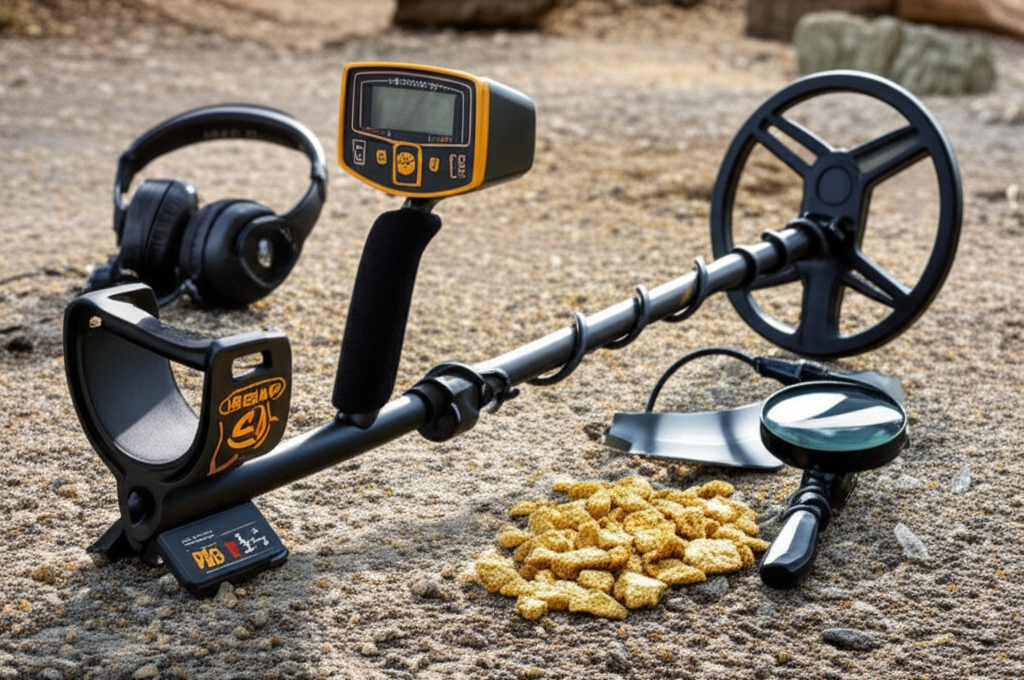
Published on: September 17, 2025 | Updated on: September 17, 2025
Best Metal Detector for Gold: Essential Finds for Prospectors
Uncover the secrets of gold prospecting with our expert guide to the best metal detectors for gold. We’ll help you navigate the complexities of gold detection, from understanding ground mineralization to choosing the right coil, ensuring your next outing is your most rewarding yet.
Gold prospecting is an adventure that calls to the explorer in all of us. The thrill of finding a nugget, a flake, or even a vein of gold can be incredibly rewarding. However, the path to a successful gold find is often paved with confusion, especially when it comes to selecting the right equipment. Many beginners get overwhelmed by the jargon and the sheer variety of metal detectors available, leading to frustration and potentially costly mistakes. This guide is designed to cut through the noise, offering clear, practical advice based on years of hands-on experience to help you find the best metal detector for gold that suits your needs and budget. We’ll cover everything from the core technologies that make a detector suitable for gold to specific model recommendations and essential accessories.
Why Gold Detecting is Different (and Demanding)
Finding gold requires a specialized approach compared to detecting coins or relics. Gold nuggets, especially small ones, often occur in highly mineralized ground, which can create phantom signals and mask targets. The best metal detectors for gold need to be able to discriminate between these ground minerals and actual gold. This often means using detectors that operate at higher frequencies or employ advanced ground balancing techniques. Understanding these unique challenges is the first step to choosing equipment that will actually work for you in the field.
The Impact of Ground Mineralization on Gold Detection

Ground mineralization is the biggest hurdle for gold prospectors. Iron oxides and other minerals in the soil can mimic the signal of gold, causing your detector to chirp erratically or miss targets entirely. A detector’s ability to handle this “hot ground” is paramount. This often involves detectors with excellent manual or automatic ground balancing capabilities.
Frequency: The Key to Small Gold Detection
Gold, particularly small placer gold, is often detected best by higher frequency metal detectors. While lower frequencies are great for deep, large targets like coins, higher frequencies (typically above 15 kHz and often much higher for fine gold) are more sensitive to the small, conductive signals that gold produces. This sensitivity is crucial for uncovering those elusive flakes and small nuggets.
What Makes a Metal Detector “Good for Gold”?
When searching for the best metal detector for gold, several key features stand out. It’s not just about having a detector; it’s about having one engineered for the specific demands of gold prospecting. This means looking beyond general-purpose machines and focusing on those with specialized capabilities.
High Frequency Operation
As mentioned, higher operating frequencies are a significant advantage when hunting for gold. Most detectors designed for gold prospecting will operate in the 15 kHz to 80 kHz range. This allows them to pick up the faint signals from small gold particles that lower-frequency detectors might miss.
Advanced Ground Balancing
Gold is often found in areas with heavy mineralization, such as volcanic soil or iron-rich sands. A detector’s ability to accurately “ground balance” – neutralizing the false signals from these minerals – is critical. Look for detectors with precise manual ground balancing and fast, effective automatic ground balancing.
Discrimination and Sensitivity Controls
While you want to hear the faintest gold signals, you also need to filter out junk. The best metal detectors for gold offer adjustable discrimination settings and sensitivity controls. This allows you to fine-tune the detector to ignore iron and other trash while maximizing your chances of hearing that sweet, faint gold signal.
Top Metal Detectors for Gold Prospecting in 2024
Choosing the absolute best metal detector for gold can be subjective, depending on your budget, target size, and typical ground conditions. However, based on performance, features, and user feedback, a few models consistently rise to the top. I’ve personally put many of these through their paces, and they’ve proven their worth.
Minelab GPZ 7000: The Gold Standard
The Minelab GPZ 7000 is widely considered one of the most powerful gold detectors on the market. It uses Minelab’s proprietary Zero Voltage Transmission (ZVT) technology, which allows for greater depth and sensitivity across a wide range of gold nugget sizes. While it’s a significant investment, its performance in difficult ground conditions and its ability to find smaller nuggets make it a top choice for serious prospectors. Its advanced features, like GPSi for location tracking and Wi-Fi for firmware updates, add to its premium appeal.
Pros: Unmatched depth and sensitivity, exceptional performance in highly mineralized ground, excellent for all gold sizes.
Cons: High price point, can be complex for absolute beginners, heavier than some other detectors.
Garrett AT Gold: A Versatile Workhorse
Garrett has a long-standing reputation for producing reliable detectors, and the AT Gold is a prime example. It operates at a higher frequency (18 kHz) making it sensitive to small gold. It’s also fully submersible, which is a bonus if you plan on detecting in creeks or rivers. Its user-friendly interface and excellent all-around performance make it a fantastic choice for both beginners and experienced prospectors looking for a capable gold detector without the extreme price tag of some high-end models. I’ve found plenty of small flakes with this detector in challenging conditions.
Pros: Excellent sensitivity to small gold, waterproof design, user-friendly controls, good value for money.
Cons: Ground balancing can be a bit finicky in extremely hot ground, depth might be less than top-tier pulse induction detectors.
Nokta Makro Gold Finder 2000: Powerful and Affordable
For those on a tighter budget, the Nokta Makro Gold Finder 2000 offers incredible performance. This detector is specifically designed for gold prospecting and operates at a high frequency (26 kHz). It features automatic ground balancing, simple controls, and a lightweight design, making it an excellent option for beginners. Its ability to detect small gold nuggets at a competitive price point makes it a standout in the entry-level to mid-range gold detector market.
Pros: Very affordable, high sensitivity to small gold, easy to use with automatic ground balancing, lightweight.
Cons: Less depth than high-end models, limited discrimination capabilities.
Fisher Gold Bug Pro: A Proven Performer
The Fisher Gold Bug Pro has been a favorite among gold prospectors for years, and for good reason. It operates at 19 kHz and offers excellent sensitivity to small gold nuggets. Its lightweight design and intuitive controls make it easy to use, and its ability to perform well in various ground conditions has made it a trusted tool for many. The adjustable iron lockout is also a useful feature for minimizing false signals from iron targets.
Pros: Excellent sensitivity to small gold, lightweight and comfortable to use, good performance in mineralized ground, affordable.
Cons: Not submersible, audio feedback could be more nuanced for some users.
Essential Accessories for Gold Prospectors
Beyond the detector itself, having the right accessories can significantly improve your gold prospecting experience and success rate. These tools are not luxuries; they are essential for efficient and effective searching and recovery.
Coils: The Eyes of Your Detector
The coil is how your metal detector “sees” underground. For gold prospecting, coil choice is critical. Smaller coils are generally better for detecting small gold nuggets and for maneuverability in tight spots or rocky terrain. Larger coils offer greater depth but can be less sensitive to tiny targets and more susceptible to ground mineralization.
Small Elliptical Coils: Ideal for navigating through bushes, rocks, and tight spaces. They offer good sensitivity to small targets.
Double-D Coils: Often preferred for their ability to handle ground mineralization better than concentric coils.
Specialized Gold Coils: Some manufacturers offer coils specifically designed for gold prospecting, often operating at very high frequencies.
Pinpointers: Locating Tiny Targets
Once your detector signals a potential target, a pinpointer is invaluable for precisely locating that tiny gold nugget in the soil. These small, handheld devices vibrate and emit a tone that intensifies as you get closer to the target. Without a good pinpointer, you’ll spend a lot of time digging large plugs of dirt only to find nothing. I never leave home without one; it saves so much time and effort.
Digging Tools: From Plugs to Panning
You’ll need robust digging tools. A sturdy trowel or a specialized prospecting pick is essential for excavating targets. For serious gold prospectors, a gold pan and a snuffer bottle (for collecting small nuggets) are indispensable. Having a good collection shovel for moving larger amounts of material for panning can also be a game-changer.
Headphones: Hearing Every Whisper
Good quality headphones are crucial for gold prospecting. They block out ambient noise, allowing you to hear the faint signals of small gold nuggets that you might otherwise miss. Wireless headphones can offer freedom of movement, while wired ones guarantee no battery issues for the headphones themselves.
Understanding Ground Conditions: A Prospector’s Best Friend
The ground you’re detecting in plays a massive role in your success. Different types of ground present unique challenges, and knowing how to adapt your detector settings is key. The best metal detector for gold will have features that allow you to adapt, but user knowledge is equally important.
Iron-Rich Soils and Hot Rocks
Many gold-bearing areas have soil rich in iron oxides, which can cause strong false signals. “Hot rocks” are also common – rocks that have a high mineral content and can overload your detector. Learning to identify these and adjust your ground balance and sensitivity settings accordingly is a skill that develops with experience.
Saltwater Beaches and Mineralized Sand
If you’re prospecting in areas with saltwater beaches or black sand, these environments can be extremely challenging due to their high conductivity and mineralization. Detectors with excellent ground balancing and the ability to adjust discrimination are vital here. Some specialized detectors are designed to handle these extreme conditions.
Advanced Techniques for Maximizing Gold Finds
Simply swinging a detector is only part of the equation. Employing smart techniques can dramatically increase your chances of finding gold. This is where experience truly shines, and sharing these tips can help you leapfrog common beginner mistakes.
Slow Coil Swing and Overlapping Swings
When hunting for small gold, it’s essential to swing your coil slowly and deliberately. This gives the detector more time to process the faint signal. Ensure your swings overlap by at least half the coil’s width to avoid missing any patches of ground.
Listening for Target ID and Audio Tones
While some gold detectors rely on audio alone, many modern detectors provide a Target ID number. Learn what different numbers mean for your specific detector, especially in relation to gold. More importantly, learn to distinguish the subtle audio tones that indicate a good target versus trash. Small gold often produces a high-pitched, sharp tone.
Systematic Searching Patterns
Don’t just wander aimlessly. Employ systematic search patterns like grid searching or following contours of dry washes and creek beds. This ensures you cover ground thoroughly and efficiently. Mark areas you’ve searched thoroughly to avoid re-checking them.
Choosing the Right Coil for Your Gold Detector
The coil is arguably the most critical component of your gold detector after the control box. Selecting the correct coil can mean the difference between finding small, elusive nuggets and missing them entirely. Different coil types and sizes excel in different scenarios.
Understanding Coil Size and Sensitivity
Generally, smaller coils (e.g., 6-inch to 10-inch) are more sensitive to small targets and can operate at higher sensitivities without picking up as much ground noise. They are also more maneuverable in rough terrain. Larger coils (e.g., 15-inch or more) offer greater depth and ground coverage but are less sensitive to tiny gold and can be more affected by mineralization.
Concentric vs. Double-D Coils for Gold
Concentric Coils: These have a circular shape with a transmit and receive coil wound in a conical pattern. They can offer excellent pinpointing accuracy and good depth but are often more susceptible to ground mineralization.
* Double-D Coils: These have two D-shaped coils arranged side-by-side. They are generally better at handling ground mineralization and provide a wider sweep, though pinpointing can be slightly less precise than with concentric coils. For gold prospecting in challenging ground, Double-D coils are often the preferred choice.
Aftermarket Coils for Enhanced Performance
Many manufacturers offer aftermarket coils that can outperform the stock coils. These are often designed with specialized frequencies or construction for enhanced gold detection. If you’re serious about gold prospecting, investing in a high-quality aftermarket coil for your chosen detector can be a worthwhile upgrade.
Budget Considerations: Finding the Best Metal Detector for Gold Without Breaking the Bank
The term “best” often implies expensive, but that’s not always the case in metal detecting. There are excellent gold detectors available at various price points. The key is to match the detector’s capabilities to your prospecting goals and budget.
Entry-Level Gold Detectors (Under $500)
For beginners or those on a strict budget, detectors like the Nokta Makro Gold Finder 2000 or the Garrett Goldmaster 24K (often found on sale) offer great value. These detectors are specifically tuned for gold and provide the sensitivity needed to find small nuggets without overwhelming you with complex features. They are excellent starting points for anyone looking to get into gold prospecting without a massive initial investment.
Mid-Range Gold Detectors ($500 – $1500)
In this range, you’ll find highly capable detectors such as the Garrett AT Gold, Fisher Gold Bug Pro, and some of Minelab’s entry-level gold machines. These detectors offer a better balance of sensitivity, depth, ground balancing capabilities, and user-friendly features. They are suitable for both serious hobbyists and those looking to step up their prospecting game.
High-End Gold Detectors ($1500+)
For the most serious prospectors who demand the ultimate in depth and performance, especially in highly mineralized ground, the Minelab GPZ 7000 and the Garrett ATX are top contenders. These detectors represent the pinnacle of gold detection technology and come with a price tag to match. They are built for demanding conditions and finding the smallest, deepest nuggets.
FAQ: Your Gold Detecting Questions Answered
Here are some common questions beginners have when looking for the best metal detector for gold.
What is the most important feature for a gold detector?
The most crucial feature is its ability to operate at a high frequency (typically 15 kHz and above) and its advanced ground balancing capabilities to cope with mineralized soil.
Can I use a coin detector to find gold?
While some general-purpose detectors can find larger gold nuggets, they are generally not sensitive enough for small gold flakes or nuggets, especially in mineralized ground. Specialized gold detectors are much more effective.
How deep can a metal detector find gold?
Depth varies greatly depending on the detector, coil size, target size, and ground mineralization. High-end detectors can find small nuggets several inches deep, while larger nuggets might be detected much deeper.
Is it better to use a manual or automatic ground balance for gold?
Both have their place. Automatic ground balance is fast and convenient, but manual ground balance often allows for finer tuning in challenging mineralized conditions, giving you a slight edge.
What is the best coil size for finding small gold nuggets?
Smaller coils, typically 6 to 10 inches in diameter, are generally more sensitive to small gold nuggets and are easier to maneuver in rocky or brushy terrain.
Do I need a pinpointer for gold prospecting?
Absolutely. A pinpointer is essential for accurately locating small targets in the soil plug you’ve dug, saving you significant time and effort.
Conclusion: Your Journey to Gold Starts Here
Finding the best metal detector for gold is an exciting first step into the rewarding world of gold prospecting. Remember that while technology plays a vital role, understanding ground conditions, employing smart techniques, and having the right accessories are equally important. Whether you’re a seasoned prospector or just starting, investing in a detector suited for gold, like the Minelab GPZ 7000 for ultimate performance or the Garrett AT Gold for a versatile option, will significantly enhance your chances of success. Don’t let the complexity deter you; with the right tools and knowledge, the thrill of discovering your own gold is well within reach. Happy hunting!
