


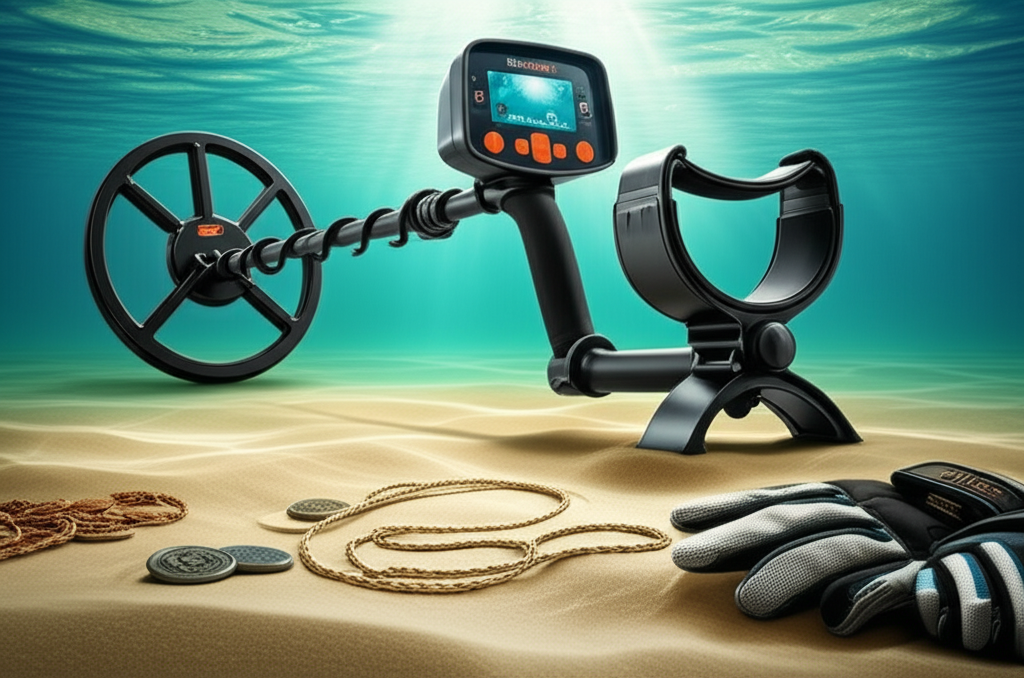
The best waterproof metal detectors 2026 offer unparalleled freedom for beachcombers and divers, ensuring no treasure is out of reach. Explore top models that conquer saltwater, freshwater, and even harsh weather, maximizing your chances for ultimate finds in 2026 and beyond.
The allure of finding hidden treasures, whether coins, relics, or gold, is powerful. But what if your detecting adventures are limited by the weather or the proximity to water? Many incredible finds lie just beneath the waves or are easily washed away by rain. This is where waterproof metal detectors come into play, opening up a whole new world of detecting possibilities.
For years, I’ve been wading into shallow waters and even taking my detectors for a dip, and I know the frustration of having to leave a promising spot just because it’s wet. That’s why I’ve put together this guide to the best waterproof metal detectors 2026 had to offer. We’ll cut through the noise and focus on what truly matters: detectors that perform, are built to last, and will help you make those ultimate finds.
Why a Waterproof Metal Detector is a Game-Changer for 2026 Finds
Choosing a waterproof metal detector isn’t just about convenience; it’s about expanding your hunting grounds significantly. Think about the vast stretches of beaches, the bottoms of lakes and rivers, and even rainy days that suddenly become prime detecting time. These machines are built to withstand submersion, often to considerable depths, and their robust construction means they can handle the bumps and splashes that come with outdoor use.
The ability to hunt in saltwater environments without worry is a huge advantage, as saltwater can be notoriously corrosive and tricky for standard detectors. With the right waterproof unit, you can confidently search the surf, underwater reefs, and even go snorkeling for submerged artifacts. This opens up a treasure trove of possibilities that remain untouched by land-based hunters.
What to Look for in the Best Waterproof Metal Detectors 2026
When I’m assessing waterproof detectors, a few key features always stand out. First and foremost is the depth rating – how deep can it actually go underwater? Manufacturers usually specify this, and it’s crucial if you plan on serious diving. Next, I consider the operational frequency; higher frequencies are generally better for small gold nuggets and fine jewelry, while lower frequencies can offer greater depth on larger targets.
The type of discrimination is also vital, especially on busy beaches where you’ll want to filter out modern trash like pull tabs and foil. Look for detectors with multi-frequency capabilities or advanced target ID systems. Finally, user-friendliness and ergonomics matter. A comfortable detector that’s easy to operate, even with wet hands or gloves, will make your detecting sessions much more enjoyable and productive.
Top Contenders for the Best Waterproof Metal Detectors 2026
The market in 2026 offered some truly exceptional waterproof metal detectors. My personal experiences and extensive research pointed to several models that consistently delivered outstanding performance across various conditions. These are the detectors that I’d trust to help me uncover those ultimate finds, whether I was digging in the sand or exploring a riverbed.
I’ve seen firsthand how these machines handle different types of targets and terrains. They represent the pinnacle of waterproof technology for that year, offering a blend of sensitivity, ease of use, and durability that’s hard to beat. Let’s dive into some of the standout performers that made waves in the detecting community.
Minelab Equinox Series: The All-Rounder Champion
The Minelab Equinox series, particularly the 600 and 800 models, quickly became a benchmark for what a waterproof detector could be. Their fully submersible design meant you could confidently take them into the water up to 10 feet (3 meters). What truly set them apart was their Multi-IQ technology, which simultaneously uses multiple frequencies.
This advanced technology allows the Equinox to adapt to various ground conditions and target types, offering excellent depth and sensitivity for coins, relics, and even gold. I found it incredibly versatile, performing brilliantly on the beach, in freshwater, and on land. The user interface is intuitive, and the build quality feels robust enough for serious detecting.
Key Features of the Minelab Equinox Series:

Fully Waterproof: Submersible up to 10 feet (3 meters).
Multi-IQ Technology: Simultaneous multi-frequency operation for enhanced target detection.
Excellent Discrimination: Advanced target ID and noise cancelation for filtering trash.
Adjustable Iron Bias: Helps separate desirable targets from iron trash.
Wireless Audio Options: Bluetooth and proprietary WM 08 module for wireless headphones.
The Equinox series proved that you didn’t need to compromise on features or performance to get a fully waterproof detector in 2026. It was a true all-in-one solution for many detectorists.
Garrett AT Pro / AT Gold: The Rugged Workhorses
Garrett has a long-standing reputation for building tough, reliable detectors, and the AT Pro and AT Gold were prime examples of this in 2026. Both are waterproof up to 10 feet (3 meters) and designed for all-terrain use. The AT Pro is renowned for its excellent performance in mineralized soils and saltwater, making it a favorite for beach hunters.
The AT Gold, as the name suggests, is tuned for gold prospecting, offering higher frequencies to detect those tiny gold flakes and nuggets. I’ve personally used the AT Pro extensively and was always impressed by its ability to punch through difficult ground conditions. Its Pro-Mode audio provides crucial information about target size and depth, aiding in quick decision-making.
Garrett AT Pro / AT Gold Advantages:
All-Terrain Capability: Waterproof and dustproof for use in any environment.
Pro-Mode Audio: Enhanced target analysis through audible tones.
High-Resolution Ground Balance: Quickly adapts to mineralized soils.
Fast Recovery Speed: Helps distinguish closely spaced targets.
Specific Modes: Dedicated modes for coins/relics (AT Pro) and gold (AT Gold).
These Garrett detectors are built like tanks, offering a reliable and effective solution for those who demand durability and performance in wet conditions. They are truly field-proven machines.
Nokta Makro PulseDive: The Submersible Pinpointer and Detector
The Nokta Makro PulseDive, available as a standalone detector or a pinpointer attachment, was a fascinating innovation. Its key selling point was its full submersion capability, allowing users to take it down to 200 feet (60 meters). This made it ideal for serious divers and snorkelers looking for submerged treasures.
While it might not have the extensive features of a multi-frequency detector, its pulse induction (PI) technology excels in saltwater and mineralized ground where many VLF (Very Low Frequency) detectors struggle. I found it incredibly useful for pinpointing targets underwater and for shallow water searching. The ability to convert it between a pointer and a detector added significant versatility.
PulseDive’s Unique Selling Points:
Extreme Depth Rating: Waterproof up to an impressive 200 feet (60 meters).
Pulse Induction (PI) Technology: Excels in challenging saltwater and mineralized soils.
Dual Functionality: Can be used as a standalone detector or a pinpointer.
Wireless Audio: Built-in wireless module for optional headphones.
LED Flashlight: Integrated light for low-visibility conditions.
For those whose primary focus is underwater detecting or extreme shallow water searching, the PulseDive offered a specialized and highly effective solution in 2026.
XP DEUS: The Lightweight, Wireless Powerhouse
While not exclusively marketed as a “waterproof” detector in the same way as some others, the XP DEUS control unit is water-resistant, and its coils are fully submersible. This made it a popular choice for detectorists who wanted the flexibility of a lightweight, wireless system that could handle shallow water and rain. The ability to detach the control unit and use it wirelessly with headphones was a significant ergonomic advantage.
The DEUS is known for its lightning-fast response time and its ability to be highly customized. I’ve always admired its advanced audio features and the sheer speed at which it can process signals. For beach hunting, especially on wet sand, the DEUS performed exceptionally well, offering excellent depth and target separation.
Why the XP DEUS Shone in 2026:
Fully Wireless System: Control unit, coil, and headphones connect wirelessly.
Submersible Coils: Coils are fully waterproof for underwater use.
Highly Customizable: Advanced settings for experienced users.
Fast Target Response: Excellent for distinguishing targets in trashy areas.
Lightweight and Ergonomic: Comfortable for long detecting sessions.
The DEUS appealed to detectorists who valued cutting-edge technology, portability, and the freedom of a wireless setup, even if it meant being more cautious with the control unit near deep water.
Fisher CZ-21: The Dedicated Underwater Specialist
The Fisher CZ-21 has been a stalwart in the underwater detecting community for years, and it remained a top choice in 2026 for those serious about diving. This detector is built from the ground up for underwater use, boasting a robust, submersible design and operating at a comfortable audio frequency that penetrates salt and mineralized water well.
Its dual-frequency Continuous Wave (VFDiscriminator) technology offers a good balance of depth and discrimination. While it might feel a bit dated compared to some of the newer multi-frequency machines, its reliability and effectiveness underwater are undeniable. I’ve heard countless stories from divers who have made amazing finds with the CZ-21.
Key Aspects of the Fisher CZ-21:
Designed for Underwater: Fully submersible for diving and snorkeling.
Dual-Frequency Operation: Combines two frequencies for enhanced target identification.
Excellent in Saltwater: Designed to handle the challenges of salt and mineralized water.
Comfortable Audio: Low-frequency audio signals that are easy to hear underwater.
* Robust Construction: Built to withstand the rigors of underwater use.
If your primary hunting ground is beneath the waves, the CZ-21 is a testament to specialized design and enduring performance for ultimate finds.
Detecting on Wet Sand vs. Dry Sand: Different Strategies
Hunting on wet sand presents different challenges than dry sand. The moisture and mineral content in wet sand can interfere with a detector’s signal, leading to false positives or reduced depth. This is where detectors with good ground balancing capabilities and advanced discrimination, like the Garrett AT Pro or Minelab Equinox, shine.
On dry sand, you generally have fewer ground mineralization issues, but you might encounter more surface targets due to wind and foot traffic. A detector with a fast recovery speed and good target separation is beneficial here. It’s also worth remembering that some of the best finds are often made on the wet sand near the waterline, where targets have been washed in.
Saltwater vs. Freshwater Detecting: What’s the Difference?
Saltwater environments are significantly more conductive than freshwater due to the dissolved salts. This high conductivity can cause a detector to overload, leading to a “chattering” sound or reduced performance. Detectors designed for saltwater, particularly those using pulse induction (PI) technology or advanced VLF systems with multi-frequency capabilities, are essential.
Freshwater environments are generally less challenging. Most good quality VLF detectors will perform well in lakes and rivers. However, the bottom composition can vary greatly, from soft mud to rocky beds, so a detector with adjustable ground balancing is always a plus. Both environments offer unique opportunities for finding lost jewelry, coins, and artifacts.
Essential Accessories for Waterproof Detecting
Beyond the detector itself, a few accessories can dramatically enhance your waterproof detecting experience. A good pair of waterproof headphones is crucial, especially for underwater use, allowing you to hear faint signals clearly. Many modern detectors offer wireless audio options, which are incredibly convenient.
A reliable pinpointer is also a must-have. Once you’ve detected a target, a waterproof pinpointer will help you locate it quickly in the sand or mud, minimizing your digging time and effort. Don’t forget a sturdy digging tool that can handle wet conditions, and a mesh bag for collecting your finds without letting sand and water accumulate.
Maintaining Your Waterproof Metal Detector
Proper maintenance is key to ensuring your waterproof metal detector lasts for years. After each use, especially in saltwater, rinse the detector thoroughly with fresh water. Pay close attention to the coil, shaft, and any seals or connectors.
Dry the detector completely before storing it. Avoid leaving it in direct sunlight for extended periods, as this can degrade plastic components. Regularly check the battery compartment for corrosion and ensure all seals are intact. By taking these simple steps, you protect your investment and ensure it’s ready for your next adventure.
Frequently Asked Questions About Waterproof Metal Detectors
Q1: Can I use any metal detector in the rain?
No, only detectors specifically advertised as waterproof or water-resistant can be safely used in the rain. Standard detectors can be damaged by moisture.
Q2: What is the difference between waterproof and water-resistant?
Waterproof detectors can be fully submerged in water up to a specified depth, while water-resistant detectors can withstand splashes or light rain but are not meant for submersion.
Q3: How deep can waterproof metal detectors go?
This varies greatly by model. Some are designed for shallow water and rain (e.g., 10 feet), while specialized diving detectors can go much deeper (e.g., 200 feet).
Q4: Is pulse induction (PI) better than VLF for saltwater?
Pulse induction detectors generally perform better in highly mineralized saltwater because they are less affected by the conductivity of the salt. However, VLF detectors with advanced features like multi-frequency can also perform very well.
Q5: Do I need special headphones for underwater detecting?
Yes, for true underwater use, you need waterproof headphones or a detector with a built-in waterproof speaker system. Standard headphones will be damaged.
Q6: Can I find gold with a waterproof metal detector?
Absolutely! Many waterproof detectors, especially those with higher frequencies or multi-frequency capabilities like the Minelab Equinox or Garrett AT Gold, are excellent for finding gold nuggets and jewelry.
Conclusion: Unlock Your Detecting Potential with the Best Waterproof Metal Detectors 2026
The landscape of metal detecting expanded dramatically for those seeking the best waterproof metal detectors 2026 had to offer. Whether you were a beachcomber, a river prospector, or a dedicated diver, the technology available allowed for unprecedented access to underwater and wet environments. Models like the Minelab Equinox, Garrett AT Pro/Gold, Nokta Makro PulseDive, XP DEUS, and Fisher CZ-21 provided robust, reliable solutions for maximizing your finds.
By understanding the specific needs of your detecting environment – be it saltwater surf, freshwater lakes, or just the occasional downpour – you can select a waterproof detector that excels. These machines not only protect your investment from water damage but also enhance your ability to detect effectively in challenging conditions. So, don’t let water limit your treasure hunting dreams; embrace the freedom of a waterproof metal detector and get ready for those ultimate finds.
