


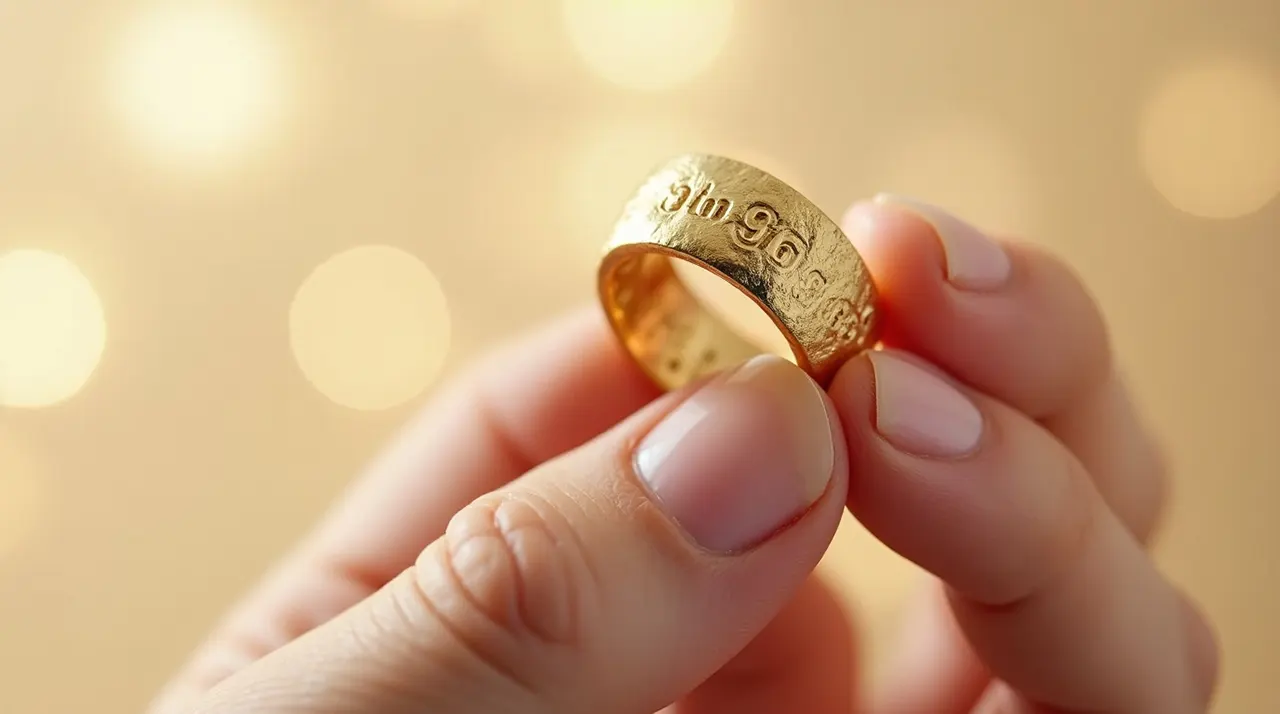
How to identify fake 22 carat gold stamps is no longer just about checking color or doing a quick magnet test. Today, many fake gold items pass basic tests—but fail in one critical area: the stamp itself. In this guide, you’ll learn how to decode, verify, and expose fake 22K (916) gold stamps using simple but powerful methods.
If you’re unsure about the real value behind stamps, start with this deeper guide on 22 carat gold stamps worth to understand what these markings actually represent.
Let’s be honest: scammers today don’t rely on obvious fakes. They replicate stamps so well that most buyers trust them blindly. That’s exactly where mistakes happen.
A “916” stamp does NOT prove gold is real — it only proves what someone wants you to believe.
Contents
- 1 What Is a 22 Carat Gold Stamp?
- 2 What Do Fake 22K Gold Stamps Look Like?
- 3 Real vs Fake 22K Gold Stamp (Quick Comparison Table)
- 4 Step-by-Step: How to Identify Fake 22 Carat Gold Stamps
- 5 At-Home Tests to Support Stamp Verification
- 6 Common Mistakes People Make When Checking Gold Stamps
- 7 22K vs 24K vs 18K Gold Stamps: How to Tell the Difference
- 8 When to Trust (or Not Trust) a Jeweler in the USA
- 9 Frequently Asked Questions (FAQ)
- 10 Conclusion: Your Next Step Is Not Guessing—It’s Verifying
- 11 Author
What Is a 22 Carat Gold Stamp?
A 22 carat gold stamp is a small engraved mark (usually “916” or “22K”) that indicates the gold contains 91.6% pure gold. It is a standardized way to communicate purity, but it is not a guarantee of authenticity unless verified properly.
Gold stamps are typically found in hidden areas like ring interiors, necklace clasps, or earring posts. In the U.S., stamps may also include a manufacturer’s mark, but regulations are less strict compared to some other countries.
Here are the most common 22K stamp formats:
- 916 → 91.6% gold (most common global code)
- 22K or 22KT → Karat-based marking
- 916 + brand mark → Higher credibility
Expert Insight: In 15+ years of evaluating gold, one pattern is clear—real gold stamps are consistent, precise, and professionally engraved. Fake ones often look “almost right,” but not perfect.
Understanding this difference is the foundation of detecting fake stamps. Now, let’s expose how scammers manipulate these markings.
Summary: A 22K stamp tells you the claimed purity—but not whether that claim is true.
What Do Fake 22K Gold Stamps Look Like?
Fake 22K gold stamps often look very similar to real ones at first glance, but they usually have subtle flaws in engraving quality, alignment, or context that reveal the truth when inspected closely.
Imagine you’re holding a necklace under light. The stamp says “916.” It looks convincing. But something feels off—that instinct is often right.
🔍 Common Signs of Fake Gold Stamps
- Blurry or shallow engraving → lacks depth and precision
- Uneven spacing → numbers not aligned properly
- Incorrect font style → looks too modern or inconsistent
- Overly polished stamp area → hides poor engraving
- Stamp on wrong location → random placement instead of hidden areas
🚨 Suspicious Stamp Combinations
- “916 GP” → Gold plated (NOT solid gold)
- “22K GE” → Gold electroplated
- Missing brand/manufacturer mark → common in fake imports
If a stamp looks perfect but the jewelry feels wrong, trust the feel—not the stamp.
Expert Insight: Fake gold today is engineered to pass visual checks. That’s why stamp context (placement, combination, and logic) matters more than appearance alone.
Summary: Fake stamps don’t fail visually—they fail logically when you analyze details.
Real vs Fake 22K Gold Stamp (Quick Comparison Table)
A real vs fake 22K gold stamp comparison helps you quickly identify authenticity by checking engraving quality, stamp logic, and supporting indicators instead of relying on appearance alone.
| Feature | Real 22K Gold Stamp | Fake 22K Gold Stamp |
|---|---|---|
| Engraving Quality | Sharp, deep, precise | Blurry, shallow, inconsistent |
| Alignment | Even and symmetrical | Uneven or tilted |
| Stamp Format | 916 / 22K / with brand | Mixed or incorrect codes |
| Location | Hidden, logical placement | Random or overly visible |
| Material Reaction | No tarnish or discoloration | May fade, darken, or react |
| Consistency | Matches weight & feel | Feels light or hollow |
Golden Rule: Never judge a stamp in isolation. Always cross-check with physical properties.
Summary: Real stamps are consistent across multiple factors—fake ones break under combined checks.
Step-by-Step: How to Identify Fake 22 Carat Gold Stamps
To identify fake 22 carat gold stamps, follow a structured process that starts with stamp inspection, then verifies logic, and finally confirms with physical tests. This layered approach reduces false assumptions and increases accuracy.
Step 1: Inspect the Stamp Closely
Use a magnifying glass or phone zoom. Look for precision, spacing, and depth.
- Clean, sharp edges → good sign
- Faded or uneven → red flag
Step 2: Decode the Stamp Meaning
Check if the stamp makes sense:
- 916 = 22K gold
- 750 = 18K gold
If the stamp mixes terms like “916 GP,” it’s not solid gold.
Step 3: Verify Stamp Placement
Authentic stamps are placed in discreet, logical areas:
- Inside ring band
- Necklace clasp
- Earring post
Random placement = warning sign.
Step 4: Cross-Check with Physical Properties
Now combine with basic tests:
- Magnet → should NOT stick
- Color → consistent deep yellow
- Weight → feels dense for size
Step 5: Look for Supporting Marks
In the U.S., stamps may include:
- Manufacturer mark
- Trademark or logo
No supporting mark doesn’t always mean fake—but increases risk.
Think like an investigator: never trust one clue. Build a case from multiple signals.
Summary: The safest way to detect fake stamps is to combine visual, logical, and physical checks.
At-Home Tests to Support Stamp Verification
At-home tests help confirm whether a gold item matches its stamp claim, but they should always be used as secondary verification—not the primary method for identifying fake 22K gold stamps.
Imagine relying only on a magnet test. It passes. You feel confident. But the stamp was fake all along. That’s the risk of skipping stamp analysis.
✔ Magnet Test
- Gold is non-magnetic
- If it sticks → likely fake
✔ Water Test
- Real gold sinks quickly
- Fake may float or hover
✔ Vinegar Test
- No reaction → likely real
- Color change → fake
✔ Ceramic Test
- Yellow streak → real gold
- Black streak → fake
⚠️ Lighter Test (Use Caution)
- Real gold won’t burn or darken
- Fake metals may discolor
Expert Insight: In real-world testing, fake gold often passes 1–2 tests. That’s why relying on a single method is risky.
Summary: Use tests to support your conclusion—not to replace stamp verification.
Common Mistakes People Make When Checking Gold Stamps
Most people fail to identify fake 22 carat gold stamps because they rely on a single indicator—usually the stamp itself—without verifying supporting evidence. This leads to false confidence and costly mistakes.
Imagine buying a chain that clearly says “916.” You assume it’s real. Months later, it fades. The issue wasn’t the gold—it was trusting one signal.
🚫 Mistake #1: Trusting the Stamp Alone
A stamp is only a claim. Without verification, it means nothing.
If you trust the stamp without testing the metal, you are trusting the seller—not the truth.
🚫 Mistake #2: Ignoring Stamp Context
People see “916” and stop there. They don’t check:
- Placement of the stamp
- Font consistency
- Additional markings (GP, GF, etc.)
🚫 Mistake #3: Over-Relying on One Test
Many users search “test gold with lighter” and stop after one test. This is risky.
- Fake gold can pass magnet test
- Gold-plated items can pass ceramic test
🚫 Mistake #4: Assuming No Stamp = Fake
Older or custom jewelry may not have visible stamps. Lack of stamp is not proof of fake gold.
🚫 Mistake #5: Ignoring Feel and Weight
Real gold has a dense, premium feel. Lightweight or hollow items often indicate fake or plated metal.
Summary: Most mistakes come from incomplete checks. Combine stamp, logic, and physical tests for accuracy.
22K vs 24K vs 18K Gold Stamps: How to Tell the Difference
Understanding the difference between 22K, 24K, and 18K gold stamps helps you avoid confusion and spot fake or misleading markings more accurately. Each stamp represents a specific purity level and follows a standard code.
| Gold Type | Stamp Code | Purity | Key Characteristics |
|---|---|---|---|
| 24K Gold | 999 / 24K | 99.9% | Very soft, bright yellow, rarely used in jewelry |
| 22K Gold | 916 / 22K | 91.6% | Rich yellow, common in high-quality jewelry |
| 18K Gold | 750 / 18K | 75% | Stronger, slightly less vibrant color |
🔍 Why This Matters for Fake Detection
- Fake items often misuse these codes randomly
- Scammers mix high-value stamps (like 916) with plated metals
- Color and feel should match the purity level
If the stamp says 22K but the color looks pale or dull, something is wrong.
Expert Insight: In practice, mismatched signals (stamp vs color vs weight) are the fastest way to detect fake gold.
Summary: Always match the stamp code with physical characteristics to confirm authenticity.
When to Trust (or Not Trust) a Jeweler in the USA
In the USA, gold hallmark regulations are less strict compared to some countries, so trusting a jeweler requires verification of credentials, documentation, and testing methods—not just reputation.
Imagine walking into a store. The seller confidently says “This is 22K.” Without proof, that statement is just another claim—like the stamp itself.
✅ Signs You Can Trust a Jeweler
- Provides written certification or receipt
- Offers professional testing (XRF, electronic tester)
- Has verifiable business history and reviews
🚫 Red Flags to Watch For
- No certification or vague answers
- Prices significantly below market value
- Pressure to buy quickly
🔬 Professional Testing Methods
- XRF Analyzer: Non-destructive, highly accurate
- Acid Test: Precise but requires expertise
- Electronic Tester: Quick verification tool
A trustworthy jeweler proves authenticity—they don’t ask you to believe it.
Summary: In the U.S., verification matters more than claims. Always ask for proof.
Frequently Asked Questions (FAQ)
How to spot a fake gold stamp?
Look for blurry engraving, uneven spacing, incorrect font, or suspicious combinations like “916 GP.” Real stamps are sharp, consistent, and logically placed.
What is the stamp code for 22 carat gold?
The most common stamp is 916, which means the gold is 91.6% pure. It may also appear as 22K or 22KT.
What does a 22 carat gold hallmark look like?
A real hallmark is small, precise, and engraved in hidden areas like inside rings or clasps. It often includes purity and sometimes a manufacturer mark.
How to tell if 22K gold is real at home?
Use a combination of tests: check the stamp, try a magnet test, observe color consistency, and verify weight. Do not rely on a single method.
What color does fake gold turn?
Fake gold may turn darker, dull, or show green/black discoloration over time due to base metals like copper or brass.
How can I test my gold without tools?
You can visually inspect the stamp, check color consistency, and feel the weight. Basic tests like water or magnet can also help.
How to identify fake 22 carat gold stamps at home?
Start with stamp inspection (clarity, alignment), verify code (916), check placement, and confirm with simple tests like magnet and vinegar.
Conclusion: Your Next Step Is Not Guessing—It’s Verifying
You now understand something most buyers miss: identifying fake 22 carat gold stamps is not about one test—it’s about combining logic, observation, and verification.
Imagine the confidence of picking up any gold piece and knowing exactly what to check—within seconds. That’s the skill you’ve just built.
Smart buyers don’t ask “Is this real?” They ask: “Does every detail support the claim?”
Your next step:
- Apply the step-by-step method on your own gold
- Never trust a stamp without verification
- Use multiple signals before making a decision
If you want to go deeper, revisit this guide on 22 carat gold stamps worth to understand the hidden value behind these markings.
