


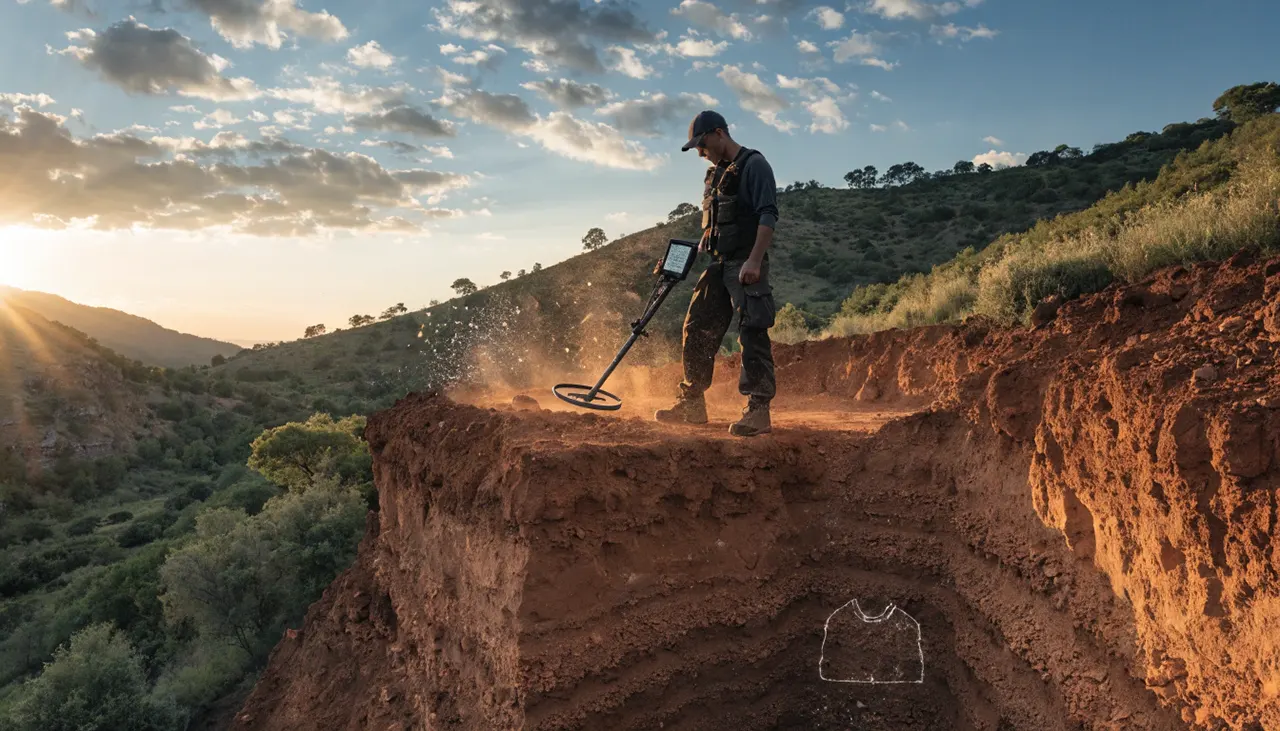
Many people search for a “10 feet deep metal detector” imagining coins, treasure chests, or gold buried far underground.
Here’s the honest answer:
For small objects like coins or jewelry, 10 feet is not realistic with consumer metal detectors.
However…
For very large buried metal objects, under ideal soil conditions, certain specialized detectors may approach those depths.
The difference comes down to one critical factor:
🔎 Depth increases with target size.
A soda can-sized object behaves very differently underground than a large metal chest, pipe, or cache.
This guide will explain:
- What “10 feet deep” actually means
- Which types of detectors are designed for large buried objects
- Which machines are better for deep gold vs. deep caches
- What realistic expectations should look like before you invest
We’ll avoid marketing hype and focus on practical, physics-based explanations.
What Determines How Deep a Metal Detector Can Detect?
Before looking at specific models, it’s important to understand what affects detection depth.
1️⃣ Target Size
This is the biggest factor.
- Small coin → shallow detection range
- Medium relic → deeper range
- Large metal mass → significantly deeper potential detection
When manufacturers mention extreme depths, they are typically referring to large metal objects, not coins.
2️⃣ Soil Conditions
Highly mineralized soil reduces depth.
Machines like:
are designed to handle mineralized ground better than entry-level detectors — but even they are still limited by physics.
3️⃣ Coil Size & Detector Type
Larger coils can detect larger objects deeper — but:
- They lose sensitivity to small targets
- They are heavier
- They require slower sweep speeds
Two-box systems and certain specialized scanners are built specifically for large buried objects, not small finds.

Quick Guide: Which Type of Deep Detection Are You Actually Looking For?
Before diving into models, identify your real goal:
🔹 Testing deep hunting on a moderate budget
🔹 Serious buried cache hunting
🔹 Deep gold prospecting
🔹 Professional ground scanning
Each category requires a different type of machine.
Let’s break them down clearly.
Tier 1 – Entry-Level Large Object Hunting (Budget-Friendly)
If you’re starting out and want to experiment with deeper large-object detection without spending thousands, this category makes the most sense.
Recommended Setup:
Garrett GTI 2500 (with TreasureHound coil)
What It’s Designed For
This detector, when paired with its larger TreasureHound search coil, is intended for:
- Larger buried metal objects
- Relics
- Cache-sized targets
It is not designed for detecting coins at extreme depths.
Realistic Expectation
Under good conditions:
- Larger objects may be detectable several feet deep.
- Depth depends heavily on object mass and soil mineralization.
It would not be accurate to expect consistent 10-foot performance for typical targets.
Who This Is Best For
- Hobbyists exploring deeper detection
- Users who want a recognizable brand without entering professional price ranges
Soft Recommendation:
If you want an accessible starting point for deeper large-object hunting — and understand its limits — this is one of the more established entry paths.
Tier 2 – True Cache Hunting Machines (Two-Box Systems)
If your goal is specifically locating large buried metal masses, two-box systems are purpose-built for that job.
Recommended Model:
Why Two-Box Systems Are Different
Unlike standard detectors, two-box systems:
- Ignore most small surface trash
- Focus on large, deeply buried metal objects
- Are commonly used for cache and utility-type searches
They are not coin-shooters.
Depth Expectations
Manufacturers often reference significant depth potential for large metal masses. In real-world conditions:
- Performance varies dramatically based on soil and target size.
- Very large metal objects may be detectable at substantial depths.
- Smaller objects will not approach those depths.
This category aligns more closely with what people imagine when they search for “10-foot deep metal detector,” but only when the buried object is large.
Who This Is Best For
- Serious cache hunters
- Users intentionally ignoring small targets
- Buyers prioritizing large-object depth over versatility
Strategic Recommendation:
If your primary goal is large buried caches — not coins or jewelry — this type of system is generally more appropriate than standard hobby detectors.
Tier 3 – Advanced Pulse Induction Machines (Deep Gold & Relic Focus)
This category is often misunderstood.
Machines like:
are frequently described online as “extreme depth detectors.”
That description needs context.
What Pulse Induction (PI) Machines Are Actually Designed For
Pulse induction systems are built to:
- Handle highly mineralized soil
- Detect deeper gold nuggets than standard VLF detectors
- Maintain stability where other machines struggle
They are excellent in difficult ground conditions.
However, they are not specialized 10-foot coin machines.
Realistic Depth Expectations
- Larger relics and metal masses may be detected at impressive depths compared to entry-level detectors.
- Smaller objects still remain limited by physics.
- Soil conditions play a major role.
The Minelab GPZ 7000, for example, is widely respected for gold performance — not for extreme cache-depth claims.
Who This Tier Is Best For
- Serious gold prospectors
- Advanced hobbyists
- Users hunting in mineralized environments
Strategic positioning:
If your primary goal is deep natural gold or relics in difficult soil, this category is more appropriate than a two-box cache detector.
If your goal is strictly large buried caches at maximum depth, Tier 2 may be more purpose-built.
Tier 4 – Professional 3D Ground Scanners
This is the highest budget category.
Examples include:
These are not traditional hobby metal detectors.
What Makes Them Different
They attempt to:
- Provide visual ground imaging
- Analyze underground anomalies
- Offer advanced data interpretation
However, important clarification:
These systems require:
- Proper training
- Careful calibration
- Realistic expectations
They are not “press a button and find treasure” devices.
Depth Expectations
Depth capability depends heavily on:
- Target size
- Soil composition
- Operator skill
- Environmental interference
Large buried metal masses may be detectable at significant depths under suitable conditions.
But no system guarantees consistent 10-foot detection of small objects.
Who This Tier Is For
- Professional survey applications
- High-budget buyers
- Advanced users comfortable interpreting ground data
Strategic note:
If you are not prepared for a learning curve and significant investment, this tier may be more complex than necessary.
Comparison Overview (Realistic Capability Snapshot)
Instead of listing exaggerated depth numbers, here’s a practical comparison:
Tier 1 – Large Coil Hobby Setup
Best for: Budget large-object hunting
Skill level: Beginner to intermediate
Small-object depth: Limited
Large-object depth: Several feet possible under good conditions
Tier 2 – Two-Box Cache System
Best for: Large buried metal caches
Skill level: Intermediate
Small-object sensitivity: Intentionally reduced
Large-object depth: Designed specifically for deeper large masses
Tier 3 – Pulse Induction Gold Machines
Best for: Deep gold & relics in mineralized soil
Skill level: Intermediate to advanced
Small-object performance: Strong (for gold)
Extreme cache depth: Not their primary design focus
Tier 4 – 3D Ground Scanners
Best for: Professional anomaly detection
Skill level: Advanced
Ease of use: Lower
Cost: Highest
How to Increase Real-World Detection Depth (Without Falling for Marketing)
This is where many buyers make mistakes.
Here’s what actually helps:
✔ Use a Larger Coil (When Appropriate)
- Better for large objects
- Reduced small-target sensitivity
- Heavier and slower to sweep
✔ Slow Your Sweep Speed
Moving too quickly reduces signal strength.
✔ Proper Ground Balancing
Incorrect ground balance can reduce usable depth dramatically.
✔ Hunt in Lower Mineralization Areas When Possible
Highly mineralized soil limits depth across all detector types.
✔ Match the Detector to the Target
Using a coin-shooting detector to search for large buried caches is inefficient.
Using a two-box cache detector to search for small coins is equally inefficient.
Correct tool selection often matters more than raw specifications.
Frequently Asked Questions
Can any metal detector detect 10 feet deep?
For small objects like coins: no consumer-grade detector consistently reaches that depth.
For very large buried metal objects: certain specialized systems may approach those depths under favorable conditions.
Are “10 feet deep metal detectors” real?
The term usually refers to maximum potential depth on large metal masses — not everyday targets.
What type of detector is best for buried treasure chests?
A two-box system such as the Fisher Gemini 3 is generally more purpose-built for large metal masses than standard hobby detectors.
Is pulse induction deeper than VLF?
Pulse induction machines typically perform better in mineralized soil and can achieve greater usable depth on certain targets — but they are not magic unlimited-depth machines.
Final Recommendations (Segmented by Goal)
🔹 Best Budget Entry Into Deeper Large-Object Hunting
The Garrett GTI 2500 (with larger coil) offers an accessible starting point — provided expectations remain realistic.
🔹 Best Purpose-Built Option for Large Buried Caches
The Fisher Gemini 3 is specifically engineered for large, deeper metal masses and avoids chasing small surface trash.
🔹 Best for Deep Gold in Mineralized Soil
Machines like the Minelab GPX 6000 or Garrett ATX are better aligned with gold prospecting and difficult ground conditions.
🔹 Professional-Level Ground Analysis
Advanced systems such as the Nokta Invenio Pro are intended for experienced users requiring deeper analysis tools.
Bottom Line
If you’re searching for a metal detector that can “reach 10 feet,” the most important question is:
10 feet for what size object?
No detector defies physics.
But when matched correctly to target size, soil conditions, and user skill, certain specialized systems can detect very large buried metal objects at substantial depths.
The key is choosing the right category — not chasing the biggest advertised number.
