


Published on: September 13, 2025 | Updated on: September 13, 2025
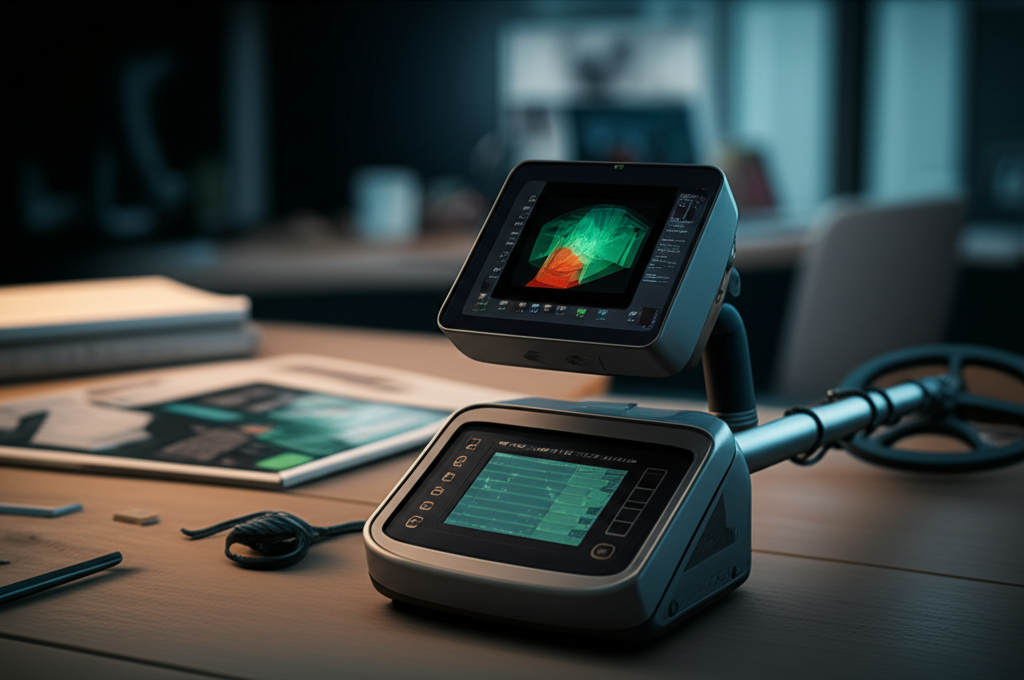
A 3D metal detector scanner represents a significant leap forward for educational institutions, offering a tangible and engaging way to teach geology, archaeology, and even physics. This advanced technology allows students to visualize underground structures and targets, transforming theoretical concepts into hands-on learning experiences.
Ever wished you could show students what lies hidden beneath the surface without disturbing a single patch of soil? For educators in fields like geology, archaeology, and even physics, visualizing subterranean elements has always been a challenge. Traditional methods often rely on abstract diagrams or expensive, invasive excavation. This can make complex concepts harder for students to grasp, leading to disengagement. But what if there was a way to make the invisible visible, right in the classroom or on a field trip? Prepare to be amazed as we explore how the 3D metal detector scanner is revolutionizing education, turning learning into an exciting adventure.
What is a 3D Metal Detector Scanner and How Does It Work?
A 3D metal detector scanner is a sophisticated device that goes beyond simply detecting metal. It uses advanced ground-penetrating radar (GPR) or electromagnetic induction (EMI) technologies to create visual representations of objects and structures beneath the ground. These scanners analyze variations in the earth’s composition and the magnetic properties of buried items, translating this data into detailed, three-dimensional images. This allows users to see the size, shape, and depth of targets before any digging begins.
The Science Behind the Scan

At its core, a 3D metal detector scanner employs principles of physics to map the subsurface. Technologies like GPR send electromagnetic pulses into the ground and measure the reflections from different layers and objects. EMI detectors, on the other hand, generate a magnetic field and measure how buried metal objects disturb it. Sophisticated algorithms then process these signals, distinguishing between different materials and creating a digital model. This intricate interplay of physics and engineering is what makes these scanners such powerful educational tools.
Beyond Basic Detection: Visualizing the Unseen
Traditional metal detectors beep when they find metal, but a 3D scanner provides much more information. It can differentiate between a small coin and a larger pipe, or even identify the shape of a buried artifact. This level of detail transforms a simple detection into a spatial mapping exercise. For students, this means understanding concepts like density, conductivity, and electromagnetic fields in a practical, visual way.
Transforming Archaeology Education
Unearthing History with Precision
Archaeology is inherently about uncovering the past, and a 3D metal detector scanner offers an unprecedented, non-destructive way to do just that. Students can learn about site surveying and subsurface investigation without the need for extensive excavation. They can identify potential burial sites, ancient foundations, or even discarded tools from past civilizations. This hands-on approach fosters a deeper appreciation for archaeological methods and ethical excavation practices.
Simulating Fieldwork in the Classroom
Imagine setting up a simulated dig site in a controlled environment, where students can use a 3D metal detector scanner to map out buried “artifacts.” This allows them to practice their interpretation skills, plan excavation grids, and understand stratigraphy. It’s a safe and controlled way to introduce the complexities of real-world archaeological fieldwork. This method significantly reduces the costs and logistical challenges associated with traditional field schools.
Ethical Considerations and Preservation
One of the most critical lessons in archaeology is the importance of preservation and ethical excavation. A 3D metal detector scanner allows students to learn how to identify and prioritize targets, minimizing unnecessary disturbance of sensitive sites. By understanding what lies beneath before digging, students can develop a responsible approach to uncovering history. This technology promotes a conservation-minded mindset from the outset of their studies.
Revolutionizing Geology and Earth Science Lessons
Visualizing Subsurface Structures
Geology students often struggle to visualize the layers of the earth and the formations hidden beneath the surface. A 3D metal detector scanner, particularly GPR-based models, can illustrate subsurface stratigraphy, identify different soil types, and even detect geological anomalies. This provides a tangible model for understanding concepts like sedimentary layers, bedrock, and underground water tables.
Exploring Mineral Deposits and Geodes
For students interested in mineralogy or prospecting, these scanners offer an exciting way to learn. They can be used to identify potential mineral veins or locate areas with high concentrations of metallic ore. While not a substitute for geological surveying equipment, they can serve as an excellent introductory tool for understanding how geologists might approach prospecting. Imagine students learning about ore bodies by scanning a prepared area, seeing the “deposit” visualized before them.
Understanding Soil Contamination and Remediation
In environmental science, understanding what lies beneath the soil is crucial for assessing contamination. 3D metal detector scanners can help map the extent of buried metallic pollutants or identify buried waste. This provides a practical application for learning about environmental impact assessment and remediation strategies. Students can see how technology aids in identifying and managing environmental hazards.
Enhancing Physics and Engineering Education
Practical Application of Electromagnetic Principles
The operation of a 3D metal detector scanner is a direct application of fundamental physics principles, particularly electromagnetism. Students can learn about magnetic fields, induction, wave propagation, and signal processing in a hands-on manner. Building or even just operating these devices offers a concrete example of how theoretical physics concepts are applied in real-world technology.
Data Interpretation and Signal Analysis
Interpreting the data generated by a 3D metal detector scanner involves understanding signal patterns and noise reduction. This provides an excellent opportunity for students to develop critical thinking and data analysis skills. They learn to discern meaningful signals from background interference, a valuable skill applicable across many scientific disciplines. This process mirrors real-world scientific research and engineering challenges.
Introduction to Geophysics and Remote Sensing
These advanced detectors serve as an accessible entry point into the fields of geophysics and remote sensing. They demonstrate how scientists can gather information about the Earth’s subsurface and physical properties without direct contact. This can spark interest in more complex geophysical instruments and techniques used in professional research and exploration.
Choosing the Right 3D Metal Detector Scanner for Educational Use
Selecting the appropriate 3D metal detector scanner for an educational setting depends on several factors. Budget, intended use, and the age group of the students are primary considerations. Simpler, more robust models might be best for younger students, while advanced units with detailed imaging capabilities are ideal for higher education or specialized programs. It’s also important to consider ease of use and data output capabilities.
Key Features to Look For
- Imaging Capabilities: Does it provide a clear 3D visualization of targets?
- Depth and Sensitivity: Can it detect targets at relevant depths for your curriculum?
- Ease of Use: Is the interface intuitive for students and instructors?
- Durability: Can it withstand regular use in various educational environments?
- Data Export: Can the data be exported for further analysis or presentation?
- Software Integration: Does it come with user-friendly software for interpreting scans?
Budgetary Considerations
The cost of 3D metal detector scanners can vary significantly. Some entry-level models designed for hobbyists might offer basic 3D imaging and could be suitable for introductory lessons. Professional-grade units, offering higher resolution and advanced features, represent a larger investment but provide more in-depth analytical capabilities. Exploring options from reputable brands like Minelab or Garrett can provide a good starting point for research.
Safety and Training
Regardless of the model chosen, proper safety protocols and user training are paramount. Instructors should be thoroughly familiar with the device’s operation and potential hazards. Students need clear guidelines on safe handling and operation to prevent accidents. Many manufacturers offer training resources or courses to ensure optimal and safe use of their equipment.
Integrating 3D Metal Detector Scanners into Curricula
Incorporating 3D metal detector scanners into educational programs can be approached in various ways. From dedicated modules on geophysical surveying to cross-curricular projects that blend science, technology, engineering, and math (STEM), the possibilities are vast. The key is to align the use of the scanner with specific learning objectives and curriculum standards.
Project-Based Learning Opportunities
Imagine students designing and executing a simulated archaeological dig, using the 3D scanner to map their findings. Or perhaps a geology class uses it to identify different subsurface layers in a designated area. These project-based learning opportunities make abstract concepts concrete and foster problem-solving skills. Students learn by doing, making the educational experience far more memorable and impactful.
Field Trips and Outdoor Exploration
Taking the 3D metal detector scanner out into the field for educational excursions adds another layer of excitement. Whether exploring local historical sites, geological formations, or even school grounds, these trips can bring lessons to life. They provide real-world context for scientific principles and encourage outdoor exploration. This hands-on interaction with the environment is invaluable for student engagement.
Classroom Demonstrations and Labs
Even without extensive field trips, 3D metal detector scanners can be powerful tools for classroom demonstrations. Instructors can use them to show students how different materials register, how depth affects signals, and how to interpret imaging data. Setting up controlled lab experiments, perhaps with buried targets of known composition and size, allows for precise learning about the scanner’s capabilities and limitations.
Comparing 3D Metal Detector Scanners with Traditional Methods
The advent of 3D metal detector scanners offers a significant advantage over older, more invasive methods of subsurface investigation. Traditional techniques often involve significant manual labor, potential damage to sites, and less detailed information. These new scanners provide a cleaner, more efficient, and information-rich alternative.
Pros of 3D Metal Detector Scanners in Education
- Non-Destructive: Minimizes or eliminates the need for physical excavation, preserving sites.
- Detailed Visualization: Provides 3D images of targets, revealing shape, size, and depth.
- Efficiency: Speeds up site assessment and target identification.
- Engaging Learning: Offers a hands-on, interactive way to learn complex concepts.
- Safety: Reduces risks associated with excavation and handling unknown objects.
- Data Rich: Generates digital data that can be analyzed and shared.
Limitations and Considerations
Despite their advantages, 3D metal detector scanners are not a panacea. Their effectiveness can be influenced by soil conditions, the type of metal, and the depth of the target. Furthermore, the initial cost can be a barrier for some educational institutions. It is also crucial to remember that these scanners are tools that require skilled interpretation; they do not replace expert analysis.
When Traditional Methods Still Apply
In certain advanced archaeological or geological research, physical excavation remains essential for detailed study, artifact recovery, and contextual analysis. 3D scanners are best viewed as powerful preliminary investigation tools. They help prioritize areas for excavation, making the entire process more targeted and efficient. For example, after a 3D scan identifies a promising anomaly, careful excavation would still be needed to understand its archaeological context.
Future of 3D Metal Detector Scanners in Educational Settings
The trajectory for 3D metal detector scanners in education is incredibly promising. As the technology becomes more affordable and user-friendly, its adoption is likely to increase. We can expect to see these devices integrated into a wider range of curricula, from primary school STEM programs to university-level geophysics courses. The ability to visualize the hidden world beneath our feet offers unparalleled opportunities for learning.
Technological Advancements
Future iterations of these scanners will likely offer even higher resolutions, greater depth penetration, and more sophisticated AI-driven data analysis. Wireless connectivity, enhanced portability, and integration with augmented reality (AR) for overlaying scan data onto the real world are also on the horizon. These advancements will make them even more powerful and intuitive educational tools.
Accessibility and Affordability
As with most technologies, increased demand and production will likely lead to more affordable options. This will make them accessible to a broader range of schools and educational programs that may currently find the cost prohibitive. The democratization of this technology is key to its widespread educational impact.
Expanding Applications
Beyond traditional archaeology and geology, the applications for 3D metal detector scanners in education could expand. Imagine their use in urban planning to map buried infrastructure, in environmental science to detect buried pollutants, or even in forensics for crime scene investigation training. The versatility of this technology ensures its continued relevance and growth in educational contexts.
Frequently Asked Questions
What is the primary advantage of a 3D metal detector scanner for education?
The main advantage is its ability to non-destructively visualize subsurface targets in 3D, making abstract concepts tangible and enhancing student engagement in subjects like archaeology and geology.
Are 3D metal detector scanners easy for students to use?
Many modern 3D metal detector scanners are designed with user-friendly interfaces, making them relatively easy for students to learn and operate under proper supervision.
Can a 3D metal detector scanner identify different types of metal?
Yes, advanced 3D scanners can often differentiate between various metals based on their conductivity and magnetic properties, providing more detailed information about detected targets.
What are the limitations of using a 3D metal detector scanner in a classroom setting?
Limitations include potential cost barriers, the need for proper training and interpretation skills, and the fact that they may not provide the same level of detail as physical excavation for advanced analysis.
Do schools need specialized training to use these devices?
Yes, it is highly recommended that instructors receive specialized training on operating the specific 3D metal detector scanner model and interpreting its data effectively and safely.
Can these scanners detect non-metallic objects?
While primarily designed for metal detection, some advanced ground-penetrating radar (GPR) based 3D scanners can detect variations in soil density and structure, which can indirectly reveal non-metallic features or voids.
Conclusion
The integration of a 3D metal detector scanner into educational environments represents a truly essential breakthrough. It bridges the gap between theoretical learning and practical application, offering students an unparalleled opportunity to explore and understand the world beneath their feet. From unearthing historical secrets in archaeology to visualizing geological strata, this technology transforms learning into an interactive, engaging, and profoundly effective experience. As these devices become more accessible, they are poised to become indispensable tools in classrooms and field studies worldwide, igniting curiosity and fostering a deeper appreciation for science and history.
