


Published on: October 6, 2025 | Updated on: October 6, 2025
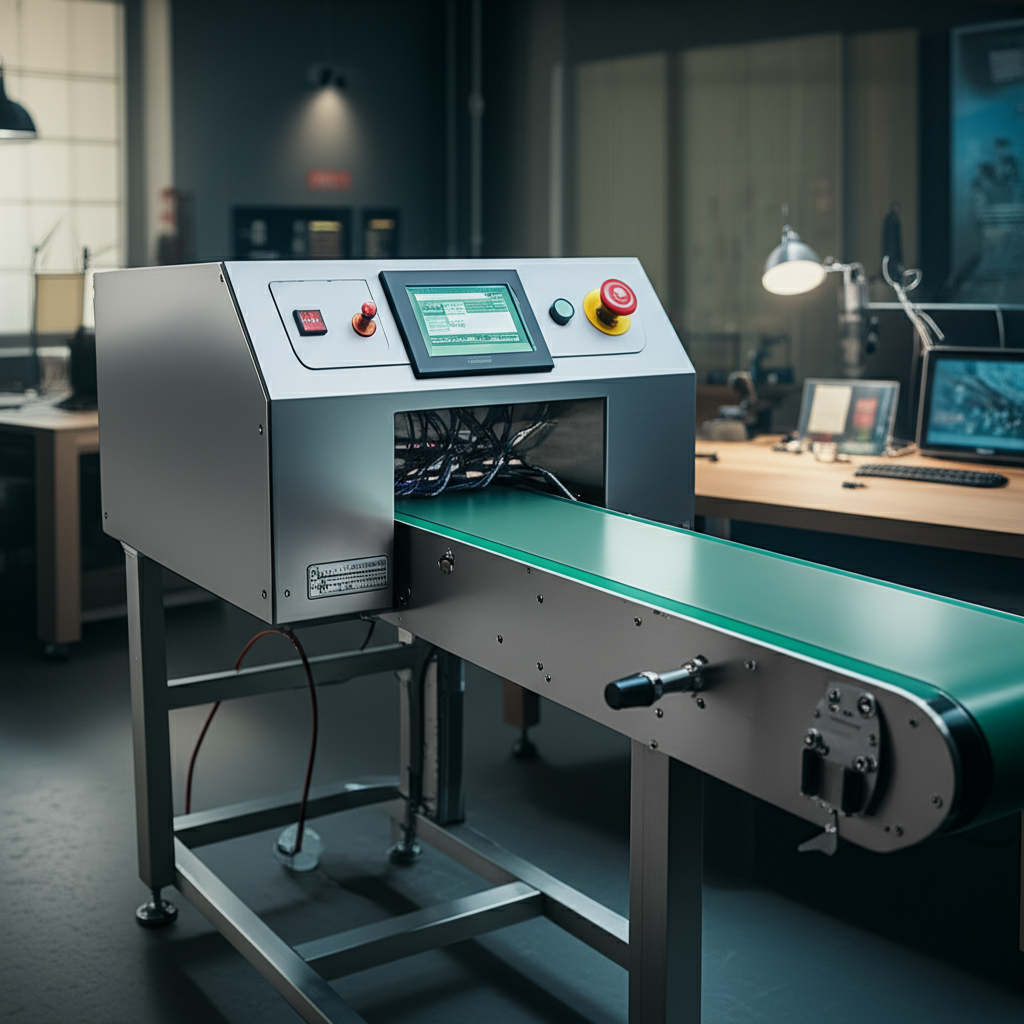
A conveyor metal detector is a sophisticated piece of industrial equipment designed to detect metallic contaminants in bulk materials, ensuring product purity and safety. Its application in educational settings, particularly in vocational training and industrial safety programs, represents a significant breakthrough, offering hands-on learning opportunities with real-world technology.
Contents
- 1 The Unseen Guardian: Why Conveyor Metal Detectors Matter in Education
- 2 What Exactly is a Conveyor Metal Detector?
- 3 The Educational Imperative: Bridging the Skills Gap
- 4 Beyond the Classroom: Real-World Applications of Conveyor Metal Detectors
- 5 Types of Conveyor Metal Detectors: Tailoring to the Task
- 6 The “Breakthrough” in Education: Hands-On Learning Revolutionized
- 7 Integrating Conveyor Metal Detectors into Curricula
- 8 Benefits for Students and Institutions
- 9 Choosing the Right Conveyor Metal Detector for Educational Use
- 10 Challenges and Solutions in Implementation
- 11 The Future of Industrial Training: Embracing Technology
- 12 Frequently Asked Questions about Conveyor Metal Detectors in Education
- 13 Conclusion: Equipping the Future with Essential Technology
- 14 Author
The Unseen Guardian: Why Conveyor Metal Detectors Matter in Education
Imagine a world where the products we rely on daily are free from harmful metallic debris. This isn’t science fiction; it’s the reality made possible by advanced industrial equipment like the conveyor metal detector. For students entering fields like manufacturing, food processing, or even recycling, understanding and operating this technology is becoming increasingly vital. It’s a critical tool for ensuring safety and quality, and its presence in educational programs is a game-changer for hands-on learning.
What Exactly is a Conveyor Metal Detector?
A conveyor metal detector is a specialized device engineered to identify and reject any metallic contaminants present within a stream of non-metallic products moving on a conveyor belt. These systems are crucial for protecting downstream processing equipment from damage and, more importantly, for safeguarding consumers from ingesting or encountering dangerous metal fragments. They operate by generating a magnetic field; when a metal object passes through this field, it disrupts the balance, triggering an alarm or an automatic rejection mechanism.
The Educational Imperative: Bridging the Skills Gap
The modern industrial landscape is rapidly evolving, and educational institutions play a pivotal role in preparing the next generation of skilled workers. A significant challenge has been the gap between theoretical knowledge and practical, hands-on experience with the sophisticated machinery that drives these industries. Introducing conveyor metal detectors into vocational training programs directly addresses this by providing students with exposure to real-world, safety-critical technology. This practical engagement fosters a deeper understanding of industrial processes and enhances employability.
Beyond the Classroom: Real-World Applications of Conveyor Metal Detectors
The impact of conveyor metal detectors extends far beyond the factory floor, influencing many aspects of our daily lives. In the food industry, they are indispensable for detecting stray metal pieces that could have fallen from machinery, ensuring that products like bread, pasta, or packaged goods are safe for consumption. Similarly, in pharmaceuticals, they prevent contamination that could have severe health consequences. The mining and recycling sectors also rely heavily on these detectors to separate valuable metals and remove hazardous debris.
Types of Conveyor Metal Detectors: Tailoring to the Task
Not all conveyor metal detectors are created equal; they are designed with specific applications in mind. The most common types include inductive and magnetic detectors. Inductive detectors use a coil to create an electromagnetic field and sense disturbances caused by conductive metals. Magnetic detectors, on the other hand, are primarily used for detecting ferrous metals (iron-based) using strong magnetic fields. The choice depends on the material being inspected, the type of contaminants expected, and the sensitivity required for the specific educational module.
Inductive Detectors: The Versatile Workhorses

Inductive conveyor metal detectors are incredibly versatile and can detect a wide range of metals, including ferrous, non-ferrous (like aluminum and copper), and even stainless steel. They work by passing the product stream through a search coil. When a metal object enters the field, it induces eddy currents, which alter the coil’s electrical properties. This change is detected by the system, signaling the presence of metal. Their ability to detect non-ferrous metals makes them a staple in many industries, from food to plastics.
Magnetic Detectors: For Ferrous Focus
Magnetic conveyor metal detectors are specifically designed to capture ferrous metals. These are often simpler and more robust, utilizing powerful permanent magnets or electromagnets. They are particularly effective in environments where tramp iron, such as bolts, nails, or metal shavings from machinery, is a common concern. In educational settings, demonstrating the difference in detection capabilities between inductive and magnetic types can be a valuable lesson in material science and contaminant control.
The “Breakthrough” in Education: Hands-On Learning Revolutionized
The real breakthrough for education lies in moving beyond theoretical instruction to practical, hands-on engagement. When students can physically interact with, calibrate, and even troubleshoot a conveyor metal detector, their learning is fundamentally transformed. This experience builds confidence, develops critical problem-solving skills, and provides a tangible understanding of industrial safety protocols. It makes abstract concepts concrete and prepares them for the demands of a professional environment.
Integrating Conveyor Metal Detectors into Curricula
Incorporating conveyor metal detectors into educational programs requires careful planning. Curricula can be designed to cover the principles of electromagnetism, the operational mechanics of the detectors, calibration techniques, and troubleshooting common issues. Practical sessions could involve setting up the detectors, testing them with known metallic contaminants, and simulating rejection scenarios. This hands-on approach not only deepens understanding but also instills a sense of responsibility regarding product safety and quality control.
Benefits for Students and Institutions
The advantages of integrating this technology are manifold. For students, it provides invaluable real-world experience, making them more attractive candidates to potential employers. They gain practical skills in operating and maintaining sophisticated industrial equipment. For educational institutions, it elevates the quality of their programs, demonstrating a commitment to cutting-edge training and industry relevance. This can lead to stronger partnerships with businesses and improved graduate placement rates.
Choosing the Right Conveyor Metal Detector for Educational Use
When selecting a conveyor metal detector for an educational setting, several factors come into play. Durability, ease of use, and the ability to demonstrate various detection scenarios are paramount. Many manufacturers offer robust, user-friendly models designed for training purposes, often with simplified interfaces and comprehensive manuals. Considering models that can simulate different contaminant types and sizes will provide a richer learning experience.
| Feature | Description | Educational Relevance |
|—————-|———————————————————————————————————|———————————————————————————————————————————————————————————|
| Detection Type | Inductive (all metals), Magnetic (ferrous metals) | Allows comparison and understanding of different detection principles and applications. |
| Sensitivity | Ability to detect very small metal fragments | Teaches the importance of precise calibration and understanding detection limits for different contaminants. |
| Rejection System | Automatic rejection arm, air blast, or alarm | Demonstrates how detection leads to action, crucial for understanding quality control processes. |
| Durability | Robust construction to withstand frequent use and potential mishandling by students | Ensures longevity of the equipment in a busy educational environment. |
| User Interface | Intuitive controls and clear display for easy operation and calibration | Facilitates student learning and reduces the need for constant instructor supervision during basic operations. |
| Connectivity | Data logging and integration capabilities | Introduces students to modern industrial data management and process monitoring concepts. |
Challenges and Solutions in Implementation
Implementing advanced equipment like conveyor metal detectors can present challenges. Initial costs can be a barrier for some institutions. However, many manufacturers offer educational discounts or refurbished units. Another challenge is ensuring qualified instructors can effectively teach the technology. Professional development programs and manufacturer-provided training can bridge this gap. The long-term benefits in terms of student preparedness and program reputation far outweigh these initial hurdles.
The Future of Industrial Training: Embracing Technology
The integration of conveyor metal detectors is more than just adding a piece of equipment; it’s a step towards a future where industrial training is deeply integrated with the technologies that shape our world. As industries continue to automate and prioritize safety and quality, educational institutions must keep pace. Embracing such advancements ensures that graduates are not only knowledgeable but also skilled and ready to contribute from day one. This proactive approach prepares students for careers in advanced manufacturing, food safety, and beyond.
Frequently Asked Questions about Conveyor Metal Detectors in Education
Q1: What is the primary purpose of a conveyor metal detector in an industrial setting?
A conveyor metal detector is used to identify and remove metallic contaminants from products or materials moving on a conveyor belt, ensuring product safety and preventing damage to machinery.
Q2: Why is it important for students to learn about conveyor metal detectors?
Learning about these detectors provides students with practical, hands-on experience with essential industrial safety and quality control technology, enhancing their employability and understanding of manufacturing processes.
Q3: Can students actually operate and calibrate these machines in a classroom setting?
Yes, many educational models are designed for student use, allowing them to practice operation, calibration, and basic troubleshooting under instructor guidance.
Q4: What types of metals can a conveyor metal detector detect?
Depending on the type, they can detect ferrous metals (like iron), non-ferrous metals (like aluminum and copper), and even stainless steel, offering comprehensive contaminant detection.
Q5: Are conveyor metal detectors expensive for educational institutions?
While professional units can be costly, many manufacturers offer educational pricing, refurbished options, or simpler training models that make them more accessible for schools.
Q6: How do these detectors ensure safety in food production?
They act as a critical final check, catching any stray metal fragments that might have accidentally entered the food supply during processing, thus preventing consumer injury.
Q7: What skills do students gain by studying conveyor metal detectors?
Students gain skills in operational procedures, calibration, understanding electromagnetic principles, troubleshooting, and appreciating the importance of quality control and industrial safety.
Conclusion: Equipping the Future with Essential Technology
The introduction of the conveyor metal detector into educational curricula marks a significant and necessary evolution in vocational training. It bridges the critical gap between theoretical knowledge and practical application, offering students invaluable hands-on experience with a technology that is fundamental to safety and quality across numerous industries. By providing students with the opportunity to learn, operate, and understand these sophisticated systems, we are not just teaching them about machinery; we are equipping them with the skills, confidence, and insight necessary to excel in the modern industrial landscape. This is a true breakthrough, ensuring that the next generation of professionals is well-prepared for the challenges and opportunities ahead.
