


Published on: October 7, 2025 | Updated on: October 7, 2025
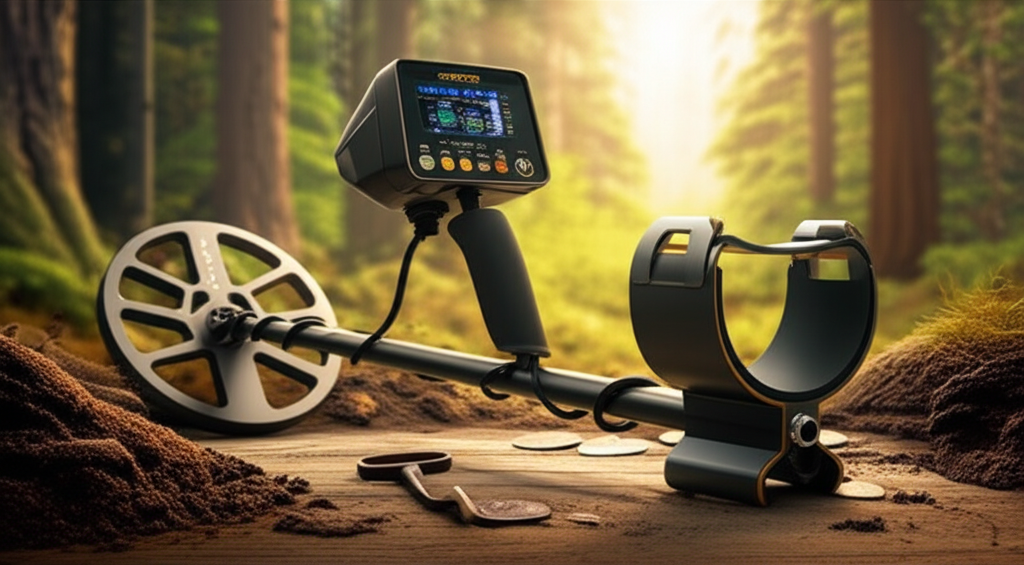
Unlock the secrets beneath your feet with a deep finder metal detector. These powerful machines are engineered to penetrate deeper into the ground, revealing coins, relics, and even gold nuggets that lesser detectors miss. Learn what makes them essential for serious treasure hunters and how to choose the right one for your quest.
The thrill of unearthing a forgotten coin, a historical relic, or even a glint of gold is what drives many of us to metal detecting. Yet, sometimes, the most exciting finds seem just out of reach, lying deeper than our current equipment can sense. Frustration can set in when we suspect valuable targets are present, but our detectors can’t confirm it. This is where the true power of a deep finder metal detector comes into play, offering a significant advantage for those serious about maximizing their discoveries.
Contents
- 1 What Makes a Metal Detector a “Deep Finder”?
- 2 The Anatomy of a Deep Finder Metal Detector
- 3 Choosing the Right Deep Finder for Your Needs
- 4 Top Deep Finder Metal Detector Models to Consider
- 5 Essential Accessories for Maximizing Depth
- 6 Techniques for Hunting Deep Targets
- 7 Common Pitfalls to Avoid with Deep Finders
- 8 The Future of Deep Finder Technology
- 9 Frequently Asked Questions
- 10 Conclusion: Unearthing More with a Deep Finder Metal Detector
- 11 Author
What Makes a Metal Detector a “Deep Finder”?
A deep finder metal detector isn’t just a marketing term; it refers to specific design and technological features that allow a detector to achieve greater penetration depth. This is crucial for locating older, deeper targets that have settled over time or were intentionally buried. The effectiveness of a deep finder lies in its ability to generate a strong, stable electromagnetic field and process faint return signals accurately.
Understanding Electromagnetic Fields and Depth

Metal detectors work by transmitting an electromagnetic field. When this field encounters a metallic object, it induces eddy currents within the object. These eddy currents then generate their own magnetic field, which is detected by the detector’s receiver coil. A deeper target means the transmitted field needs to be stronger and more persistent to reach it, and the returning signal will be weaker. Deep finder detectors are optimized to achieve this balance.
Key Technologies for Enhanced Depth
Several technological advancements contribute to a metal detector’s deep-seeking capabilities. These include larger coils, lower operating frequencies, advanced discrimination circuitry, and sophisticated ground balancing. Each plays a vital role in ensuring that faint signals from deep targets are not lost or misinterpreted as ground noise.
The Anatomy of a Deep Finder Metal Detector
To truly appreciate what makes a deep finder metal detector special, it’s helpful to understand its core components and how they are engineered for superior performance. It’s more than just a big coil; it’s a symphony of advanced electronics and thoughtful design.
Coil Size and Design
The search coil is arguably the most critical component for depth. Larger coils generally have a wider and deeper electromagnetic field, allowing them to sweep a larger area and sense targets further down. However, larger coils can also be heavier and less sensitive to small targets. Manufacturers often use specialized coil designs and materials to optimize depth without sacrificing too much sensitivity or maneuverability.
Operating Frequency and Its Impact
Lower operating frequencies (typically below 10 kHz) are generally better for detecting larger, deeper targets, especially conductive ones like silver coins. Higher frequencies are better for small, shallow targets like thin gold jewelry. A true deep finder often incorporates a lower frequency or offers adjustable frequencies to adapt to different target types and depths.
Ground Balancing Capabilities
Mineralization in the soil can create interference that masks faint signals from deep targets. Advanced ground balancing, whether automatic or manual, helps the detector ignore this ground noise. This allows the detector to focus on actual metallic targets, no matter how deep they are or how mineralized the soil is.
Choosing the Right Deep Finder for Your Needs
Selecting a deep finder metal detector involves considering your specific detecting environment, the types of targets you’re looking for, and your budget. There’s no single “best” deep finder; the ideal choice depends on your personal circumstances.
Target Type: Coins, Relics, or Gold?
If your primary interest is deep-buried historical relics or older, larger coins, a detector designed for lower frequencies and maximum depth will be your best bet. For gold prospecting, especially small nuggets, a detector with excellent sensitivity at higher frequencies or a multi-frequency machine might be more suitable, though some deep-seeking machines can still perform well.
Detecting Environment: Fields, Beaches, or Woods?
Different environments present unique challenges. Mineralized ground requires excellent ground balancing. Saltwater beaches demand robust waterproofing and effective saltwater modes. Woods and cluttered areas benefit from a detector that can discriminate well and has a more agile coil. A deep finder that excels in one area might be average in another.
Budget and Brand Considerations
Deep finder metal detectors can range significantly in price. High-end models offer advanced features and superior performance but come with a premium price tag. Reputable brands like Minelab, Garrett, Nokta Makro, and XP Metal Detectors offer various models that cater to different budgets and performance needs. Researching specific models within your price range is essential.
Top Deep Finder Metal Detector Models to Consider
While the market is constantly evolving, certain models have consistently impressed detectorists with their deep-seeking capabilities. These are the workhorses that have helped unearth some incredible finds.
Minelab Equinox Series
The Minelab Equinox series is renowned for its multi-frequency technology, allowing it to perform exceptionally well across a wide range of targets and conditions. Its ability to simultaneously operate on multiple frequencies makes it a fantastic all-around detector, capable of finding deep coins and relics.
Nokta Makro Legend
Nokta Makro’s Legend is another strong contender, offering impressive depth and features at a competitive price point. Its robust build and effective multi-frequency capabilities make it a popular choice for those seeking a powerful deep finder without breaking the bank.
Garrett ATX
For serious gold prospectors and relic hunters working in challenging environments, the Garrett ATX is a pulse induction (PI) detector that excels at extreme depths and in highly mineralized ground. While it lacks the discrimination of VLF detectors, its raw depth capability is undeniable.
Essential Accessories for Maximizing Depth
While the detector itself is paramount, the right accessories can significantly enhance your ability to find those deep treasures. These tools help you pinpoint, dig, and recover your finds efficiently.
Larger Search Coils
As mentioned, a larger coil can increase depth. If your detector allows for interchangeable coils, investing in a larger, specialized deep-seeking coil can be a worthwhile upgrade. However, be mindful of the trade-offs in weight and sensitivity to very small targets.
High-Quality Pinpointer
Once your detector signals a target, a good pinpointer is essential for locating it precisely within the plug of soil. A deep target might be several inches down, and a sensitive pinpointer can save you a lot of time and effort in the dig.
Robust Digging Tools
Recovering deep targets requires sturdy digging tools. A strong digging trowel, a robust soil knife, or even a shovel designed for tough ground will be necessary. You don’t want to be caught with inadequate tools when you finally locate that deep signal.
Techniques for Hunting Deep Targets
Finding deep targets isn’t just about having the right equipment; it’s also about employing smart techniques. Patience and methodical searching are key to success when pursuing those elusive deeper signals.
Slow and Overlapping Sweeps
When hunting for deep targets, it’s crucial to sweep your coil slowly and deliberately. This allows the detector more time to register the faint return signal. Overlapping your sweeps ensures you don’t miss any areas, especially with larger coils.
Understanding Target ID and Depth
Learn how your specific detector indicates target depth. Most detectors provide a target ID number and an estimated depth reading. While these aren’t always perfectly accurate, they can give you valuable clues. Deep targets often produce different target IDs than shallow ones.
Reconnaissance and Research
Before you even swing your coil, do your homework. Research historical maps, old property lines, and known historical activity in the area. Parks, old homesteads, and fairgrounds are prime locations for deeper historical finds. Understanding the history of a site can guide your search efforts effectively.
Common Pitfalls to Avoid with Deep Finders
Even with a powerful deep finder metal detector, there are common mistakes that can hinder your success. Being aware of these pitfalls can help you avoid them and improve your find rate.
Ignoring Faint Signals
Deep targets often produce faint signals. It’s tempting to dismiss weak or intermittent signals, but these could be your deepest, most valuable finds. Learn to listen for subtle changes in tone and respond to them.
Over-Reliance on Target ID
While target IDs are helpful, they are not infallible, especially for deep targets. Ground mineralization and target orientation can affect the ID. Trust your ears and your instincts as much as the display.
Rushing the Dig
When you get a strong signal, especially one that indicates depth, resist the urge to rush the recovery. Digging carefully and methodically will ensure you don’t damage the item and will help you retrieve it successfully.
The Future of Deep Finder Technology
The metal detecting industry is constantly innovating, and the pursuit of greater depth is a continuous goal. Expect future deep finder metal detectors to incorporate even more advanced processing, lighter designs, and enhanced multi-frequency capabilities.
AI and Machine Learning Integration
Artificial intelligence and machine learning are starting to play a role in metal detector design. These technologies can help detectors better distinguish between targets and ground noise, potentially improving depth performance and accuracy.
Lighter and More Ergonomic Designs
As detectors become more technologically advanced, manufacturers are also focusing on making them lighter and more comfortable to use for extended periods. This is especially important for deep-seeking detectors, which often feature larger coils and thus can be heavier.
Frequently Asked Questions
What is the deepest a metal detector can find?
The depth a metal detector can achieve varies greatly depending on the detector’s technology, coil size, operating frequency, and ground conditions. While some consumer detectors can reach 12-18 inches for larger objects, specialized deep-seeking machines or pulse induction (PI) detectors can potentially reach several feet for very large metallic masses.
Are larger coils always better for depth?
Larger coils generally offer greater depth penetration, especially for larger targets. However, they can also be heavier, less sensitive to small targets, and more susceptible to ground mineralization. For very small, deep targets, a smaller coil on a highly sensitive detector might sometimes be more effective.
How do I know if a target is deep?
Most modern metal detectors provide an estimated depth reading on their display. Additionally, deep targets often produce a more subdued or drawn-out signal compared to shallow targets. Experienced detectorists learn to interpret these subtle differences in audio and visual cues.
Can I use a deep finder detector in highly mineralized soil?
Yes, many deep finder metal detectors are designed with advanced ground balancing features that allow them to perform well even in highly mineralized soil. Pulse induction (PI) detectors are particularly adept at handling extreme mineralization, though they may sacrifice some discrimination capabilities.
Is it worth upgrading to a deep finder metal detector?
If you’re serious about finding older coins, historical relics, or gold that may have settled deeper over time, upgrading to a capable deep finder metal detector can significantly improve your chances of success. For casual hunting of modern trash or shallow coins, it might be overkill.
What is the difference between VLF and PI detectors for depth?
Very Low Frequency (VLF) detectors use two coils and offer good discrimination but can be limited in very mineralized ground. Pulse Induction (PI) detectors use a single coil and send out powerful pulses, making them excellent for depth and mineralization but generally with less discrimination.
Conclusion: Unearthing More with a Deep Finder Metal Detector
The quest for hidden treasures often leads us to wonder what lies just beyond the reach of our current equipment. A deep finder metal detector is an indispensable tool for any serious treasure hunter looking to expand their horizons and uncover those elusive deeper targets. By understanding the technology behind these powerful machines, choosing the right model for your needs, and employing effective techniques, you can significantly increase your chances of finding those truly exceptional pieces of history or valuable metals. Don’t let your next great find remain buried; consider the advantages a deep finder metal detector can bring to your detecting adventures.
