


Published on: October 12, 2025 | Updated on: October 12, 2025
This guide breaks down everything you need to know about entry level metal detectors. Learn what makes a good beginner detector, key features to look for, and how to start your treasure hunting journey. We make choosing your first metal detector easy and fun.
Welcome to the exciting world of metal detecting! It can seem a bit confusing at first. So many choices, so many features. But picking your first entry level metal detector doesn’t have to be hard. This guide is here to help. I’ll walk you through everything. You’ll learn what to look for and why. Soon, you’ll be out searching for treasures. Let’s get started on your detecting adventure!
Contents
- 1 What is an Entry Level Metal Detector?
- 2 Why Choose an Entry Level Metal Detector?
- 3 Top Entry Level Metal Detector Brands and Models
- 4 Essential Accessories for Your First Detector
- 5 Where to Hunt with Your Entry Level Metal Detector
- 6 Understanding Your Detector’s Signals
- 7 Tips for Your First Metal Detecting Outing
- 8 Maintaining Your Entry Level Metal Detector
- 9 Frequently Asked Questions About Entry Level Metal Detectors
- 10 Conclusion: Start Your Treasure Hunting Adventure
- 11 Author
What is an Entry Level Metal Detector?
An entry level metal detector is a beginner-friendly device. It’s designed to be easy to use. It helps you find common targets like coins and jewelry. These detectors offer core features without overwhelming complexity. They are perfect for those just starting out.
Why Choose an Entry Level Metal Detector?
Starting with an entry level metal detector is smart. These machines are simpler to operate. They are also much more affordable. You can learn the basics without spending a lot of money. This lets you see if you enjoy the hobby first. It’s a great way to begin your treasure hunting journey.
Key Features Every Beginner Needs

When looking for your first detector, focus on a few key things. You want something that’s easy to set up and use. Simple controls are best. Good sensitivity to common targets is also important. Adjustable settings help you tune the detector to different grounds.
Discrimination: What to Ignore
Discrimination is a vital feature. It lets your metal detector ignore junk. Think iron nails or pull tabs. This stops you from digging up trash all the time. For beginners, a simple discrimination setting is enough. You can learn to adjust it as you get better.
Sensitivity: How Deep It Sees
Sensitivity tells you how well the detector finds small or deep items. Higher sensitivity is generally good. But, too much can cause false signals. Especially in areas with lots of metal trash. Look for an entry level metal detector with adjustable sensitivity. This lets you fine-tune it for different sites.
Target ID: What Did You Find?
Target ID gives you a number. This number suggests what metal you might have found. Coins usually have a different ID than pull tabs. It’s not perfect, but it helps you decide if a target is worth digging. Many entry level metal detectors have a basic Target ID system.
Water Resistance: Detecting Near Water
Some entry level metal detectors have waterproof coils. This means you can search near lakes or beaches. Even in shallow water. A coil that can handle moisture is very useful. It opens up more places to search. Always check if the control box is also waterproof. Usually, it is not.
Top Entry Level Metal Detector Brands and Models
Several brands make great entry level metal detectors. Garrett, Minelab, and Bounty Hunter are popular choices. They offer reliable detectors for beginners. Each brand has models with different features. Researching these brands will help you choose.
Garrett Ace Series: A Classic Choice
The Garrett Ace series is very popular for beginners. The Ace 250 and Ace 300 are excellent entry level metal detectors. They are easy to use and find common items. These models have good discrimination and Target ID. They are often recommended for new detectorists.
Minelab Vanquish Series: Modern Technology for Beginners
Minelab’s Vanquish series offers advanced tech in an easy package. The Vanquish 340 is a fantastic entry level metal detector. It uses Multi-Frequency technology. This helps it find targets better in different soils. It’s lightweight and simple to operate.
Bounty Hunter Models: Affordable and Effective
Bounty Hunter offers very affordable entry level metal detectors. Models like the TK4 Tracker IV are basic but work well. They are great for very simple hunts. If budget is a big concern, these are worth a look. They get the job done for basic treasure hunting.
Essential Accessories for Your First Detector
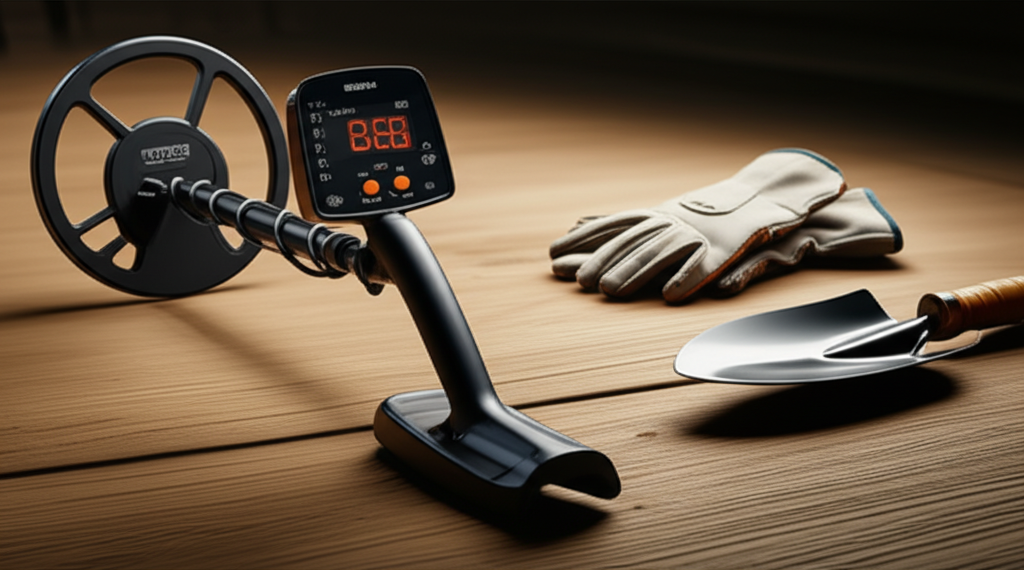
Beyond the detector itself, a few accessories make hunting easier. You’ll need something to dig with. A pinpointer helps locate targets in the soil. A good headphones set is also very helpful. These items improve your chances of success.
Pinpointer: Finding Small Targets
A pinpointer is a small, handheld detector. You use it after digging a plug of dirt. It helps you find the exact spot of your target. This saves a lot of time and frustration. It’s one of the most useful accessories for any detectorist.
Digging Tools: Getting to Your Treasure
You need tools to dig safely. A sturdy digging trowel is essential. For tougher ground, a small shovel might be needed. Always try to dig minimal plugs. This helps preserve the sites you hunt. Respect the land you are detecting on.
Headphones: Hear Every Signal
Good headphones are a game-changer. They block out wind noise. This lets you hear faint signals clearly. You won’t miss those tiny targets. Wired headphones are common for entry level metal detectors. Look for ones designed for outdoor use.
Where to Hunt with Your Entry Level Metal Detector
Choosing where to hunt is key. Parks, old home sites, and beaches are good starting points. Always check local laws and get permission. Some places are off-limits for detecting. Knowing the rules helps you hunt legally and respectfully.
Parks and Playgrounds: Common Finds
Parks and playgrounds are often good spots. People lose coins, jewelry, and small toys. These areas have seen a lot of activity over the years. They are usually easy to access and search. Just be mindful of other park users.
Old Home Sites and Fields: Historical Treasures
Exploring old home sites can yield amazing finds. These places often have older coins and relics. You might find buttons or pieces of pottery. Always get permission from the landowner. Be very careful when digging in these areas.
Beaches: Saltwater and Freshwater Hunting
Beaches are popular for metal detecting. You can find modern jewelry and coins. Some entry level metal detectors with waterproof coils work well here. Remember to rinse your detector after saltwater use. This prevents corrosion.
Understanding Your Detector’s Signals
Learning to interpret signals is crucial. Your detector makes sounds. These sounds tell you what it might have found. Different tones and numbers mean different things. Practice is the best way to learn. Listen to your detector in different situations.
Interpreting Tones
Most detectors use different tones. A low tone often means iron. A mid-tone might be a pull tab or small gold ring. A high tone usually indicates a good target like a coin. Your entry level metal detector will have a few distinct tones. Learn what they mean for your specific model.
Understanding the Display
The display shows you information. It often shows a Target ID number. It might also show a depth indicator. Some displays have icons representing common targets. This visual information helps you make decisions. Read your detector’s manual to understand its display.
Tips for Your First Metal Detecting Outing
Your first trip out should be fun. Don’t expect to find a huge treasure right away. Focus on learning your machine. Get a feel for the sounds and signals. Enjoy being outdoors and the thrill of the hunt. Success comes with practice and patience.
Start Simple
For your first outing, pick an easy spot. A local park is a good choice. Don’t try to hunt a difficult area. Focus on learning how your entry level metal detector works. Get comfortable with swinging the coil. Learn how to dig a neat plug.
Dig All Your Targets
At first, dig every signal you get. This helps you learn what different signals sound like. You will dig a lot of trash. This is part of the learning process. You will get better at identifying signals over time.
Practice Makes Perfect
The more you use your detector, the better you’ll become. You’ll learn to distinguish signals. You’ll get faster at finding targets. You’ll also learn the best places to hunt. Keep practicing, and your finds will improve.
Maintaining Your Entry Level Metal Detector
Proper care keeps your detector working well. Clean it after each use. Store it in a dry place. Protect it from extreme temperatures. Following these simple steps will extend its life. Your entry level metal detector will last longer.
Cleaning Your Detector
Wipe down the coil and control box. Use a damp cloth for dirt. Avoid harsh chemicals. Make sure it’s completely dry before storing. This simple cleaning routine is very important.
Storage and Protection
Store your detector indoors. Keep it away from direct sunlight and moisture. A detector cover can offer extra protection. Protect the coil from scratches. Proper storage prevents damage.
Frequently Asked Questions About Entry Level Metal Detectors
What is the best entry level metal detector for a complete beginner?
Many experts recommend the Garrett Ace series or the Minelab Vanquish 340. These are user-friendly and effective for finding common targets like coins and jewelry. They offer a good balance of features and simplicity for beginners.
Do I need to buy a pinpointer right away?
While not strictly essential for your very first outing, a pinpointer is highly recommended. It significantly speeds up target recovery and reduces frustration. Most detectorists consider it a must-have accessory soon after starting.
How deep can an entry level metal detector find things?
Entry level metal detectors can typically detect coins and small items up to 6-8 inches deep. Deeper targets are possible depending on the size of the object, ground mineralization, and the specific detector model.
Is metal detecting legal everywhere?
No, metal detecting is not legal everywhere. Laws vary by country, state, and local municipality. Always check regulations for parks, historical sites, and private property before you detect. Getting permission is crucial.
What should I do if I find something historical or valuable?
If you find something of historical significance, it’s often best to leave it in situ and contact local archaeological authorities or a museum. For valuable items, laws regarding finds vary, so research local regulations.
Conclusion: Start Your Treasure Hunting Adventure
Choosing an entry level metal detector is an exciting first step. You now have the knowledge to pick a machine that fits your needs. Remember to focus on ease of use and essential features. With a good entry level metal detector, some basic accessories, and a willingness to learn, you are ready. Get out there, practice, and enjoy the thrill of discovery. Happy hunting!
