


Published on: November 10, 2025 | Updated on: November 10, 2025
Metal Detectors for Meteorite Hunting: Essential Finds
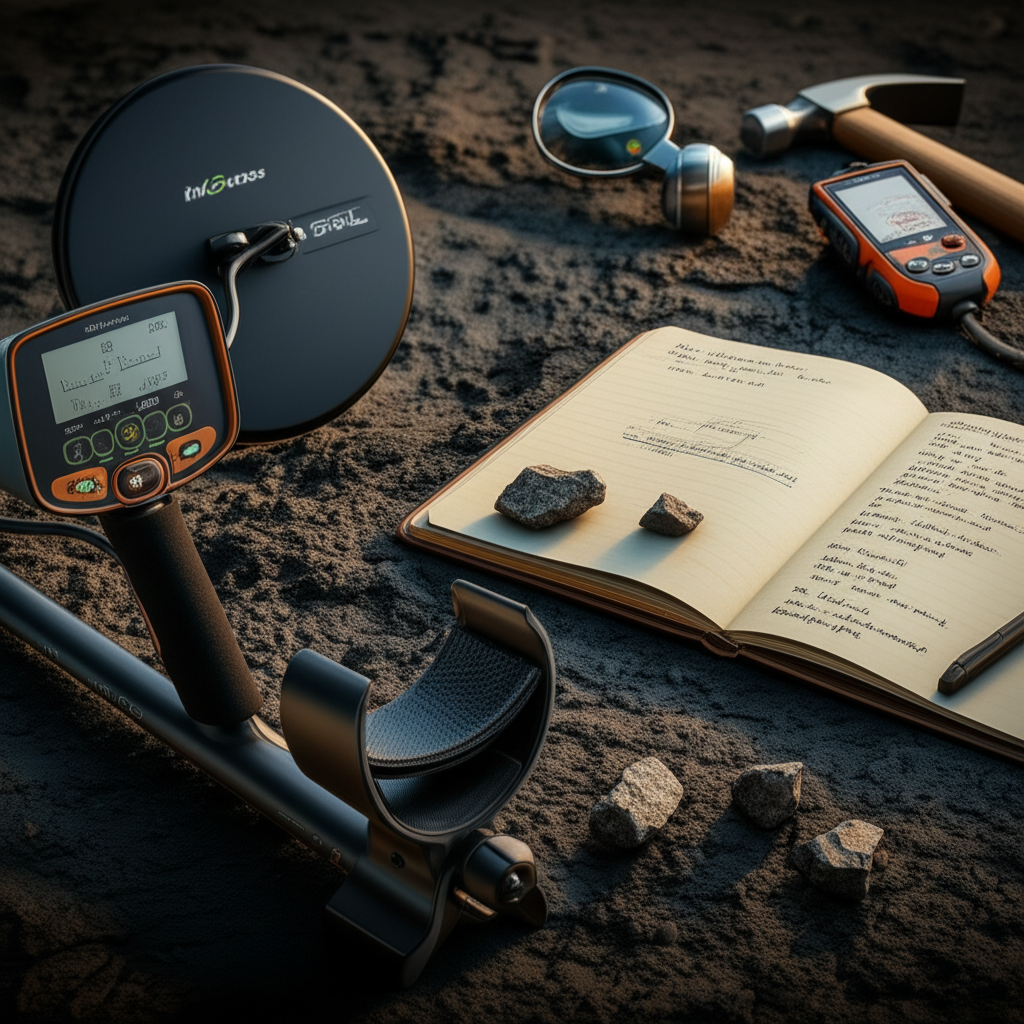
Finding meteorites requires specific metal detectors that can handle various ground conditions and detect faint signals from extraterrestrial objects. This guide covers the best tools and techniques for successful meteorite hunting.
Meteorite hunting is a unique and exciting hobby. It combines outdoor exploration with the thrill of finding something truly out of this world. Unlike hunting for coins or relics, meteorites often fall on diverse terrains, including mineralized soil, which can challenge standard metal detectors. Choosing the right equipment is crucial. This guide will help you find the best metal detectors for meteorite hunting. We will cover what to look for and how to use them effectively.
Why Meteorites Are Tricky to Find with Metal Detectors
Meteorites are not like typical targets. They can have unusual metallic compositions. Some are iron-rich, while others are stony. These differences affect how they reflect a detector’s signal. Also, the ground where meteorites land can be mineralized. This means the soil itself can create false signals. Standard detectors might struggle with these conditions. They might miss faint meteorite signals or give too many false alarms.
Understanding Meteorite Detection Needs
To find meteorites, your metal detector needs specific capabilities. It should be good at handling mineralized ground. This is often called “ground balancing.” The detector needs to ignore the ground’s mineral content. It should also be sensitive enough to pick up faint signals. Meteorites can be small or buried deep. A good detector will have adjustable settings. This allows you to fine-tune it for different environments.
Key Features of Metal Detectors for Meteorite Hunting
When looking for a metal detector for meteorite hunting, focus on a few key features. These will make your search much more successful.
Excellent Ground Balance: This is the most important feature. It allows the detector to ignore the ground’s minerals. This prevents false signals and helps you hear faint targets. Look for detectors with manual and automatic ground balance options.
Adjustable Sensitivity: Sensitivity controls how deeply the detector can “see” into the ground. Higher sensitivity is good for faint signals. However, too much sensitivity can cause false signals in noisy environments. Being able to adjust it is vital.
Multiple Frequency Options: Different frequencies are better for different targets. Lower frequencies are good for larger, deeper targets. Higher frequencies are better for smaller targets. Some detectors offer multiple frequencies or broadband technology. This covers a wider range of target sizes and types.
Discrimination Capabilities: Discrimination helps ignore unwanted metal objects like iron. While you might want to ignore modern trash, some meteorites can be mistaken for iron by a detector. So, adjustable discrimination is key. You don’t want to discriminate out a potential meteorite.
Robust Construction: Meteorite hunting often takes you to remote and rough areas. Your detector needs to be durable. Waterproof coils are also a plus for hunting in wet conditions.
Top Metal Detector Technologies for Meteorite Hunting
Several technologies in metal detectors are particularly useful for finding meteorites. Understanding these will help you choose the right device.
Very Low Frequency (VLF) Detectors: These are common and versatile. They work well in many conditions. Many VLF detectors have good ground balancing. They can be tuned to ignore mineralized soil.
Pulse Induction (PI) Detectors: PI detectors are excellent in highly mineralized ground. They are less affected by ground minerals than VLF detectors. PI detectors often have great depth. However, they typically lack discrimination. This means they will signal on all metals.
Multi-Frequency Detectors: These modern detectors transmit and receive signals at multiple frequencies simultaneously. This gives them versatility. They can find a wide range of targets in various soil conditions. Brands like Minelab offer excellent multi-frequency options.
Recommended Metal Detectors for Meteorite Hunters
Based on my field experience, certain metal detectors stand out for meteorite hunting. These machines offer the right balance of features and performance.
1. Minelab Equinox Series

The Minelab Equinox series is a popular choice for many detectorists. It uses Multi-IQ technology. This means it operates on multiple frequencies at once.
Pros: Excellent all-around performance. Good in mineralized soil. Detects small and large targets well. Relatively affordable for its capabilities.
Cons: Can be complex for absolute beginners.
Why it’s great for meteorites: The Multi-IQ system is fantastic for ground balancing. It adapts to different soil types and helps pick up faint signals. I’ve found faint targets with the Equinox that other detectors missed.
2. Garrett ATX
The Garrett ATX is a Pulse Induction (PI) detector. PI detectors are known for their depth and ability to handle mineralized ground.
Pros: Exceptional depth. Works very well in highly mineralized soil. Fully waterproof.
Cons: No discrimination, so it signals on all metals. Heavier than some other detectors.
Why it’s great for meteorites: If you are hunting in areas with extreme ground mineralization, the ATX is a top contender. Its PI technology cuts through the noise. This allows you to find targets that VLF detectors might miss.
3. Nokta Makro The Legend
The Legend is another multi-frequency detector. It offers excellent performance for its price point. It has advanced features like Iron Volume control.
Pros: Very good performance in mineralized ground. Multiple search modes. Affordable.
Cons: Battery life could be better for long hunts.
Why it’s great for meteorites: Its ability to handle mineralized ground makes it a strong choice. The different frequencies help detect various types of metallic objects. It’s a solid option for those on a budget.
4. XP DEUS II
The XP DEUS II is a high-end wireless detector. It uses Fast Multi-Frequency (FMF) technology. It is very lightweight and comfortable for long detecting sessions.
Pros: Extremely fast and responsive. Excellent target separation. Lightweight and wireless. Highly versatile with many settings.
Cons: High price point.
Why it’s great for meteorites: Its speed and sensitivity are outstanding. The FMF technology allows it to adapt quickly to changing ground conditions. This is crucial for finding those elusive meteorite signals.
Essential Accessories for Meteorite Hunters
Beyond the detector itself, a few accessories are vital for successful meteorite hunting. These tools enhance your efficiency and recovery success.
Pinpointer: A good pinpointer is non-negotiable. Once your detector signals a target, a pinpointer helps you locate it precisely in the dug plug. This saves a lot of time and effort. Look for one that is sensitive and reliable.
Digging Tools: You’ll need sturdy digging tools. A strong digging trowel or a specialized digging tool designed for tough ground is essential. A small shovel can also be helpful for larger targets or deeper finds.
Coil Covers: Protecting your detector’s coil is important, especially when digging in rocky or abrasive soil. A coil cover will extend the life of your coil.
GPS Device or Smartphone App: Meteorite falls can occur in remote areas. A GPS device or a reliable mapping app on your smartphone will help you navigate. It also allows you to mark promising locations for future searches.
Collection Bags and Tools: Small bags or containers are needed to safely store any finds. A small brush can help clean off dirt without damaging fragile specimens.
Understanding Meteorite Signals
Meteorite signals can be tricky. They are often faint. They might also sound similar to iron or other junk targets.
Iron Signals: Many meteorites, especially iron meteorites, can produce signals similar to iron. This is why adjustable discrimination is important. You need to be able to analyze the signal. Is it a rusty nail or something more?
Faint Signals: Stony meteorites are often harder to detect. They are less conductive than iron meteorites. You need a sensitive detector. You also need to listen carefully to faint repeatable signals.
Repeatable Signals: A true target will usually produce a consistent signal. Sweep the coil from different directions. If the signal remains consistent, it’s more likely a real target.
Where to Hunt for Meteorites
The best places to hunt for meteorites are often areas where they have been found before. Large meteorite impact craters are obvious targets. However, meteorites can fall anywhere.
Known Fall Sites: Research historical meteorite falls. Many scientific organizations and online databases list these locations. Hunting near these sites increases your chances.
Desert Regions: Deserts are excellent for meteorite hunting. The dry climate preserves meteorites well. The lack of vegetation makes detection easier. Also, meteorites often contrast with the lighter soil.
Agricultural Fields: After a meteorite fall, farming can bring fragments closer to the surface. Fields that have been plowed for years might reveal buried meteorites. Always get permission before detecting on private land.
Rocky Outcrops and Trails: Meteorites can tumble down slopes. Look in areas where they might accumulate. Rocky areas can also provide a good contrast for your detector.
Techniques for Effective Meteorite Hunting
Using the right techniques will significantly improve your success rate. It’s not just about the equipment.
Slow and Steady Sweeps: Sweep your coil slowly and deliberately over the ground. This ensures you don’t miss faint signals. Overlap your sweeps to cover the area completely.
Listen for Repeatable Signals: Pay close attention to your detector’s audio. A repeatable signal that sounds consistent from different directions is usually a good sign. Learn to distinguish these from random ground noise.
Dig Carefully: When you get a signal, dig a neat plug of soil. Try to keep the plug intact. This makes it easier to locate the target within the soil. Use your pinpointer to check the hole and the plug.
Analyze Your Finds: If you recover a metallic object, examine it closely. Does it look like a meteorite? Meteorites often have a dark, fusion crust. They can also be dense and magnetic. If you suspect you’ve found a meteorite, consult with experts.
Ground Mineralization: The Detectorist’s Nemesis
Ground mineralization is a common challenge in metal detecting. It’s especially true for meteorite hunting in certain terrains.
What is Mineralization? It’s when the soil contains a high concentration of iron oxides or other minerals. These minerals can create their own electrical fields. Your metal detector can mistake these for metal targets.
How Detectors Handle It: Detectors with good ground balance can adjust to ignore these mineral effects. PI detectors are generally less affected by mineralization than VLF detectors.
Tips for Mineralized Ground: Use a detector with adjustable ground balance. If using a VLF detector, set it to “ground balanced” or “neutral” ground. Sometimes reducing sensitivity can help reduce false signals from heavy mineralization.
Identifying Potential Meteorites
Spotting a meteorite can be challenging. They don’t always look like what people expect.
Fusion Crust: Many meteorites have a dark, thin outer layer called a fusion crust. This forms as the meteorite burns through the atmosphere. However, older meteorites on Earth might lose this crust.
Density: Meteorites are generally denser than terrestrial rocks of the same size. Iron meteorites are very heavy. Stony meteorites are also denser than most Earth rocks.
Magnetism: Most meteorites, especially iron meteorites, are magnetic. They will attract a magnet. However, some stony meteorites are not magnetic. So, magnetism is a good indicator but not definitive proof.
Shape: Meteorites often have rounded edges and sometimes thumbprint-like indentations called regmaglypts. They are rarely perfectly spherical or angular.
Meteorite Identification and Authentication
If you find something you believe might be a meteorite, the next step is identification. This is a crucial part of the process.
Consult Experts: Reach out to university geology departments or meteorite societies. They can help with preliminary identification. Many experienced meteorite hunters can also offer advice.
Laboratory Analysis: For official authentication, laboratory analysis is often required. This can involve testing the meteorite’s chemical composition and structure. Such tests can confirm if it is extraterrestrial.
Resources: Websites like the Meteoritical Society provide valuable information and resources for identification. Learning about different meteorite types is also very helpful.
Frequently Asked Questions About Metal Detectors for Meteorite Hunting
Q1: Can any metal detector find meteorites?
No, not all metal detectors are ideal for finding meteorites. Meteorites can be found in mineralized ground that challenges standard detectors. You need a detector with good ground balancing and sensitivity.
Q2: What is the best type of metal detector for meteorite hunting?
Pulse Induction (PI) detectors are excellent for highly mineralized ground. Multi-frequency detectors are also very effective. They offer versatility and good performance in various conditions.
Q3: How do I know if a signal is a meteorite?
Meteorite signals can be faint and sometimes mimic iron. Listen for repeatable signals. Examine the recovered object for a fusion crust, density, and magnetism. Expert advice is often needed for confirmation.
Q4: Do I need a special coil for meteorite hunting?
While not strictly necessary, a smaller coil can sometimes be more sensitive to smaller targets. A waterproof coil is also beneficial if you hunt in wet environments.
Q5: Where are the best places to look for meteorites?
Deserts, known fall sites, open fields, and rocky areas are good places. Always ensure you have permission to detect on private land.
Q6: What is ground balancing and why is it important for meteorite hunting?
Ground balancing helps your detector ignore the effects of minerals in the soil. This is crucial for meteorite hunting because many potential fall sites have mineralized ground. It prevents false signals and helps detect faint meteorite signals.
Conclusion
Metal detecting for meteorites is a rewarding pursuit that requires the right tools and knowledge. The best metal detectors for meteorite hunting are those that excel in challenging ground conditions and offer high sensitivity. Features like excellent ground balance, adjustable sensitivity, and multi-frequency capabilities are key. By choosing a reliable detector like the Minelab Equinox, Garrett ATX, Nokta Makro The Legend, or XP DEUS II, and pairing it with essential accessories like a pinpointer and sturdy digging tools, you significantly increase your chances of making an extraterrestrial find. Remember to learn about meteorite signals, explore promising locations, and employ careful hunting techniques. Happy hunting for those essential finds from space!
