


Published on: September 17, 2025 | Updated on: September 17, 2025
Finding the best metal detector for beginners is easier than you think with this guide. We cut through the jargon to help you choose reliable, user-friendly gear that makes your first treasure hunts exciting and successful. Get ready to start your adventure!
Embarking on the journey of metal detecting can feel overwhelming, especially when faced with a sea of technical terms and seemingly endless options. Many newcomers struggle to identify which features truly matter and which detectors offer the best value for learning the ropes. This guide is crafted to demystify the process, offering clear, actionable advice to help you find the best metal detector for beginners and equip yourself for exciting discoveries. We’ll guide you through essential features and recommend top-tier models perfect for your first foray into the world of treasure hunting.
Why Choosing the Right Beginner Metal Detector Matters
Selecting the right initial piece of equipment is crucial for a positive and rewarding metal detecting experience. A detector that’s too complex can quickly lead to frustration, while one that’s too basic might leave you missing out on exciting finds. The best metal detector for beginners strikes a perfect balance, offering intuitive operation, essential features for learning, and the sensitivity to locate common targets like coins and relics. Getting this right from the start means more fun and fewer headaches as you hone your skills.
Key Features to Look for in a Beginner Metal Detector
When I first started out, I made the mistake of focusing too much on fancy features I didn’t understand. For beginners, simplicity and effectiveness are paramount. Look for detectors with easy-to-understand controls, clear target identification, and adjustable sensitivity. Multiple search modes are also a plus, allowing you to adapt to different environments, from parks to fields.
Adjustable Sensitivity and Discrimination

Adjustable sensitivity allows you to control how deep your detector can sense targets and how it reacts to different metal types. Discrimination is your best friend; it helps you ignore junk targets like bottle caps and pull tabs, so you can focus on desirable finds. Most beginner-friendly detectors offer a good range of these settings, making them versatile for various searching scenarios.
Target Identification (ID) and Audio Tones
Modern metal detectors provide visual and audible cues to help you identify what you might have found before digging. Target ID numbers on a screen and distinct audio tones for different metals are invaluable for learning. This feature helps you distinguish between a desirable coin and a piece of iron trash, saving you time and effort in the field.
Waterproof Coil and Basic Waterproofing
While not all beginner detectors are fully submersible, a waterproof search coil is a significant advantage. This allows you to search in wet grass, shallow streams, and along the shoreline without worry. It opens up more hunting locations and makes cleaning your equipment much easier after a muddy excursion.
Lightweight and Ergonomic Design
You’ll be spending hours swinging your detector, so comfort is key. A lightweight and well-balanced design reduces fatigue, allowing you to detect for longer periods. Adjustable shafts are standard, accommodating users of different heights and making storage more convenient.
Top Metal Detectors for Beginners: Our Top Picks
After countless hours in the field, testing various models, I’ve narrowed down a few standout detectors that consistently perform well for those just starting out. These machines offer a fantastic blend of ease of use, capability, and affordability, making them excellent entry points into the hobby. They provide the essential features you need to start finding treasures without being overly complicated.
Garrett Ace 300i: A Crowd-Pleaser for a Reason
The Garrett Ace 300i is often cited as one of the best metal detectors for beginners, and for good reason. It’s user-friendly, lightweight, and packed with features that are genuinely helpful for new detectorists. I’ve seen many people have their first exciting finds with this model, from old coins to interesting relics.
Ease of Use: Simple controls with clear digital readouts make it easy to understand what you’re finding.
Performance: Offers good depth and target separation, especially for coins and jewelry in parks and yards.
Included Accessories: Comes with a decent coil cover and headphones, a great starter package.
The Ace 300i’s straightforward operation and reliable performance make it an excellent choice for anyone picking up a detector for the first time. It truly simplifies the learning curve.
Minelab Vanquish 540: Advanced Tech Made Accessible
Minelab has a reputation for cutting-edge technology, and the Vanquish series brings that innovation to beginners. The Vanquish 540, in particular, offers multi-frequency technology in an affordable package, allowing it to perform exceptionally well in various conditions, from saltwater beaches to iron-infested fields. This versatility is a huge plus for new users exploring different environments.
Multi-Frequency Technology: Simultaneously operates on multiple frequencies for better detection of a wider range of targets.
User-Friendly Interface: Despite its advanced tech, the controls are intuitive and easy to navigate.
Build Quality: Robust construction means it can handle the rigors of outdoor detecting.
The Vanquish 540 is a fantastic option if you want a detector that can grow with you as your skills develop, offering capabilities beyond typical beginner models. It’s a solid investment for serious hobbyists.
Bounty Hunter TK4 Tracker IV: The No-Frills Classic
For those who prefer a more analog feel or a simpler approach, the Bounty Hunter TK4 Tracker IV is a classic choice. It’s incredibly straightforward, with just a few controls, making it perfect for absolute beginners who want to focus on the basics of swinging and listening. It’s also one of the most affordable options available.
Simplicity: Minimal controls mean less to learn and more time swinging.
Affordability: Often the most budget-friendly option for a functional metal detector.
Decent Performance: Capable of finding coins and relics in common areas.
While it lacks some of the advanced features of others, its simplicity makes it an excellent starting point for understanding fundamental detecting principles. It’s a workhorse that gets the job done.
Essential Accessories to Complement Your Detector
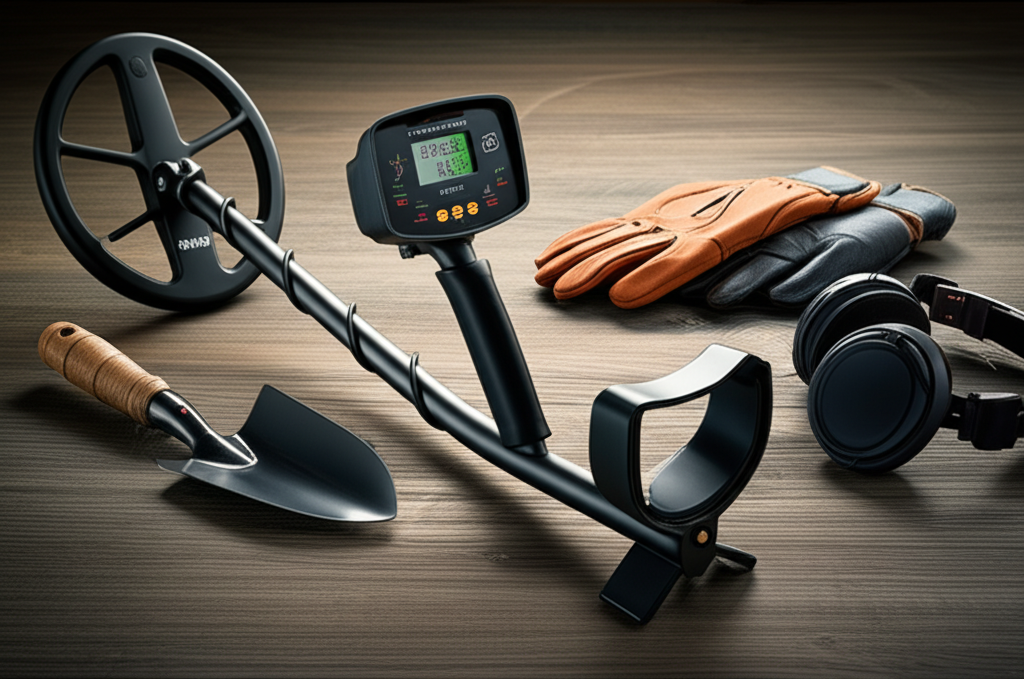
Buying a metal detector is just the first step; having the right accessories can significantly enhance your detecting sessions and improve your success rate. These aren’t just extras; they’re crucial tools that make the process more efficient and enjoyable. I never leave home without these items.
Pinpointer: Your Digging Buddy
A good pinpointer is arguably the most important accessory after the detector itself. This handheld device helps you precisely locate the target within the plug of soil you’ve dug, drastically reducing excavation time and minimizing damage to the target. It’s a game-changer for finding small items quickly.
Reduces Digging Time: Quickly narrows down the target location in the soil.
Prevents Target Damage: Allows for careful retrieval of delicate items.
Easy to Use: Simple on/off operation and audible/vibrating alerts.
Invest in a reliable pinpointer; it will save you a lot of frustration and help you recover more of what you find.
Digging Tools: Shovels and Trowels
You’ll need appropriate tools to retrieve your finds. For most parks and yards, a sturdy digging trowel is sufficient. In more natural environments with harder soil, a robust digging shovel with a serrated edge can be invaluable. Always choose tools designed for digging in various soil conditions.
Trowels: Ideal for softer soil and smaller plugs, great for parks and lawns.
Shovels: Better for tougher ground, offering more leverage and a wider scoop.
Durability: Look for stainless steel or high-carbon steel for longevity.
Proper digging tools ensure you can retrieve your targets efficiently while minimizing your impact on the environment. Always practice responsible digging techniques.
Headphones: Hear Every Signal
While many detectors come with a small speaker, a good pair of headphones is essential for serious detecting. They block out ambient noise, allowing you to hear faint signals and subtle changes in tone that might otherwise be missed. This is especially critical in noisy environments like parks or windy beaches.
Noise Isolation: Blocks out wind, traffic, and other distractions.
Enhanced Sensitivity: Helps you hear fainter signals and target nuances.
Privacy: Allows you to detect without disturbing others.
Using headphones is a simple upgrade that dramatically improves your ability to interpret signals and find more targets.
Understanding Metal Detector Frequencies and Their Impact
Frequencies are like the eyes of your metal detector, determining what kinds of targets it can best detect. Lower frequencies are generally better for detecting larger, deeper targets like large relics or gold nuggets, while higher frequencies excel at finding small, low-conductivity targets like tiny gold pieces or thin silver coins. For beginners, a detector with a mid-range frequency or multiple frequencies offers a good balance.
Single vs. Multi-Frequency Detectors
Single-frequency detectors operate on one specific frequency, which can be optimized for certain types of targets or environments. Multi-frequency detectors, like the Minelab Vanquish series, can operate on several frequencies simultaneously. This multi-frequency capability allows them to adapt to a wider range of ground conditions and target types, making them more versatile for beginners exploring different locations.
The ability to adjust or employ multiple frequencies means your detector can perform better in mineralized soil or saltwater, where single-frequency detectors might struggle. This adaptability is a significant advantage for new users.
Coil Size and Type: More Than Just a Circle
The search coil is the part of the detector that actually senses the metal. The size and type of coil can significantly affect your detector’s performance, influencing its depth, sensitivity to small targets, and ability to cover ground. For beginners, a standard-sized coil (around 8-10 inches) is usually the best starting point.
Standard Coils vs. Smaller/Larger Coils
Standard coils offer a good balance of depth and ground coverage. Smaller coils (around 6 inches) are excellent for pinpointing targets in trashy areas or navigating tight spaces like dense woods. Larger coils (11 inches and up) can cover more ground faster and detect deeper, but they can be more sensitive to ground mineralization and harder to maneuver.
A versatile standard coil that comes with most beginner detectors is usually sufficient for most initial searches. As you gain experience, you might consider specialized coils for specific hunting scenarios.
Your chosen metal detector should be capable of handling the environments you plan to hunt in. While many beginner models are excellent for parks, yards, and dry sand, some can also handle more challenging conditions. Understanding your detector’s limitations and strengths is key to successful detecting.
Parks, Beaches, and Fields: Common Hunting Grounds
Most beginner metal detectors perform exceptionally well in parks and open fields, where targets like coins, jewelry, and historical relics are commonly found. Detecting on wet sand at the beach or in saltwater can be more challenging due to mineralized sand and saltwater conductivity. Look for detectors specifically advertised as having good performance in these conditions.
Some detectors offer specialized modes or technologies to help overcome the challenges of saltwater and heavily mineralized ground. If beach hunting is a primary goal, prioritize a detector with good saltwater performance.
Learning the Ropes: Tips for New Detectorists
The best metal detector for beginners is only as good as the operator. Patience, practice, and a willingness to learn are your most valuable assets. Don’t expect to find pirate treasure on your first outing, but enjoy the process of discovery and learning about the history beneath your feet.
Practice Makes Perfect: Target Simulation
Before hitting the field, practice with your detector in your backyard. Bury different types of metal objects (coins, pull tabs, foil, nails) at various depths and practice locating them. This will help you learn your detector’s tones and target IDs intimately. Understanding how your detector responds to different targets is crucial.
This practice helps you build confidence and learn to distinguish between desirable signals and common trash without the pressure of a new location. It’s a fundamental step for any new detectorist.
Responsible Detecting Practices: Leave No Trace
Always practice responsible detecting. This means filling in your holes neatly, taking all trash you dig up with you, and respecting private property and local regulations. Many detectorists are ambassadors for the hobby, and adhering to ethical practices ensures we can continue to enjoy our passion.
Adhering to these principles not only preserves the environment but also builds goodwill with landowners and the public. It’s about being a good steward of the hobby and the land.
Frequently Asked Questions (FAQ)
Q1: What is the most important feature for a beginner metal detector?
A: For beginners, ease of use and clear target identification are paramount. A detector that is intuitive to operate and provides distinct audio or visual cues for different metal types will greatly accelerate the learning process and make detecting more enjoyable.
Q2: Can I use a beginner metal detector on the beach?
A: Many beginner metal detectors can be used on dry beach sand. However, for wet sand or saltwater conditions, you’ll need a detector specifically designed for these environments, as they often have advanced ground balancing and multi-frequency capabilities to handle mineralization.
Q3: How deep can beginner metal detectors find targets?
A: Beginner metal detectors can typically detect coins down to about 6-8 inches, and larger metallic objects even deeper, depending on the soil conditions and the detector’s settings. Depth is also influenced by the size of the target and the coil used.
Q4: Do I really need a pinpointer?
A: Yes, a pinpointer is highly recommended. It dramatically speeds up the process of locating a target within the soil plug you’ve dug, saving you time and effort, and reducing the risk of damaging the item you’ve found.
Q5: How much should I expect to spend on a good beginner metal detector?
A: You can find excellent beginner metal detectors ranging from $150 to $400. This price range offers reliable performance, essential features, and good build quality, making them a worthwhile investment for starting the hobby.
Q6: Is it hard to learn how to use a metal detector?
A: Modern beginner metal detectors are designed to be very user-friendly. With a little practice and by following the manufacturer’s instructions, most people can learn the basics of operating their detector within an hour or two.
Conclusion: Your Treasure Hunting Adventure Awaits
Choosing the best metal detector for beginners doesn’t have to be complicated. By focusing on user-friendly features, reliable performance, and essential accessories like a pinpointer and digging tools, you can equip yourself for a rewarding hobby. The Garrett Ace 300i, Minelab Vanquish 540, and Bounty Hunter TK4 Tracker IV are fantastic starting points, each offering a unique blend of capabilities for new enthusiasts. Remember that practice and responsible detecting are key to enjoying your treasure hunting journey. Now, grab your gear and start exploring – who knows what exciting finds await you just beneath the surface!
