


Published on: September 17, 2025 | Updated on: October 24, 2026
Stop Swinging Blindly: The Logic Behind Every Great Find
Most beginners power on their metal detector and walk in random circles. In testing across dozens of sites, the detectorists who consistently pull silver coins and gold rings rely on a specific formula: historical research plus behavioral logic. You are not just searching for metal; you are searching for places where human distraction, gravity, and time intersect. This guide breaks down exactly where to find those intersections.
The Science of Where People Drop Things
The best places for metal detecting share one universal trait: disrupted pockets. When people run, jump, sit, or shiver, items fall out. Understanding human mechanics allows you to predict exactly where valuables land before you even turn on your machine.
The Jewelry Drop Zones
Where do people lose jewelry most? The answer is almost always related to temperature changes or physical exertion. Beach towel lines are prime real estate because cold swimmers remove rings before applying sunscreen, dropping them in the sand. Soccer fields and volleyball courts see high-impact movement where rings fly off sweaty fingers. In winter, sledding hills yield massive amounts of lost class rings when frozen fingers lose dexterity.
Focus your grid searches on the edges of activities, not the centers. People drop items along the sidelines, under bleachers, and at the entry points of sports fields. The center of a field is manicured and heavily trafficked, but the sidelines are where people stand, fidget, and accidentally empty their pockets.

The Coin Spill Logic
Coins behave differently than jewelry because they are pulled out intentionally. Old coins cluster around former gathering nodes. You want to look for large shade trees, old picnic pavilions, and the foundations of demolished buildings. In the 1920s through 1950s, people gathered under specific trees for community events. Those root systems now swallow dropped change that has been sinking for a century.
Let’s be honest, a freshly sodded city park is a graveyard for modern zinc pennies. If you want silver or older copper, you have to find the original dirt. Look for the uneven ground, the old oak trees, and the sections of the park that the city mowers avoid.
How to Research Metal Detecting Locations
Finding good metal detecting spots requires transitioning from a treasure hunter to a historical detective. The best locations are not marked on modern maps; you have to overlay historical data to find them.
The Population Shift Method
To predict the age of the coins you will find, you must understand local population shifts. In the 1790s through 1850s, populations were heavily agrarian. Hunting near old fence lines, stone walls, and abandoned farmyards yields large cents and early copper. Between 1870 and 1920, urbanization took hold. Searching the curbs strips and front yards of homes built in this era produces Barber dimes, Seated Liberty coins, and early Lincoln wheat pennies. Target the era of the land use to match the era of your target coins.
Acquire Historic Aerials: Open HistoricAerials.com to compare modern satellite imagery with topographical maps from the 1950s and earlier. Look for structures that no longer exist.
Analyze Real Photo Postcards (RPPCs): Search eBay and local archives for RPPCs from the 1920s to 1940s. These un-retouched photographs show exactly where old swimming holes, picnic groves, and fairgrounds were located.
Deploy LiDAR Technology: Use free county LiDAR data to see through heavy tree canopy. LiDAR reveals the faint square outlines of old house foundations and forgotten roads that are completely invisible on the ground.
High-Traffic Public Zones
Public spaces offer the lowest barrier to entry for metal detecting. While they are hunted frequently, strategic targeting within these zones still produces excellent results.
Parks and Recreational Areas
Parks are the most accessible good spots to metal detect, but you must avoid the manicured centers. Focus on the “fringe” areas: the tree lines bordering open fields, the steep banks where people sit to watch games, and the old pathways that have since been overgrown. In older city parks, check the curb strips between the sidewalk and the street. When cities tear up old sidewalks to replace them, they expose the undisturbed original soil where older coins settle.
💡 Key Takeaway: How deep are old coins in the ground? In mild climates, coins sink about one inch every 10 to 15 years. A coin dropped in 1920 is typically resting between 6 to 8 inches deep, well within the reach of most VLF metal detectors.
Beaches and Shorelines
Beaches are dynamic environments that naturally replenish targets. The best time to hunt a beach is immediately after a strong coastal storm. Storm surges strip away layers of sand, pulling heavy items like gold rings and silver coins out of the deep silt and dropping them into the low-tide cuts. Look for shell lines and black sand deposits; heavy metals concentrate in these dense mineral pockets. Does aluminum foil trigger a metal detector? Yes, heavily, so beach hunters must learn to rely on pinpointers and target conductivity readings to distinguish foil from gold.

Avoid the dry sand near parking lots unless you are targeting modern pocket change. The wet sand zone is where gravity and water action pull the dense, valuable targets. If you are hunting in saltwater, ensure you are using a specialized pulse induction (PI) detector to handle the mineralization.
Schoolyards and Former Playgrounds
Schools are incredible metal detecting spots, but the age of the school dictates your strategy. Modern schools built after 1990 will mostly yield clad coins and cheap jewelry. However, if the school sits on land that was a farm in the 1800s, the edges of the property can produce exceptional older relics. Always hunt around the old metal swing sets and monkey bars, focusing on the “kick-out” zones where children’s swinging feet would launch objects out of their pockets.
Pro Tip: Hunt schoolyards in the summer. Ground conditions are usually drier, making target recovery easier, and you avoid any legal gray areas regarding detecting near children during session.
Forgotten Historical Hotspots
Historical sites offer the highest probability of finding rare, high-value relics and old coins. These locations require more effort to locate but reward you with finds that modern public parks simply cannot produce.
Ghost Towns and Forgotten Settlements
Ghost towns are the holy grail for relic hunters. When searching these areas, ignore the open main streets. Focus on the downwind side of old stagecoach stops where people camped, the areas directly behind former saloons, and the privy locations. How to tell if a creek has gold? Look for creeks feeding out of historically documented gold-bearing districts, specifically checking inside the bends of the creek where heavy materials naturally settle during flash floods.
Old home sites and abandoned homesteads are incredibly lucrative. People historically buried their savings in metal caches before the era of modern banking. Search near the front steps, around old well foundations, and directly beneath large oak trees that served as central meeting points.
What hiding places do looters never check? In testing old homesteads, focus on sub-floor cavities in collapsed wooden porches and the bottom of hand-dug stone wells. These require physical probing rather than just swinging a detector, but they often hold the untouched silver and copper stashes.

Old Fairgrounds and Circus Grounds
Traveling carnivals, circuses, and old county fairgrounds are prime targets for both modern jewelry and older tokens. These events drew massive crowds who sat on temporary bleachers and ate at crowded food stalls. Use historical newspapers to find out exactly where the annual county fair was held prior to 1950. Today, that land might just be an empty cow pasture, but the dense layer of dropped coins and pocket watches remains just beneath the surface.
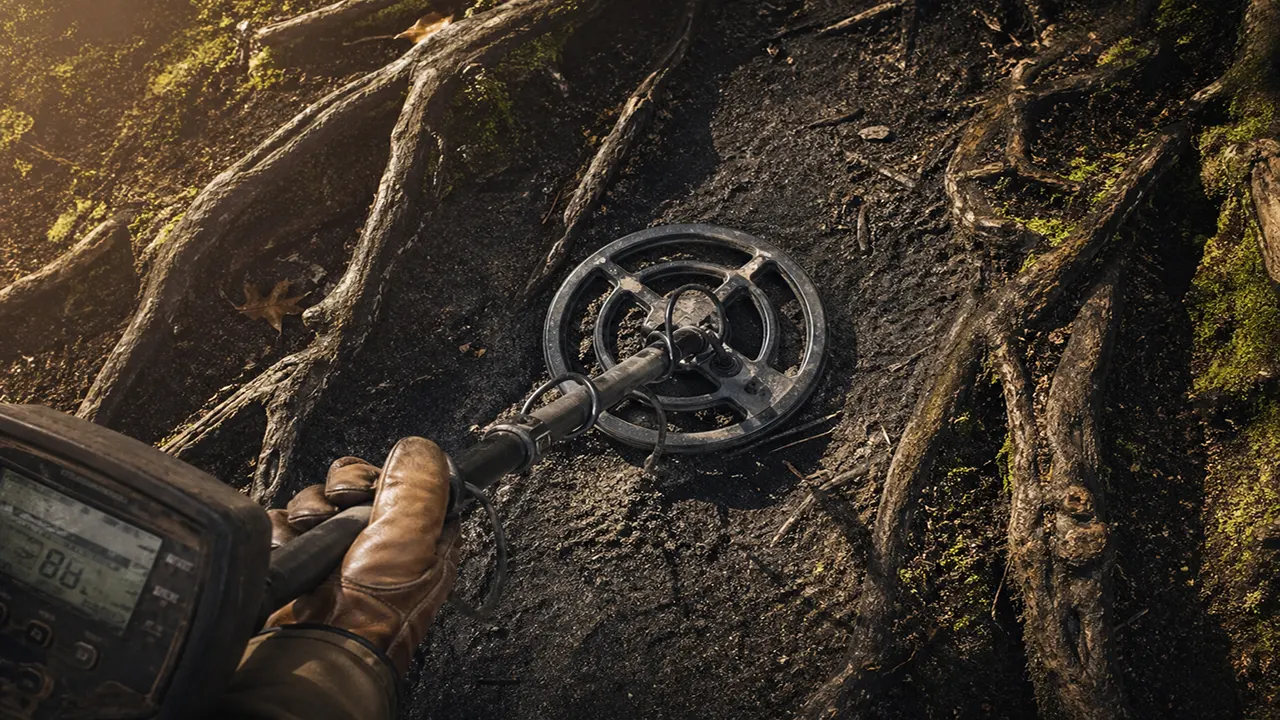
A forest looks uniform from the surface, but underground it is a map of human movement. Old roadbeds act as magnetic ribbons of iron trash that lead directly to the old homesteads everyone else walks past.
Specialized Terrain: Gold Prospecting and Water Hunting
Hunting for raw gold demands a completely different approach, equipment set, and geological understanding compared to searching for coins or jewelry.
Where to Metal Detect for Gold
If you are wondering where to metal detect for gold in Arizona or other historic mining states, you must abandon parks entirely and head for dry washes, exposed bedrock crevices, and ancient river channels. Gold is exceptionally heavy. When water pushes it downstream, it sinks immediately into cracks in the bedrock. You are not scanning random dirt; you are scanning the heavy black sand accumulations trapped inside solid rock fissures.
How deep can a GPZ 7000 detect gold? In highly mineralized ground, specialized pulse induction machines like the GPZ 7000 can detect large gold nuggets at depths exceeding 4 to 5 feet. However, for average detectorists using standard VLF machines, realistic gold detection depth in streams is limited to 6 to 12 inches, making bedrock crevice hunting critical.
Freshwater Riverbanks and Swimming Holes
Before the invention of public swimming pools, people congregated at local river bends and old swimming holes. Using RPPCs (Real Photo Postcards) from the 1930s and 1940s, you can identify these forgotten summer hotspots. Focus on the grassy banks where people undressed, the flat rocks used as diving platforms, and the sandy bottom in the shallower water. Freshwater hunting requires a fully waterproof metal detector and a robust sand scoop.
Knowing the best places to metal detect is useless if you cannot legally swing your machine there. Understanding the law protects you from fines and protects the hobby from further restrictions.
Can I Metal Detect in My Local Park?
It depends entirely on the municipality. Can I metal detect my local park? You must check the specific park district rules. Many city parks allow metal detecting, but they strictly prohibit digging tools, requiring you to only use hand probes and extract targets from the surface. Some parks ban detecting entirely. Always call the park superintendent’s office before you go. Never assume permission.
Warning: Metal detecting is strictly prohibited in all US National Parks, National Monuments, and federally owned Native American lands. Violating the Archaeological Resources Protection Act (ARPA) can result in felony charges and massive fines. State parks vary wildly; always check state websites first.
The Three Golden Rules of Metal Detecting
What are the three golden rules of metal detecting? If you follow nothing else, follow these: First, always fill your holes perfectly so the ground looks undisturbed. Second, never detect on private property without explicit verbal or written permission. Third, respect the environment by packing out all trash, even modern junk. These rules are not just ethics; they are the exact reasons landowners continue to grant access to detectorists.
Your Next Steps in the Field
Finding the best places for metal detecting is a continuous process of research, permission gathering, and physical scouting. Start by pulling up historic maps of your exact town and identifying one piece of land that has shifted from agricultural to public use. Grab your gear, check the local laws, and grid that fringe area systematically. The silver is there, buried exactly where human behavior dictates it should be.
💡 Key Takeaway: The best metal detecting spot is rarely a secret public beach. It is the old tree line at the edge of a suburban park, researched thoroughly and hunted patiently. Equip yourself with the right machine for your terrain using our comprehensive metal detecting guides.
