


Published on: September 2, 2025 | Updated on: September 2, 2025
Discover the surprisingly simple and effective way to make your treasured jewelry sparkle like new using just common household vinegar.
Is your favorite necklace looking dull, or are those rings losing their shine? You’re not alone! Over time, jewelry can accumulate dirt, oils, and tarnish, making it look less than its best. But before you reach for harsh chemicals or expensive cleaners, consider a secret weapon hiding in your kitchen: vinegar. Yes, that tangy liquid can be a remarkably effective and budget-friendly solution for restoring the brilliance of your precious metals and stones. Get ready to learn how to clean jewelry with vinegar like a pro, bringing back that dazzling gleam with simple, accessible steps.
Why Vinegar is a Brilliant Choice for Jewelry Cleaning
Vinegar, specifically white distilled vinegar, is a fantastic cleaning agent due to its acidic nature. This acidity is key to breaking down the grime, oils, and mild tarnish that dull your jewelry’s appearance. Unlike abrasive cleaners that can scratch delicate surfaces, vinegar offers a gentle yet powerful way to lift away impurities. It’s also incredibly cost-effective and readily available in most households, making it an accessible solution for everyone.
The Science Behind Vinegar’s Cleaning Power

The acetic acid in vinegar is the primary active ingredient that makes it so effective for cleaning. Acetic acid is a weak acid, but it’s strong enough to dissolve mineral deposits, soap scum, and the oxides that cause tarnish on metals like silver and gold. When you use vinegar to clean jewelry with vinegar, you’re essentially using a natural solvent to break down these unwanted substances, revealing the underlying shine. This gentle acidity is often preferable to harsher chemicals that might damage certain jewelry components.
What Types of Jewelry Can You Clean With Vinegar?
While vinegar is a versatile cleaner, it’s crucial to know which types of jewelry it’s safe for. Generally, white distilled vinegar is excellent for cleaning most solid gold, platinum, and sterling silver jewelry. It can also be effective for costume jewelry made from base metals. However, caution is advised with certain materials.
Safe for: Solid gold (10K, 14K, 18K, 24K), platinum, sterling silver, and some plated metals (with caution).
Use with caution or avoid: Pearls, opals, turquoise, coral, emeralds, antique jewelry, jewelry with glued-on stones, or heavily tarnished silver that might be porous.
Always test on an inconspicuous area first if you’re unsure. Understanding your jewelry’s composition is the first step to a successful clean.
Getting Started: Essential Tools and Preparation
Before you dive into cleaning your jewelry with vinegar, gathering a few basic supplies will make the process smoother and more effective. Having everything ready ensures you can follow the steps without interruption, minimizing any potential risks to your precious pieces. Proper preparation is key to achieving that sparkling, like-new finish.
Your Jewelry Cleaning Toolkit
You don’t need a specialized kit to clean jewelry with vinegar. Most of the items are likely already in your home. Having these on hand will ensure a comprehensive and safe cleaning experience for your treasured pieces.
White Distilled Vinegar: The star ingredient.
Baking Soda: For creating a gentle paste to tackle tougher grime.
Soft Toothbrush: An old, soft-bristled toothbrush is perfect for gentle scrubbing.
Cotton Swabs: Useful for cleaning intricate settings and hard-to-reach areas.
Soft, Lint-Free Cloths: For drying and buffing your jewelry to a shine. Microfiber cloths work wonderfully.
Small Bowl or Container: To soak your jewelry.
Warm Water: For rinsing.
Tweezers (Optional): To safely remove jewelry from the soaking solution.
Having these simple tools ready ensures you can tackle the cleaning process efficiently and effectively.
Preparing Your Jewelry for a Vinegar Soak
Before you submerge your jewelry in the vinegar solution, a quick rinse under warm water can help remove any loose debris. This initial step prevents larger particles from scratching your jewelry during the cleaning process. It’s a small but important detail that contributes to the overall care of your pieces.
Gently rinse your jewelry under lukewarm water. This simple step helps dislodge any surface dirt or dust. It primes your jewelry for the vinegar soak, ensuring the solution can work directly on tarnish and grime.
The Step-by-Step Guide to Cleaning Jewelry With Vinegar
Now that you have your tools and your jewelry prepped, it’s time to get to work! Following these clear, easy steps will help you clean jewelry with vinegar effectively, bringing back its original luster without causing any damage. Remember to be gentle throughout the process, especially with delicate pieces.
Step 1: The Vinegar and Baking Soda Soak
This is where the magic happens. The combination of vinegar and baking soda creates a mild effervescence that helps lift dirt and tarnish. It’s a classic DIY cleaning duo that’s surprisingly effective for jewelry.
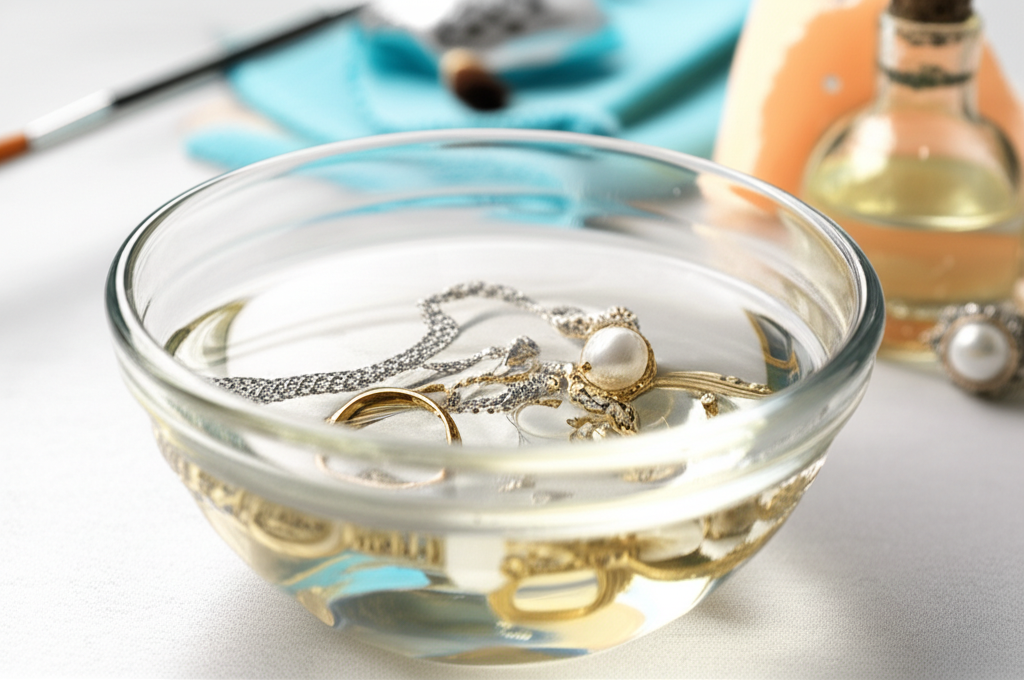
1. Mix the Solution: In your small bowl, combine equal parts white distilled vinegar and baking soda. You want to create a paste-like consistency or a slightly fizzy solution. Start with about 1/4 cup of vinegar and add baking soda gradually until you achieve the desired effect.
2. Submerge Your Jewelry: Carefully place your jewelry into the solution. Ensure all parts of the jewelry are submerged.
3. Soak: Let your jewelry soak for about 10-30 minutes. The exact time will depend on the level of tarnish or grime. For heavily tarnished items, you might need a slightly longer soak, but avoid leaving them in for hours.
This initial soak is crucial for loosening grime and tackling mild tarnish. It’s the foundation of making your jewelry sparkle again.
Step 2: Gentle Scrubbing for Stubborn Spots
While the soak loosens much of the buildup, some areas might require a little extra attention. A soft toothbrush or cotton swab is your best friend here, allowing you to gently work on intricate details and any remaining dullness.
1. Remove from Solution: Carefully remove one piece of jewelry at a time from the vinegar solution.
2. Scrub Gently: Use your soft toothbrush or a cotton swab to gently scrub away any remaining tarnish or dirt. Pay close attention to settings, clasps, and intricate designs. For stubborn spots, you can make a thicker paste of baking soda and water and apply it directly with the toothbrush.
3. Rinse: Rinse the jewelry thoroughly under warm running water to remove all traces of the cleaning solution and loosened debris.
Gentle scrubbing ensures that all the grime is removed without scratching or damaging the metal. This meticulous approach guarantees a superior shine.
Step 3: The Final Rinse and Drying
A thorough rinse is essential to ensure no vinegar residue remains on your jewelry, which could potentially cause damage over time. Proper drying is equally important to prevent water spots and maintain that brilliant shine.
1. Rinse Thoroughly: Rinse each piece of jewelry under cool or lukewarm running water. Make sure to rinse all nooks and crannies to remove any lingering vinegar or baking soda residue.
2. Pat Dry: Gently pat your jewelry dry with a soft, lint-free cloth. Avoid rubbing vigorously, as this can cause micro-scratches.
3. Air Dry (Optional): For intricate pieces, you can allow them to air dry completely on a soft cloth before wearing or storing. Ensure they are in a well-ventilated area.
Proper drying is the final touch that seals in the shine and protects your jewelry. It’s the last step before your pieces look brand new.
Tackling Tough Tarnish: The Vinegar Paste Method
Sometimes, a simple soak isn’t enough for heavily tarnished pieces. For those stubborn dark spots, a concentrated paste made from vinegar and baking soda can work wonders. This method provides more direct contact with the tarnish, allowing the acidic properties of vinegar to break it down more effectively.
Creating and Applying the Vinegar Paste
This paste acts like a targeted treatment for areas that need a little extra help. It’s a powerful yet simple way to tackle more persistent tarnish, making your jewelry gleam again.
1. Make the Paste: In a small bowl, mix baking soda with a small amount of white distilled vinegar to create a thick paste. Aim for a consistency similar to toothpaste.
2. Apply to Tarnish: Using a soft toothbrush or cotton swab, carefully apply the paste directly to the tarnished areas of your jewelry.
3. Let it Sit: Allow the paste to sit on the jewelry for about 5-10 minutes. You might see some gentle fizzing as it works.
4. Gently Scrub and Rinse: After the allotted time, gently scrub the areas with the toothbrush and then rinse the jewelry thoroughly under warm water.
This targeted approach is incredibly effective for reviving severely dulled items. It’s a testament to the power of simple ingredients when used correctly.
What NOT to Clean with Vinegar: Important Precautions
While cleaning jewelry with vinegar is a fantastic DIY solution, it’s not suitable for all types of jewelry. Knowing which materials to avoid is crucial to prevent irreversible damage. Always err on the side of caution if you’re unsure about a particular piece.
Materials to Avoid When Using Vinegar
Certain gemstones and metals can be damaged by the acidity of vinegar. Understanding these exceptions will save your precious items from potential harm. It’s vital to know the composition of your jewelry before attempting any cleaning.
Pearls and Opals: These organic gemstones are porous and can be etched or dulled by acidic solutions like vinegar.
Turquoise, Coral, and Lapis Lazuli: These are also porous and can be damaged by acids, leading to color loss or surface degradation.
Emeralds: While some emeralds are robust, many have natural inclusions or are treated, making them sensitive to acids.
Antique or Heavily Inlaid Jewelry: The adhesives or materials used in older or intricately designed pieces might not withstand vinegar.
Jewelry with Glued-On Stones: The adhesive can be weakened by vinegar, causing stones to loosen or fall out.
Porcelain or Enamel: Acid can etch or damage these finishes.
If your jewelry contains any of these materials, it’s best to opt for specialized cleaners or consult a professional jeweler. Always check the care instructions for your specific pieces if available.
Testing for Sensitivity: A Crucial First Step
Before you commit your entire piece to a vinegar bath, a small test is highly recommended, especially if you’re dealing with plated metals or unfamiliar materials. This simple precaution can prevent costly mistakes and ensure your jewelry remains in pristine condition.
Apply a small amount of the vinegar solution to an inconspicuous area, like the underside of a ring band or the back of a pendant. Let it sit for a minute, then rinse and dry. Inspect the area for any discoloration, dulling, or texture changes. If you notice any adverse reactions, do not proceed with cleaning the entire piece using vinegar.
Alternative Gentle Cleaning Methods for Sensitive Jewelry
If your jewelry isn’t suitable for vinegar cleaning, or if you prefer an even gentler approach, there are other effective DIY methods. These alternatives can still restore shine without the risk of acid damage, ensuring all your cherished pieces can be cared for properly.
The Mild Soap and Water Method
This is the most universally safe method for cleaning almost any type of jewelry, including those with sensitive stones or plated finishes. It’s simple, effective, and uses readily available household items.
1. Prepare Solution: Mix a few drops of mild dish soap (like Dawn) with warm water in a small bowl.
2. Soak: Place your jewelry in the soapy water for about 5-10 minutes.
3. Gentle Scrub: Use a very soft toothbrush or a cotton swab to gently clean the jewelry.
4. Rinse and Dry: Rinse thoroughly under warm water and pat dry with a soft, lint-free cloth.
This method is excellent for removing everyday dirt and oils without any risk of chemical damage. It’s a reliable go-to for everyday jewelry care.
Using Baking Soda and Water Paste (for Non-Tarnish Issues)
While vinegar and baking soda together tackle tarnish, baking soda and water alone can be used as a gentle abrasive for cleaning away surface grime and fingerprints without the acidity.
1. Create Paste: Mix baking soda with just enough water to form a soft paste.
2. Apply and Rub: Apply the paste to your jewelry and gently rub with your fingers or a soft cloth.
3. Rinse and Dry: Rinse thoroughly under warm water and dry with a soft cloth.
This method is effective for general cleaning of metals and stones that might be sensitive to acids. It buffs away surface dirt gently.
Keeping Your Jewelry Sparkling Between Cleans
Regular maintenance is key to keeping your jewelry looking its best and reducing the need for deep cleaning. Simple habits can make a big difference in preserving the shine and preventing excessive tarnish buildup. Proactive care is often easier than restoration.
Daily Habits for Jewelry Care
Incorporating a few simple habits into your daily routine can significantly extend the life and brilliance of your jewelry. These small efforts prevent the buildup of dirt and oils that lead to dullness.
Remove Jewelry Before Activities: Take off your jewelry before showering, swimming, exercising, cleaning with chemicals, or applying lotions and perfumes. Moisture, chemicals, and oils can all contribute to tarnishing and damage.
Wipe Down After Wearing: After each wear, gently wipe your jewelry with a soft, lint-free cloth. This removes oils and sweat, preventing them from sitting on the metal.
* Proper Storage: Store your jewelry separately in a jewelry box, pouch, or airtight bag. This prevents pieces from scratching each other and minimizes exposure to air and moisture, which cause tarnish. Consider using anti-tarnish strips for extra protection, especially for sterling silver.
Consistent, gentle care is the best way to maintain your jewelry’s beauty. These simple steps ensure your pieces remain stunning for years to come.
Understanding Tarnish and How to Prevent It
Tarnish is a natural process where metals react with sulfur compounds in the air, forming a dull layer on the surface. While some tarnish is inevitable, certain practices can slow down its formation, especially for silver and some plated metals.
The best prevention is minimizing exposure to tarnishing agents. This includes keeping jewelry away from humidity, perfumes, hairspray, and cleaning products. For sterling silver, which tarnishes more readily, storing it in an airtight container with an anti-tarnish strip is highly effective. Keeping your jewelry clean of oils and grime also helps slow down the tarnishing process.
Frequently Asked Questions (FAQ) About Cleaning Jewelry With Vinegar
Got more questions about using vinegar to clean your bling? We’ve got answers to some of the most common concerns people have when tackling this DIY cleaning method. It’s always good to be informed before you start.
Is it safe to clean my diamond rings with vinegar?
Yes, it is generally safe to clean most diamond rings with vinegar. Diamonds are very hard and resistant to chemicals. The vinegar will help remove dirt and oil buildup that can dull the sparkle of your diamonds. Just ensure the setting is also suitable for vinegar, as discussed in the precautions section.
Can I use apple cider vinegar instead of white vinegar?
While apple cider vinegar is also acidic, it’s generally not recommended for cleaning jewelry. White distilled vinegar is preferred because it’s clear and free from the colorants and sugars found in apple cider vinegar, which could potentially leave residue or affect certain gemstones. Stick to white vinegar for the best and safest results.
How often should I clean my jewelry with vinegar?
The frequency depends on how often you wear your jewelry and the conditions it’s exposed to. For everyday pieces, a gentle clean with soap and water weekly or bi-weekly is often sufficient. For jewelry that has become dull or tarnished, a vinegar cleaning can be done as needed, perhaps once a month or every few months. Avoid over-cleaning, especially with pieces that have sensitive components.
Will vinegar damage the gold plating on my jewelry?
Vinegar can potentially damage gold plating if used too frequently or for too long, especially if the plating is thin or worn. The acidity can erode the plating over time, exposing the base metal underneath. If you have plated jewelry, it’s safer to use a mild soap and water solution or consult a jeweler for specialized cleaning advice.
What if my jewelry still looks dull after cleaning with vinegar?
If your jewelry remains dull after cleaning, it might indicate a different type of buildup or severe tarnish that vinegar cannot fully address. For stubborn issues, consider a professional cleaning service. Alternatively, if the piece is suitable, a very fine jewelry polishing cloth might help buff out minor imperfections after cleaning.
Conclusion: Shine On with Your Sparkling Jewelry!
You’ve now got the insider knowledge on how to effectively clean jewelry with vinegar, transforming dull pieces back into radiant treasures. This simple, cost-effective method harnesses the natural power of acetic acid to cut through grime and tarnish, restoring the brilliance of your favorite accessories. Remember to always be mindful of the materials your jewelry is made from and perform a patch test if you’re unsure. By following these steps and incorporating good jewelry care habits, you can keep your collection looking its absolute best, shining brightly for every occasion. So go ahead, give your jewelry the sparkle it deserves with this genius and effective DIY solution!
