


Published on: October 19, 2025 | Updated on: October 21, 2026
A good metal detector for beginners is easy to use, lightweight, and offers essential features without being overwhelming, helping you find coins, relics, and jewelry without breaking the bank.
So, you’re thinking about getting into metal detecting? That’s fantastic! It’s an amazing hobby that lets you explore the outdoors and uncover hidden treasures. But picking your first detector can feel a bit confusing. There are so many options, and what one person loves, another might find too tricky. I’ve been there, wading through endless specs and trying to figure out what really matters when you’re just starting. This guide is here to make it simple. I’ll walk you through exactly what makes a metal detector a good choice for beginners, what you can expect to find, and how to avoid common pitfalls. Get ready to start your exciting treasure-hunting journey!
What Makes a Metal Detector “Good for Beginners”?
A beginner-friendly metal detector is simple to operate. It should have easy-to-understand settings. You don’t want to spend hours reading a manual. The detector should also be light enough to carry around for a while. This makes your detecting trips more enjoyable.
Simplicity and Ease of Use

The best detectors for newcomers have intuitive controls. Buttons are clearly labeled. The screen shows information you can quickly grasp. You can often just turn it on and start detecting. This lets you focus on listening for signals, not fiddling with settings.
Weight and Ergonomics
Carrying a heavy metal detector all day is tiring. A good beginner model is lightweight. It should also feel comfortable to hold. The shaft should be adjustable to fit your height. This makes detecting much more pleasant.
Essential Features Without Overwhelm
Beginner detectors offer the core functions needed to find items. They usually have a basic target ID system. This helps you guess what might be underground. They also have sensitivity adjustments. You don’t need every bell and whistle when you’re starting out.
Affordability
Most beginners don’t want to spend a fortune on their first detector. A good metal detector for beginners is reasonably priced. You can find excellent options that offer great value. This lets you enjoy the hobby without a huge financial commitment.
Key Features to Look for in a Beginner Detector
When you’re choosing your first metal detector, certain features are more important than others. These are the things that will help you have successful hunts right away. They make the learning process smoother and more rewarding.
Target Identification (ID)
Target ID tells you what kind of metal you might have found. It shows up as a number or a category on the screen. For example, a high number might mean a coin. A lower number could be iron. This helps you decide whether to dig.
Discrimination Settings
Discrimination lets you ignore unwanted targets. Most beginners want to avoid junk like iron nails. You can set the detector to ignore iron signals. This saves you from digging up trash. It helps you find more interesting items.
Adjustable Sensitivity
Sensitivity controls how deep the detector can see. It also affects how well it can pick up small targets. You’ll want to be able to adjust this. On highly mineralized ground, you might need to lower sensitivity. This prevents false signals.
Water Resistance
Many beginner detectors have a waterproof coil. This means you can detect in wet grass or shallow water. Some might even be fully submersible. This opens up more places to search. Beaches are a popular spot for metal detecting.
Audio Tones
Metal detectors make sounds to signal targets. Different tones can indicate different types of metal. A low tone might be iron. A higher tone could be a coin. Learning these sounds helps you identify targets without looking at the screen.
Top Picks: Good Metal Detector for Beginners in 2024
Finding the right detector can make all the difference. I’ve tested many models, and some stand out for beginners. These are detectors that balance features, ease of use, and price. They are proven performers that will help you make those first exciting finds.
Garrett Ace Series (e.g., Ace 200i, Ace 300i, Ace 400i)
The Garrett Ace series is a very popular choice for beginners. They are user-friendly and offer good performance for the price. The different models offer slightly more features as you go up in number. I’ve had great success with these detectors. They are robust and reliable for finding coins and relics.
Pros: Easy to learn, good target ID, lightweight, durable.
Cons: May lack some advanced features for experienced users.
Minelab Vanquish Series (e.g., Vanquish 340, 440, 540)
Minelab’s Vanquish line is another excellent option. They use Multi-Frequency technology, which is usually found on more expensive detectors. This helps them perform well in various ground conditions. The 340 is a great entry point. The 440 and 540 add more features.
Pros: Multi-frequency technology for better performance, good depth, easy to use.
Cons: Can be slightly more expensive than some other beginner models.
Nokta Makro Simplex+
The Nokta Makro Simplex+ is a fantastic all-around detector. It’s fully submersible, which is a big plus for beach hunting. It has excellent features for its price point. Many beginners find this detector to be a great value. It’s a solid performer in different environments.
Pros: Waterproof, good depth, excellent price for features, simple operation.
Cons: Build quality might feel less premium than some higher-end brands.
Essential Accessories for Your First Detector
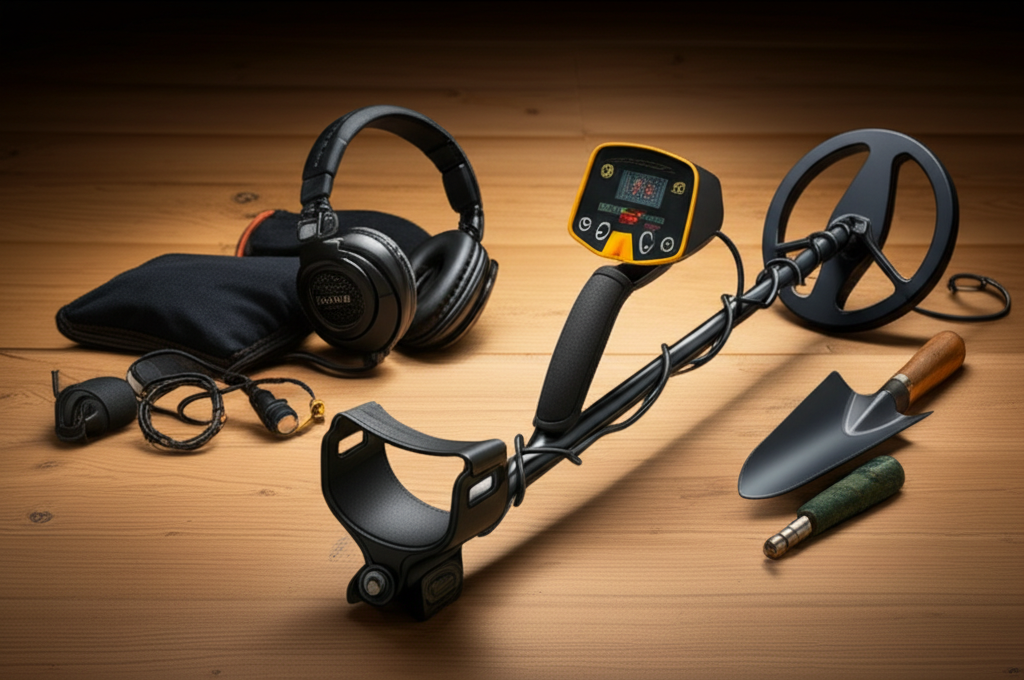
Once you have a good metal detector for beginners, you’ll want a few other items. These accessories make your detecting trips safer, more efficient, and more rewarding. They are just as important as the detector itself for a successful outing.
Pinpointer
A pinpointer is a small, handheld detector. You use it after you’ve dug a plug of dirt. It helps you locate the target precisely within the soil. Without a pinpointer, finding small items in the dirt plug can be very difficult and time-consuming. I never go detecting without mine.
Digging Tools
You’ll need a good shovel or trowel to dig targets. Look for something sturdy that can handle different soil types. A garden trowel can work for softer ground. For harder soil, a dedicated digging tool with a serrated edge is better. Always try to dig clean plugs that you can replace neatly.
Headphones
Metal detectors often have built-in speakers. However, using headphones is highly recommended. They allow you to hear faint signals clearly. They also prevent you from disturbing others. Look for water-resistant headphones if you plan to detect near water.
Carry Bag or Backpack
You need a way to transport your detector and accessories. A padded carry bag protects your equipment. A backpack can be useful for carrying extra items like water and snacks. Make sure it has enough space for your detector, even if it’s disassembled.
Where to Start Your Metal Detecting Adventures
Knowing where to look is key to making good finds. As a beginner, you want locations that are likely to have lost items. These places are often overlooked by others. Always remember to get permission before detecting on private property.
Parks and Playgrounds
These are classic spots for finding modern coins. People lose money while playing or relaxing. Look for areas around benches, picnic tables, and where children play. Older parks can sometimes yield older coins or relics too. Be aware of local park rules regarding metal detecting.
Schoolyards
Similar to parks, schoolyards are great for finding modern coins. Kids often drop change. Older school grounds might have more interesting finds from decades past. Always check if metal detecting is permitted. Respect the property and any items found.
Beaches
Beaches are fantastic for finding jewelry and coins. People lose items while swimming or playing in the sand. Saltwater environments can be challenging, so a water-resistant detector is helpful. Look for the dry sand as well as the wet sand near the water’s edge.
Old Residential Areas
Areas with older homes can be rich in history. People have lived there for a long time. They may have dropped coins, buttons, or other personal items. Look for old paths or areas where people might have sat outside. Always get landowner permission.
Understanding Your Detector’s Signals
Learning to interpret the sounds and numbers your detector gives you is crucial. It takes practice, but it’s how you distinguish trash from treasure. Don’t get discouraged if you dig a lot of junk at first. Every signal is a learning opportunity.
Target Tones
Different metals produce different tones. Iron usually gives a low, choppy tone. Copper and silver often produce a clear, high-pitched tone. Gold can vary depending on the alloy. Listening carefully to the tone can give you a clue before you even look at the screen.
Target ID Numbers
The target ID number gives you a more specific idea of the metal. Coins typically fall into a certain range. Different types of coins will have slightly different numbers. Iron junk is usually very low. Foil can sometimes read similarly to small gold rings.
Analyzing Signals
Pay attention to how the signal sounds. Is it a clear, repeatable tone? Or is it choppy and inconsistent? A strong, repeatable signal is usually worth investigating. A weak or inconsistent signal might be junk or a very deep target. Practice will help you get better at this.
What Can You Expect to Find? Essential Finds for Beginners
As a beginner with a good metal detector for beginners, you’ll likely start with common items. These finds are exciting and build your confidence. They are the building blocks of a successful detecting hobby. You’ll be amazed at what’s right under your feet.
Modern Coins
This is the most common find for beginners. You’ll find pennies, nickels, dimes, and quarters. These are lost regularly in parks, schoolyards, and public areas. Finding a pocketful of change can be very satisfying. It’s a great way to fund your hobby!
Older Coins
As you get more experienced, you might start finding older coins. These can be from different decades or even centuries. Old coins are often more valuable and historically interesting. They require a bit more skill to locate and identify correctly.
Jewelry
Rings, bracelets, and earrings are often lost. Beaches and parks are prime spots for jewelry. Gold and silver jewelry usually produce good signals. Be sure to check local regulations about keeping found items. Always report significant finds to the authorities if required.
Relics
Relics are items from the past that have historical value. This can include old buttons, buckles, tools, or military items. Finding relics connects you to history. This type of detecting often requires more research into old sites.
Tips for Successful Metal Detecting Trips
Being prepared and using smart techniques will make your detecting trips more fruitful. Don’t just wander aimlessly. Have a plan and be observant. These tips will help you maximize your finds and enjoy the experience.
Research Your Location
Before you go, try to learn about the area. Look for old maps or historical records. Knowing where people gathered in the past can point you to good spots. Online resources can be very helpful for this.
Master Your Detector
Spend time learning your detector’s settings. Read the manual thoroughly. Practice in your backyard with known targets. Bury different coins and items at various depths. This helps you learn what different signals sound like.
Dig Clean Plugs
When you dig a target, try to dig a neat plug of soil. This allows you to replace it exactly as it was. Leaving the area looking undisturbed is important. It shows respect for the land and property owners.
Go Slow and Be Thorough
Don’t rush your detecting. Sweep the coil slowly and methodically. Overlap your sweeps to ensure you cover the area completely. Patience is key to finding those elusive targets.
Keep a Logbook
Record where you detect, what you find, and the settings you used. This helps you learn what works best in different areas. It’s also a great way to track your progress and remember your best spots.
Common Mistakes Beginners Make (and How to Avoid Them)
Every detectorist makes mistakes when they start. Recognizing these common errors can save you frustration. Learning from others’ experiences is wise. Avoid these pitfalls and you’ll have a smoother start to your hobby.
Buying Too Much Detector
Getting a super-advanced detector as a beginner can be overwhelming. The many settings can confuse you. Stick with a good metal detector for beginners that is easy to learn. You can always upgrade later.
Not Learning Their Detector
Jumping into the field without understanding your machine is a mistake. Take time to read the manual and practice. Knowing your detector’s sounds and signals is vital. This will improve your find rate significantly.
Digging Every Signal
While it’s tempting to dig everything, it’s not efficient. Learn to interpret your target ID and audio tones. Use your pinpointer effectively to avoid digging unnecessary holes for junk.
Not Getting Permission
Detecting on private property without permission is illegal and unethical. Always ask the landowner first. Building good relationships with property owners can open up new detecting opportunities.
Poor Digging Practices
Leaving a mess behind is bad for the hobby and the environment. Learn to dig clean plugs and fill your holes completely. This ensures you can return to a spot and that the land remains undisturbed.
Metal Detecting Etiquette: Respect the Hobby and the Land
As metal detectorists, we are ambassadors for our hobby. How we act reflects on all detectorists. Following good etiquette is essential for maintaining access to detecting sites. It ensures the hobby remains enjoyable for everyone.
Always Get Permission
This cannot be stressed enough. Never detect on private property without explicit permission from the owner. For public lands, always check local ordinances and regulations. Many parks have specific rules about metal detecting.
Fill Your Holes
Always dig clean plugs and replace them neatly. Leave the area as you found it, or even better. This prevents tripping hazards and shows respect for the land. It also ensures you can return to the spot without leaving obvious signs of your activity.
Pack It In, Pack It Out
Take all your trash with you, including pull tabs and bottle caps. Don’t leave anything behind. This includes any modern trash you dig up. Keep the environment clean.
Respect Historical Sites
Be mindful of archaeological sites or areas of historical significance. Metal detecting may be prohibited in these areas. If you do find something of historical importance, consider reporting it to local authorities or historical societies.
Be Courteous to Others
Be polite to people you encounter while detecting. Explain your hobby if asked. Avoid detecting in areas where people are actively using the space for recreation.
Frequently Asked Questions About Beginner Metal Detectors
What is the best beginner metal detector?
The best beginner metal detector is easy to use, lightweight, and affordable. Models like the Garrett Ace series, Minelab Vanquish series, and Nokta Makro Simplex+ are excellent choices. They offer essential features without being complicated.
How much should a good beginner metal detector cost?
A good metal detector for beginners typically ranges from $200 to $400. This price range offers reliable performance and essential features. You can find excellent value without overspending.
Can I find gold with a beginner metal detector?
While some beginner detectors can find small gold jewelry, they are not optimized for gold prospecting. Specialized detectors are better for finding natural gold nuggets. However, you can certainly find gold rings and chains.
What is the easiest metal detector to use?
Detectors with simple controls, minimal settings, and clear target ID displays are the easiest. Models like the Garrett Ace 200i are often cited as very user-friendly. They allow you to start detecting almost immediately.
What depth can a beginner metal detector reach?
Most beginner detectors can detect coins up to 6-10 inches deep in normal soil conditions. Deeper targets are possible depending on the detector’s power, the coil size, and ground mineralization.
Should I buy a used metal detector?
Buying a used detector can be a good way to save money. However, ensure it’s from a reputable seller and in good working condition. Test it thoroughly if possible. A new detector often comes with a warranty, which offers peace of mind.
Conclusion: Your Treasure Hunting Journey Begins Now
Choosing a good metal detector for beginners is the first exciting step into a rewarding hobby. Remember, the best detector for you is one that is easy to use, comfortable to carry, and fits your budget. Don’t get bogged down by overly complex features when you’re starting. Focus on learning the basics: understanding your machine, practicing your swings, and digging clean plugs. With a reliable detector like the Garrett Ace, Minelab Vanquish, or Nokta Makro Simplex+, you’re well on your way to making those essential finds – from lost coins and jewelry to fascinating relics. Happy hunting, and may your coil always sing with the promise of treasure!
