


Published on: September 2, 2025 | Updated on: September 2, 2025
Learn how to clean jewelry at home with vinegar using this essential, genius guide. Discover the best methods for a sparkling clean without harsh chemicals, making your precious pieces shine like new.
Jewelry can lose its luster over time, becoming dull and grimy from everyday wear. Many people reach for expensive, specialized cleaners, but a surprisingly effective solution might already be in your kitchen pantry: vinegar. This humble household staple can work wonders on your precious metals and gemstones.
You might be wondering if vinegar is safe for all your treasured items or if it’s too harsh. Fear not! I’ll guide you through the simple, safe, and surprisingly effective process of cleaning jewelry at home with vinegar. Get ready to bring back the sparkle to your favorite necklaces, rings, and earrings with this essential genius method.
Why Vinegar is a Jewelry Cleaning Marvel
Vinegar, particularly white distilled vinegar, is a fantastic natural cleaner due to its acidic properties. This acidity helps to break down tarnish, grime, and residue that accumulate on jewelry, restoring its shine. It’s a cost-effective and readily available alternative to commercial cleaners, making it accessible for everyone.
This acidic power is what makes vinegar so effective at dissolving the oxidation that causes tarnish on metals like silver and gold. It also gently lifts away dirt and oils, leaving your jewelry looking brighter and cleaner.
The Science Behind Vinegar’s Cleaning Power

The acetic acid in vinegar is the active ingredient responsible for its cleaning prowess. Acetic acid is a weak acid, but it’s strong enough to react with and dissolve common types of tarnish, which are often metal sulfides or oxides. This reaction breaks down the dull layer, revealing the bright metal underneath.
When you soak your jewelry in a vinegar solution, the acid works its magic by chemically reacting with the tarnish. This process is similar to how some commercial cleaners work, but without the harsh chemicals that can sometimes damage delicate pieces.
What Types of Jewelry Can You Clean with Vinegar?
While vinegar is a powerful cleaner, it’s not suitable for every type of jewelry. Understanding which pieces can benefit from a vinegar bath is crucial to avoid damage. Generally, vinegar is best for solid gold, silver, and platinum jewelry without porous gemstones or intricate settings.
Always exercise caution with plated jewelry, costume jewelry, or pieces with softer stones. For these, a gentler cleaning method is usually recommended to preserve their integrity and finish.
Metals That Shine with Vinegar
Solid gold (10K, 14K, 18K, 24K), sterling silver, and platinum jewelry are excellent candidates for vinegar cleaning. These durable metals can withstand the acidity of vinegar without corroding or losing their finish. You’ll be amazed at how much brighter these metals become after a simple vinegar soak.
The vinegar effectively lifts away the dulling film, restoring the inherent brilliance of these precious metals. It’s a straightforward way to maintain the beauty of your everyday and special occasion pieces.
Gemstones and Materials to Avoid with Vinegar
It’s vital to know which materials and gemstones can be damaged by vinegar’s acidity. Porous gemstones like pearls, opals, turquoise, and coral can absorb the vinegar, leading to discoloration, etching, or cloudiness. Emeralds and antique diamonds can also be sensitive to acidic solutions.
Vinegar should also be avoided on plated metals, as it can strip away the plating, and on porous materials like unglazed ceramics or certain types of enamel. Always check the composition of your jewelry before attempting any cleaning.
Gather Your Supplies: What You’ll Need
Before you begin, ensure you have all the necessary items for a successful and safe jewelry cleaning session. Having everything ready will make the process smooth and efficient. The good news is that most of these items are common household essentials, meaning you likely already have them on hand.
This preparation ensures you can tackle the cleaning with confidence, knowing you have the right tools for the job. A little preparation goes a long way in achieving brilliant results.
Essential Cleaning Tools and Materials
To clean jewelry at home with vinegar, you will need:
White Distilled Vinegar: The primary cleaning agent.
Water: For diluting the vinegar and rinsing.
Small Bowl or Container: To hold the cleaning solution.
Soft Brush (like a Toothbrush): For gentle scrubbing.
Soft, Lint-Free Cloths: For drying and polishing.
Optional: Baking Soda: For tougher tarnish (use with extreme caution and knowledge).
Optional: Ammonia: For certain types of jewelry, but use with extreme caution and never mix with vinegar.
Having these readily available makes the process a breeze, turning a potentially daunting task into a simple DIY project.
Preparing Your Workspace
Set up your cleaning area in a well-lit space, preferably near a sink, to easily rinse your jewelry and dispose of used solutions. Protect your work surface with a towel or newspaper to catch any drips. This ensures a clean and organized process, minimizing mess and making cleanup easier.
A little organization upfront prevents frustration later, allowing you to focus on bringing that sparkle back to your treasured pieces.
Step-by-Step Guide: How to Clean Jewelry at Home with Vinegar
Now, let’s dive into the actual process. Following these steps carefully will ensure your jewelry is cleaned effectively and safely, restoring its original gleam without any risk of damage. This method is straightforward and yields impressive results.
Prepare to be amazed as your dull pieces transform into radiant treasures with this simple yet genius approach.
Step 1: Prepare the Vinegar Solution
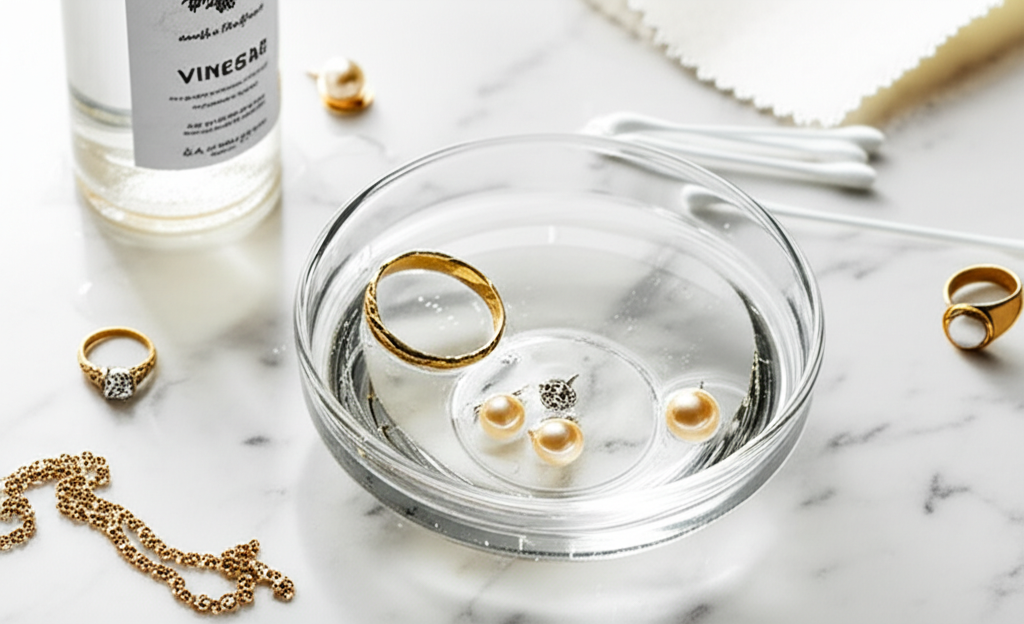
Mix equal parts white distilled vinegar and water in your small bowl. For example, use half a cup of vinegar and half a cup of water. This dilution helps to make the solution effective without being overly harsh on your jewelry.
This simple mixture is the foundation of your jewelry’s revival. It’s the perfect balance of cleaning power and gentleness.
Step 2: Soak Your Jewelry
Gently place your suitable jewelry items into the vinegar and water solution. Ensure the pieces are fully submerged. Let them soak for about 10-30 minutes, depending on the level of tarnish.
Avoid soaking delicate or porous items, as this could cause damage. For tougher tarnish, you might need a slightly longer soak, but keep an eye on it.
Step 3: Gentle Scrubbing
After soaking, use a soft-bristled toothbrush to gently scrub away any remaining tarnish or residue. Pay attention to crevices and settings where dirt tends to accumulate. This manual scrubbing is key to lifting away loosened grime.
Be thorough but gentle; you don’t want to scratch the metal or dislodge any stones. A soft brush is your best friend here.
Step 4: Rinse Thoroughly
Rinse each piece of jewelry under cool, running water to remove all traces of the vinegar solution and loosened dirt. Ensure no residue remains, as this can dull the shine or even cause irritation if worn. A thorough rinse is crucial for a brilliant finish.
This step washes away the cleaning agents and the grime they’ve dissolved. It’s like giving your jewelry a refreshing bath.
Step 5: Dry and Polish
Gently pat your jewelry dry with a soft, lint-free cloth. For extra shine, you can buff the pieces with a clean, dry section of the cloth or a jewelry polishing cloth. Proper drying prevents water spots and enhances the final gleam.
A final polish can make a world of difference, bringing out that mirror-like finish. Your jewelry should now look significantly brighter and cleaner.
Dealing with Tough Tarnish: Advanced Vinegar Techniques
Sometimes, standard soaking isn’t enough for heavily tarnished pieces. For those stubborn spots, a slightly more concentrated approach might be needed. However, it’s crucial to proceed with caution and understand the risks involved.
These advanced methods can revive even the dullest jewelry, but they require a bit more attention and care. Always test on an inconspicuous area first if you’re unsure.
The Baking Soda Paste Method (Use with Extreme Caution)
For severe tarnish on durable metals like sterling silver, a paste of baking soda and vinegar can be effective. Mix baking soda with just enough vinegar to form a thick paste. Apply this paste to the tarnished areas and let it sit for a few minutes before gently scrubbing with a soft brush.
Important Note: Baking soda is mildly abrasive. While generally safe for sterling silver, it can scratch softer metals or plated finishes. Always test first and use minimal pressure. This method is best reserved for heavy tarnish on robust items.
Vinegar and Ammonia (Never Mix Directly!)
Ammonia can also be a powerful cleaning agent for jewelry, but it should never be mixed directly with vinegar, as this creates toxic fumes. If you choose to use ammonia, it must be done in separate cleaning steps. For instance, you could clean with vinegar, rinse thoroughly, and then use a diluted ammonia solution for a different type of cleaning, followed by another thorough rinse.
This approach is generally for more experienced cleaners and requires significant ventilation and caution. Most DIYers will find the standard vinegar method sufficient for most needs.
When Not to Use Vinegar on Your Jewelry
As we’ve touched upon, vinegar isn’t a universal solution for all jewelry. Knowing when to avoid it is just as important as knowing how to use it. Certain materials and finishes can be irreversibly damaged by the acidic nature of vinegar.
Always prioritize the safety of your precious items. If in doubt, a professional jeweler is always the best recourse.
Protecting Plated and Costume Jewelry
Vinegar can easily strip away the plating on items like gold-plated or silver-plated jewelry. The acid erodes the thin layer of precious metal, exposing the base metal underneath, which can then tarnish or corrode. Similarly, costume jewelry often uses materials that are not designed to withstand acidic cleaners.
For these pieces, a mild soap and water solution or specialized cleaners for plated items are much safer alternatives. Gentle care is key to maintaining their appearance.
Gemstones Sensitive to Acids
Pearls, opals, turquoise, coral, amber, and certain treated or dyed gemstones are particularly vulnerable to vinegar. The acid can etch the surface, leach out color, or cause cloudiness. Even some softer natural stones like lapis lazuli can be affected.
Always research your gemstones before cleaning. If you’re unsure, it’s best to err on the side of caution and use a gentler cleaning method.
Alternative Home Cleaning Methods for Jewelry
If vinegar isn’t suitable for your specific jewelry pieces, or if you’re looking for other DIY options, there are several effective alternatives. These methods also utilize common household items and can help restore your jewelry’s sparkle safely. Exploring these options ensures you have a solution for every type of treasured item.
Having a few different methods in your DIY arsenal means you can cater to the unique needs of all your jewelry. This versatility is invaluable for any jewelry owner.
Mild Soap and Water Wash
For most jewelry, including those with sensitive stones or plating, a gentle wash with mild dish soap and warm water is an excellent option. Create a lather in a bowl, soak your jewelry for a few minutes, and then gently scrub with a soft brush. Rinse thoroughly and dry with a lint-free cloth.
This is often the safest and most recommended method for everyday cleaning and for pieces you’re unsure about. It effectively removes dirt and oils without risking damage.
The Power of Baking Soda (Used Differently)
While the baking soda and vinegar paste requires caution, baking soda alone can be used more safely for gentle cleaning. Mix baking soda with a small amount of water to create a paste, apply it to your jewelry with a soft cloth, and gently rub. Rinse thoroughly and dry.
This method offers a mild abrasive action that can help lift light tarnish without the harshness of direct acid. It’s a good middle-ground for items that need a bit more than soap and water but can’t handle vinegar.
Maintaining Your Jewelry’s Sparkle: Prevention is Key
Cleaning your jewelry is important, but preventing it from getting dirty and tarnished in the first place can save you a lot of effort. Simple habits can significantly extend the time between cleanings and keep your pieces looking their best. Proactive care is always better than reactive cleaning.
Adopting a few preventative measures can make a huge difference in the long-term beauty and wearability of your jewelry. Think of it as regular maintenance for your most cherished accessories.
Best Practices for Everyday Jewelry Care
Remove Jewelry Before Activities: Take off your rings when gardening, cleaning, or exercising. Remove necklaces and earrings before swimming or showering.
Avoid Chemical Contact: Keep jewelry away from perfumes, lotions, hairsprays, and cleaning chemicals, as these can cause damage or tarnish.
Store Properly: Store each piece of jewelry separately in a soft pouch, jewelry box, or airtight bag to prevent scratching and tarnishing from air exposure.
* Regular Inspection: Periodically check clasps, settings, and stones to ensure they are secure.
By following these simple tips, you can significantly reduce the rate at which your jewelry accumulates dirt and tarnish, keeping it cleaner for longer.
When to Seek Professional Cleaning
For very valuable pieces, intricate designs, delicate gemstones, or jewelry with significant damage or wear, professional cleaning by a reputable jeweler is the safest bet. They have specialized tools and knowledge to clean and assess your jewelry without risk.
Professionals can also perform repairs, check stone settings, and give your valuable pieces a comprehensive overhaul that DIY methods can’t replicate.
FAQ: Your Top Questions About Cleaning Jewelry with Vinegar Answered
Here are some common questions people have when considering using vinegar to clean their jewelry. I’ve compiled answers to help you feel more confident in your approach.
Can I use apple cider vinegar to clean jewelry?
While apple cider vinegar is also acidic, white distilled vinegar is generally preferred for jewelry cleaning. White vinegar is clearer and less likely to leave behind any residue or color. Stick to white distilled vinegar for the best and safest results.
How often should I clean my jewelry with vinegar?
You should clean your jewelry with vinegar as needed, typically when you notice a significant dulling or tarnish. For most people, this might be every few months to once or twice a year, depending on the type of jewelry and environmental factors. Over-cleaning can sometimes wear down metals.
Will vinegar damage my diamond jewelry?
Vinegar is generally safe for most diamonds, as diamonds are very hard and resistant to acid. However, if your diamond jewelry has other components like porous gemstones, plated settings, or intricate metalwork, it’s best to avoid vinegar or test it very carefully.
What should I do if my jewelry still looks dull after cleaning with vinegar?
If your jewelry remains dull after a vinegar soak and gentle scrub, it might be due to the type of tarnish or material. For persistent dullness on metals, a specialized jewelry polishing cloth might be more effective. For gemstones, it could indicate surface damage or a need for professional assessment.
Can I use vinegar on my gold-plated jewelry?
It is not recommended to use vinegar on gold-plated jewelry. The acidity can easily strip away the thin layer of gold plating, exposing the base metal underneath and potentially causing damage or discoloration. Opt for milder cleaning methods for plated items.
Conclusion: A Brighter Future for Your Beloved Jewelry
Learning how to clean jewelry at home with vinegar is an essential skill that can save you money and keep your treasured pieces looking their absolute best. This natural, acidic cleaner is a powerhouse for tackling tarnish and grime on many common metals. By following the simple steps outlined – preparing the solution, soaking, gentle scrubbing, rinsing, and polishing – you can effectively restore the brilliance to your gold, silver, and platinum jewelry.
Remember to always be mindful of the materials and gemstones your jewelry is made from. Avoid vinegar for porous stones, plated items, or anything you’re unsure about, opting for milder alternatives like soap and water. With this knowledge, you can confidently bring back the shine to your favorite accessories, ensuring they remain a source of joy for years to come.
