


Published on: September 3, 2025 | Updated on: September 3, 2025
Restore your treasured gold jewellery to its original brilliance with our expert guide on how to wash gold jewellery, ensuring a lasting shine and proper care.
Gold jewellery, those sparkling pieces that adorn us, can lose their luster over time due to everyday wear and tear. Dust, oils, lotions, and even tiny particles from the air can build up, dulling that precious gleam. It’s a common frustration for anyone who cherishes their gold pieces, but thankfully, restoring that essential shine is surprisingly simple. This guide will walk you through the easiest and most effective methods to wash gold jewellery safely, bringing back its original radiance and keeping it looking its best for years to come.
Why Does Gold Jewellery Lose Its Shine?
Your beloved gold pieces, whether a delicate chain or a statement ring, naturally accumulate grime from daily life. This buildup isn’t just superficial; it can actually dull the metal’s natural shine. Understanding these common culprits is the first step in proper care and effective cleaning.
The Culprits Behind Dull Gold

Several everyday elements contribute to your gold jewellery losing its sparkle. From the lotions you apply to the air you breathe, each can leave its mark.
Oils and Lotions: Our skin naturally produces oils, and personal care products like lotions, creams, and even hairspray contain oils and chemicals that can transfer to your jewellery. These create a film that dulls the gold’s surface.
Dirt and Dust: Airborne particles, dust, and general environmental grime can settle on your jewellery, getting into intricate settings and crevices. This accumulated dust acts like a fine sandpaper over time, dulling the finish.
Sweat and Body Residue: During physical activity or even just normal daily life, sweat and skin cells can adhere to your jewellery. These can react with the metal, especially if your gold jewellery contains alloys.
Makeup and Perfume: Cosmetics and perfumes often contain alcohol and other chemicals that can leave a residue on gold, diminishing its shine and potentially even causing damage to certain types of gold plating or softer alloys.
Chlorine and Harsh Chemicals: Exposure to chlorine in swimming pools, hot tubs, or cleaning agents can cause significant damage to gold jewellery. Chlorine can react with gold alloys, leading to discoloration and pitting.
By being mindful of these factors, you can proactively protect your gold jewellery and minimize the need for frequent deep cleaning.
The Essential Toolkit for Washing Gold Jewellery
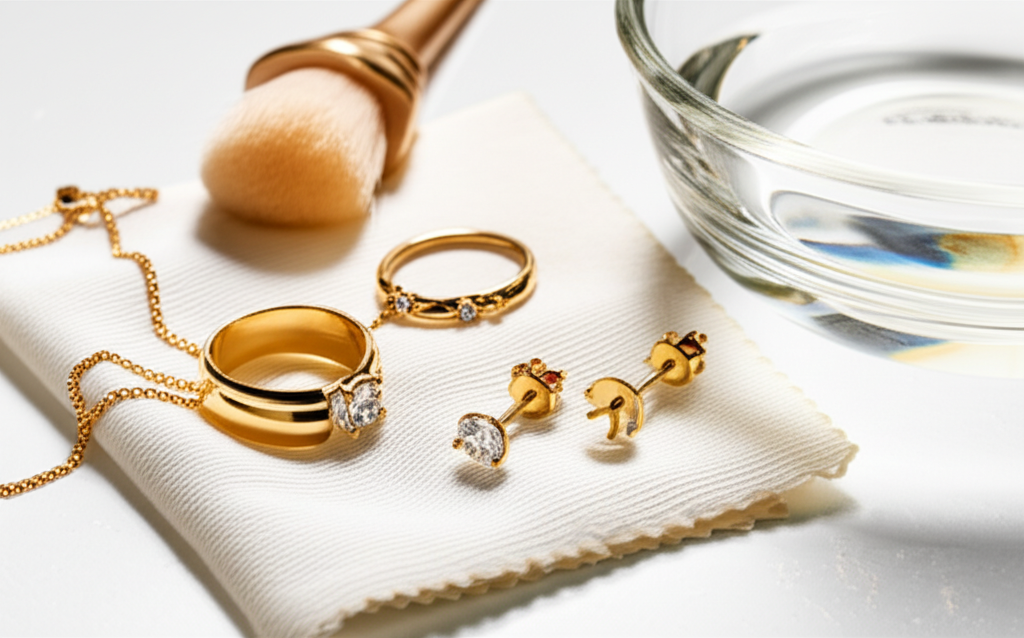
Before you start, gathering the right supplies is crucial for a safe and effective cleaning process. You don’t need specialized tools; most items are readily available in your home.
What You’ll Need
Having the correct items ensures you can clean your gold jewellery thoroughly without causing any damage. These are the basic essentials for a sparkling finish.
Mild Dish Soap: A gentle, non-moisturizing dish soap is your best friend for washing gold jewellery. Look for formulas free of harsh detergents or abrasive chemicals.
Warm Water: Not hot, not cold, but comfortably warm water is ideal for loosening dirt and oils.
Soft-Bristled Brush: An old, soft toothbrush or a specialized jewellery cleaning brush is perfect for gently scrubbing intricate areas. Avoid stiff bristles that could scratch.
Lint-Free Cloth: A soft microfiber cloth or a jewellery polishing cloth is essential for drying and buffing your gold pieces to a shine.
Small Bowl or Basin: To hold the warm, soapy water for soaking.
Optional: Ammonia or Rubbing Alcohol: For tougher grime, a diluted solution can be used, but with extreme caution.
Always ensure that any cleaning solution you use is specifically approved for use on gold jewellery.
The Gentle Soak: A Safe Starting Point
For most everyday dirt and grime, a simple soak in warm, soapy water is all your gold jewellery needs to regain its shine. This method is incredibly effective and poses no risk to your precious metals.
Step-by-Step Soaking Method
Follow these easy steps to give your gold jewellery a refreshing bath. This is the safest and most recommended method for regular cleaning.
1. Prepare the Soaking Solution: Fill a small bowl with warm water. Add a few drops of mild dish soap. Stir gently to create a slightly sudsy solution.
2. Submerge Your Jewellery: Carefully place your gold jewellery into the bowl. Ensure all pieces are fully submerged in the soapy water.
3. Let it Soak: Allow the jewellery to soak for about 15-20 minutes. This gives the warm water and soap time to break down oils and loosen dirt.
4. Gentle Agitation (Optional): If some areas still appear dull, you can gently swirl the water or use your fingers to move the jewellery around.
This initial soak is often enough to reveal a significant difference in your jewellery’s appearance.
Scrubbing Away Stubborn Grime
After the initial soak, some stubborn dirt might remain, especially in the intricate details of your gold pieces. A gentle scrub with a soft brush will help dislodge these particles.
Using a Soft Brush Effectively
The key here is gentleness. You want to remove dirt, not scratch the gold.
1. Rinse and Brush: Remove a piece of jewellery from the soapy water. Hold it under a gentle stream of running water or use a clean cloth dipped in the solution.
2. Targeted Scrubbing: Using your soft-bristled brush, gently scrub all surfaces of the jewellery. Pay special attention to clasps, settings, and any textured areas where dirt can hide.
3. Rinse Thoroughly: Once you’ve scrubbed, rinse the jewellery thoroughly under clean, running water to remove all soap residue.
This process ensures that even the most hidden grime is removed, leaving your gold looking pristine.
Drying and Polishing for Maximum Shine
Proper drying and polishing are the final, crucial steps to achieving that dazzling, like-new shine. This is where you bring out the full brilliance of your gold.
Achieving a Flawless Finish
The right drying technique prevents water spots and enhances the metal’s natural luster.
1. Gentle Drying: Pat your jewellery dry with a soft, lint-free cloth. Avoid rubbing vigorously, as this can still cause microscopic scratches over time.
2. Air Dry (Optional): For extra assurance, you can let your jewellery air dry completely on a clean, soft surface for a few minutes.
3. Buffing for Brilliance: Once completely dry, use a clean section of your lint-free cloth or a dedicated jewellery polishing cloth to gently buff the gold. This removes any lingering smudges and brings out a brilliant shine.
Regular, gentle polishing is key to maintaining that essential gleam.
When to Consider Stronger Solutions (With Caution)
While mild soap and water work wonders, some heavily tarnished or extremely dirty pieces might benefit from slightly stronger solutions. However, these methods require extra care and are not suitable for all types of gold jewellery.
Ammonia and Rubbing Alcohol: A Deep Clean Option
These solutions can be effective for removing tough buildup, but always test on an inconspicuous area first.
Ammonia Solution: Mix one part ammonia with six parts warm water. Soak the jewellery for no more than 10 minutes, then rinse thoroughly and dry as usual. Ammonia is excellent at cutting through grease and grime.
Rubbing Alcohol: A soak in rubbing alcohol (isopropyl alcohol) can also help remove residues and disinfect. Soak for a few minutes, then rinse and dry. Rubbing alcohol is effective for removing oily films.
Important Note: Never mix ammonia and bleach, as this creates toxic fumes. Also, avoid these stronger solutions for jewellery with porous gemstones (like pearls or opals), emeralds, or antique pieces, as they can cause damage. Always consult with a jeweller if you are unsure.
What to AVOID When Washing Gold Jewellery
Just as important as knowing what to do is knowing what not to do. Certain substances and tools can irrevocably damage your gold jewellery, turning a simple cleaning task into a costly mistake.
Common Mistakes to Steer Clear Of
Preventing damage is paramount when caring for your precious gold.
Abrasive Cleaners and Scrubbers: Never use toothpaste, baking soda paste, scouring pads, or harsh brushes. These are too abrasive and will scratch the gold surface, dulling its shine permanently.
Harsh Chemicals: Avoid bleach, chlorine, acetone, and strong household cleaners. These chemicals can react with gold alloys, causing discoloration, pitting, or even dissolving solder points.
Ultrasonic Cleaners (Use with Caution): While effective for many jewellery types, ultrasonic cleaners can loosen stones in their settings or damage certain gemstones if used improperly or too frequently. If your gold has loose stones, avoid ultrasonic cleaners altogether.
Over-Soaking: Leaving gold jewellery in strong cleaning solutions for too long can potentially damage it. Stick to recommended soaking times.
Skipping the Rinse: Always rinse jewellery thoroughly after cleaning to remove all traces of soap or cleaning solution, which can leave a dull film if left behind.
Following these avoidance tips will help ensure your gold jewellery remains beautiful for generations.
Special Considerations for Different Gold Types and Gemstones
Not all gold is created equal, and the presence of gemstones adds another layer of complexity to cleaning. Understanding these nuances ensures you clean your specific pieces safely and effectively.
Caring for Specific Jewellery Types
The purity of gold and the types of stones set in your jewellery dictate the best cleaning methods.
Pure Gold (24K): Pure gold is very soft and malleable, so it’s rarely used for jewellery on its own. If you have pure gold pieces, they are best cleaned with just warm water and a very gentle touch.
Gold Alloys (18K, 14K, 10K): Most gold jewellery is alloyed with other metals (like copper, silver, or zinc) to increase its durability and alter its colour. These alloys are more susceptible to tarnishing and chemical reactions than pure gold. Mild soap and water are generally safe, but be cautious with stronger solutions.
Gold-Plated or Vermeil Jewellery: These pieces have a thin layer of gold over a base metal. Harsh cleaning, abrasive scrubbing, or strong chemicals can easily wear away the plating, exposing the base metal underneath. Stick to very gentle washing with mild soap and water, and avoid vigorous scrubbing or prolonged soaking.
Jewellery with Soft or Porous Gemstones: Stones like pearls, opals, turquoise, coral, and emeralds are delicate. They can be damaged by chemicals, heat, or even vigorous scrubbing. It’s often best to clean these pieces by wiping them with a damp cloth or consulting a professional jeweller. Diamonds, sapphires, and rubies are much harder and can typically withstand gentle cleaning methods.
When in doubt, always err on the side of caution and opt for the mildest cleaning method.
How Often Should You Wash Gold Jewellery?
The frequency of cleaning depends on how often you wear your jewellery and the conditions it’s exposed to. Regular maintenance is key to preserving its shine.
Maintaining the Gleam
Striking a balance between regular cleaning and over-cleaning is important.
Everyday Wear: If you wear a piece daily, a quick rinse and polish with a soft cloth once a week can help prevent significant buildup.
Occasional Wear: For jewellery worn less frequently, a thorough wash every few months or whenever it appears dull is usually sufficient.
* Exposure to Elements: If your jewellery has been exposed to lotions, perfumes, sweat, or harsh environments, it’s a good idea to clean it soon after.
Listen to your jewellery; if it looks dull, it’s time for a gentle wash.
Frequently Asked Questions About Washing Gold Jewellery
Here are answers to some common questions people have about cleaning their gold pieces.
Your Gold Cleaning Questions Answered
Q1: Can I use toothpaste to clean gold jewellery?
A1: No, toothpaste is abrasive and can scratch the gold’s surface, dulling its shine. It’s best to stick to mild dish soap.
Q2: Is it safe to clean gold jewellery in the dishwasher?
A2: It is generally not recommended. Dishwashers use harsh detergents and high heat, which can damage gold jewellery, especially pieces with gemstones or intricate settings.
Q3: What should I do if my gold jewellery has loose stones?
A3: If your gold jewellery has loose stones, avoid ultrasonic cleaners and vigorous scrubbing. A gentle soak in mild soapy water and a very light touch with a soft brush is the safest approach. For very loose stones, it’s best to consult a professional jeweller.
Q4: How can I clean jewellery with pearls or opals?
A4: Pearls and opals are porous and sensitive. Clean them by gently wiping with a slightly damp, soft cloth. Avoid soaking them in any cleaning solution, as this can damage their luster and setting.
Q5: My gold jewellery looks dull even after washing. What else can I try?
A5: If mild soap and water don’t restore the shine, ensure you rinsed thoroughly. You can try a very dilute ammonia solution (1 part ammonia to 6 parts water) for a maximum of 10 minutes, followed by thorough rinsing and buffing with a soft cloth. However, always test this on an inconspicuous area first and avoid it for delicate gemstones.
Q6: Can I use a jewellery polishing cloth on all my gold jewellery?
A6: Yes, a soft jewellery polishing cloth is generally safe for most gold jewellery and is excellent for buffing away fingerprints and restoring shine without being abrasive.
Conclusion: Keep Your Gold Gleaming
Washing gold jewellery is a straightforward process that can make a world of difference in its appearance. By using gentle, readily available household items like mild dish soap and warm water, and employing soft brushes and lint-free cloths, you can effectively remove daily buildup and restore that essential shine. Remember to be cautious with stronger cleaning agents and always consider the type of gold and any gemstones your piece holds. Regular, gentle care will ensure your gold jewellery remains a treasured part of your collection for years to come, reflecting light and beauty with every wear.
Final Verdict: Simple Steps for Lasting Shine
The process of how to wash gold jewellery is far simpler than many people imagine, requiring minimal tools and effort. By adhering to the gentle methods outlined, you can easily maintain the brilliance of your gold pieces. A routine of soaking, gentle scrubbing, thorough rinsing, and careful drying with a soft cloth is all it takes. This ensures your gold jewellery not only looks its best but also remains free from damaging residues, preserving its value and beauty for a lifetime of enjoyment.
