


Published on: November 4, 2025 | Updated on: November 4, 2025
Metal Detector Coins: Essential Hidden Finds
Discovering coins with your metal detector is incredibly rewarding. This guide covers everything you need to know to find those essential hidden coins, from choosing the right gear to mastering detection techniques. Get ready to unearth history and valuable treasures right in your backyard.
Metal detecting is a hobby that connects you with history and the thrill of discovery. Many people start this hobby hoping to find old coins. These metal detector coins are often overlooked but are some of the most exciting finds. They tell stories from the past. This guide will show you how to find them. We will cover the best tools and tips. You’ll learn what makes a coin find special. Get ready to find your own piece of history.
Why Metal Detector Coins Are So Special
Coins found with metal detectors hold a special place in the hobby. They are tangible links to people who lived long ago. Each coin has a story to tell about its time. Finding a coin can be more exciting than finding other items. It’s like holding a piece of history in your hand. These finds connect us to the past in a very personal way.
Coins are often found in many places. They can be from different countries and time periods. This makes every find a potential historical discovery. The thrill of unearthing a forgotten piece of currency is a major draw for many detectorists. It’s a direct connection to the lives and economies of previous generations.
Choosing the Right Metal Detector for Coin Hunting
Picking the right metal detector is key for finding coins. Different detectors work best in different situations. For coin hunting, you want a detector that is sensitive to small targets. It should also be able to ignore junk targets. Many detectors have special modes for coin shooting. Some are better on wet sand, while others excel in parks.
Consider the frequency of the detector. Higher frequencies are good for small, thin coins. Lower frequencies can detect deeper. A good all-around coin detector will balance these features. Brands like Minelab, Garrett, and Fisher offer excellent options for coin hunters. Researching specific models based on your budget and target locations is a smart move.
Key Detector Features for Coin Finds
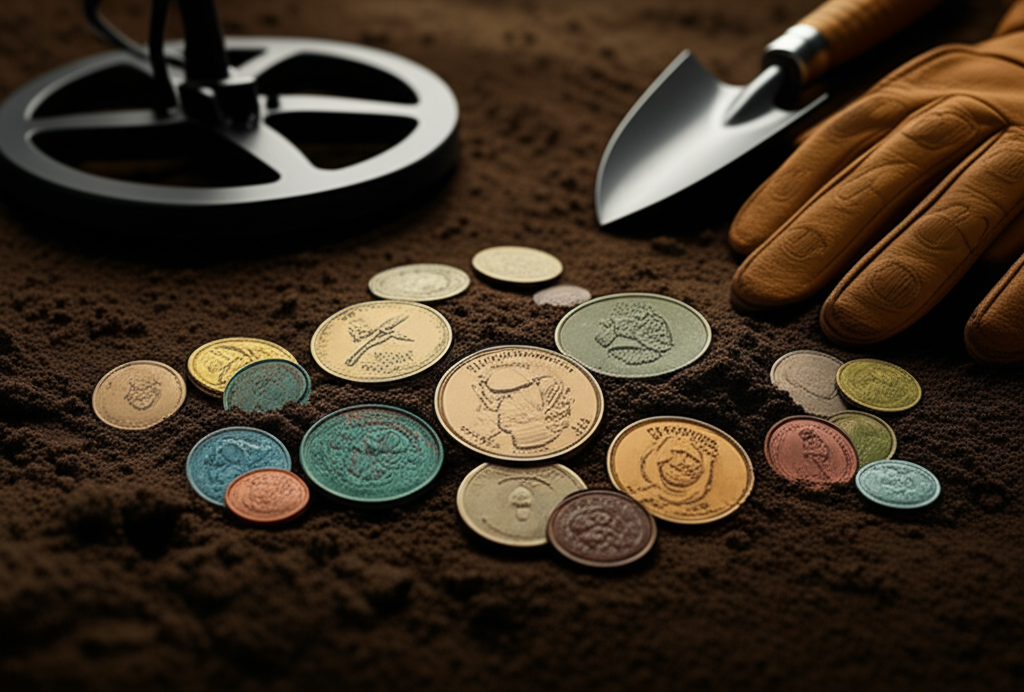
When looking for a coin-finding detector, certain features stand out. Look for adjustable discrimination settings. This lets you filter out iron trash. Target ID numbers are also very helpful. They give you a hint of what you might have found. A good ground balance feature helps ignore mineralized soil. This is common in many areas.
Depth capability is also important. You want a detector that can find coins buried deeper than just a few inches. Some detectors come with multiple search coils. A smaller coil is great for trashy areas. A larger coil can cover more ground faster. Consider a detector with a comfortable design for long detecting days.
Essential Accessories for the Coin Hunter
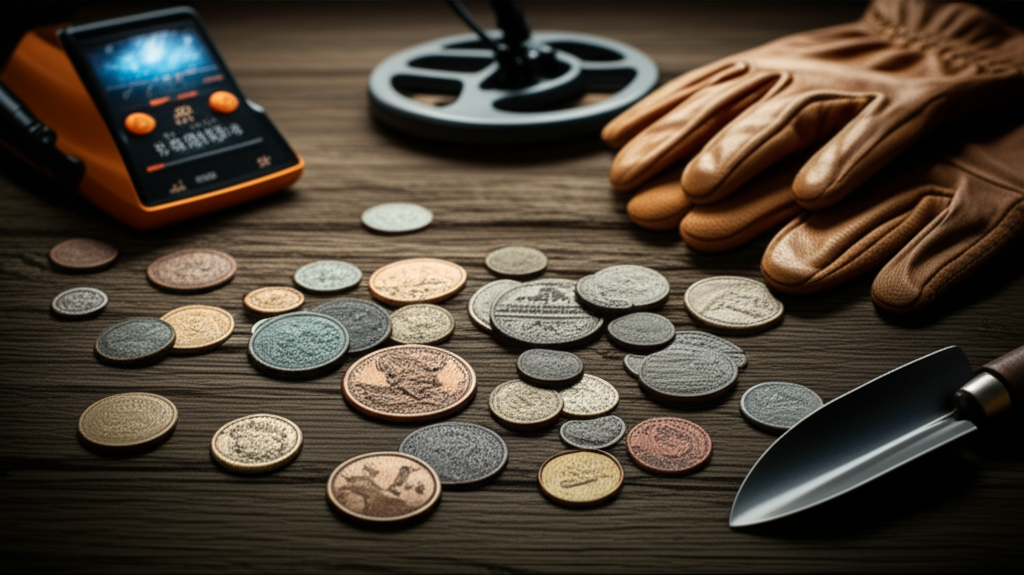
Beyond the detector, a few accessories make coin hunting easier. A good pinpointer is a must-have. It helps you locate the exact spot of your target in the dug plug. This saves a lot of time and effort. Digging tools are also crucial. A sturdy trowel or a specialized digging tool is needed.
A finds pouch is handy for keeping your treasures safe. You’ll also want headphones. They help you hear faint signals and keep your finds private. A pouch for trash is also essential. We should always pack out what we pack in. This keeps the hobby enjoyable for everyone.
The Power of a Pinpointer
A pinpointer is a small, handheld detector. It’s used after you dig a plug of soil. You sweep the pinpointer over the removed soil and the hole. It beeps faster as it gets closer to the target. This is incredibly useful for finding tiny coins. Without one, you might spend ages sifting through dirt.
Using a pinpointer speeds up recovery significantly. It also helps you dig less, which is better for the ground. Most serious detectorists consider a pinpointer an indispensable tool. It turns a frustrating search into a quick find. Look for ones that are waterproof if you plan to detect near water.
Understanding Metal Detector Signals for Coins
Metal detectors make sounds to tell you about targets. These sounds are called signals. Different signals mean different things. A smooth, clear tone often means a good target like a coin. A choppy or broken signal might be junk metal. Learning to interpret these signals is a skill. It comes with practice.
Your detector will likely show a number on a screen. This is called Target ID. Different metals give different numbers. Coins usually fall into a specific range of numbers. You will learn what numbers typically represent coins in your area. This helps you decide whether to dig.
Decoding Target ID Numbers
Target ID numbers help identify what’s under your coil. They are not always exact. Soil conditions and target orientation can change them. However, they provide a good starting point. For example, US pennies might read in the 70s. Nickels often fall in the 30s-40s. Older silver coins can read higher.
It’s important to learn your detector’s Target ID chart. What a penny reads on one detector might differ on another. Digging a few known targets can help you learn. This practice builds confidence in your interpretations. Don’t rely on Target ID alone. Always listen to the audio tone.
Where to Hunt for Metal Detector Coins
The best places to find coins are where people have gathered over time. Old parks, schoolyards, and fairgrounds are great spots. Beaches can be very productive, especially near the water line. Old home sites and farm fields are also excellent. Always get permission before detecting on private property.
Public parks are often rich in coin spills. People lose coins while walking or sitting. Beaches are dynamic environments. Tides can uncover and bury targets regularly. Old roads and pathways are also good bets. Look for areas where people might have dropped money historically. Respect local laws and regulations regarding metal detecting.
Beach Hunting for Lost Change
Beaches are fantastic for finding lost coins. People drop them while walking on the sand. The waves can wash them closer to the surface. You might find modern change or older currency. Some beaches have a history of shipwrecks, offering even older finds.
Detecting on wet sand can be challenging. You may need a detector that can handle saltwater. Waterproof detectors and coils are beneficial here. Look for areas where people relax or play. The surf line is often a productive zone. Be aware of tides and changing conditions.
Techniques for Maximizing Coin Finds
Effective techniques can greatly increase your coin finds. Overlapping your sweeps ensures you cover the area thoroughly. Slow and steady wins the race; moving your coil too fast can miss targets. Learn to read the ground and adjust your detector accordingly. Pinpointing accurately is crucial for quick recovery.
Practicing in your yard with known targets helps. Bury coins and other items. Then, try to find them with your detector. This builds your understanding of signals. Patience is a virtue in metal detecting. Don’t get discouraged by trash finds. Every coin is a victory.
The Art of the Plug Cut
Making a clean plug cut is important for minimizing your impact. Use a sharp digging tool. Cut a neat circle or horseshoe shape in the turf. Lift the plug carefully. Place it to the side. Then, use your pinpointer to find the target. Once found, retrieve the coin.
Replace the plug carefully, making sure it sits flat. This helps the grass grow back quickly. Good digging etiquette is essential. It keeps areas open for detecting. Always fill your holes completely. Leave the area looking as if you were never there.
Identifying Your Coin Finds
Once you’ve dug up a coin, the next step is identification. Clean it gently. Avoid harsh scrubbing, which can damage old coins. For modern coins, a little water and a soft brush usually suffice. For older coins, research cleaning methods carefully. Sometimes, leaving them as found is best.
You can use online resources or coin books to identify your finds. Look at the date, mint mark, and design. These details will tell you the coin’s origin and age. Some old coins might be valuable. Others are more historically interesting than monetarily.
When to Seek Professional Advice
If you find a coin that looks very old or unusual, you might have something special. Before cleaning it extensively, consider consulting an expert. Local coin dealers or numismatic societies can offer advice. They can help determine its authenticity and value. Improper cleaning can significantly reduce a coin’s worth.
Remember that most detected coins are common currency. However, every find is a piece of history. Enjoy the process of discovery and learning. The story behind the coin is often as valuable as its monetary worth.
Common Metal Detector Coin Mistakes to Avoid
Beginners often make a few common mistakes. One is digging every single signal. Learning to differentiate good signals from trash is vital. Another mistake is moving the coil too fast. This causes you to miss targets. Not using a pinpointer is also a common error.
Not getting permission to detect on private land is a big mistake. It can lead to legal trouble. Also, damaging the ground with poor digging practices is frowned upon. Always be a responsible detectorist. Respect the land and its owners.
The Thrill of the Hunt: Metal Detector Coins
Finding metal detector coins is a journey. It’s about exploration, history, and the sheer joy of discovery. Each unearthed coin is a small victory. It’s a connection to the past. The process involves learning about your equipment. It also means understanding where to look. Most importantly, it’s about patience and persistence.
The next time you head out with your metal detector, keep your eyes peeled for those tell-tale signals. Those essential hidden finds are waiting beneath the surface. Happy hunting!
Frequently Asked Questions About Metal Detector Coins
What is the best metal detector for beginners looking for coins?
For beginners, a user-friendly detector with good coin-detecting capabilities is ideal. Models like the Garrett AT Pro or Minelab Vanquish series are often recommended. They offer a good balance of performance and ease of use.
How deep can a metal detector find coins?
The depth a detector can find coins depends on the detector, coil size, and ground conditions. A good detector can find coins buried from 6 inches to over a foot deep. Smaller, shallower coins require more sensitive detectors and coils.
Should I clean old coins I find with my metal detector?
It’s best to be cautious when cleaning old coins. Aggressive cleaning can damage them and reduce their value. For very old or potentially valuable coins, seek advice from a coin expert before cleaning.
What are the best places to hunt for coins with a metal detector?
Old parks, schoolyards, beaches, old home sites, and fairgrounds are excellent places to hunt for coins. These are areas where people have historically gathered and dropped money. Always get permission before detecting on private property.
Can I use my metal detector in my local park?
Many local parks allow metal detecting, but rules vary. It’s crucial to check with your local authorities or park management. Some parks may have restrictions or require permits. Always follow local regulations.
What is a “coin spill” in metal detecting?
A coin spill happens when a large number of coins are lost in one spot. This often occurs when a coin purse or pocket breaks. They can be found in areas where people sat or walked frequently.
How do I know if a signal is a coin or trash?
Learning to interpret signals takes practice. Look at the Target ID number and listen to the audio tone. Smooth, consistent tones and specific Target ID ranges often indicate coins. Choppy signals usually mean trash. Digging a few targets will help you learn.
