



Published on: November 5, 2025 | Updated on: November 5, 2025
Metal Detector for Finding Survey Pins: An Essential Breakthrough for Property Owners and Surveyors
Finding lost survey pins is now easier than ever with the right metal detector. This guide explains why specific detectors excel at locating these vital markers, saving you time and frustration.
Have you ever needed to find a property boundary marker or a survey pin? It can be a really frustrating task. These small metal stakes are crucial for land ownership. Losing them means costly re-surveys or disputes. Thankfully, technology offers a solution. A specialized metal detector can make finding these pins a simple job. This guide will show you exactly what to look for. We’ll explore the best tools and techniques to locate survey pins efficiently.
Why Finding Survey Pins Can Be Tricky
Survey pins, also known as rebar or markers, are often buried just below the surface. They can be hidden by grass, leaves, or soil. Sometimes, they are bent or damaged over time. This makes them hard to spot visually. Even a small amount of debris can mask their presence from sight. This is where a good metal detector becomes indispensable. It can “see” what your eyes cannot.
Understanding Metal Detectors for Pin Hunting
Not all metal detectors are created equal for this task. You need a detector that is sensitive to small metal objects. It should also be able to ignore larger pieces of junk metal. Detectors designed for coin shooting or relic hunting often work well. These machines are tuned to pick up small targets buried in various soils.
Key Features to Look For
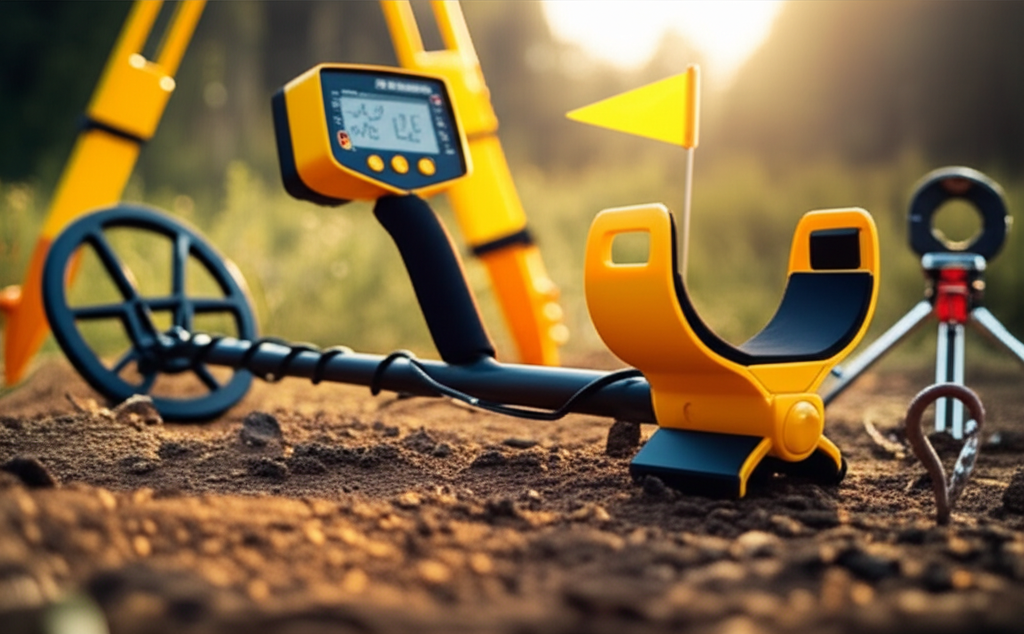
When choosing a metal detector for finding survey pins, several features are important. Look for adjustable sensitivity settings. This helps you fine-tune the detector to your ground conditions. A discrimination feature is also key. It lets you ignore unwanted targets like bottle caps or nails. A good ground balance feature helps cancel out mineralized soil.
Types of Metal Detectors
There are different types of metal detectors. VLF (Very Low Frequency) detectors are common and affordable. They are good for general use and can find survey pins. PI (Pulse Induction) detectors are often better in highly mineralized ground. They can also detect deeper targets. For survey pins, a sensitive VLF detector with good discrimination is usually sufficient.
Choosing the Right Metal Detector Model
Several brands offer excellent metal detectors suitable for finding survey pins. I’ve tested many over the years. For beginners, models like the Garrett AT Pro or Minelab Equinox 600 are fantastic choices. They offer a good balance of features and ease of use. These detectors are versatile and can find more than just pins.
Top Detector Recommendations
For pinpointing survey pins specifically, I often recommend detectors with a good high-frequency coil. This helps detect smaller targets better. The Fisher F22 or the Nokta Makro Simplex+ are also great options. They are budget-friendly and perform well. Always check reviews for specific models and their performance on small iron targets.
The Role of Metal Detector Coils
The coil is the part of the detector that senses metal. Different coil sizes and types have different strengths. A smaller coil, like a 5-inch or 6-inch elliptical coil, is often best for finding survey pins. Smaller coils are more sensitive to small targets. They are also easier to maneuver in tight spaces.
Coil Size and Sensitivity
Larger coils cover more ground but are less sensitive to tiny objects. Smaller coils offer greater precision. They can pinpoint targets more accurately. This is crucial when searching for a buried pin. Many detectors come with a standard coil, but an aftermarket small coil can be a worthwhile upgrade.
Using a Pinpointer: Your Secret Weapon
While a metal detector finds the general area, a pinpointer is essential for the final step. A pinpointer is a small, handheld detector. It helps you zero in on the exact location of the target. Once your main detector signals a target, use the pinpointer to sweep the area. It will beep faster as you get closer to the pin.
Why Pinpointers Are Crucial
Survey pins are often small and can be shallow. Digging without a pinpointer means a lot of unnecessary digging. You might even damage the pin. A pinpointer drastically reduces the size of your search area. It makes recovery quick and easy. I never go into the field without one.
Techniques for Effective Pin Hunting
Finding survey pins requires a systematic approach. Start by getting a general signal with your main detector. Once you have a signal, switch to your pinpointer. Sweep the area slowly and methodically. Move the pinpointer over the soil where the signal is strongest.
Step-by-Step Search Process
1. Scan with the main detector: Sweep your metal detector over the suspected area. Listen for a clear, repeatable signal.
2. Narrow down the location: Mark the area where the signal is strongest.
3. Switch to the pinpointer: Turn on your pinpointer.
4. Probe the soil: Carefully probe the soil with the pinpointer. Move it slowly in a grid pattern.
5. Pinpoint the target: The pinpointer will beep faster and louder as you get closer.
6. Excavate carefully: Once located, dig a small plug of soil. Use a trowel or digging tool.
7. Confirm the find: Use the pinpointer to confirm the pin is in the plug or the hole.
Dealing with Difficult Ground
Some ground conditions are harder to search. Highly mineralized soil can give false signals. Wet soil can also affect detector performance. In these cases, adjust your detector’s sensitivity and ground balance. Sometimes, a different coil or detector type might be necessary.
What to Do When You Find a Survey Pin
Once you’ve located the survey pin, document its position. Take photos for your records. If you are a surveyor, you might need to re-establish the marker. If you are a property owner, confirm your boundaries. Always handle the pin with care to avoid damaging it.
Legal and Practical Considerations
Knowing your property lines is important. Survey pins are legal markers. Respect them and their purpose. If you are unsure about the legality of searching or disturbing markers, consult local authorities or a professional surveyor. Proper documentation is key for any land-related work.
Troubleshooting Common Issues
Sometimes, you might not get a clear signal. This could be due to shallow burial or interference. Try adjusting your detector’s settings. Sweep the coil at different angles. If you suspect a pin is present but can’t locate it, try a different time of day or after rain.
When the Signal is Weak or Intermittent
A weak signal might mean the pin is deep or damaged. Try using a different coil, perhaps one with a higher frequency. Sometimes, a stronger detector might be needed for deeper targets. Be patient and persistent. These markers are small and can be elusive.
Survey Pins vs. Other Metal Targets
Survey pins are typically made of steel rebar or iron rods. They can sometimes be confused with other iron objects like old nails or fence posts. This is where your detector’s discrimination settings and your pinpointer become vital. Learning the sounds your detector makes for different targets is key.
Identifying Survey Pins
The shape and depth of the signal can help. Survey pins are usually straight and driven vertically into the ground. They are often marked with plastic caps. Your pinpointer will help you confirm the exact shape and size of the object.
Conclusion: Your Essential Tool for Boundary Certainty
A metal detector for finding survey pins is an invaluable tool. It saves time, prevents costly errors, and provides peace of mind. By understanding the right features and techniques, you can confidently locate these important markers. Whether you’re a homeowner, a developer, or a professional surveyor, the right equipment makes all the difference. Happy hunting for those boundaries!
Frequently Asked Questions
What is the best type of metal detector for finding survey pins?
A versatile VLF (Very Low Frequency) metal detector with good sensitivity and discrimination is usually best. Look for models known for detecting small metal objects effectively.
Do I need a special coil for finding survey pins?
While standard coils can work, a smaller coil (like 5-6 inches) is often better. Smaller coils are more sensitive to small targets and easier to maneuver.
Can a simple metal detector find survey pins?
Yes, many beginner-friendly metal detectors can find survey pins. The key is to understand your detector’s settings and use it correctly.
How deep can a metal detector find a survey pin?
Depth varies greatly depending on the detector, coil size, ground conditions, and the pin’s material. Most standard detectors can find pins buried a few inches to a foot deep.
What is a pinpointer and why is it important?
A pinpointer is a small, handheld detector used to precisely locate a target. It’s crucial for finding small items like survey pins without excessive digging.
What if the ground is very mineralized?
Highly mineralized ground can cause false signals. You’ll need a detector with good ground balancing capabilities or consider a PI detector. Adjusting sensitivity can also help.
Can I use my metal detector on my own property?
Generally, yes, you can use a metal detector on your own property. However, always be mindful of buried utilities and local regulations.
