



Published on: November 5, 2025 | Updated on: November 5, 2025
Metal Detector for Gold Prospecting: Your Ultimate Essential Find
Find gold with the right metal detector for gold prospecting. This guide covers everything you need to know. It helps you choose the best tool to start your gold hunting adventure and make amazing finds.
Gold prospecting is an exciting adventure. Many people dream of finding their own gold nuggets. But finding gold can be tricky. You need the right tools and knowledge. A good metal detector is the most important tool for any gold prospector. This guide will help you understand what makes a metal detector great for finding gold. We will explore the features you need and how to use them. Get ready to uncover the secrets to successful gold prospecting.
Why Specialized Metal Detectors Matter for Gold
Gold is a unique target for metal detectors. It often occurs in small pieces called nuggets. These nuggets can be very tiny or quite large. They are also found in different types of soil. Some soils can interfere with a metal detector’s signals. This is called ground mineralization. Regular coin-hunting detectors might struggle with this. They might miss small gold pieces or give false signals. Detectors built for gold are designed to handle these challenges. They are more sensitive to the small signals gold makes. This increases your chances of finding gold.
Understanding Gold Prospecting Metal Detector Features
When looking for a metal detector for gold prospecting, several features stand out. These features help the detector perform better in gold-rich areas. High-frequency operation is key. Gold signals are often weak. A higher frequency can pick up these faint signals more easily. Good ground balancing is also crucial. This feature helps the detector ignore minerals in the soil. It allows the detector to focus on metal targets. Adjustable sensitivity lets you fine-tune the detector. This helps you avoid false signals.
Frequency: The Key to Small Gold
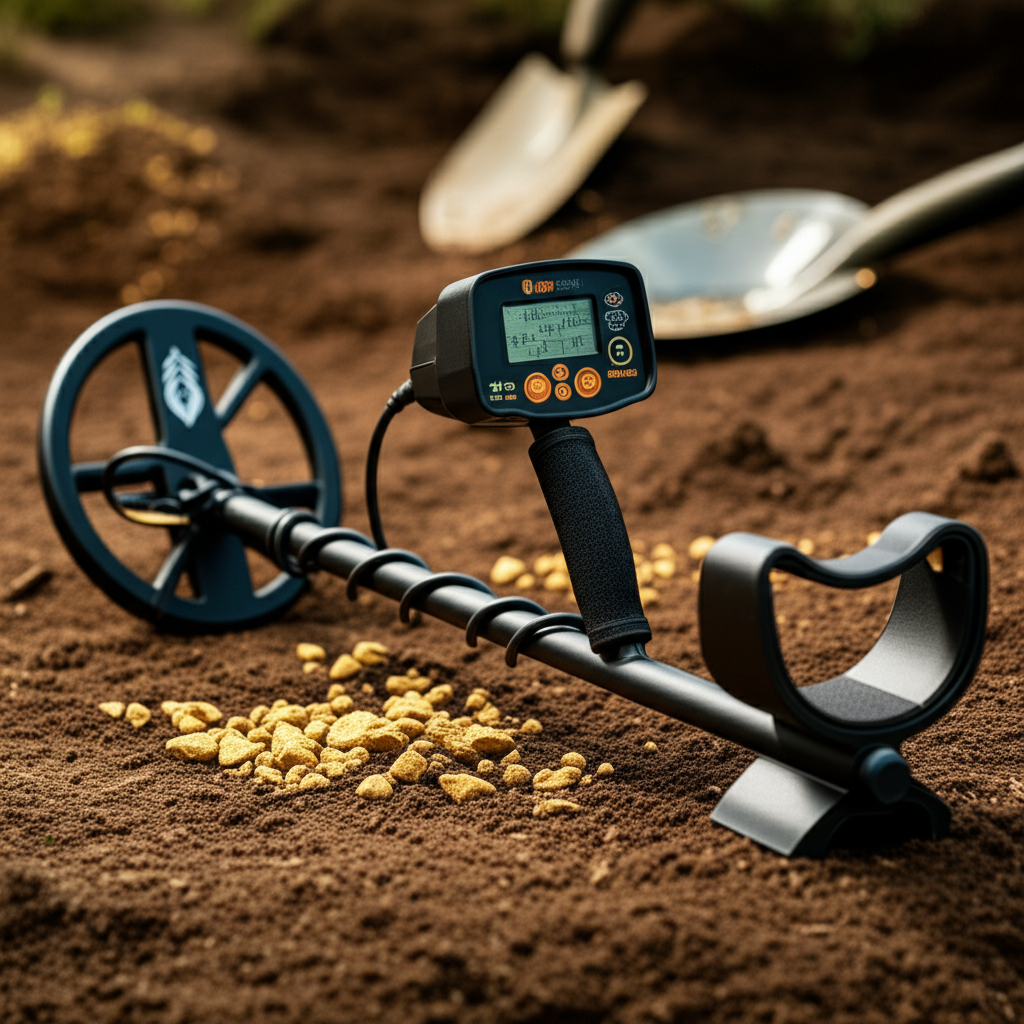
The frequency of a metal detector is measured in kilohertz (kHz). Most general-purpose detectors operate between 5-15 kHz. For gold prospecting, you want higher frequencies. Detectors in the 18-70 kHz range are ideal. Higher frequencies are much better at detecting small, low-conductivity targets like gold nuggets. Think of it like a magnifying glass for tiny things. A higher frequency acts like that magnifying glass for gold. It makes faint gold signals much clearer to the detector.
Ground Balancing: Ignoring the Earth’s Noise
Ground balancing is a way for the detector to ignore the natural minerals in the ground. These minerals can make the detector think there’s metal when there isn’t. This causes false signals. There are two main types: manual and automatic. Manual ground balancing lets you adjust it yourself. Automatic ground balancing does it for you with a button push. For gold prospecting, a detector with excellent ground balancing is essential. It ensures you hear real targets, not just soil noise.
Sensitivity and Threshold Control
Sensitivity adjusts how deeply the detector can search. Higher sensitivity can find smaller or deeper targets. However, too much sensitivity can cause chatter and false signals. Threshold is a low-level background hum you can hear. Adjusting the threshold can help you hear faint signals better. For gold, you need a detector that allows precise control over both. This helps you tune out noise and hear those tiny gold whispers.
Types of Metal Detectors for Gold Prospecting
There are a few types of metal detectors that are good for gold. Each has its strengths. Understanding these helps you pick the best one for your needs.
Very Low Frequency (VLF) Detectors
VLF detectors are common and versatile. Many VLF detectors can be adapted for gold prospecting. Look for VLF models with high frequencies (above 15 kHz). They are often more affordable. They also tend to be good at distinguishing between different types of metals. This can be helpful when searching in areas with lots of old junk. However, they can sometimes struggle with highly mineralized ground.
Pulse Induction (PI) Detectors
Pulse Induction detectors are excellent for gold. They send out strong magnetic pulses. These pulses can cut through highly mineralized soil. PI detectors are generally very sensitive to gold. They can often find targets deeper than VLF detectors. A downside is that they typically don’t discriminate well. This means they will signal on all metals. You will need to dig more trash. PI detectors are often more expensive than VLFs.
Multi-Frequency Detectors
Some modern detectors can operate on multiple frequencies at once. This offers the best of both worlds. You get the sensitivity of high frequencies for small gold. You also get the deeper penetration of lower frequencies. These detectors are very versatile. They can handle various ground conditions and target types. Multi-frequency detectors are usually the most expensive option.
Top Features to Look For in a Gold Detector
Beyond the basic types, certain features make a detector truly shine for gold. Prioritizing these will lead to more successful hunts.
Waterproof Capability
Gold is often found in rivers, streams, and beaches. A waterproof metal detector allows you to search these areas. You can even submerge the coil or the entire detector. This opens up many more prospecting possibilities. Always check the depth rating for waterproofing.
Lightweight and Ergonomic Design
You will be swinging your detector for hours. A lightweight and well-balanced detector reduces fatigue. An ergonomic design with an adjustable shaft ensures comfort. This allows you to search for longer periods. A comfortable detector means more time detecting.
Interchangeable Coils
Different coil sizes and shapes are useful. Smaller coils are great for tight spaces and detecting tiny gold. Larger coils can cover more ground faster and detect deeper. Having the option to swap coils gives you flexibility. It lets you adapt to different prospecting conditions.
Essential Accessories for Gold Prospecting
A great metal detector is just the start. Other tools can make your gold prospecting much more effective.
Pinpointer
A pinpointer is a small, handheld detector. It helps you locate the exact spot of a target once you’ve dug a plug of soil. This saves a lot of time and effort. Instead of sifting through dirt with your fingers, you can quickly find the target. Most gold prospectors consider a pinpointer essential.
Durable Digging Tools
You will need tools to dig up your targets. A sturdy digging trowel or a specialized prospecting shovel is necessary. Look for tools made from strong steel. They should be able to handle tough ground. A good digging tool makes excavation easier and faster.
Gold Pans and Sieves
Once you find a promising area, you might want to pan for gold. Gold pans are shaped to help you separate gold from other materials. Sieves help you filter out larger rocks. These are traditional prospecting tools. They can still be very effective for finding placer gold.
How to Choose the Right Metal Detector for Gold Prospecting
Choosing your first gold detector can feel overwhelming. Consider these factors to make the best decision.
Your Budget
Metal detectors for gold prospecting range in price. Entry-level models can be a few hundred dollars. High-end detectors can cost over a thousand. Decide how much you are willing to spend. Remember that investing a bit more can yield better results.
Your Target Areas
Where do you plan to search for gold? Are you looking in dry creek beds, rivers, or on land? Some detectors are better suited for specific environments. For example, PI detectors excel in highly mineralized ground. VLF detectors might be better for areas with less mineralized soil.
Your Experience Level
Some detectors are simpler to use than others. Beginners might prefer a detector with automatic features. Experienced prospectors might want more manual control. Read reviews and watch videos to understand the ease of use.
Putting Your Metal Detector to Work: Basic Techniques
Once you have your detector, it’s time to use it. Here are some basic techniques for gold prospecting.
Learn Your Detector’s Sounds
Every detector has different tones for different targets. Spend time in your yard learning what different signals sound like. Bury some gold, silver coins, and junk metal. Practice identifying each sound. This will help you make better decisions in the field.
Master Ground Balancing
As mentioned, proper ground balancing is vital. If your detector has manual ground balancing, practice it often. Get a feel for how it affects the detector’s performance. A well-balanced detector will be quieter and more sensitive.
Work in a Grid Pattern
When searching an area, use a systematic approach. Overlap your sweeps to ensure you cover every inch. Work in a grid pattern. This prevents you from missing spots. Slowly and steadily is the best way to detect.
Where to Prospect for Gold
Finding gold isn’t just about the detector; it’s also about location. Researching potential gold-bearing areas is crucial.
Understanding Geology
Gold is often found in specific geological settings. Learn about the types of rocks and soil where gold typically occurs. This knowledge will guide you to promising prospecting spots. Look for areas with quartz veins or placer deposits.
Public Lands and Regulations
Many areas are open to recreational gold prospecting. However, regulations vary widely. Always check with local authorities. Understand mining claims and claim jumping laws. Respect private property and follow all rules. You can often find information from government geological surveys or land management agencies.
Common Mistakes to Avoid
Even with the best metal detector, mistakes can happen. Learning from others’ errors saves you time and frustration.
Using the Wrong Detector
Trying to find gold with a basic coin detector is a common mistake. These detectors are not optimized for gold’s faint signals. They may also struggle with mineralized ground. Always choose a detector designed or suited for gold.
Not Learning Your Detector
Many new prospectors rush into the field without learning their equipment. Take time to read the manual. Practice in a controlled environment. Understanding your detector’s settings and sounds is critical.
Giving Up Too Soon
Gold prospecting can be challenging. It requires patience and persistence. Don’t get discouraged if you don’t find gold immediately. Keep learning, keep practicing, and keep exploring. Success often comes to those who don’t give up.
Frequently Asked Questions
What is the best type of metal detector for gold prospecting?
Pulse Induction (PI) detectors are excellent for gold, especially in mineralized soil. However, high-frequency Very Low Frequency (VLF) detectors can also be very effective and are often more affordable. Multi-frequency detectors offer the best of both worlds.
Do I need a special metal detector to find gold?
Yes, a specialized metal detector for gold prospecting is highly recommended. These detectors operate at higher frequencies and have better ground balancing than general-purpose detectors. This makes them more sensitive to small gold nuggets and able to handle mineralized ground.
How much should I expect to spend on a metal detector for gold prospecting?
Prices vary greatly. You can find entry-level gold detectors starting around $300-$500. Mid-range models typically cost between $700-$1200. High-end, professional detectors can cost $1500 or more.
Can I find gold with any metal detector?
While any metal detector will signal on gold, a detector designed for gold prospecting will be far more effective. It will be more sensitive to tiny gold pieces and better at ignoring ground minerals that can mask gold signals.
What is the most important feature for a gold prospecting metal detector?
High frequency and excellent ground balancing are arguably the most important features. High frequencies detect small, faint gold signals, while good ground balancing ignores mineralized soil that can hide gold.
Conclusion: Your Golden Opportunity Awaits
Choosing the right metal detector for gold prospecting is your first and most crucial step. A detector with high frequency, superior ground balancing, and adjustable sensitivity will significantly boost your chances. Whether you choose a VLF, PI, or multi-frequency model, understanding its features and learning to use it effectively are paramount. Combine your detector with essential accessories like a pinpointer and good digging tools. Research your prospecting locations and respect all regulations. With patience, practice, and the right equipment, your ultimate essential find – gold – could be waiting just beneath the surface. Happy hunting!
