


Published on: November 9, 2025 | Updated on: November 9, 2025
Metal Detector to Find Gold: Essential Beginner Tips
Finding gold with a metal detector is achievable for beginners. This guide explains how to choose the right detector, understand its features, and start your gold prospecting journey effectively, avoiding common pitfalls.
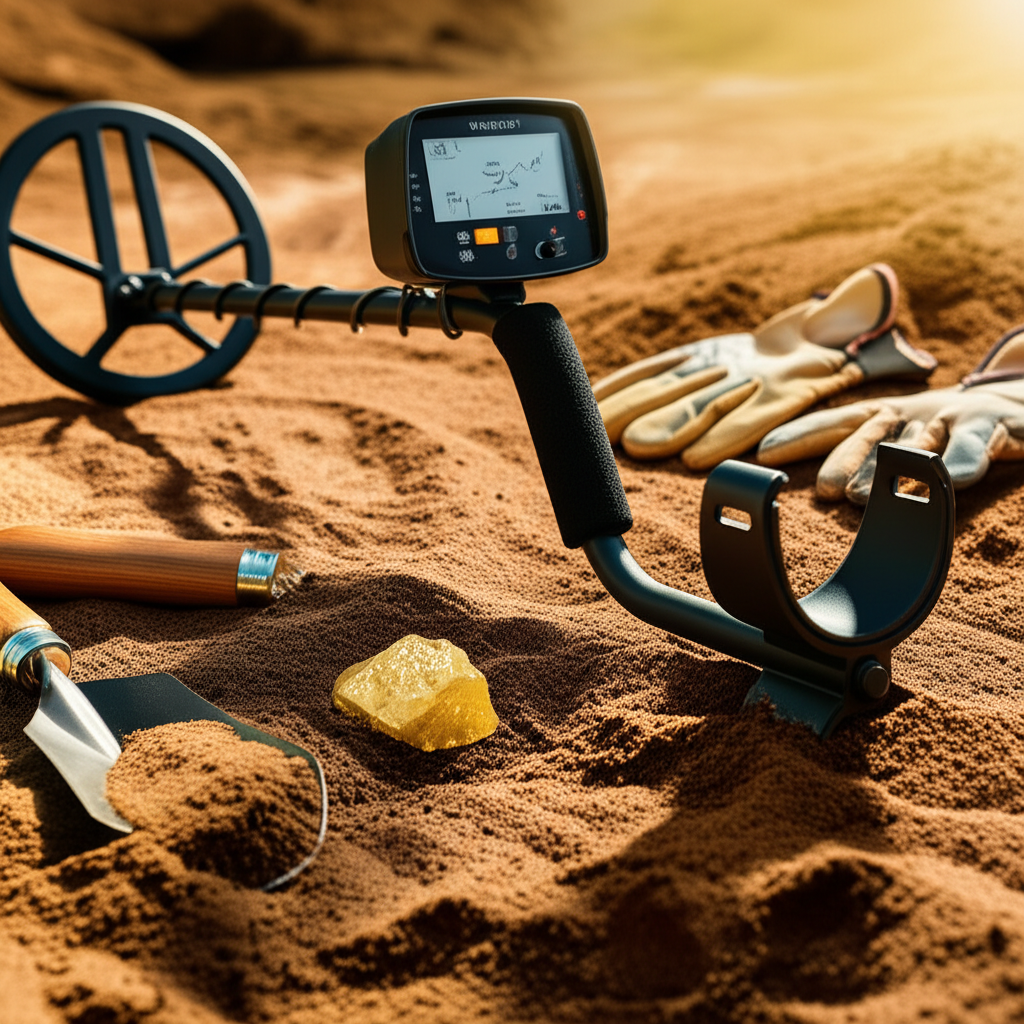
Embarking on the quest for gold can feel like a treasure hunt from a storybook. Many beginners dream of finding that glint of precious metal, but knowing where to start with a metal detector can be daunting. The sheer variety of detectors and techniques can be overwhelming. This guide cuts through the confusion, offering clear, actionable steps to help you find your first gold nuggets. We’ll cover everything from selecting the perfect metal detector to mastering basic prospecting skills.
What Makes a Metal Detector Good for Finding Gold?
A good metal detector for gold needs specific features. It must be sensitive to small gold pieces. High frequencies are key for detecting tiny gold specks. It should also handle mineralized ground well, as gold is often found in such areas. These detectors often have advanced ground balancing capabilities.
Choosing Your First Gold-Hunting Metal Detector
Selecting your first metal detector to find gold is a big step. Look for detectors designed for gold prospecting. These often operate at higher frequencies, between 14 kHz and 100 kHz. Brands like Minelab, Garrett, and Fisher offer excellent beginner-friendly gold detectors. Consider a detector with good discrimination to ignore junk metal.
Key Features to Look For

When buying a metal detector to find gold, prioritize certain features. High operating frequency is crucial for small gold. Adjustable ground balance helps cancel out ground minerals. Look for excellent sensitivity to tiny targets. Simplicity in controls is also a plus for beginners.
Recommended Beginner Gold Detectors
Several models stand out for those new to gold prospecting. The Garrett AT Gold is a popular choice, offering good performance in mineralized soils. The Minelab GPZ 7000 is a top-tier machine, but might be too advanced and expensive for a first-time buyer. A more accessible option is the Minelab Equinox series, which can be configured for gold with its advanced settings. The Fisher Gold Bug Pro is another solid contender, known for its sensitivity to small gold.
Understanding Your Metal Detector Settings
Once you have your metal detector to find gold, understanding its settings is vital. Settings like sensitivity, ground balance, and discrimination play big roles. Sensitivity controls how deep and how faint a target the detector can pick up. Ground balance helps the detector ignore the natural minerals in the soil. Discrimination allows you to ignore unwanted metals like iron.
Sensitivity Explained
Sensitivity is your detector’s ability to find targets. Higher sensitivity means it can detect smaller and deeper objects. However, too much sensitivity can lead to false signals, especially in mineralized ground. Start with a moderate setting and increase it slowly. Listen for a stable, clear signal.
Ground Balance: Your Best Friend in Gold Country
Gold is often found in areas with lots of minerals in the soil. These minerals can confuse your metal detector, causing it to give false signals. Ground balancing tells your detector to ignore these minerals. Most gold detectors have automatic or manual ground balance. Always perform ground balance in the area you plan to hunt.
Discrimination: Filtering Out the Junk
Discrimination helps you ignore trash like iron nails or pull tabs. For gold prospecting, you often want to set discrimination very low. This is because gold can sometimes have a similar signal to junk. Some detectors have specific modes for gold that help differentiate signals. Learning your detector’s audio tones is key.
Essential Accessories for Gold Prospecting
Beyond the metal detector to find gold, other gear is important. A good pinpointer is a must-have. It helps you pinpoint the exact location of a target in the soil plug. A sturdy digging tool, like a trowel or a specialized digging stick, is also necessary. A collection scoop or pan can help retrieve smaller targets.
The Mighty Pinpointer
A pinpointer is a small, handheld detector. You use it after digging a soil plug to find the target. It saves a lot of time and frustration. Instead of sifting through a large pile of dirt, you can quickly locate the target within the plug. This makes recovery much faster and easier.
Digging Tools and Recovery
Choose a digging tool that suits your terrain. A strong trowel works well in softer soils. For harder ground, a digging stick with a serrated edge is better. Always dig carefully to avoid damaging any potential gold nuggets. Try to keep the soil plug intact.
Where to Hunt for Gold
Finding gold with a metal detector depends heavily on location. Look for areas where gold has been found historically. Old riverbeds, dry creek beds, and placer mining areas are prime spots. Research local geology and historical mining records. Understanding how gold travels and settles is key.
Understanding Gold Deposits
Gold is often found in placer deposits. These are created when gold erodes from its original source (lode deposits) and is carried by water. It settles in areas where the water slows down, like inside bends of rivers or in cracks in bedrock. Detecting these natural traps increases your chances.
Researching Historical Mining Areas
Old mining maps and records can be invaluable. Search for information on past gold rushes or small-scale mining operations in your region. Many public lands have historical mining activity. Always check land ownership and regulations before detecting. Some areas might be off-limits.
Techniques for Effective Gold Detecting
Using your metal detector to find gold requires specific techniques. Sweep your coil slowly and methodically. Overlap your sweeps to ensure full coverage. Listen carefully to the audio signals. Different tones can indicate different types of metals. Practice in an area where you know there are targets.
Coil Control and Swing Speed
Sweep your detector coil smoothly and at a consistent height above the ground. Overlapping each sweep by about half the coil’s width ensures you don’t miss anything. Too fast a swing can cause the detector to miss small or deep targets. A slow, steady sweep is best for gold.
Interpreting Audio Signals
Your metal detector’s audio feedback is crucial. Learn the different tones your specific model makes. A clean, sharp signal often indicates a good target. A choppy or inconsistent signal might be junk or mineralized ground. Practice makes perfect in understanding these sounds.
Dealing with Mineralized Ground
Mineralized ground is a common challenge for gold prospectors. Many minerals in the soil can mimic the signal of gold. Proper ground balancing is essential to overcome this. Some detectors have specialized modes or settings for highly mineralized areas. You might need to adjust sensitivity as well.
Advanced Ground Balancing Techniques
If your detector has manual ground balance, learn to use it effectively. Adjust it until the detector makes a smooth, consistent sound. Re-balance the ground periodically as you move to different areas. Some detectors have features like “fast auto-track” for quick adjustments.
Adjusting Sensitivity in Tough Conditions
In highly mineralized soil, you may need to reduce your sensitivity. This helps prevent false signals from the ground itself. Find the highest sensitivity setting that still provides stable operation. It’s a balance between depth and stability.
Recognizing Gold Signals
Learning to identify gold signals takes practice. Gold often produces a sharp, distinct, repeatable tone. The target’s conductivity and size influence the sound. Small gold nuggets might give a higher-pitched tone. Larger nuggets might produce a more mid-range sound.
Understanding Target ID Numbers
Many modern metal detectors display target identification (ID) numbers. These numbers give you an idea of what kind of metal the target is made of. Gold targets typically fall within a certain range of numbers on most detectors. However, these numbers can vary based on the detector model and ground conditions.
The Importance of Digging Test Targets
To learn your detector’s signals, bury some test targets. Dig up coins, jewelry, and small pieces of gold (if you have them). Bury them at different depths. This helps you associate specific sounds and ID numbers with actual targets. It’s a crucial learning step.
Regulations and Ethics in Gold Detecting
Always be aware of the rules for metal detecting. Check local, state, and federal regulations for the areas you plan to hunt. Some public lands have restrictions on detecting or digging. Practice ethical detecting by filling in your holes and not disturbing historical sites. Respect the land and leave it better than you found it.
Understanding Land Use Permissions
Before you detect, know who owns the land. Detecting on private property requires explicit permission from the landowner. Public lands have their own set of rules. National Parks, for instance, often prohibit metal detecting entirely. Always verify permitted activities.
Leave No Trace Principles
Ethical detecting means minimizing your impact. Always fill in any holes you dig completely. Remove all trash you find. Avoid damaging vegetation or historical artifacts. Your goal is to find treasure, not to leave a mess.
Frequently Asked Questions (FAQ)
Can any metal detector find gold?
While any detector can technically find gold, specialized gold detectors are much more effective. They are designed with higher frequencies and better ground balancing for gold prospecting.
How much does a good beginner gold detector cost?
Beginner gold detectors can range from $400 to $1,000. More advanced models can cost significantly more. It’s a worthwhile investment for serious hobbyists.
Is it hard to find gold with a metal detector?
It takes practice and knowledge, but it’s not impossible. Learning your detector, understanding geology, and choosing good locations significantly improve your chances.
What is the best time of year to hunt for gold?
Spring and fall are often ideal. Cooler temperatures make detecting more comfortable. After heavy rains, water can expose new areas or move gold.
Should I dig every signal when looking for gold?
For gold prospecting, it’s often best to dig most repeatable signals. Even faint signals can sometimes be small gold pieces. You can learn to distinguish between trash and potential gold over time.
Conclusion
Finding gold with a metal detector is an exciting adventure. With the right metal detector to find gold, a bit of knowledge, and persistence, you can increase your chances of success. Start with a beginner-friendly detector, learn its settings, and practice in promising locations. Remember to be patient, ethical, and enjoy the thrill of the hunt. Happy prospecting!
