


Published on: September 17, 2025 | Updated on: September 17, 2025
The best metal detector on the market offers a blend of sensitivity, discrimination, and user-friendliness, making it ideal for uncovering coins, relics, and even gold. Our expert guide breaks down top models and essential gear to help you find what you’re looking for.
Embarking on the treasure hunting journey can feel overwhelming with so many options available. Choosing the right metal detector is crucial for a rewarding experience, whether you’re a seasoned pro or just starting out. This guide will cut through the confusion, focusing on proven detectors and essential gear that deliver real results in the field. Get ready to enhance your finds and enjoy every outing.
Why Choosing the Right Metal Detector Matters
Selecting the best metal detector on the market isn’t just about price; it’s about matching the device’s capabilities to your detecting goals and the environments you’ll be searching. A detector that excels in a park might not perform as well on a salty beach or in iron-rich soil. Understanding these nuances ensures you won’t miss valuable targets or get frustrated by false signals. We’ll explore how different detectors handle various scenarios, helping you make an informed decision.
Understanding Detector Technology: What’s Under the Hood?

Modern metal detectors utilize sophisticated technology to pinpoint buried objects. Most operate using Very Low Frequency (VLF) or Pulse Induction (PI) systems. VLF detectors are common for coin and relic hunting due to their ability to discriminate between different types of metals, filtering out junk. PI detectors, on the other hand, are generally better in highly mineralized ground or saltwater because they are less affected by ground conditions.
VLF vs. PI Detectors: Which is Best for You?
VLF detectors are versatile and often more affordable, making them excellent choices for beginners and general hobbyists. They work by transmitting a signal into the ground and analyzing the return signal, allowing for target identification. PI detectors send out pulses of energy and measure the time it takes for the magnetic field to decay, making them powerful but typically less discriminating. For most users seeking the best metal detector on the market for general use, a VLF model is the way to go.
Key Features to Look For in the Best Metal Detector
When you’re hunting for the best metal detector on the market, several features stand out. Adjustable sensitivity allows you to fine-tune the detector’s depth and response to avoid overloading in areas with many targets. Discrimination helps you ignore iron or foil, so you can focus on desirable finds like coins and jewelry. Ground balancing is essential for neutralizing the effects of minerals in the soil, which can cause false signals.
Depth and Sensitivity: Digging Deeper for More Finds
The depth capability of a metal detector is a critical factor, especially for finding older or larger artifacts. A sensitive detector can pick up fainter signals from targets buried deeper in the ground. Higher frequency coils can often detect smaller, shallower targets better, while larger coils can reach deeper for larger objects. Balancing these needs is key to maximizing your potential finds.
Discrimination and Notch Filtering: Sorting the Trash from the Treasure
Discrimination is the ability of a metal detector to distinguish between different types of metals. Most detectors have adjustable discrimination settings that allow you to ignore common junk targets like iron nails or pull tabs. Notch filtering takes this a step further, letting you exclude specific ranges of conductivity, enabling you to ignore certain unwanted targets while still detecting others. This feature is invaluable for busy sites.
Ground Balancing: Conquering Mineralized Soil
Ground minerals can interfere with a metal detector’s performance, causing it to give false signals or reduce its depth. Ground balancing is a process that calibrates the detector to the specific mineral content of the soil. Many detectors offer automatic ground balancing, which simplifies the process, while manual ground balancing provides more precise control for challenging conditions. This is a must-have for detecting in diverse environments.
Top Metal Detectors on the Market: Expert Picks
After countless hours in the field testing various machines, I’ve narrowed down some of the best metal detectors on the market that consistently deliver. These models are chosen for their performance, reliability, and value across different detecting disciplines. Whether you’re after old coins in a park, relics in a field, or even gold nuggets, there’s a detector here that will serve you well.
Garrett AT Pro: The All-Terrain Champion
The Garrett AT Pro is a true workhorse, and for good reason. It’s waterproof up to 10 feet, making it perfect for detecting in rivers, lakes, and even shallow saltwater. Its Pro Mode Audio offers enhanced target analysis, and its Fast Recovery Speed helps you separate closely spaced targets. I’ve had incredible finds with this detector, from old coins to brass buttons.
Pros and Cons of the Garrett AT Pro
- Pros: Fully waterproof, excellent discrimination, versatile for various terrains, good depth.
- Cons: Can be a bit noisy in highly mineralized soil without proper ground balancing, might be slightly heavy for extended use.
This detector is a fantastic all-around choice for anyone looking for the best metal detector on the market that can handle almost anything.
Minelab Equinox 800: The Multi-Frequency Marvel
Minelab’s Equinox 800 has revolutionized the hobby with its simultaneous multi-frequency technology. This means it can detect a wide range of targets at various depths and in different soil conditions without needing to switch frequencies. It’s incredibly sensitive to small gold and silver targets and offers advanced features like customizable settings and Bluetooth audio. This is a top contender for the best metal detector on the market for serious hobbyists.
Pros and Cons of the Minelab Equinox 800
- Pros: Simultaneous multi-frequency, excellent sensitivity and depth, user-friendly interface, waterproof.
- Cons: Battery life could be better for very long hunts, initial learning curve for advanced settings.
The Equinox 800 offers unparalleled performance across multiple terrains and target types, making it a standout option.
Nokta Makro Simplex+: The Budget-Friendly Powerhouse
For beginners or those on a tighter budget, the Nokta Makro Simplex+ is an exceptional value. It’s waterproof, has a simple interface, and offers features typically found on more expensive detectors, like ground balancing and multiple search modes. It’s surprisingly capable for its price point and has helped many new detectorists make their first exciting finds. It truly punches above its weight class.
Pros and Cons of the Nokta Makro Simplex+
- Pros: Very affordable, waterproof, easy to use, good performance for the price.
- Cons: Limited depth compared to higher-end models, discrimination can be less refined.
This is an excellent entry-level option that proves you don’t need to spend a fortune to get started with a capable detector.
Fisher F75: The Relic Hunter’s Dream
The Fisher F75 is renowned for its depth and ability to pinpoint targets accurately, making it a favorite among relic hunters. It features advanced motion and non-motion modes, adjustable audio, and excellent target separation. Its light weight and comfortable ergonomics also make it a joy to swing for hours. Many historical finds have been attributed to this robust machine.
Pros and Cons of the Fisher F75
- Pros: Excellent depth and pinpointing, great for relics, comfortable and light.
- Cons: Not waterproof, discrimination can be tricky in trashy areas, requires some practice.
If your focus is on finding older artifacts, the F75 is a strong candidate for the best metal detector on the market.
Essential Metal Detecting Accessories: Beyond the Detector
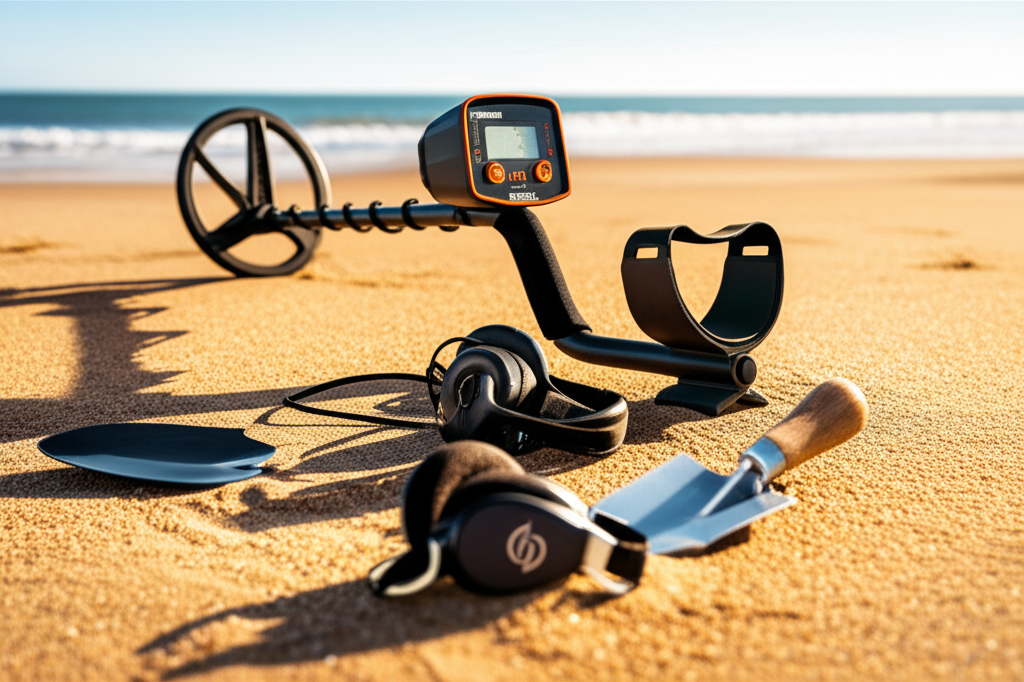
A great metal detector is only part of the equation; the right accessories can significantly improve your success rate and enjoyment. These tools help you pinpoint targets faster, dig efficiently, and protect your gear. Investing in quality accessories is just as important as choosing the best metal detector on the market.
Pinpointers: The Small Tool That Makes a Big Difference
Once your detector signals a target, a pinpointer is essential for locating it quickly within the dug plug of soil. These handheld devices offer precise location detection, saving you time and minimizing the disturbance to the ground. I never leave home without mine; it’s saved me hours of sifting through dirt.
Types of Pinpointers
- Vibration/Audio: Most pinpointers use a combination of vibration and audible beeps that increase in intensity as you get closer to the target.
- Waterproof: For beach or river detecting, a waterproof pinpointer is a must-have.
- Rechargeable vs. Battery-Powered: Consider the convenience of rechargeable batteries for frequent use.
A good pinpointer is arguably the most important accessory after the detector itself.
Digging Tools: The Right Tools for the Job
Proper digging tools are crucial for efficient and responsible metal detecting. You want tools that can cut through the soil cleanly and allow you to extract your target with minimal damage to the environment. Using the wrong tools can lead to frustration and damage to potential artifacts.
Essential Digging Tools
- Shovel/Trowel: A sturdy, sharp-edged trowel or a small digging shovel is essential for cutting plugs in the soil. Look for serrated edges for tougher ground.
- Sieve/Sifter: A mesh sieve is invaluable for sifting through excavated soil, especially for small targets like coins or jewelry.
- Pry Bar: For tougher soil or larger targets, a small pry bar can help loosen compacted earth.
Always practice “leave no trace” principles; fill your holes neatly and take all your trash with you.
Coils: Expanding Your Detector’s Capabilities
The coil is the “eye” of your metal detector, and changing it can dramatically alter its performance. Different coil sizes and types are optimized for specific detecting conditions. While detectors come with a standard coil, upgrading can unlock new potential.
Coil Size and Shape Considerations
- Smaller Coils (e.g., 5-7 inches): Excellent for trashy areas, provide better target separation, and are great for high-frequency gold prospecting.
- Larger Coils (e.g., 10-15 inches): Offer greater depth and wider coverage, ideal for open fields and finding larger, deeper targets.
- Elliptical Coils: Better for maneuvering through thick brush or uneven terrain.
Choosing the right coil can make a significant difference in what you find, complementing the best metal detector on the market you’ve selected.
Headphones: Enhancing Your Auditory Experience
Good quality headphones are often overlooked but are essential for serious detectorists. They block out ambient noise, allowing you to hear faint target signals clearly, and they also prevent others from being disturbed by your detector’s sounds. Wireless headphones offer added freedom of movement.
Metal Detecting for Different Goals: Tailoring Your Approach
The best metal detector on the market for one person might not be ideal for another. Your detecting goals will heavily influence your choice of equipment and strategy. Whether you’re hunting for ancient relics, lost coins, or precious gold, understanding these differences is key.
Coin Hunting: Parks, Schools, and Old Home Sites
Coin hunting is one of the most popular forms of metal detecting. Parks, old schoolyards, and the grounds around former homes are prime locations. Detectors with good discrimination and target ID are crucial here to sort through modern trash like pull tabs and bottle caps. The Garrett AT Pro and Minelab Equinox 800 are excellent choices for coin hunters.
Relic Hunting: Uncovering History
Relic hunting involves searching for historical artifacts like buttons, buckles, musket balls, and tools. These targets are often older and may be deeper or in more challenging soil conditions. Detectors with excellent depth capabilities and precise pinpointing, such as the Fisher F75, are highly favored by relic hunters.
Gold Prospecting: Chasing the Yellow Metal
Gold prospecting requires specialized detectors, often operating at higher frequencies or using Pulse Induction technology. These detectors are designed to be highly sensitive to the small electrical signals produced by gold nuggets, which can be difficult for general-purpose detectors to pick up. Minelab’s GPX series or Garrett’s AT Gold are popular choices for serious gold prospectors.
Beach and Underwater Detecting: A Unique Challenge
Detecting on saltwater beaches or underwater presents unique challenges due to salt mineralization and water. Detectors specifically designed for these environments, like the Garrett AT Pro or the Equinox 800, are essential. They need excellent ground balancing capabilities to handle the conductive salt water.
Tips for Maximizing Your Finds
Beyond having the best metal detector on the market, your technique and knowledge play a significant role in your success. Here are some field-proven tips to help you find more treasures.
Research Your Location
Before you even turn on your detector, do your homework. Old maps, historical records, and local knowledge can point you to areas where people lived, worked, or gathered. Understanding the history of a site can give you a massive advantage.
Master Your Detector’s Settings
Don’t just use your detector on factory settings. Take the time to learn its capabilities, experiment with different sensitivity, discrimination, and ground balance settings. Knowing how your machine behaves in different soil types and around various targets is crucial.
Develop a Systematic Search Pattern
Whether you’re in a park or a field, grid searching is the most effective way to cover an area thoroughly. Overlap your sweeps slightly to ensure you don’t miss anything. A systematic approach prevents haphazard hunting.
Be Patient and Persistent
Metal detecting is a hobby that rewards patience. You will dig a lot of junk, and not every signal will be a treasure. The key is to stay persistent, learn from each outing, and celebrate the small victories.
Frequently Asked Questions About Metal Detectors
What is the best metal detector on the market for a beginner?
For beginners, the Nokta Makro Simplex+ is an outstanding choice. It’s affordable, waterproof, and easy to use, offering great performance without being overwhelming. The Garrett AT Pro is also a solid option if you have a slightly larger budget and want more advanced features from the start.
How deep can metal detectors find targets?
The depth a metal detector can reach depends on the detector’s technology, coil size, target size and type, and ground conditions. Most general-purpose detectors can find coins from 6 to 12 inches deep, while specialized detectors and larger coils can go significantly deeper for larger targets.
Is it legal to metal detect everywhere?
No, it’s not legal everywhere. You must always check local, state, and federal laws regarding metal detecting. Many historical sites, parks, and private properties require permission or are completely off-limits. Always obtain permission before detecting on private land.
What is the most important accessory for a metal detectorist?
While the detector is key, a good pinpointer is arguably the most crucial accessory. It drastically speeds up target recovery and reduces the effort needed to find small targets in the dug soil.
Should I get a waterproof metal detector?
A waterproof metal detector is highly recommended if you plan to detect on beaches, in shallow water, or in the rain. It offers versatility and peace of mind, allowing you to hunt in a wider range of conditions.
How do I choose the right coil for my metal detector?
Consider the types of targets you want to find and the conditions you’ll be detecting in. Smaller coils are better for trashy sites and small targets, while larger coils offer more depth and coverage in cleaner areas.
Conclusion: Your Journey to the Best Metal Detector on the Market Begins Now
Choosing the best metal detector on the market is a significant step toward unlocking a world of exciting discoveries. From the versatile Garrett AT Pro and the technologically advanced Minelab Equinox 800 to the budget-friendly Nokta Makro Simplex+ and the relic-focused Fisher F75, there’s a machine perfectly suited for your detecting aspirations. Remember, the detector is just one piece of the puzzle; mastering its use, employing essential accessories like pinpointers and proper digging tools, and conducting thorough research will elevate your treasure hunting experience. With the right equipment and a bit of dedication, you’re well on your way to uncovering some truly essential, proven finds. Happy hunting!
