


Published on: September 22, 2025 | Updated on: September 22, 2025
Yes, you can metal detect on public land, but rules vary significantly by location. Understanding these regulations is crucial to avoid fines and ensure you can legally pursue those hidden treasures.
Metal detecting on public land is a question that pops up frequently among detectorists, and for good reason. It’s exciting to think about the potential finds just waiting beneath the surface, but the biggest hurdle often isn’t finding treasure, it’s knowing where you’re allowed to look. Many beginners feel overwhelmed by the patchwork of rules and regulations, leading to frustration or even accidental trespassing. This guide will cut through the confusion, providing a clear, step-by-step approach to understanding your rights and responsibilities when metal detecting on public land, so you can focus on the thrill of the hunt.
Understanding Public Land: What Exactly Are We Talking About?
Public land encompasses a wide range of areas owned by federal, state, or local governments. This includes national parks, state parks, national forests, BLM (Bureau of Land Management) land, beaches, school grounds, and even city parks. Each type of public land can have its own set of rules regarding metal detecting, making it essential to do your homework before swinging your coil. Knowing the distinction between different types of public land is the first step in ensuring a legal and rewarding detecting experience.
Federal Lands: The Big Picture of Restrictions
Federal lands, managed by agencies like the National Park Service (NPS) and the Bureau of Land Management (BLM), often have the strictest regulations. The Antiquities Act of 1906 and the Archaeological Resources Protection Act (ARPA) of 1979 are key pieces of legislation that protect historical and archaeological sites. These laws generally prohibit the removal of artifacts from federal lands, especially those considered significant historical or cultural resources.
National Parks: A Strict No-Go Zone for Most

National Parks are typically off-limits for metal detecting. The primary goal of the National Park Service is preservation, and metal detecting is seen as a potential threat to archaeological sites and the historical integrity of the parks. There might be very specific exceptions in designated areas or for particular research projects, but for the average hobbyist, it’s best to assume metal detecting is not permitted. Always check the official NPS website for the specific park you intend to visit.
BLM Lands: More Permissive, But With Caveats
Bureau of Land Management (BLM) lands offer more opportunities for metal detecting. In many areas, detecting is allowed as long as you are not disturbing archaeological sites or removing artifacts that are considered historically significant. You generally can keep coins, jewelry, and other personal items you find. However, it’s crucial to fill in your holes neatly and report any significant archaeological finds to the BLM. Regulations can vary by state and even by district within a state, so local BLM offices are your best resource.
State Lands: A Mixed Bag of Rules
State parks and forests also have varying regulations regarding metal detecting. Some states are quite permissive, allowing detecting in most areas with minimal restrictions, while others are more cautious, mirroring federal guidelines. Understanding the specific laws of the state you plan to detect in is paramount. This often involves checking the website of the state’s Department of Natural Resources or Parks and Recreation.
State Parks: Often More Lenient Than National Parks
While national parks are usually a no-go, many state parks allow metal detecting. The key is often whether the park has specific archaeological significance or is designated as a protected historical site. Many state parks permit detecting on beaches, picnic areas, or developed recreational zones, provided you adhere to rules about filling holes and not disturbing vegetation. Always look for posted signs or check the park’s official guidelines.
State Forests: Generally Welcoming to Detectorists
State forests tend to be more open to metal detecting than state parks. These areas are often managed for multiple uses, including recreation. As with BLM land, the general principle is to avoid disturbing sensitive historical or archaeological sites. Most state forests will allow you to keep items like coins and jewelry. Again, responsible detecting practices, like proper hole filling, are always expected.
Local Lands: Your Backyard and Beyond
Local parks, school grounds, and other municipal lands are governed by city or county ordinances. These can be the most variable and sometimes the most challenging to navigate. Some cities are very welcoming, while others have outright bans. School grounds often have specific rules due to liability concerns and the presence of children.
City Parks and Beaches: Common Detecting Grounds
City parks and public beaches are often popular spots for metal detectorists. Many cities allow detecting, especially on beaches, where modern items are frequently lost. The rules typically focus on ensuring you don’t damage landscaping, leave holes unfilled, or disturb other park users. Some beaches may have specific restrictions on where you can detect, especially in protected dune areas. Always check your local municipality’s website or call the parks department.
School Grounds: Tread with Extreme Caution
Metal detecting on school grounds is a sensitive area. While not always explicitly forbidden, it’s generally discouraged and can lead to trouble. Schools often have policies against unauthorized activities on their property. If you are considering detecting on school grounds, it is absolutely essential to get explicit permission from the school administration beforehand. Unauthorized detecting can be seen as trespassing.
What Can You Keep? The Legalities of Finds
This is where things get particularly interesting and often confusing. The general rule of thumb is that you can usually keep items of modern origin that have no significant archaeological or historical value, such as modern coins, jewelry, and pull tabs. However, the ownership of items with historical or archaeological significance is a different matter.
Artifacts and Relics: A Tricky Distinction
Items that are considered artifacts or relics, especially those that are old or potentially significant to the history of the area, often belong to the landowner – in this case, the government. Laws like ARPA specifically protect archaeological resources on federal lands, making their removal illegal and subject to severe penalties. Even on state or local lands, there can be laws protecting historical items. It’s always better to err on the side of caution and report potentially significant finds.
Personal Items: Lost and Found
Lost modern jewelry, coins, and other personal effects are generally considered fair game on public lands where detecting is permitted. These items have usually lost their connection to historical contexts and are often the primary target for many hobbyists. The key is to ensure you are detecting in an area where you are legally allowed to do so and to practice responsible detecting habits.
Essential Gear for Public Land Detecting
Having the right metal detector and accessories can make a huge difference in your success and efficiency when detecting on public land. Modern detectors are sophisticated tools that can help you distinguish between targets and minimize digging trash.
Choosing the Right Metal Detector
For general-purpose detecting on public land, a versatile mid-range detector is often ideal. Look for features like adjustable discrimination, multiple search modes, and good depth capabilities. Brands like Garrett, Minelab, and Nokta Makro offer excellent options for various budgets and experience levels. A detector that can handle different ground conditions, from parks to fields, will serve you well.
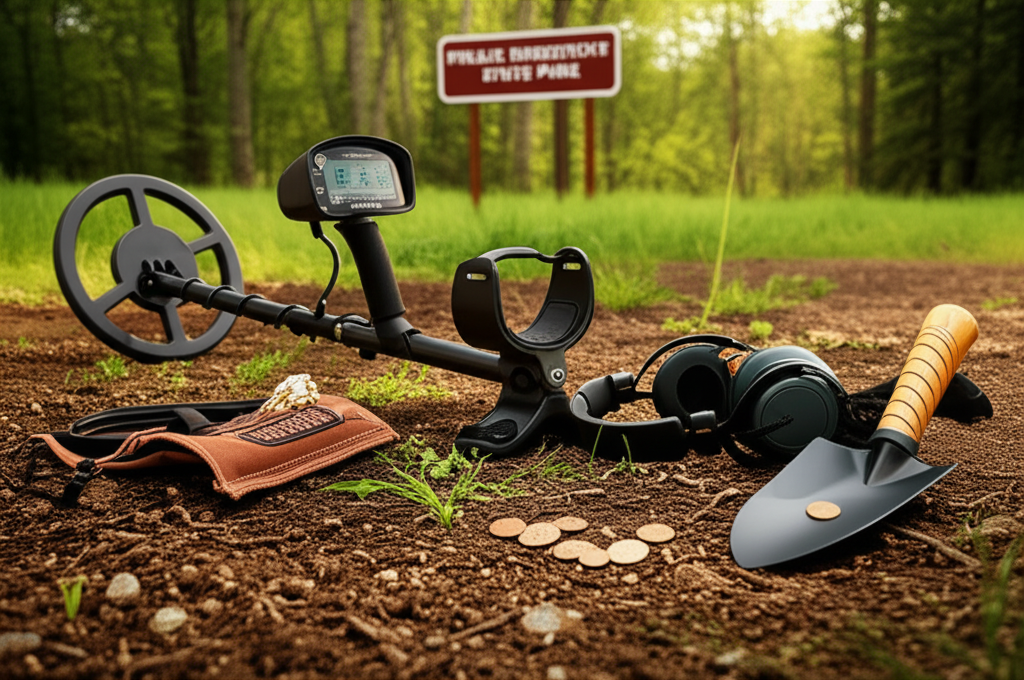
Must-Have Accessories
Beyond the detector itself, a few accessories are indispensable:
Pinpointer: This handheld device helps you pinpoint the exact location of a target within your dug plug, saving significant time and effort.
Digging Tools: A sturdy trowel or digging spade is essential for cleanly excavating targets. Ensure your tools are appropriate for the terrain – a robust spade for fields, a smaller trowel for parks.
Headphones: These help you hear faint signals and keep your finds discreet, especially in public areas.
Finds Pouch: A durable pouch to store your recovered items and any trash you dig up.
Responsible Detecting Practices: The Golden Rules
Being a responsible detectorist is not just about following the law; it’s about being a good steward of the land and maintaining positive public perception for our hobby. These practices ensure that we can continue to detect on public lands for years to come.
The “Leave No Trace” Philosophy
This is perhaps the most important principle. Always fill in your holes completely and neatly, trying to make the ground look as undisturbed as possible. Avoid digging in sensitive areas like gardens, flower beds, or areas with significant vegetation. The goal is to leave the area as you found it, or even better.
Respecting Property and People
Never detect on private property without explicit permission. On public land, be mindful of other people using the area. Avoid digging near playgrounds or during organized events. If someone asks what you are doing, be polite and explain your hobby.
Reporting Significant Finds
If you unearth something that looks like a valuable artifact or an item of historical importance, do not remove it. Report your find to the relevant authorities, such as the local historical society, museum, or the agency managing the land. This is not only legally correct but also contributes to our understanding of history.
Where to Find Specific Public Land Regulations
Navigating the rules can seem daunting, but there are reliable sources to get the information you need. Proactive research is key to a successful and legal detecting trip.
Government Agency Websites
National Park Service (NPS): Search for “[Park Name] metal detecting policy” on NPS.gov.
Bureau of Land Management (BLM): Visit BLM.gov and look for regulations specific to the state or district you plan to visit.
* State Department of Natural Resources/Parks: Search for “[State Name] metal detecting laws” or visit the official website of your state’s parks and wildlife agency.
Local Ordinances
For city and county parks, check the official website of the city or county government. Look for sections on parks and recreation or municipal codes. If you can’t find the information online, don’t hesitate to call the local parks department directly.
Detectorist Forums and Clubs
Experienced detectorists and local clubs are invaluable resources. They often have up-to-date information on local regulations and can offer practical advice based on their own experiences. However, always cross-reference information from forums with official government sources.
So, can I metal detect on public land? The answer is a resounding “yes, but…” It’s not a simple yes or no. Understanding the nuances of federal, state, and local regulations is the bedrock of legal and ethical metal detecting. Federal lands, particularly National Parks, are largely off-limits. State and local lands, including most city parks and beaches, often permit detecting, but always with specific rules.
The most common restrictions revolve around the protection of archaeological sites and historical artifacts. While you can generally keep modern personal items like lost jewelry and coins, historical relics typically belong to the government. Always prioritize responsible detecting practices: fill your holes, avoid sensitive areas, and respect other land users.
Frequently Asked Questions (FAQ)
Q1: Are there any public lands where I can legally metal detect for gold?
While gold prospecting is a specialized form of metal detecting, it’s often permitted on certain BLM and U.S. Forest Service lands where it’s historically been practiced. However, strict regulations apply regarding placer mining and the disturbance of potential historical sites. Always check with the specific land management agency.
Q2: What should I do if I find something that looks like an artifact?
If you believe you’ve found an artifact or an item of historical significance, do not remove it. Document its location with GPS if possible, and contact the managing agency of the public land (e.g., BLM, NPS, State Parks) or a local historical society or museum.
Q3: Can I metal detect on beaches?
Public beaches are generally good places to metal detect, as people often lose coins and jewelry. However, rules can vary. Some beaches may have restrictions in certain areas (like protected dunes) or require permits. Always check with the local municipality or lifeguard station.
Q4: What are the penalties for detecting illegally on public land?
Penalties can be severe, including hefty fines, confiscation of your equipment, and even criminal charges, especially if you are found to be disturbing archaeological sites or removing artifacts from federal lands.
Q5: Is it okay to metal detect in schoolyards?
While not always explicitly forbidden, it’s best to avoid schoolyards unless you have explicit, written permission from the school administration. Trespassing charges are a real risk otherwise.
Q6: Do I need a permit to metal detect on public land?
It depends entirely on the specific location. Some federal lands (like certain BLM areas) may require a permit for prospecting or detecting. Many state and local parks do not require permits but have specific rules. Always check the regulations for the area you plan to visit.
Conclusion: Your Next Detecting Adventure Awaits
So, can I metal detect on public land? Absolutely! The thrill of uncovering history, finding lost treasures, and enjoying the great outdoors is accessible to many through metal detecting on public lands. The key to a successful and enjoyable experience lies in diligent research and responsible practices. By understanding the regulations for federal, state, and local lands, and by committing to leaving no trace, you can confidently embark on your treasure-hunting adventures. Remember to equip yourself with the right tools, respect the land and its history, and always be prepared to report significant finds. Happy hunting!
